
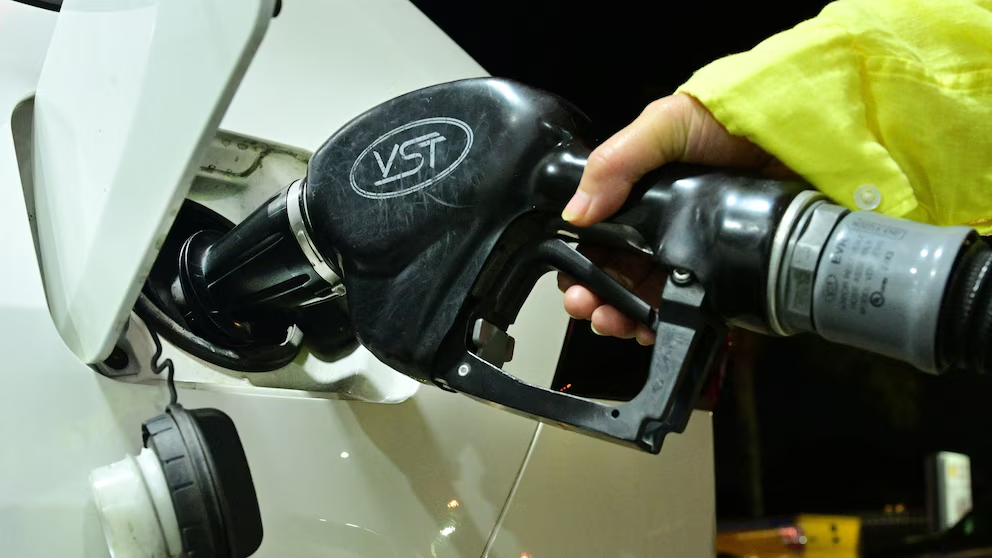
A motorist refuels their vehicle at a service station in Monterey Park, California, on March 22, 2026. Frederic J. Brown/AFP via Getty Images
The average cost of gasoline across the United States exceeded $4 per gallon Tuesday, surpassing this benchmark for the first time in almost four years, following closely behind the U.S.-Israeli war with Iran that sparked a worldwide oil market disturbance and drove up fuel expenses.
Since the commencement of hostilities on Feb. 28, pump prices have surged by over 30%, as revealed by AAA statistics, with the current average price per gallon standing at $4.018. The cost of fuel last rose above $4 per gallon in August 2022 after Russia’s incursion into Ukraine.
The conflict in the Middle East led to Iran’s decision to close the Strait of Hormuz, a crucial sea lane responsible for facilitating approximately one-fifth of the world’s oil shipments. The potential for a drawn-out oil scarcity led to a steep escalation in unrefined petroleum values.
The U.S. has a petroleum trade surplus, indicating that the nation generates more oil than it uses. However, because global forces dictate oil prices, U.S. prices are subject to variations in international supply dynamics and consumer demand.
Worldwide oil prices floated around $117 per barrel Tuesday, reflecting a more than 50% price rise from levels seen before the war.
Unprocessed petroleum constitutes the primary element in vehicle fuel, accounting for over half of the expenditure encountered at the pump, as reported by the U.S. Energy Information Administration, a federal body.
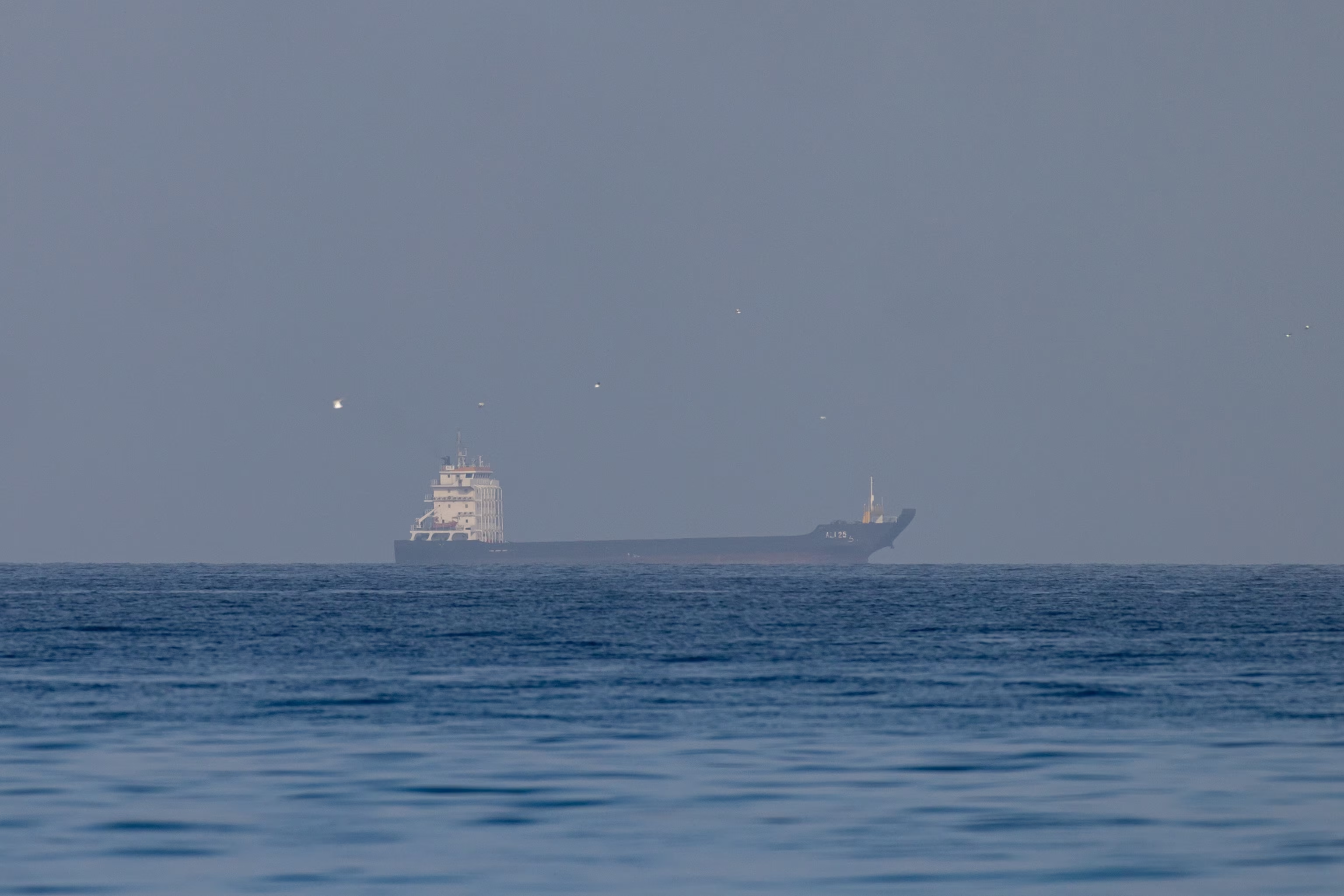
Cargo vessel, Ali 25, in the Gulf, near the Strait of Hormuz, March 22, 2026 in northern Ras al Khaimah, United Arab Emirates.Getty Images
Earlier in the week, Fatih Birol, the executive director of the International Energy Agency (IEA), expressed that the present energy emergency has exceeded the total consequence of global energy crises during the 1970s.
Birol stated at a gathering in Canberra, Australia, that the world economy is confronting a “serious, considerable danger,” pointing out that if it continues down its present path, no nation will remain “impervious to this crisis’s consequences.”
Two weeks prior, member countries of the IEA declared their intention to release 400 million barrels of oil from their strategic reserves, representing the largest oil distribution in the 32-nation organization’s history.
The Trump government is preparing to execute the second-largest ever allocation from the nation’s emergency stockpile, accounting for approximately half of the IEA’s intended release. Trump has also relaxed restrictions on Russian oil and temporarily eliminated a crucial guideline regarding domestic oil transportation. The president has additionally aimed to reinstate maritime activity within the Strait of Hormuz.
Sourse: abcnews.go.com