
A suspected outbreak of hantavirus on a passenger vessel has sparked worries regarding this uncommon ailment transmitted by rodents.
The World Health Organization (WHO) is currently reporting eight instances, which include five confirmed by laboratory analysis and three that are considered possible. These eight instances have resulted in three deaths.
It seems there are a minimum of two confirmed instances and three suspected instances that may not be included in the WHO’s official tally.
Here's what you should understand regarding hantavirus, including its nature, transmission methods, available treatments, and if any preventative actions can be taken:
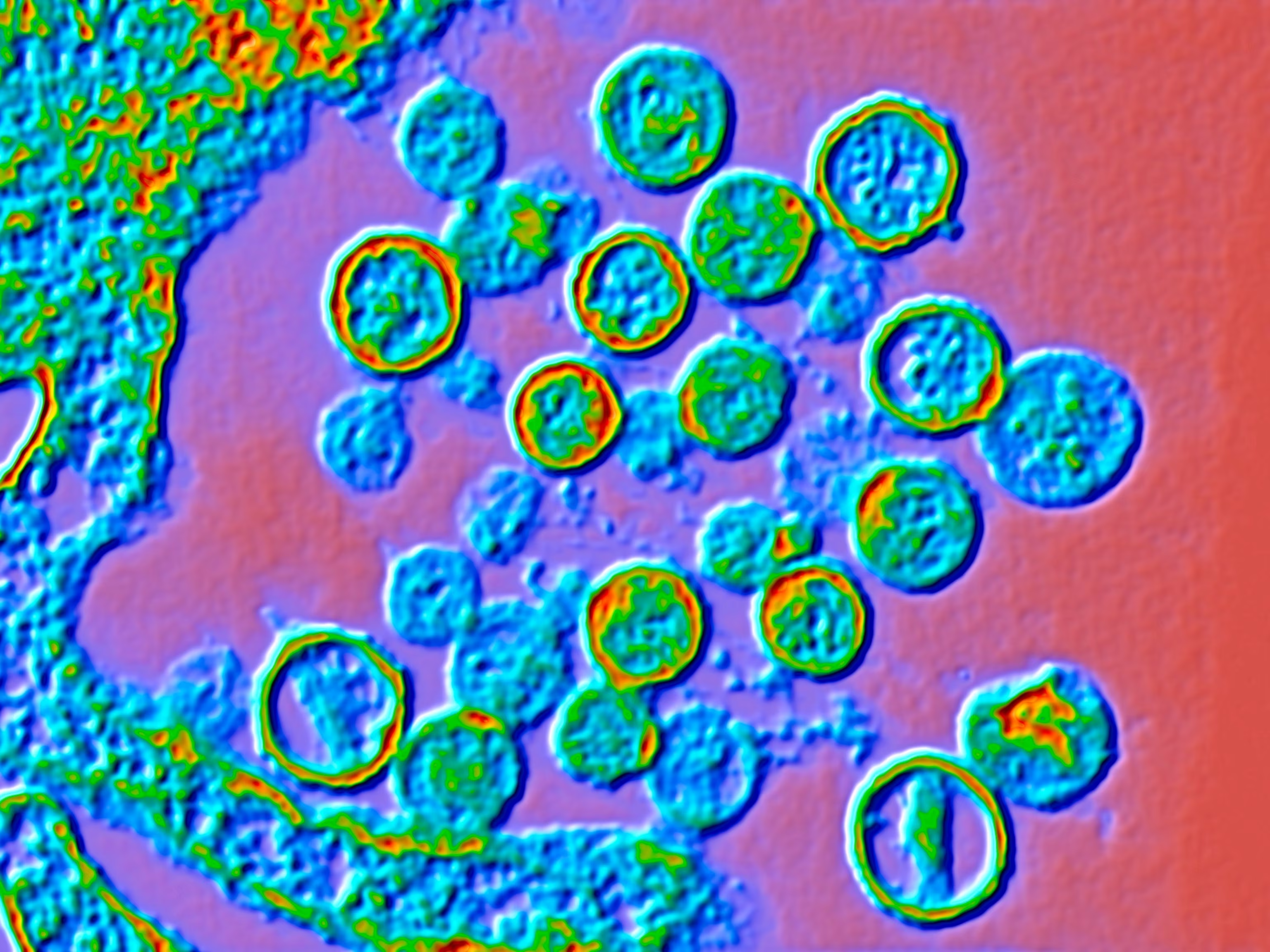
Stock photo of a colorized electron micrograph of the Hantavirus.Alfred Pasieka/Science Photo Lib/STOCK PHOTO/Getty Images
What defines hantavirus?
According to the Centers for Disease Control and Prevention (CDC), hantaviruses are a viral family capable of inducing grave sicknesses and mortality.
These viruses precipitate two health conditions: hantavirus pulmonary syndrome (HPS) and hemorrhagic fever with renal syndrome (HFRS). HPS predominately occurs in the Western Hemisphere, notably the U.S., while HFRS primarily surfaces in Europe and Asia.
The CDC stated that hantavirus surveillance in the U.S. commenced in 1993 during an episode in the Four Corners region, encompassing Arizona, Colorado, New Mexico, and Utah. From 1993 through the close of 2023, the CDC reports that 890 instances of hantavirus ailment have been documented in the U.S.
Hantavirus garnered greater recognition following its identification as the cause of death for the spouse of performer Gene Hackman, discovered alongside him in their New Mexico dwelling in February 2025.
What are the routes of hantavirus transmission?
Hantaviruses commonly spread via rodents, such as rats and mice, mainly through interacting with their urine, excrement, or spittle. The CDC notes that although the viruses can proliferate through a rodent bite or scratch, such infections are rare.
As per the WHO, hantaviruses may also propagate between individuals, albeit rarely, with suspicion focused on a singular subtype from South America.
The identified hantavirus strain in the presumed cluster is the Andes virus, which has historically presented the prospect of transmission among individuals.
Dr. Jeanne Marrazzo, the Infectious Diseases Society of America’s CEO, stated during a Thursday press conference that she suspects the transmission within the possible cluster arises from "respiratory matter."
“Concerning transmission from person to person, theoretically, there are two potential mechanisms. Individuals might carry infected material on their hands, potentially transmitting it that way,” she mentioned. "However, based on the outbreak in Argentina, documented in the New England Journal some years prior to the pandemic, we infer that it likely transmits via respiratory matter, whether airborne or through droplets; the exact mode remains uncertain."
What indications point to hantavirus?
According to the CDC, HPS symptoms generally surface one to eight weeks after viral exposure, with initial indicators including fever, lethargy, and muscular discomfort. Half of HPS sufferers will undergo cephalalgia, shivering, giddiness, emesis, nausea, diarrhea, and gastric distress.
The CDC states that within four to ten days of the disease’s onset, subsequent symptoms manifest, including cough, breathlessness, and chest constraint due to liquid accumulation in the pulmonary system.

The cruise ship MV Hondius, carrying passengers suspected of having cases of hantavirus on board, leaves Praia, Cape Verde, May 6, 2026.Reuters
The CDC approximates that about 38% of individuals developing HPS respiratory indications may succumb to the illness.
The CDC mentions that HFRS symptoms typically manifest one to two weeks post-exposure, commonly entailing severe cephalalgia, fever, rigor, spinal discomfort, gastric pain, nausea, and emesis.
Advanced symptoms might encompass diminished blood pressure, compromised circulation, internal bleeding, and rapid kidney dysfunction. The CDC indicates that the lethality rate among infected individuals fluctuates from under 1% to as much as 15%, contingent on the infecting virus.
What treatments are on hand for hantavirus?
The CDC states that there exists no explicit therapy for hantavirus contagion, advocating for supportive measures like respite, hydration, and symptomatic alleviation.
According to the CDC, breathing support, such as intubation, may be required for HPS sufferers owing to potential respiration complications.
The CDC asserts that HFRS can impair renal function, potentially necessitating dialysis to eliminate blood toxins in impacted patients.
Does a vaccine exist?
There isn’t a vaccine providing defense against hantavirus.
The CDC advises individuals to shun contact with rodent urine, waste, saliva, and nesting materials. The CDC emphasizes the necessity of secure cleanup procedures should mice or rats be detected in or near a domicile.
Sourse: abcnews.go.com