
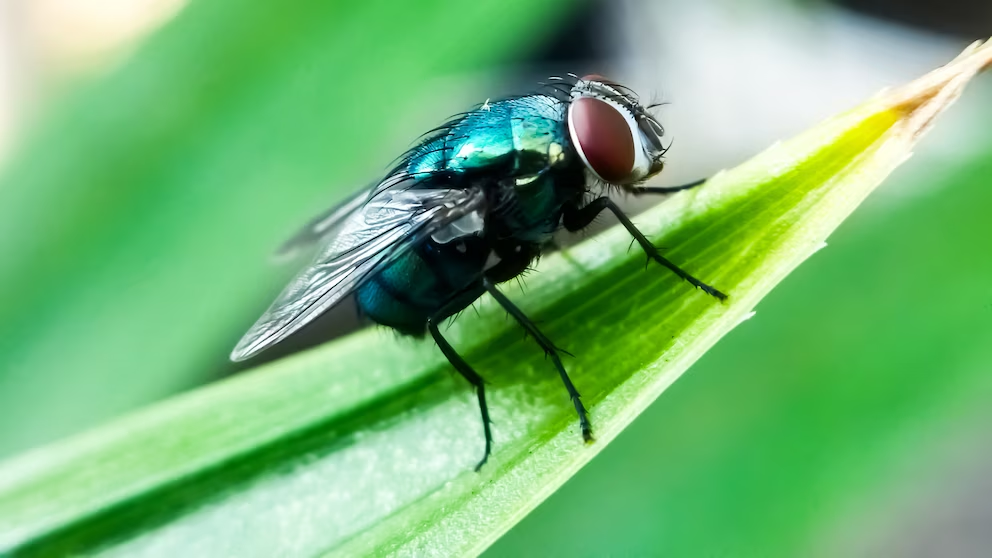
Cochliomyia hominivorax, referred to as the New World screwworm fly, or just screwworm, denotes a parasitic fly species distinguished by its larvae’s (maggots’) habit of consuming living tissue.STOCK IMAGE/Getty Images
On Monday, federal health authorities indicated that instances of a parasitic, flesh-eating infection continue to emerge in areas close to the United States.
The U.S. Department of Agriculture (USDA) conveyed that a New World screwworm occurrence was ascertained in the Mexican state of Nuevo León, situated about 62 miles from the Texas boundary. This represents the most northern ongoing case in Mexico.
The USDA communicated that the present threat to farm animals, other creatures, and humans in the U.S. remains minimal, and there is presently no indication of NWS among animals within the U.S.
Here's what you should understand regarding the infection, its treatment methods, and potential preventive measures:
What constitutes New World screwworm?
New World screwworm (NWS) defines a parasitic fly species that subsists on living tissue, inducing myiasis – an infestation by larvae or maggots, as per the Centers for Disease Control and Prevention (CDC).
They have the capacity to infest numerous animal categories, spanning livestock, domestic animals, wildlife, and infrequently, humans.
"These maggots literally consume the tissue inside the wound… and have the potential to severely damage the tissue," articulated Dr. William Schaffner, preventive medicine professor at Vanderbilt University Medical Center in Nashville, in conversation with ABC News. "And it appears they bury themselves, almost grinding into the tissue as if screwing themselves down."
A female NWS will identify a live host and alight on an open wound – possibly as minuscule as a tick bite – situated near the eyes, ears, nose, or mouth. The fly deposits between 200 and 300 eggs, according to the CDC.
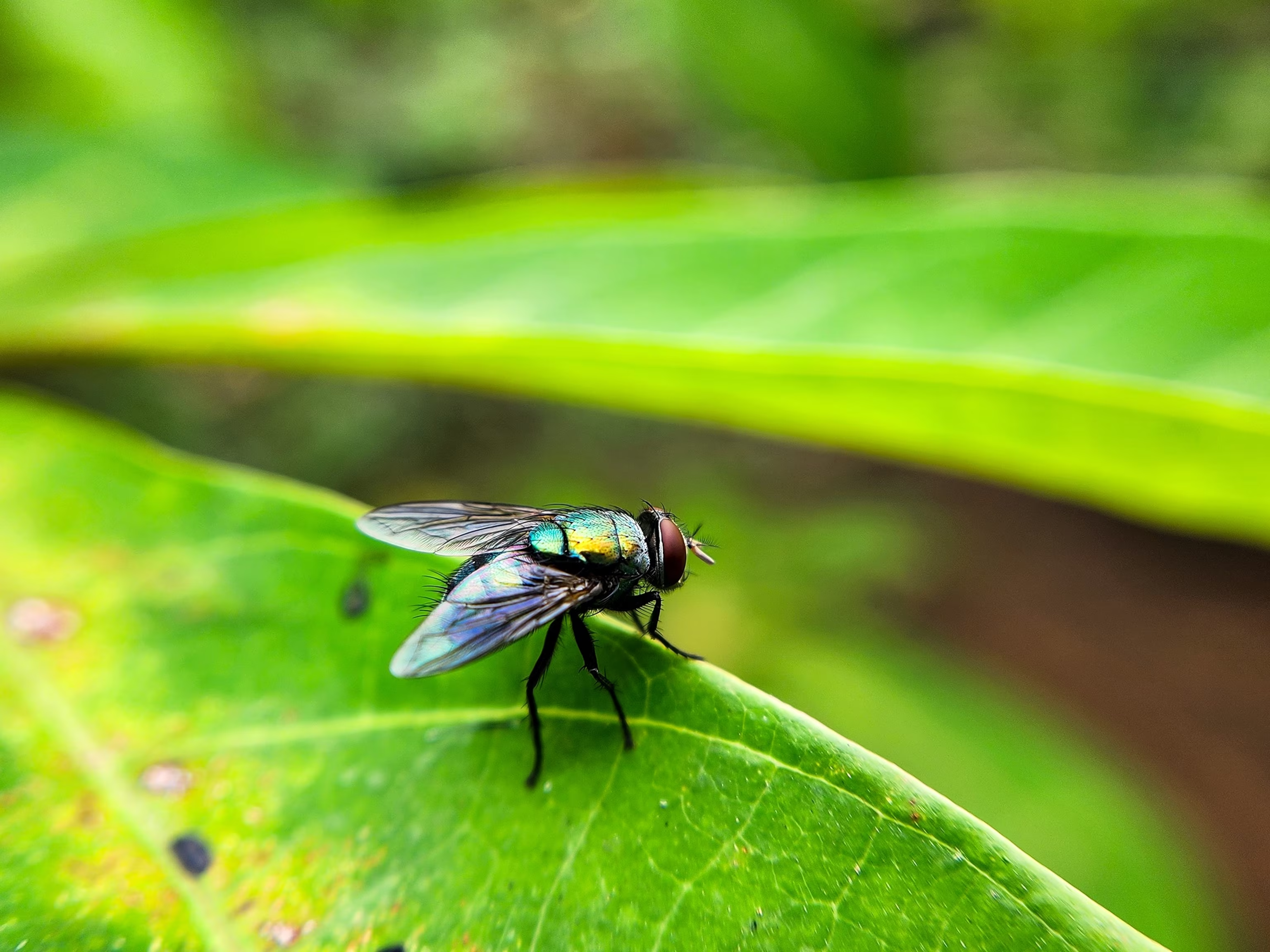
The New World screw-worm flySTOCK IMAGE/Getty Images
Following egg hatching, the maggots penetrate more deeply into the tissue, engendering painful infestations.
"It can trigger fatal lesions in animals," voiced Dr. Todd Ellerin, chief of infectious diseases at South Shore Health in Massachusetts, in discussion with ABC News. "So, it holds the potential to decimate cattle, to decimate livestock…. In rare instances, it can deposit an egg in human wounds that subsequently become infected by bacteria, leading to severe infections. It's generally not lethal in humans."
Eggs evolve into maggots, which infiltrate the wound to feed off living flesh. Following a feeding duration of roughly seven days, larvae descend to the ground, burrow into the soil, and re-emerge as adult screwworm flies.
NWS typically lacks presence in the U.S. but prevails in Central and South American countries, along with the Caribbean, according to the CDC.
"The screwworm favors warm, somewhat humid conditions," specified Ellerin. "Climate change elevates the risk in Central America and Mexico relative to the U.S., but consequently, southern border states face greater risk than northern ones."
NWS infection elicits various symptoms, encompassing non-healing or worsening skin lesions, painful wounds or sores, bleeding from open lesions, the sensation or visual confirmation of maggots in wounds, and foul odors originating from the infestation site, as indicated by the CDC.
What are the treatments?
At present, there exists no strictly medicinal remedy for NWS infestation. Should an individual suspect infestation – or perceive maggots in a wound or any part of the body – they should promptly contact a healthcare expert, according to the CDC.
Dr. Marcus Pereira, medical director of the transplant infectious diseases program at NewYork-Presbyterian/Columbia University Irving Medical Center, communicated to ABC News that an escalating wound odor, hemorrhage, discharge, or amplified pain could potentially signal an infestation.
A physician will be tasked with extracting the maggots, possibly through surgical intervention, as advised by the CDC. The agency cautions against patients independently attempting maggot removal or disposal.
Cochliomyia hominivorax, the New World screw-worm fly, or screw-worm for short, is a species of parasitic fly that is well known for the way in which its larvae (maggots) eat the living tissue.STOCK PHOTO/Getty Images
"There aren't any antibiotics or drugs available for targeting the larvae, so often the treatment involves surgery," Pereira explained. "One must remove the larvae and the surrounding wound. Frequently, this necessitates urgent surgical intervention."
The CDC advises against discarding live maggots in garbage receptacles or outdoors, as it risks NWS proliferation in the area.
Infection prevention measures
Experts communicated to ABC News that individuals journeying to regions with prevalent NWS infestation should maintain open wounds covered and employ an insect repellent sanctioned by the Environmental Protection Agency.
Individuals spending time outdoors should adopt loose-fitting, long-sleeved attire including shirts and pants, hats, and socks, according to the CDC.
Utilizing a sterile insect methodology, NWS was successfully eliminated from the U.S. in 1966, according to the USDA.
Schaffner relayed that sterile male flies, unable to impregnate females, were cultivated in a laboratory setting.
"Millions of these sterile male flies were produced and released into the environment," Schaffner stated. "They engage with females, who mate solely once. The females then remain non-pregnant, consequently failing to produce any eggs. This endeavor eradicates the species from the territory where millions of sterile male screw flies have been unleashed."
Schaffner appended that this methodology presents a more ecologically conscious alternative to pesticide use, which may potentially harm other species or plant life.
Last week, Agriculture Secretary Brooke Rollins visited Texas for the groundbreaking ceremony of a $600 million facility earmarked for sterile fly production and NWS eradication.
Upon completion, the facility should generate 300 million sterile flies each week, but full completion is anticipated by 2028.
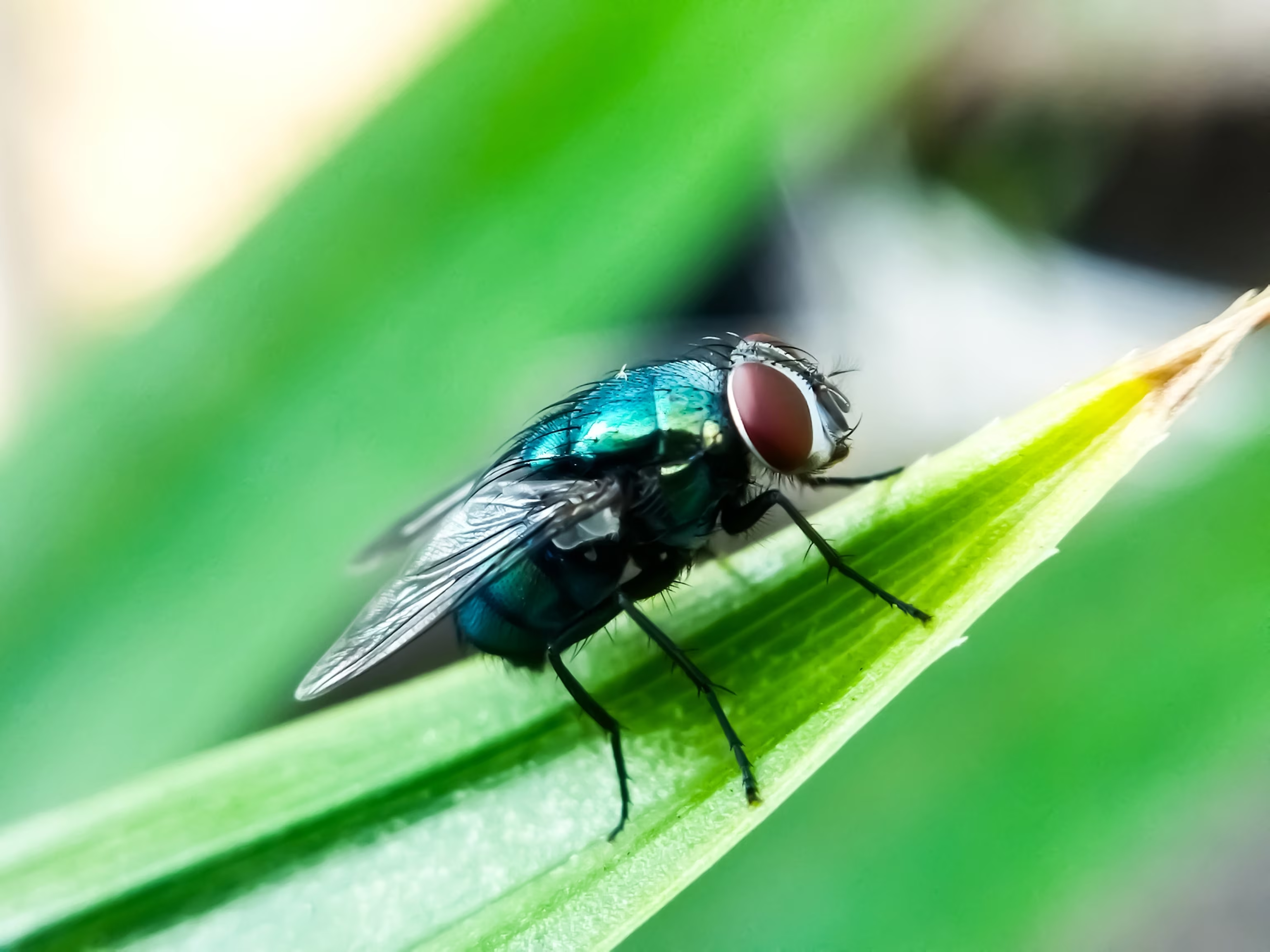
Cochliomyia hominivorax, referred to as the New World screwworm fly, or just screwworm, denotes a parasitic fly species distinguished by its larvae’s (maggots’) habit of consuming living tissue.STOCK IMAGE/Getty Images
What degree of concern is warranted?
Experts communicated to ABC News that present conditions in the U.S. do not justify significant apprehension.
Subsequent to the U.S. screwworm eradication in 1966, the nation has experienced relative freedom from the parasite, with the exception of a 2017 outbreak in the Florida Keys.
In the past year, a case manifested in a Maryland resident following a recent visit to El Salvador.
"This issue predominantly involves livestock," Schaffner conveyed. "While human infestation remains possible, the greater implication lies in potential economic impact."
Crystal Joseph, MD, MS is an anesthesiology resident at Beth Israel Deaconess Medical Center/Harvard Medical School and a member of the ABC News Medical Unit.
Sourse: abcnews.go.com