
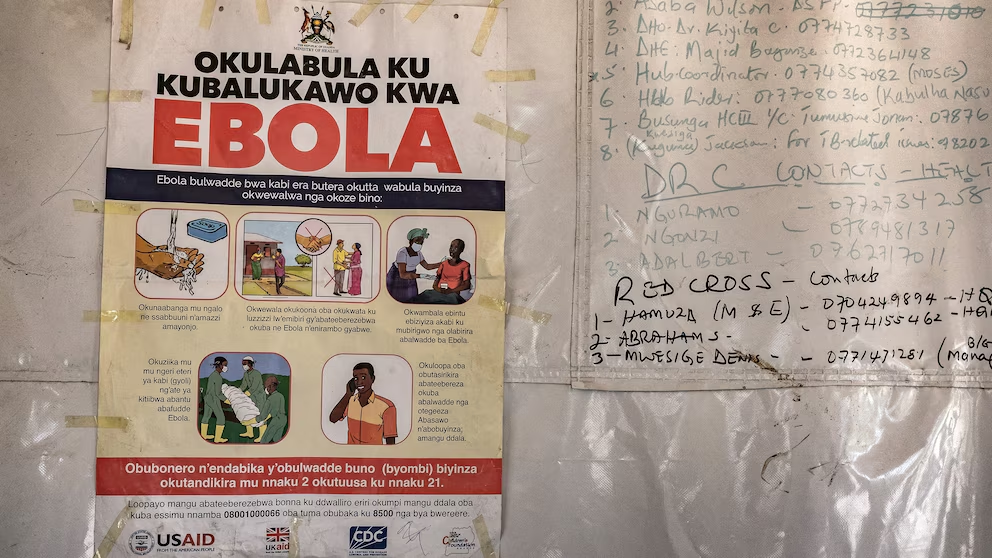
A sign displaying Ebola emergency contact numbers is fastened to a tent at the Busunga border crossing linking Uganda and the Democratic Republic of Congo in Bundibugyo, May 18, 2026. Badru Katumba/AFP via Getty Images
A hazardous Ebola epidemic continues its proliferation in the Democratic Republic of Congo and Uganda, where authorities stated on Tuesday that there were over 600 verified and suspected occurrences, along with more than 100 presumed fatalities.
The World Health Organization (WHO) has designated the outbreak as a global health emergency of international scope, and at least one American individual in the DRC has received a positive diagnosis, as reported by the Centers for Disease Control and Prevention (CDC).
Numerous specialists in public health communicated to ABC News that, while they concur with the CDC’s assessment that the hazard to the U.S. population remains minimal, the outbreak still engenders apprehension. They voiced concerns as well, noting that the U.S. may lack sufficient readiness to appropriately respond, stemming from reductions in federal health agency budgets and the nation’s departure from the WHO.
These experts emphasized that cases have surfaced in both isolated regions of the DRC and Uganda, as well as metropolitan zones, and the contagion is expanding swiftly. They further noted that while Ebola is an infrequent malady, it can be exceedingly transmissible and potentially culminate in deadly outcomes.
"We harbor concerns that if this epidemic is not brought under control, it could propagate elsewhere on the continent, thereby amplifying the potential for the virus to extend beyond the African continent," conveyed Dr. Jennifer Nuzzo, a professor of epidemiology and director of the Pandemic Center at Brown University School of Public Health, in a statement to ABC News.
"Ebola lacks the high transmissibility of a virus like a coronavirus … hence my belief that this will never evolve into a pandemic scenario. Nonetheless, it need not reach pandemic proportions to warrant serious concern," she elaborated.
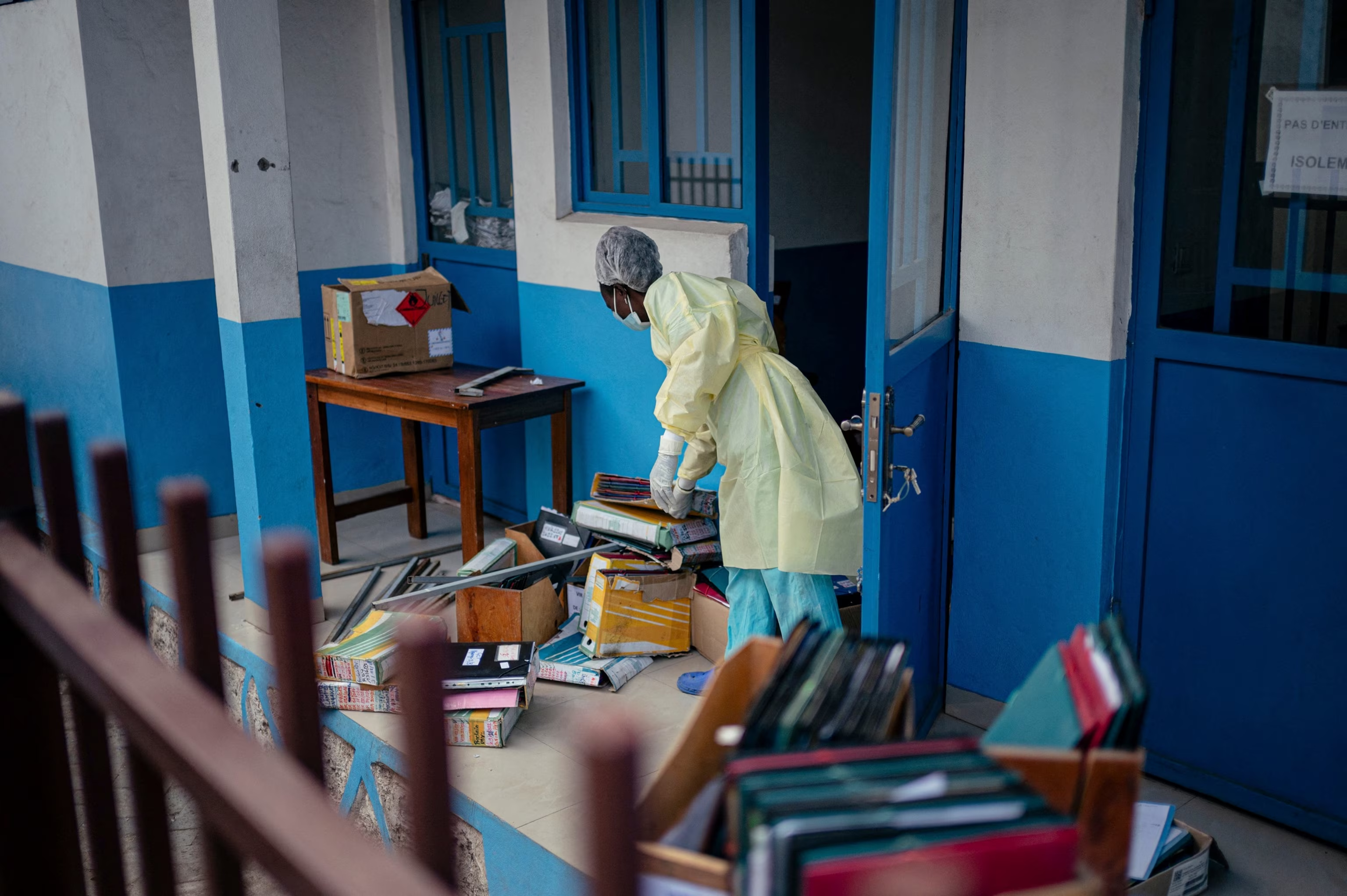
Staff members at CBCA Virunga Hospital arrange rooms intended for possible suspected Ebola cases following official announcements in Goma, May 17, 2026.Jospin Mwisha/AFP via Getty Images
Americans affected by outbreak
On Monday, the CDC verified that at least one American individual in the DRC contracted Ebola while engaged in professional duties within the country.
Dr. Satish K. Pillai, incident manager for the CDC’s Ebola response, informed reporters that the individual experienced symptoms over the weekend and received a positive test result late on Sunday. He added that the patient, along with six other high-risk contacts, were being transported to Germany for medical care and observation.
Serge, an international Christian missions enterprise, confirmed that the patient is Dr. Peter Stafford, an American medical missionary. He is a board-certified general surgeon with expertise in burn treatment, who was providing care to patients in the eastern DRC.
Pillai did not specify if or when the Americans would be repatriated to the U.S., however, experts assert that, even if the patient and contacts were to return, the degree of risk to the public would remain unchanged.
"We possess the experience of successfully and safely [returning affected Americans home] on numerous prior occasions," noted Emily Smith, interim chair of the department of global health at the Milken Institute School of Public Health at George Washington University, in a conversation with ABC News. "We are well-versed in this area and have consistently executed it with safety and efficiency. Therefore, I have no apprehensions regarding this matter."
Dr. Jesse Goodman, a professor of medicine and infectious disease at Georgetown University and former chief scientist at the Food and Drug Administration, expressed reassurance that when nations like the DRC have encountered outbreaks in the past, these have not escalated to pandemic proportions.
"I anticipate that the most [the U.S.] would experience is the form of restricted transmission witnessed previously, given that the virus almost invariably seems to transmit from individuals exhibiting symptoms," he commented to ABC News. "Should cases manifest in this country, I would foresee limited transmission, and I believe we possess the means to contain it."
During the 2014 Ebola outbreak, two cases of suspected transmission from a patient afflicted with Ebola to nurses tending to him were reported. The CDC has established thorough infection prevention and control protocols for healthcare facilities suspecting Ebola cases.
U.S. may not be as connected to the global health community
Even considering the U.S.’s potential to contain Ebola domestically, the experts interviewed by ABC News indicated that the U.S. may face disadvantages in addressing various health crises, both domestically and internationally, due to curtailments in public health capabilities.
In the preceding year, the State Department declared its assumption of programs formerly administered by the U.S. Agency for International Development (USAID). Secretary of State Marco Rubio conveyed that the agency — which supervised foreign aid, disaster response, and international development initiatives — would discontinue providing assistance to other nations.
During prior Ebola outbreaks, USAID contributed millions of dollars and operational backing in response efforts, in addition to aiding preparedness measures in neighboring countries.
Moreover, earlier in the current year, the U.S. finalized its withdrawal from the WHO, with federal officials stating at the time that there are "plans" in place to collaborate with organizations on surveillance, diagnostics, and outbreak management to compensate for deficiencies resulting from disengagement from the WHO.
Nuzzo of Brown University asserted that the Ebola outbreak represents the precise scenario that public health authorities cautioned against as USAID experienced resource depletion and the U.S. terminated its affiliation with the WHO.
A view shows The World Health Organization headquarters in Geneva, Switzerland, January 28, 2025.Denis Balibouse/Reuters
"We cautioned that the United States would be operating without proper information, and it would be informed of dangerous outbreaks belatedly, rendering it exceedingly challenging for the U.S. to mount a response due to a scarcity of resources to do so," Nuzzo elucidated. "The most profound concern revolves around the fact that the outbreak was not declared until the presence of over 200 suspected virus cases, a most unconventional occurrence. Typically, we receive notifications of an outbreak far sooner."
Smith of George Washington University echoed this sentiment, stating, "When assessing public health infrastructure and global health infrastructure, our current standing is inferior to that of two years prior."
Nuzzo further highlighted that the National Institute of Allergy and Infectious Diseases, an entity within the National Institutes of Health, discontinued research at its high containment laboratory in Fort Detrick, Maryland, as a result of "a safety stand-down" the preceding year.
This laboratory was among the limited number of federal facilities engaged in the study of Ebola and other lethal pathogens, which Nuzzo contended could have proven invaluable in comprehending the virus and devising treatments for the recent outbreak.
"Given the potential exposure of Americans to a deadly virus, lacking both vaccines and treatments, it is easy to imagine the benefit of possessing a laboratory capable of conducting superior research to assure the development of cures," Nuzzo remarked. "Unfortunately, such a resource is absent. Consequently, we are essentially trailing in readiness for this situation."
Goodman also posited that the U.S.’s preparedness may be compromised due to Health and Human Services Secretary Robert F. Kennedy Jr.’s proactive reorientation of the department’s focus from infectious disease management toward chronic ailments.
During his confirmation hearings in the previous year, Kennedy contended that an excessive amount of federal funding has been "allocated" to "infectious disease and to drug development while allotting minimal funds to chronic illnesses."
Goodman argued for the necessity of continued emphasis on infectious diseases due to the prospective risks they pose to public health.
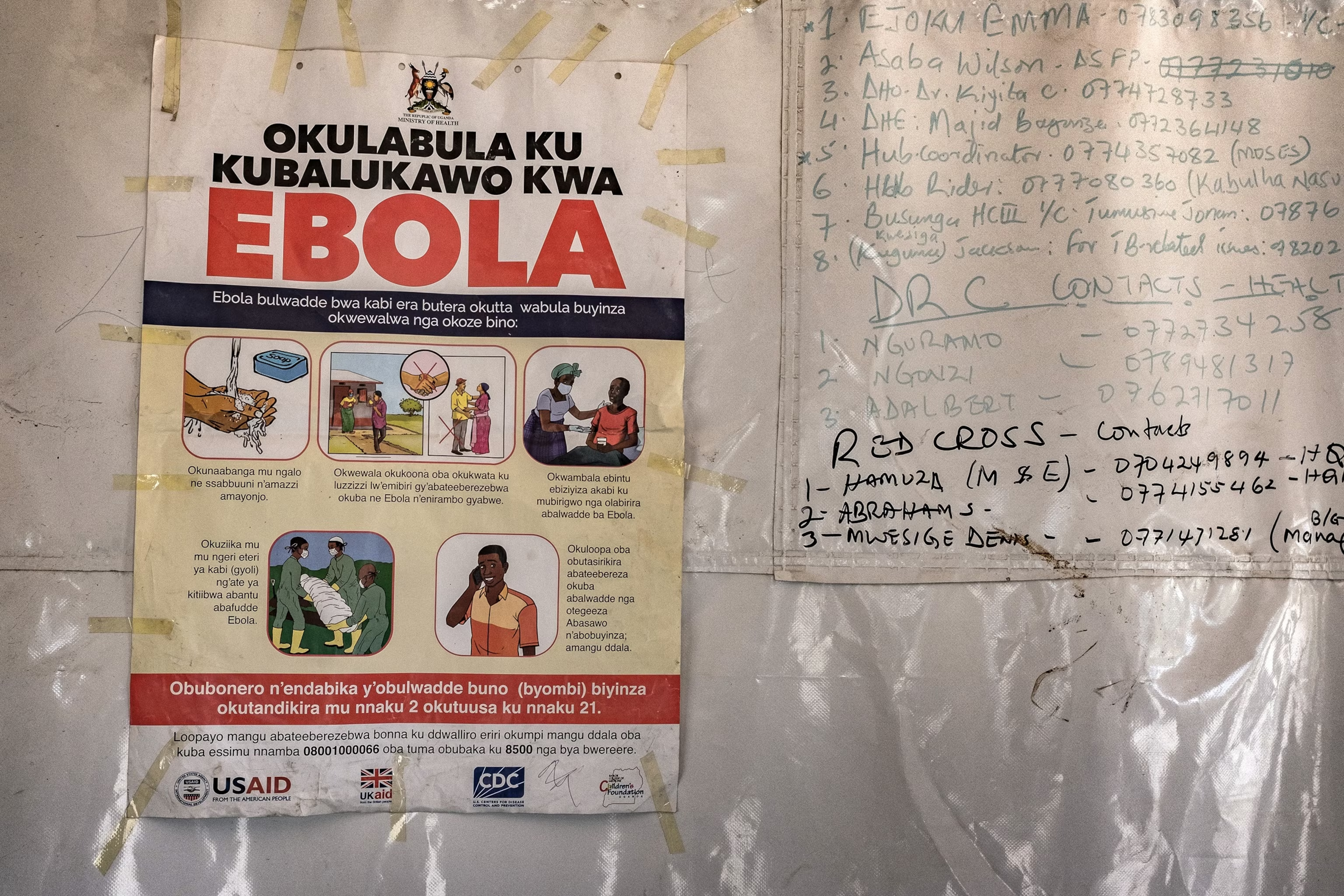
A poster displaying Ebola emergency contact numbers is pinned to a tent at the Busunga border crossing between Uganda and the Democratic Republic of Congo in Bundibugyo, May 18, 2026.Badru Katumba/AFP via Getty Images
"The crucial message here is that while we may perceive ourselves as finished with these infectious diseases, they have not relinquished their interest in us," he stated. "There exists a rationale behind the extended dedication many of us invest to prepare for future contingencies, irrespective of our lack of knowledge concerning their nature. It is simply imperative to maintain readiness."
Kennedy communicated to ABC News on Monday that his agency is actively addressing the recent outbreaks of hantavirus and Ebola.
"Affirmative, we are actively engaged in addressing it," Kennedy responded when probed about his level of concern regarding the outbreaks. Kennedy refrained from responding when questioned about his intended message to American citizens harboring anxieties about the potential dissemination of these diseases within the U.S.
On Sunday, the State Department disseminated "Level 4 — Do not travel" advisories pertaining to both Uganda and the DRC, prompted by the ongoing outbreak.
Secretary of State Marco Rubio characterized the Ebola outbreak as "worrisome" while addressing the press on Tuesday.
"Evidently, the CDC and the World Health Organization will assume the leading roles, with the latter exhibiting tardiness in the initial detection of this incident," he commented. "Access is challenging due to its presence in a rural region, thereby presenting a somewhat restricted and inaccessible location, compounded by the misfortune of occurring within a nation plagued by conflict. Nevertheless, we anticipate further announcements on this matter. We intend to allocate significant resources toward this endeavor."
Nuzzo conveyed her apprehension that the U.S. has not established a public health infrastructure that recognizes viral outbreaks as recurrent threats, citing instances such as COVID-19 where the U.S. was caught unprepared.
"We do not employ such an approach when confronted with other recurring hazards. For example, we refrain from attempting to construct FEMA amid an active hurricane," Nuzzo elucidated.
ABC News’ Shannon Kingston contributed to this report.
Sourse: abcnews.go.com