
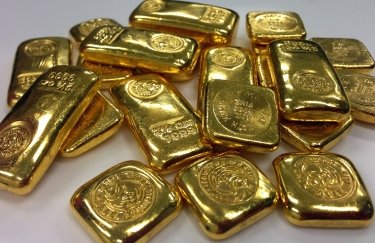
Lead turned to gold in an experiment. / Pixabay
Scientists at the European Organization for Nuclear Research (CERN) have for the first time been able to turn lead into gold using the Large Hadron Collider (LHC). This was made possible by the powerful energy conditions of the particle accelerator, recreating one of the main goals of medieval alchemy — if only for a split second.
This is reported by Engadget.
Scientific alchemy: lead turned into gold
One of the main goals of medieval alchemy has become a reality — albeit only for a moment. This achievement was made possible by the collision of subatomic particles at ultra-high speeds, which allowed the physical characteristics of lead atoms to be changed and temporarily transformed into gold.
The Large Hadron Collider is typically used to collide lead ions to create superdense, superhot matter, similar to that which arose immediately after the Big Bang. In one of its analyses, CERN scientists noticed that lead nuclei sometimes lose neutrons or protons during the collisions. Since a lead atom has only three more protons than a gold atom, under certain conditions it can lose enough particles to temporarily transform into gold. However, this state lasts only a moment, after which the atom decays.
While this transmutation is impressive, it has no practical application for gold mining. Experiments from 2015 to 2018 yielded just 29 picograms of gold , while more recent tests have yielded almost twice that amount. However, even that amount is not enough to make even a small piece of jewelry.
Therefore, the main goal of researchers is not to obtain gold, but to gain a deeper understanding of the physical processes underlying such transformations.
“It is impressive that our detectors can handle head-on collisions, creating thousands of particles, while being sensitive to collisions where only a few particles are formed at a time, allowing us to study the electromagnetic processes of 'nuclear transmutation,'” said Marco Van Leeuwen, spokesman for the Large Ion Collider Experiment project at the HAC.
Recall, on May 12, gold prices fell by 3% to $3,224.34 after the US and China announced that they had agreed to reduce mutual tariffs.