
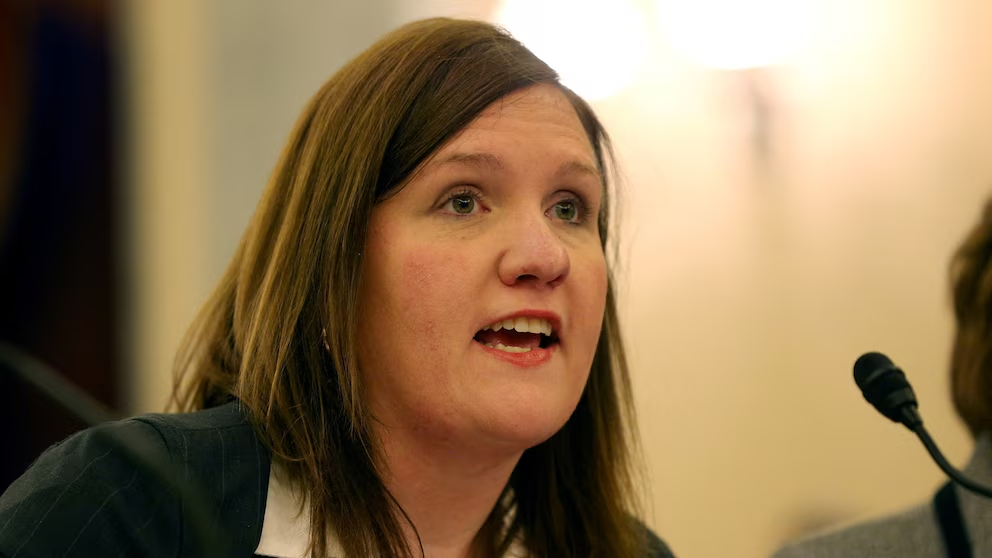
Federal Trade Commissioner Rebecca Slaughter testifies on the “Oversight of the Federal Trade Commission” before the U.S. Senate Consumer Protection, Product Safety, Insurance and Data Security Subcommittee in Washington, Nov. 27, 2018. Leah Millis/Reuters
In a pivotal ruling that may reshape the federal government, the Supreme Court has decided to permit President Donald Trump to dismiss a Democratic member of the Federal Trade Commission, Rebecca Slaughter, based on policy considerations, overturning 90 years of legal precedent that had prohibited the termination of independent agency officials at will and substantially amplifying presidential authority.
The 6-3 judgment was delivered by Chief Justice John Roberts.
Writing for the majority, Roberts asserted that congressional mandates for “for cause” removal protections at more than two dozen independent, bipartisan government bodies constitute an infringement upon the separation of powers.
“What textual evidence, historical practice, and structural principles establish, our prior decisions confirm — the President possesses the authority to dismiss his subordinates at his discretion,” Roberts stated.
This verdict grants Trump and subsequent presidents enhanced oversight over governmental operations and effectively dissolves the bipartisan, impartial character of regulatory bodies that govern numerous facets of American existence.
President Trump, in a statement released on his social media platform, characterized the Supreme Court’s decision as a “MAJOR VICTORY” and “one of the most significant rulings ever concerning Presidential Authority.”
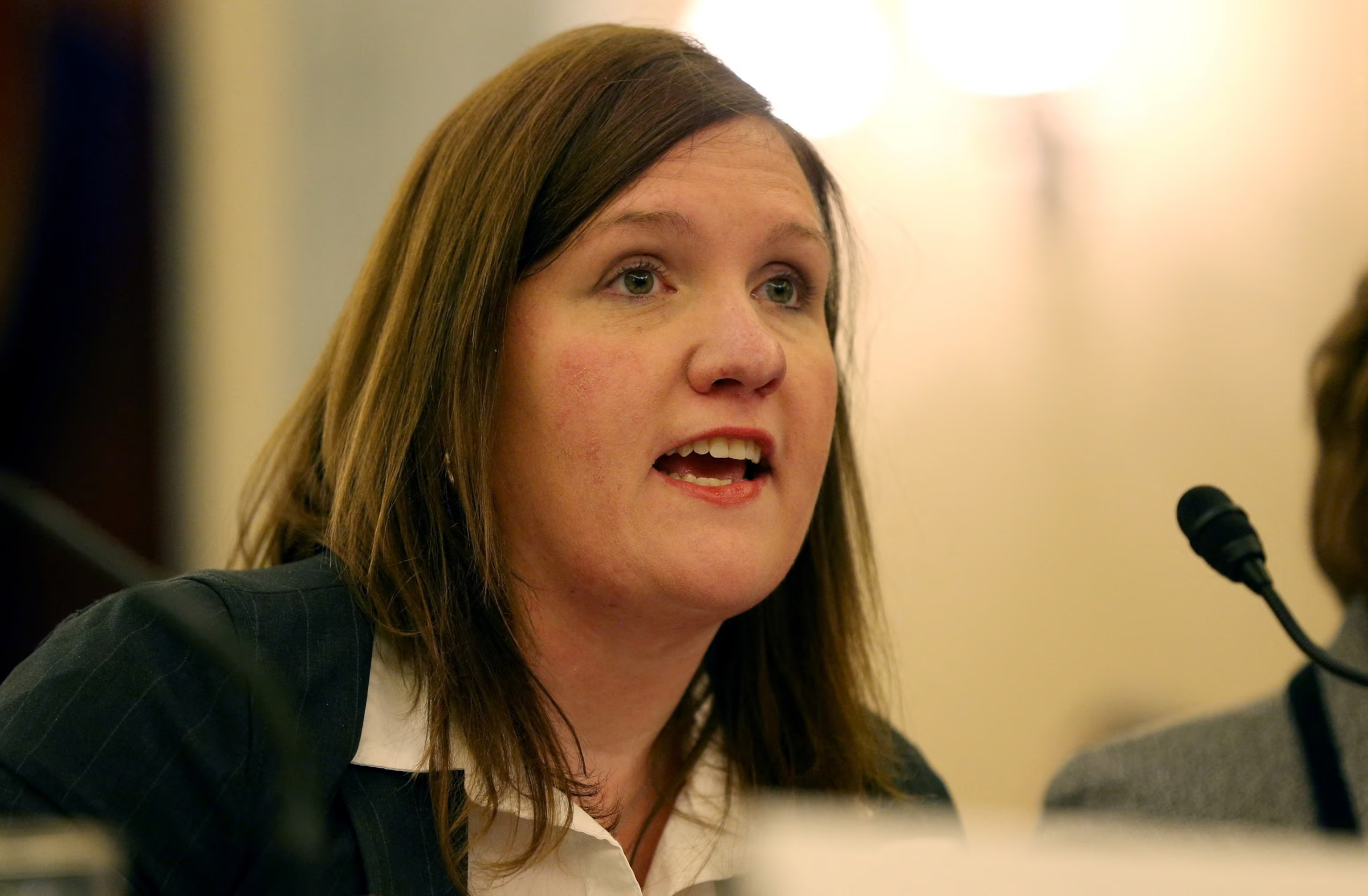
Federal Trade Commissioner Rebecca Slaughter testifies on the “Oversight of the Federal Trade Commission” before the U.S. Senate Consumer Protection, Product Safety, Insurance and Data Security Subcommittee in Washington, Nov. 27, 2018.Leah Millis/Reuters
In her dissenting opinion, Justice Sonia Sotomayor, joined by Justices Elena Kagan and Ketanji Brown Jackson, contended that her colleagues were endorsing a doctrine of “complete executive dominion” that the nation’s founders never envisioned.
“The outcome is a President who wields substantially more power than previously recognized,” Sotomayor wrote. “This is a power, however, that neither the citizenry, nor Congress, nor the Constitution vested in him. By granting the President this unrestricted authority, the Court disregards its own precedent, misinterprets our history, and abandons any pretense of judicial restraint. I respectfully disagree.”
Since the era of the New Deal, independent agencies — historically staffed by experts in various fields from across the political spectrum — have been responsible for overseeing stock transactions, transportation networks, electoral campaigns, consumer product safety, and broadcast licenses.
Empowering the president with more direct influence over the composition of these bodies has long been an objective for conservatives, who have expressed concerns about unelected officials exercising excessive authority with limited accountability.
The ruling represents a setback for progressives who have consistently advocated for the role of agencies such as the FTC, Federal Election Commission, Securities and Exchange Commission, Federal Communications Commission, and numerous others to remain insulated from political pressures to ensure regulatory stability.
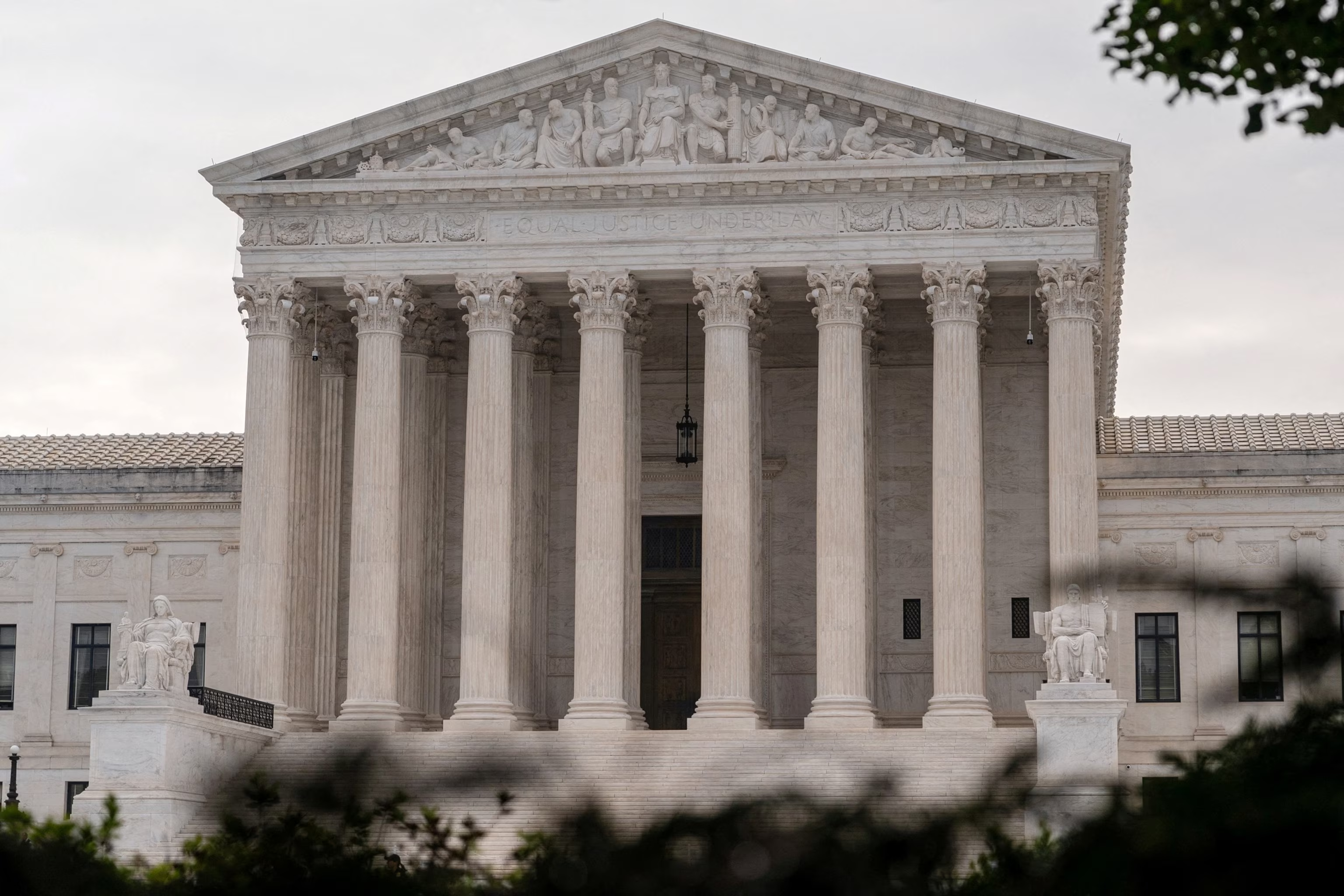
The U.S. Supreme Court, June 29, 2026.Cheney Orr/Reuters
The court’s determination does not abolish the agencies themselves but will enable them to be staffed exclusively by members of one party, be it Republicans or Democrats, should a president choose to do so, thereby granting the White House greater direct control over their operations.
The conservative majority effectively overturned a unanimous 1935 Supreme Court decision concerning the FTC — Humphrey’s Executor v. U.S. — which had previously upheld limitations on a president’s capacity to dismiss commission members solely for justifiable reasons.
“Humphrey’s Executor is merely an empty shell of its former meaning,” Chief Justice John Roberts stated unequivocally during oral arguments in December.
Sourse: abcnews.go.com