
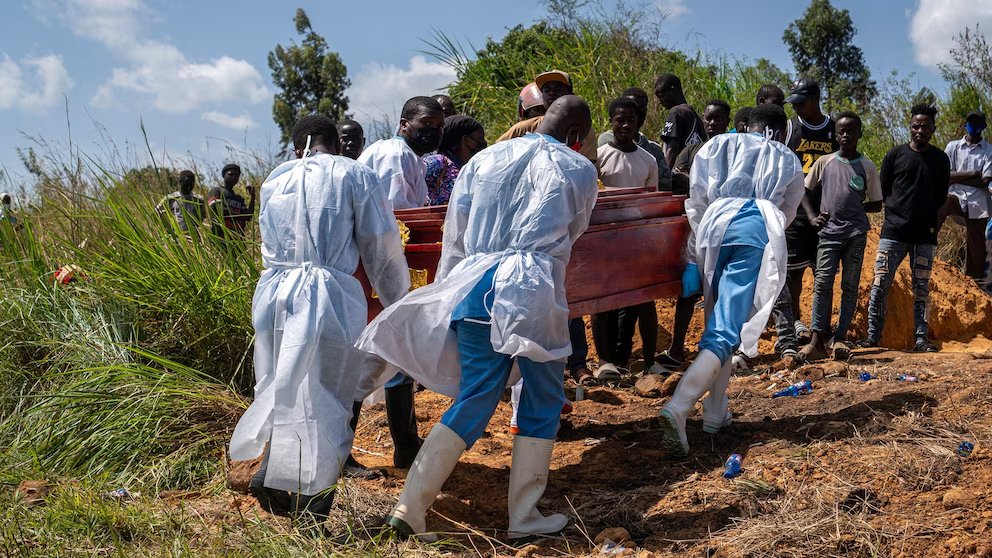
Health workers carry the coffin at the cemetery for the burial of a person suspected of having died from Ebola in Bunia, in the eastern Democratic Republic of the Congo, on May 25, 2026.Glody Murhabazi/AFP via Getty Images
LONDON — The International Rescue Committee (IRC), a relief organization headquartered in New York, issued a warning on Tuesday regarding the ongoing Ebola emergence in the Democratic Republic of the Congo (DRC) and adjacent Uganda, indicating that it is now expanding at a quicker pace than response measures can handle, potentially evolving into "the deadliest on record" unless prompt international intervention occurs.
Of particular concern, according to the IRC, is the fact that the emergence is no longer confined to isolated locations within the DRC's northeastern province of Ituri, which serves as the current epicenter.
The IRC cautioned that cases and contacts are presently extending into broader regional hubs, notably the significant city of Goma situated in the DRC's eastern province of North Kivu, along with Uganda's capital, Kampala, leading to worries about a significantly wider propagation.
"The emergence is outpacing the response, with reports of over 900 suspected cases and a minimum of 223 fatalities already documented across DRC and Uganda, encompassing vital transportation centers such as Goma and Kampala," the IRC stated.
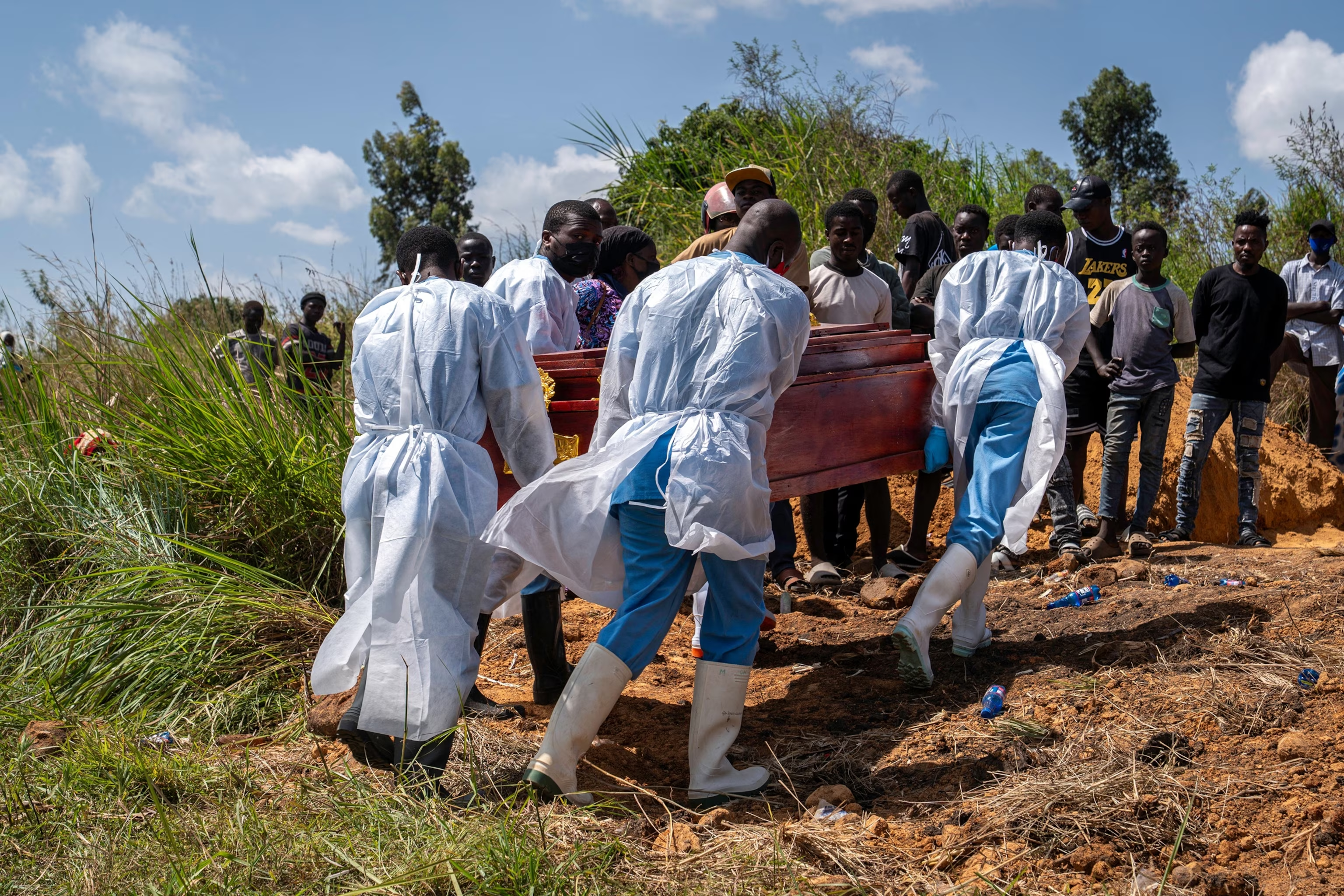
Health workers carry the coffin at the cemetery for the burial of a person suspected of having died from Ebola in Bunia, in the eastern Democratic Republic of the Congo, on May 25, 2026.Glody Murhabazi/AFP via Getty Images
The IRC asserted that conflict, widespread displacement, and substantial reductions in international aid have weakened health infrastructures significantly more than during the extensive 2018-2020 Ebola episode in the eastern DRC, which, as reported by the World Health Organization, led to at least 2,299 deaths.
The previous occasion the IRC disseminated a warning of this magnitude regarding Ebola was during the 2018-2020 outbreak, during which the organization consistently cautioned that violence, skepticism, and compromised healthcare systems could permit the virus to escalate into a regional catastrophe.
The IRC is advocating for an urgent surge in international funding, the assignment of an emergency coordinator from the United Nations, expedited authorization for importing medical provisions and equipment, enhanced community outreach to restore confidence, specialized protection for women and girls – who are reportedly about two-thirds of the suspected cases – and enduring investment in susceptible healthcare systems already affected by conflict and instability.
The ongoing Ebola emergence is triggered by the Bundibugyo virus, a scarce Ebola variant lacking sanctioned vaccines or therapeutics and necessitating distinct diagnostics in comparison to other variants. WHO data indicates that historical Bundibugyo outbreaks have exhibited case fatality rates spanning from 30% to 50%.
The Centers for Disease Control and Prevention conveyed that the deadliest Ebola outbreak ever recorded transpired between 2014 and 2016 in West Africa, involving over 28,600 reported cases. As stated by the WHO, that outbreak resulted in a minimum of 11,325 fatalities by June 2016.
During a Monday briefing, WHO chief Dr. Tedros Adhanom Ghebreyesus expressed that the current Ebola emergence "will deteriorate before it improves."
"We are contending with an exceptionally severe and challenging emergence. It is poised to worsen prior to any improvement," Tedros communicated on Monday. "Nonetheless, our familiarity with this virus and the methods to control it are well-established. Our track record includes successfully suppressing every preceding Ebola outbreak, and we are poised to achieve the same outcome in this instance."
Ghebreyesus communicated his desire to echo remarks voiced by South African President Cyril Ramaphosa concerning surmounting the emergence through collaboration.
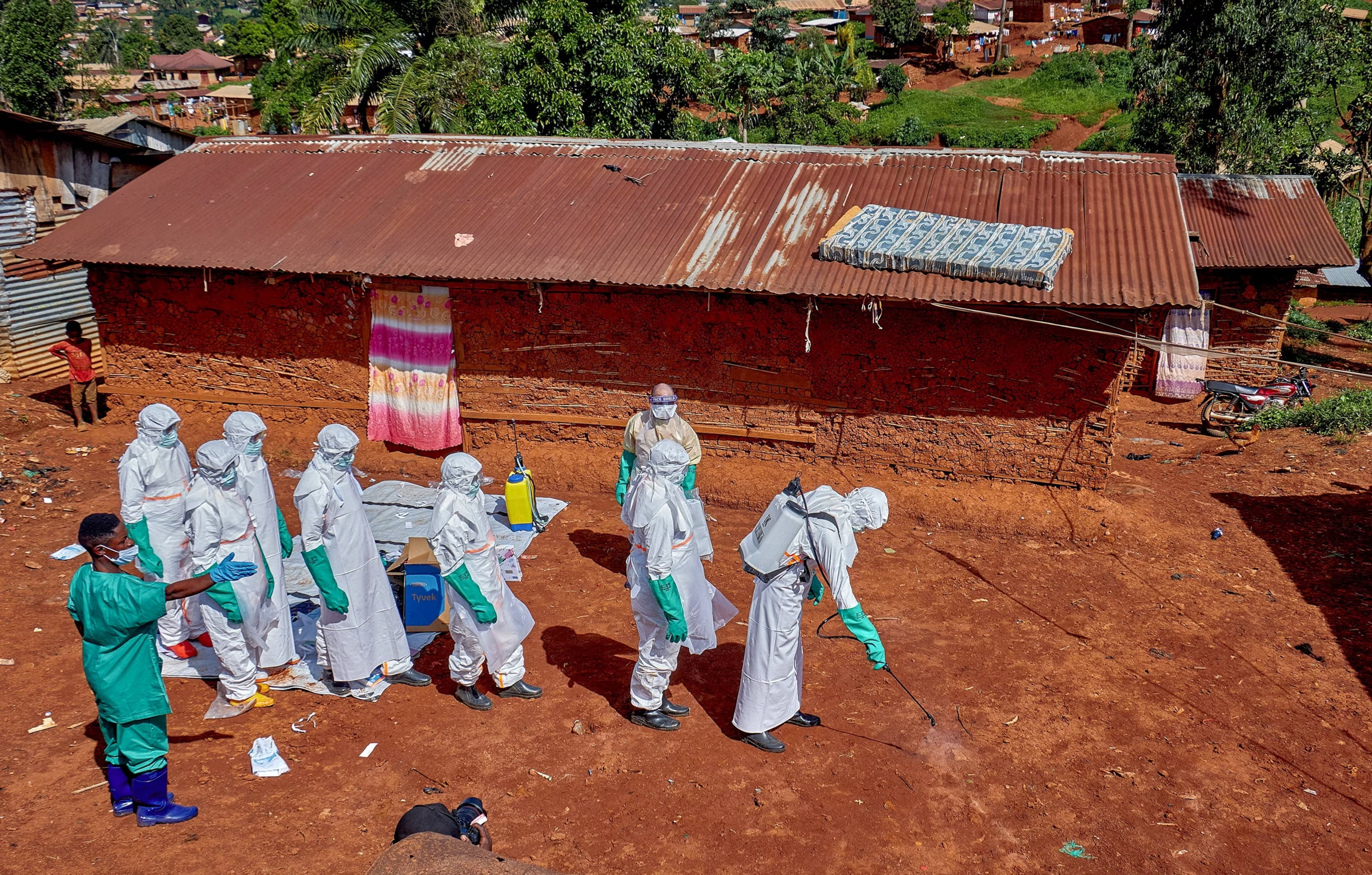
Red Cross workers wearing personal protective equipment walk in a formation as they disinfect the ground outside the house of an unidentified man who died of Ebola in Mongbwalu, Democratic Republic of Congo, May 24, 2026.Gradel Muyisa Mumbere/Reuters
"The pivotal question revolves around our pace of execution and the tally of lives tragically lost before our accomplishment," Ghebreyesus appended.
The preceding week, Tedros officially designated the Ebola emergence as a public health emergency of international concern – situated one tier below a pandemic within the United Nations agency's alert mechanism.
The WHO sustains its "very high" appraisal of the national risk landscape, while the regional level risk remains classified as "high," and the global risk level retains a "low" classification, according to Ghebreyesus on Monday.
The emergence has prompted several nations, including the U.S., India, the U.K., and Australia, to enforce travel limitations.
Entry into the U.S. is under restriction for international travelers with a recent history of presence in the DRC, Uganda, and South Sudan.
Concurrently, U.S. passport bearers and U.S. nationals returning to the U.S. from the aforementioned three nations will be routed through Dulles Airport in Virginia for screening of symptoms and assessment of potential exposure.
Augmented screening protocols also commenced at Hartsfield-Jackson Atlanta International Airport as of Saturday morning. The initiation of efforts at George Bush Intercontinental Airport in Houston is scheduled for late Tuesday.
Lawful permanent inhabitants – green card holders – with a past presence in any of the three designated nations within the preceding 21 days are temporarily prohibited from entering the U.S.
ABC News' Eric M. Strauss and Mary Kekatos played a role in this report.
Sourse: abcnews.go.com