
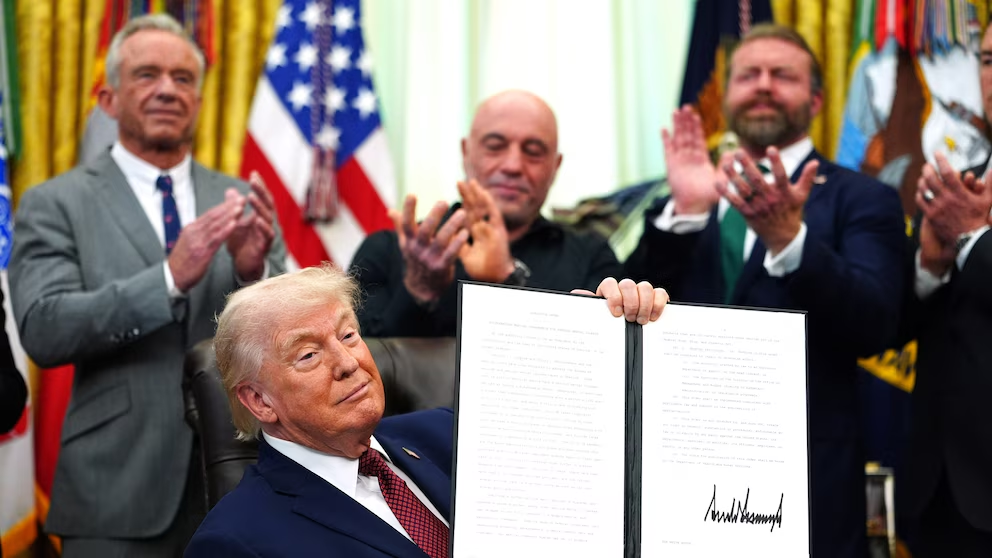
President Donald Trump displays a signed executive order inside the Oval Office, situated in the White House, on April 18, 2026, in Washington, D.C.Julia Demaree Nikhinson/AP
President Donald Trump put his signature on an executive order Saturday with the intention of speeding up both the research and the regulatory clearance of psychedelic-centered treatments, notably medications such as ibogaine, to address ailments like PTSD, depression, and addiction.
Trump was accompanied by Secretary of Health and Human Services Robert F. Kennedy, Jr., Administrator of the Centers for Medicare & Medicaid Services Dr. Mehmet Oz, Commissioner of the Food and Drug Administration Marty Makary, and the podcaster Joe Rogan within the Oval Office as the announcement was made.
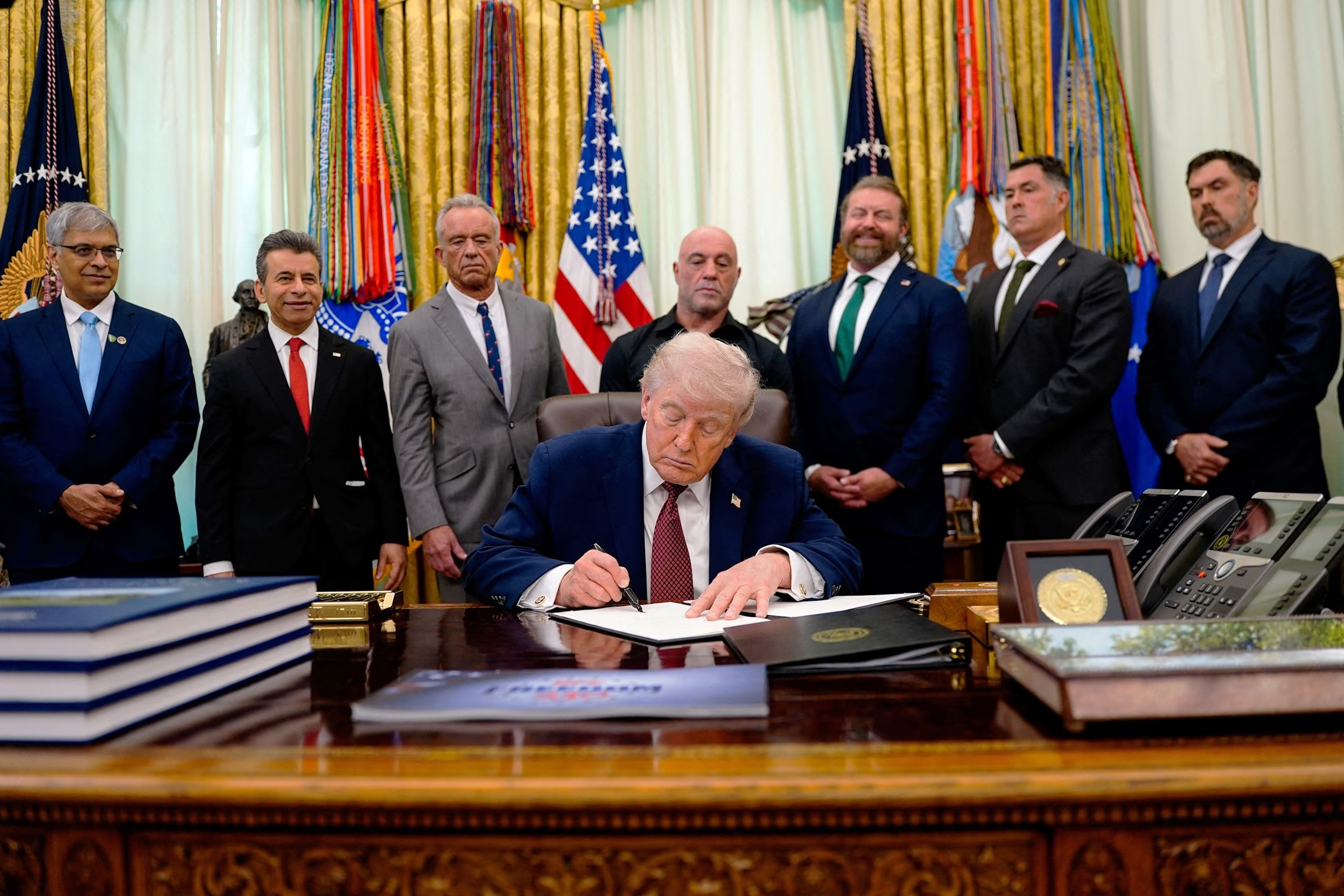
President Donald Trump formalizes an executive order relating to the loosening of limitations on mental health interventions, incorporating ibogaine, within the Oval Office of the White House, situated in Washington, D.C., April 18, 2026.Nathan Howard/Reuters
The President conveyed that the executive order aimed to aid veterans grappling with acute mental health challenges, furnishing them with fresh avenues for care.
"In numerous instances, these trial treatments have demonstrated the capacity to revolutionize the lives of those combating critical mental afflictions and despondency, notably our esteemed veterans, who are encountering exceedingly difficult circumstances," Trump expressed.
The Chief Executive communicated that Rogan had personally advocated to him concerning this matter.
"I received outreach from several individuals, including the distinguished Joe Rogan, who articulated the urgency of addressing this issue. Subsequently, I delved into it," Trump recounted.
"I consulted with Bobby and Oz, in addition to engaging with members of your staff, individuals possessing genuine expertise. The collective consensus converged upon an identical conclusion," the President elaborated.
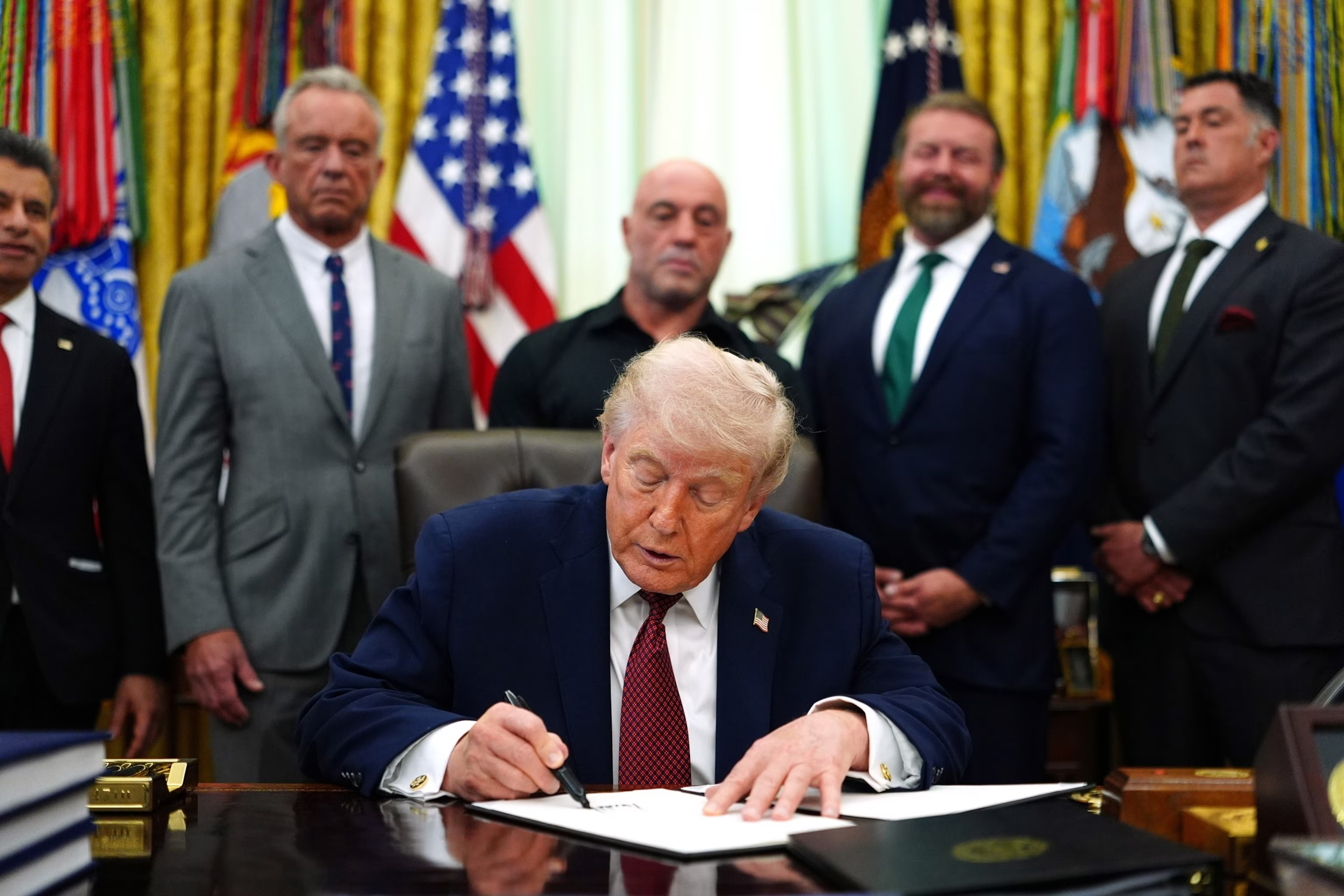
President Donald Trump executes an executive order inside the Oval Office of the White House, on April 18, 2026, in Washington, D.C.Julia Demaree Nikhinson/AP
Ibogaine is currently categorized as a schedule 1 controlled substance, a designation that implies it is not presently endorsed for therapeutic utilization. The U.S. Drug Enforcement Agency recognizes it as having a high propensity for misuse.
Ibogaine, a plant-derived psychoactive element, possesses constrained investigational data regarding its effects on depression, PTSD, anxiety, and traumatic brain injuries, with a preponderance of the supporting information originating from examinations conducted on animals and circumscribed, preliminary investigations involving human subjects, which are characterized by considerable shortcomings. While animal studies represent a critical facet of the research endeavor, their results frequently lack direct applicability to human contexts.
Available evidence intimates that ibogaine presents noteworthy safety detriments, most conspicuously a perilous cardiac dysrhythmia recognized as arrhythmia, capable of producing fatal outcomes, accompanied by neurological and digestive repercussions.
Psilocybin, the operative component contained within so-called magic mushrooms, possesses the most robust evidence base in relation to depression to date and has secured Breakthrough Therapy classification from the FDA for instances exhibiting resistance to conventional therapeutic modalities.
It has undergone decriminalization within a select few states, notwithstanding its retention of a class 1 controlled substance designation at the federal echelon.
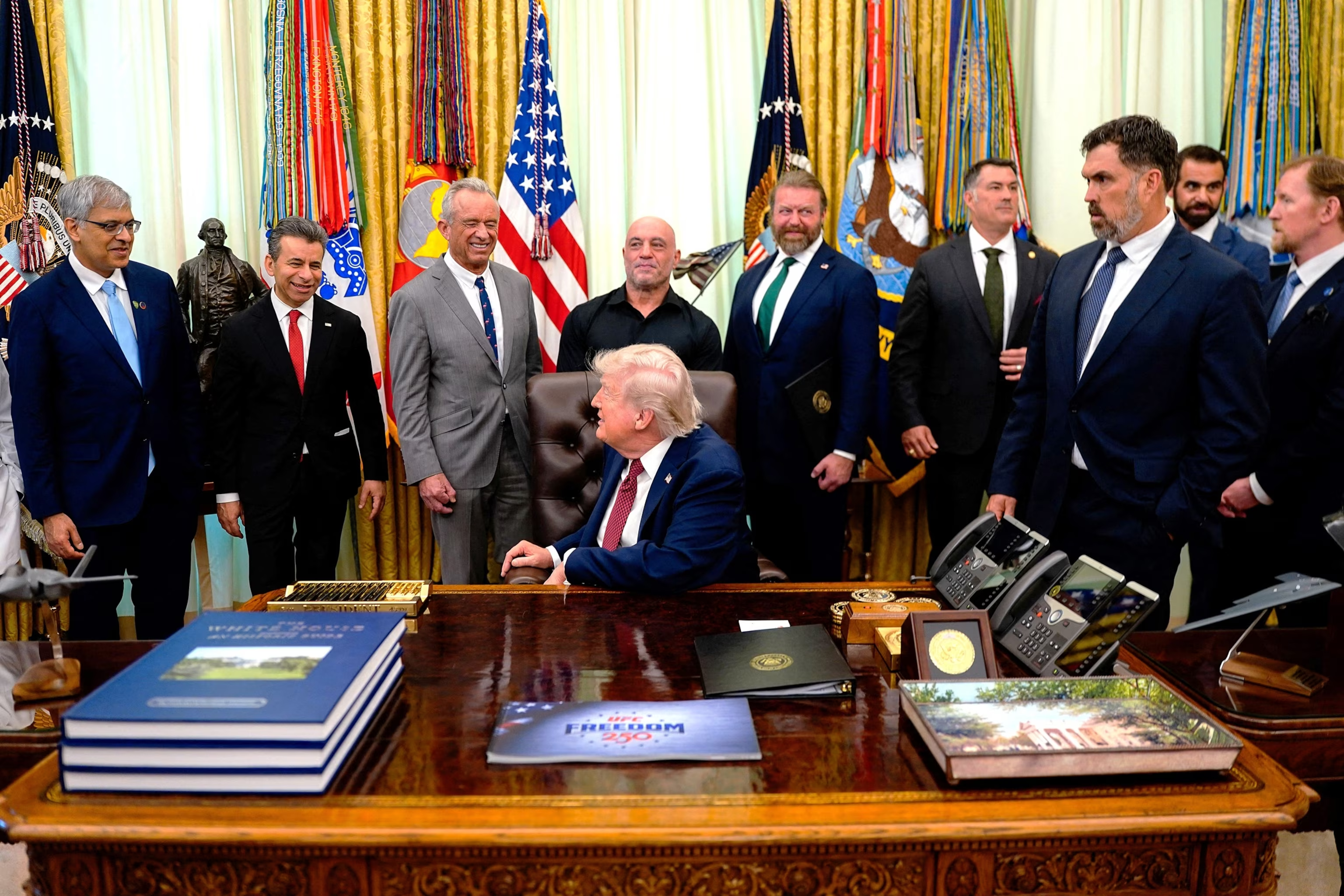
President Donald Trump is seated as he signs an executive order regarding the relaxation of constraints on mental health treatments, encompassing ibogaine, as National Institutes of Health (NIH) Director Jay Bhattacharya, Food and Drugs Administration (FDA) head Marty Makary, U.S. Health and Human Services Secretary Robert F. Kennedy Jr., podcaster Joe Rogan, Americans for Ibogaine CEO W. Bryan Hubbard, Rep. Morgan Luttrell and his brother Marcus Luttrell, a retired U.S. Navy SEAL, are standing in the Oval Office of the White House in Washington, D.C., April 18, 2026.Nathan Howard/Reuters
Within a recent Nature Medicine review encompassing 12 studies that assessed the impact of psilocybin, when integrated with psychotherapy or psychological support, each study indicated that psilocybin markedly diminished depression symptoms, demonstrating a swift and consistent influence across numerous weeks when contrasted against control conditions.
Transcending mere symptom alleviation, patients administered psilocybin exhibited a substantially elevated probability of attaining substantive clinical enhancement — with response rates registering nearly three times greater, and remission rates approximately four times surpassing those observed within the control cohorts.
MDMA has exhibited encouraging outcomes for PTSD, yet it did not secure FDA endorsement during 2024, notwithstanding the attainment of a parallel Breakthrough designation, attributed to apprehensions pertaining to the methodology employed in the clinical trials, discrepant findings, safety considerations, and a mandate for supplementary inquiry before its subsequent reassessment, as previously documented by ABC news.
It also holds the classification of a class 1 controlled substance.
These therapeutic modalities continue to necessitate vigilant monitoring within controlled environments, administered by medical professionals. Researchers possess confined data concerning the potential for protracted adverse effects or the achievement of enduring success.
Even in the presence of initial indicators of prospective efficacy utilizing these treatments, substantial safety anxieties persist, alongside uncertainty surrounding the degree to which the advantageous impacts would maintain their relevance within realistic settings. Contemporary investigations and research concentrate on the most pronounced manifestations of these mental health disorders that demonstrate resistance to prevailing treatments.
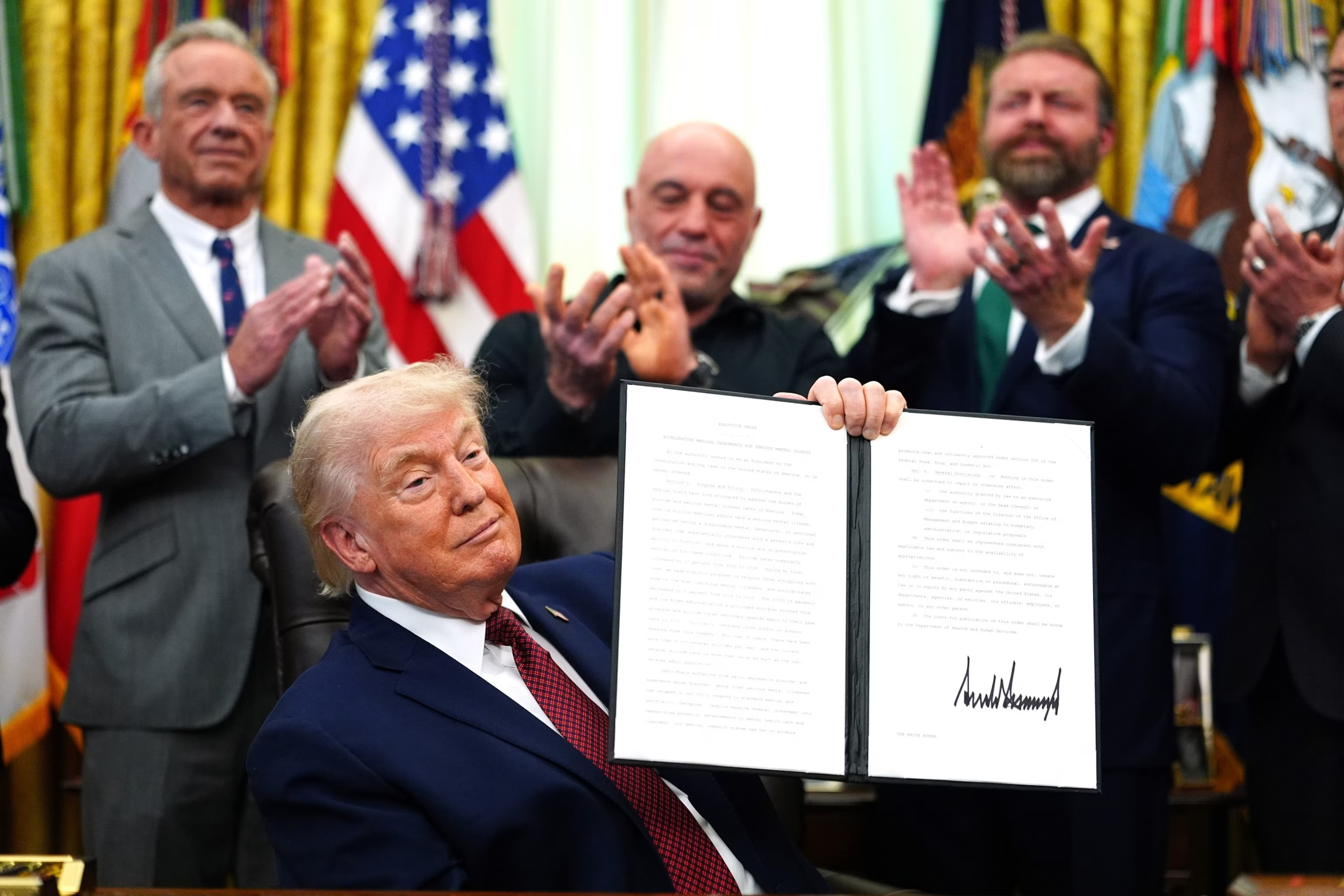
President Donald Trump presents a finalized executive order within the confines of the Oval Office, situated at the White House, on April 18, 2026, in Washington, D.C.Julia Demaree Nikhinson/AP
The President acknowledged the ongoing U.S. research into these substances and asserted that the decree would eliminate "unnecessary bureaucratic obstacles."
Trump articulated that the order facilitates accelerated rescheduling protocols for psychedelics subsequently receiving FDA approval for therapeutic applications.
"It instructs the FDA to expedite their evaluation of select psychedelics already recognized as breakthrough therapy drugs. They are undergoing substantial deliberation. It's among the most prominent topics. I believe you are alluding to Oz, is that correct?" Trump inquired.
"Should these prove as efficacious as predictions suggest, their implications for this nation, and potentially other nations as well, will be profound," he appended.
Kennedy has expressed reservations regarding the employment of antidepressants and other established therapeutic modalities employed in the treatment of these mental health conditions.
Sourse: abcnews.go.com