
According to data from the Centers for Disease Control and Prevention (CDC), the frequency of emergency room visits resulting from tick bites is at its peak since at least 2017.
In the most recent week, 71 out of every 100,000 emergency room visits were attributed to tick bites, which is more than double the usual average of approximately 30 per 100,000 emergency room visits for this period.
The CDC data reveals that, currently, the Northeast is reporting the highest number of emergency room visits for tick bites, with the Midwest, Southeast, West, and South Central regions following in that order.
Dr. John J. Halperin, chairman of the New Jersey Stroke Care Advisory Panel and a member of the neuroscience department at Atlantic Health Overlook Medical Center in New Jersey, who concentrates in part on Lyme disease, told ABC News, "We're performing considerably above the historical average and significantly higher than last year as well."
He continued, "The ticks have emerged slightly earlier this year. There seems to be a considerable quantity of them. Numerous individuals are seeking care in the emergency room. It's not entirely apparent if this is due to enhanced awareness and more people visiting the emergency room as a result of greater knowledge. However, there appears to be a definite rise in the quantity of ticks present."
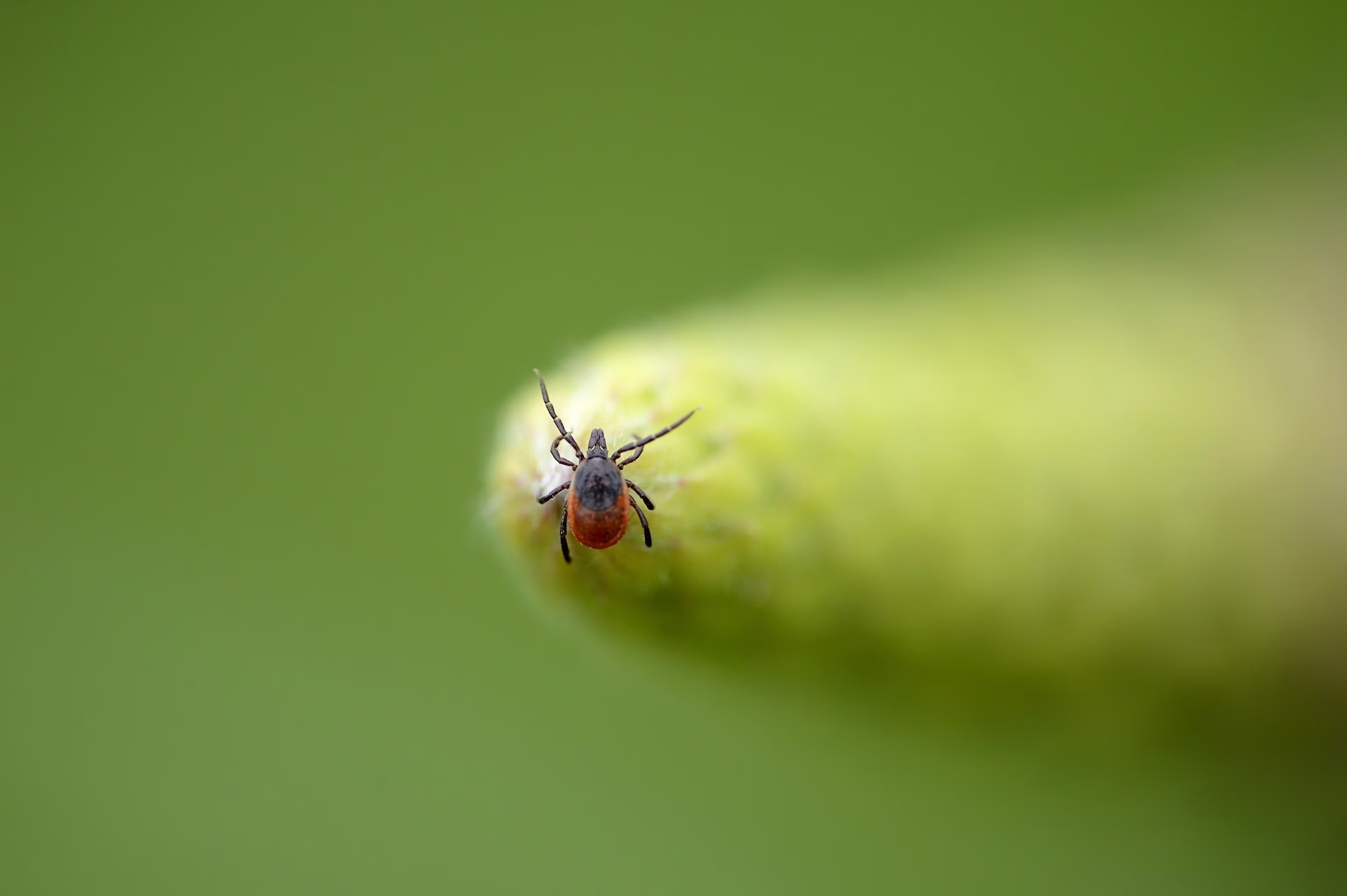
Stock photo of a tick.Imagebroker/david & Micha Sheldo/STOCK PHOTO/Getty Images
Emergency room visits for tick bites typically peak in May each year, and it is still uncertain whether the increasing trend will persist.
Halperin indicated that it is plausible the monthly average for April will stabilize and align with previous years.
He stated, "Spring and the start of summer are key times for being bitten by the locally youngest ticks, which are generally those affecting humans. Therefore, observing a significant number of them certainly indicates a heightened threat."
In recent years, tick-related diseases have been increasing, and scientists believe this is partially related to climate change, which has produced shorter winters, earlier springs, and hotter summers.
Dr. Christopher Bazzoli, an emergency medicine physician at Cleveland Clinic, stated that the combination of increased tick populations, warmer weather, and substantial rainfall likely contributes to the earlier growth of certain tick populations in the season.
He informed ABC News, "Ticks tend to activate when temperatures reach 45 degrees [Fahrenheit] or higher. If [temperatures] remain elevated into the fall, we might also observe an extended tick season."
Halperin mentioned that alongside climate change, there has been an increase in the awareness of specific tick-related diseases.
He stated, "One major modification … was the CDC altering the requirements for what qualifies as a confirmed case of Lyme disease, significantly easing the standards. This resulted in a substantial increase in the reported numbers."
The CDC advises individuals to steer clear of wooded and brushy locations with tall grass and fallen leaves and to remain on the trails’ center when hiking. The agency also suggests utilizing insect repellents registered with the Environmental Protection Agency that contain at least 20% DEET, 20% picaridin as the listed active component, or other authorized substances, but to refrain from using them on children under 3 years old.
Halperin stated, "It is important to understand that these ticks have a strong habitat preference. They spend a significant portion of their lives in low brush. Their preferred reservoir host is the field mouse. Field mice carry Lyme disease, and when a tick attaches to a field mouse, it acquires the infection and can transmit it to us. The primary action you can take is to avoid areas where field mice and ticks may be present."
The CDC also advises treating outdoor clothing and gear with 0.5% permethrin, an insecticide and repellent, which remains effective even after being washed multiple times.
Halperin suggests conducting a tick check at the close of the day. If you identify one, he suggests employing fine-tip tweezers, inserting them between the skin and the tick, and pulling to detach the tick.
Bazzoli advised cleaning the affected area and capturing an image of the tick to identify it and determine the potential type of disease it might be carrying.
Sourse: abcnews.go.com