
Every evening, after another day tracking Ebola through Bunia and the surrounding hamlets in the eastern Democratic Republic of the Congo, Dr. Patrick Katabuka pauses at his doorstep and voices the query no physician should have to pose: Should he enter his home to be with his children?
“It would be preferable for us to remain outside our residences,” he stated softly.
Katabuka, 45, is a proud father of five young offspring: sons aged 10, 8, and 4, and daughters aged 5 and 2.
He does not tend to patients within the isolation units. Rather, he navigates arduous routes from one community to another, converses with apprehensive families, collects specimens, and arranges transportation to medical facilities. He is frequently among the initial individuals to encounter the virus.
He has been performing these duties for 13 years and has weathered prior epidemics. However, this current situation feels distinct, Katabuka remarked.
A portion of the difficulty lies simply in possessing the necessary infrastructure for a response. Despite the escalating epidemic, Katabuka indicated that only one Ebola treatment center in the affected region is currently functioning at the benchmark required to deliver optimal care. Other establishments exist, but are still undergoing completion or enhancements.
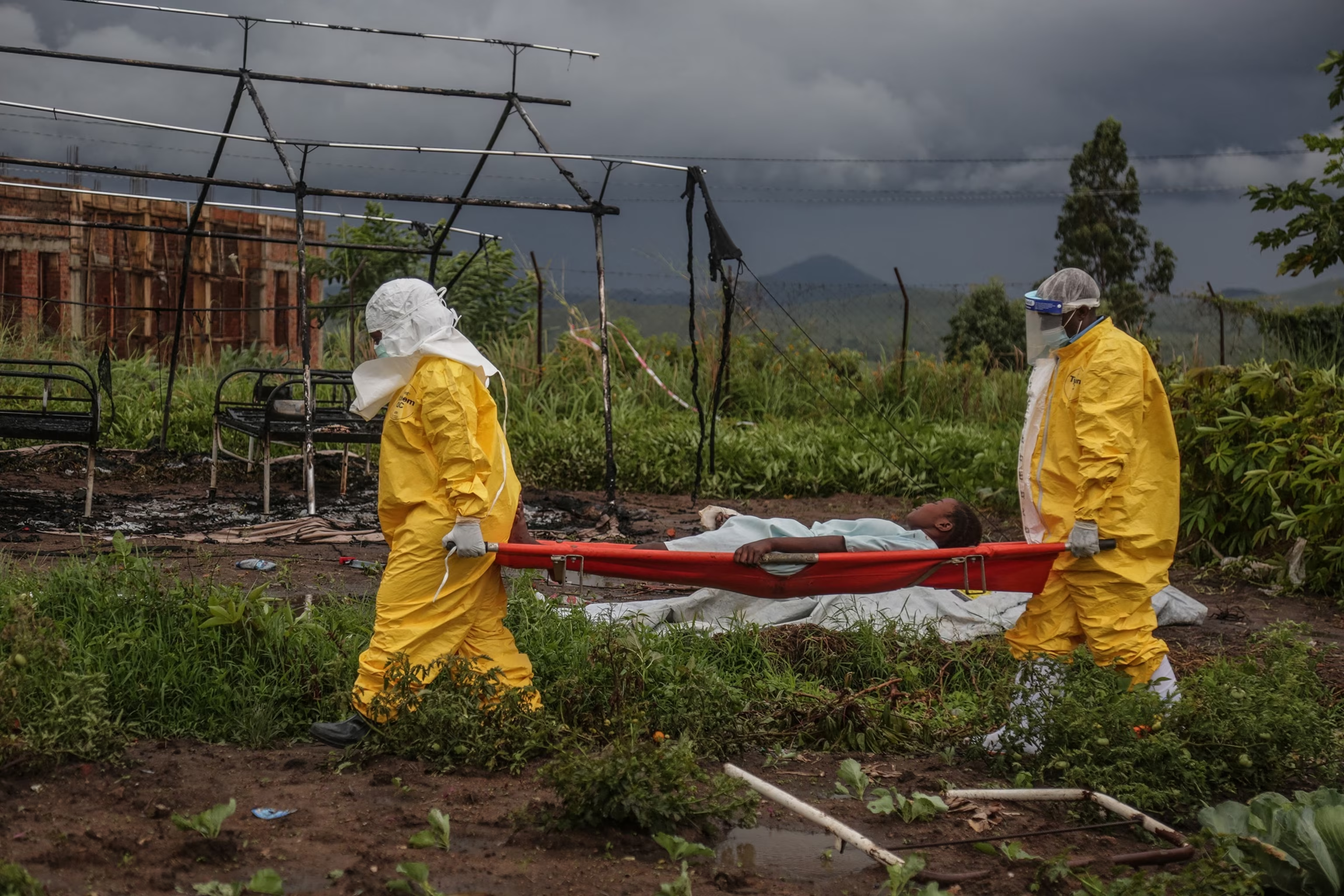
Medical staff wearing personal protective equipment (PPE) carry a patient on a stretcher at the hospital in Rwampara on May 21, 2026.Seros Muyisa/AFP via Getty Images
Some of the most significant hurdles are situated beyond the hospital premises. Portions of the Ituri province, in the eastern DRC, continue to be affected by unrest, rendering it challenging—and in certain instances, impossible—for healthcare professionals to reach populations where new transmissions may be arising.
“There are locations where an effective intervention is unfeasible because healthcare providers lack access,” Katabuka stated. In those territories, potential cases might remain unspotted, associated individuals may not be located, and patients might never arrive at care facilities.
Protective attire is frequently in scarce supply. When accessible, the cumbersome outfits become intolerable beneath the equatorial sun.
“One cannot endure it for two hours,” Katabuka commented. “You perspire profusely. You deplete your body’s fluids significantly.”
Laboratory outcomes can take over three days to process. Yet, the most profound afflictions are not logistical in nature.
Within the treatment centers, individuals suspected of having the illness—many of them youngsters and mothers—remain separated from their relatives while awaiting diagnostic results. Some have already witnessed the demise of others. They press against the enclosures, yearning for a familiar countenance.
“They require contact with their kin,” Katabuka conveyed. “That presents a substantial issue.”
Fear compounds the situation. Certain communities still do not recognize the malady and conceal those who are ill. Reductions in international financial aid, including from the United States, have rendered the healthcare system more attenuated and vulnerable.
Katabuka mentioned that the prevailing epidemic differs from the Ebola outbreak in 2018. At that time, medical personnel frequently resided and operated within designated encampments.
“We worked there, we dined there, all necessities were provided,” he reminisced.
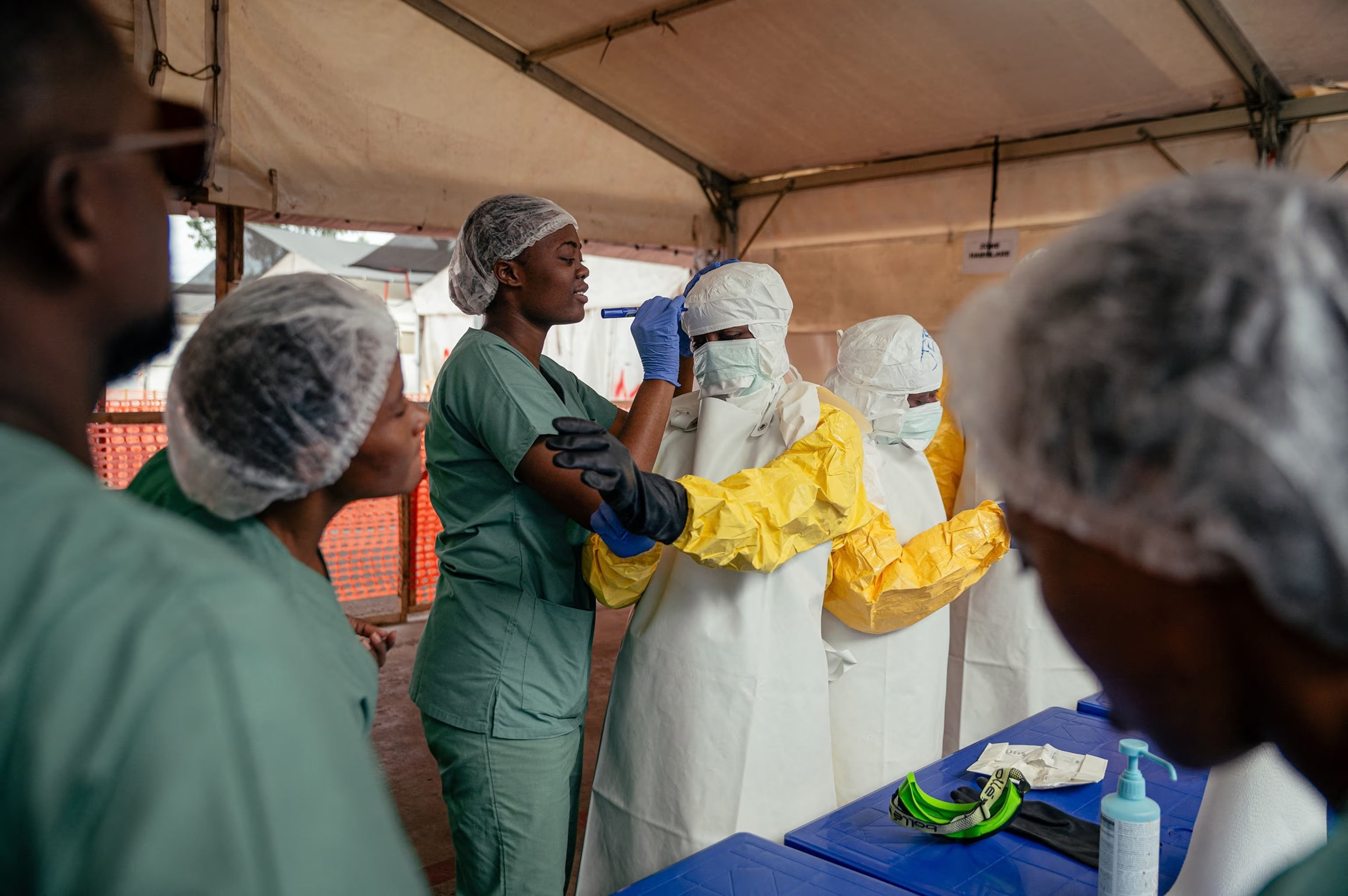
Healthcare workers put on personal protective equipment (PPE) in the dressing area under the supervision of specialists before going to examine patients in the isolation ward during their shift at the Ebola Treatment Center (ETC) following its rehabilitation by Doctors Without Borders (MSF) in Munigi on June 2, 2026.Jospin Mwisha/AFP via Getty Images
Today, the arrangements are different. At the conclusion of each day, he returns to his spouse and five young children, bringing with him the occupational hazards and apprehensions.
He contemplates the sweat-drenched attire he donned that day, the families he stood in proximity to, and the youngsters he assessed for pyrexia. Then, he gazes at his own doorway.
Should he risk the embrace or maintain his distance—just in case?
Sourse: abcnews.go.com