
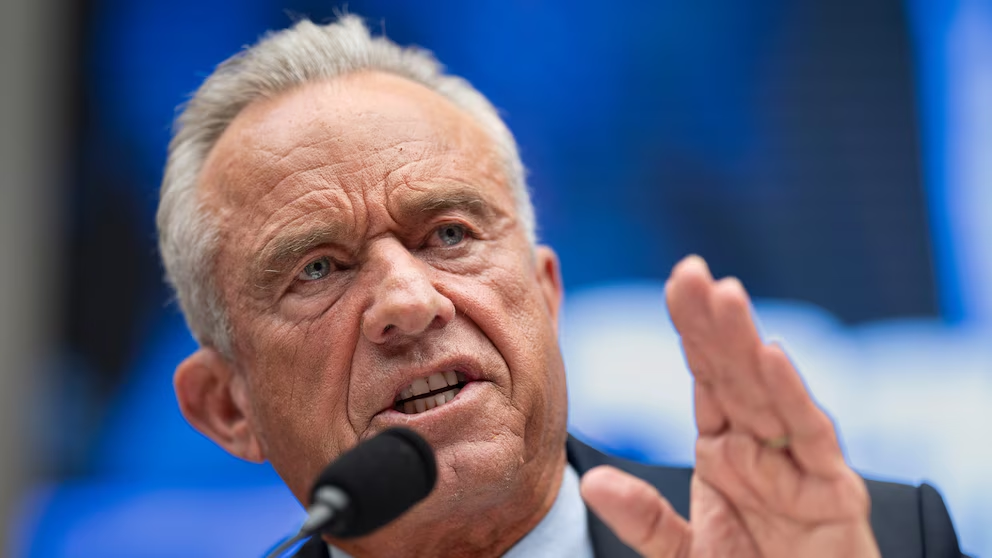
The Secretary of Health and Human Services, Robert F. Kennedy Jr., testified before the House Education and Workforce Committee to defend the strategies and aims of his department at the Capitol Building in Washington, on April 17, 2026. J. Scott Applewhite/AP
Robert F. Kennedy Jr., Secretary of Health and Human Services, underwent another challenging hearing on Capitol Hill, centering on his judgments that representatives assert have impacted the well-being of children, notably his opinions on vaccinations and prior statements concerning autism.
After the session before the House Education and Workforce Committee on Friday, Kennedy sidestepped inquiries from reporters regarding President Donald Trump’s latest selection for the head of the Centers for Disease Control and Prevention (CDC), Dr. Erica Schwartz, alongside Kennedy’s forthcoming discussions with Senators in the coming week.
Views on vaccines
Rep. Suzanne Bonamici, a Democrat from Oregon, implied that Kennedy’s history of expressing doubts about vaccines is linked to a rise in the incidence of measles.
"Does subjecting infants and children to measles improve their health and welfare?" Bonamici questioned.
Kennedy informed Bonamici that he is "not against vaccination."
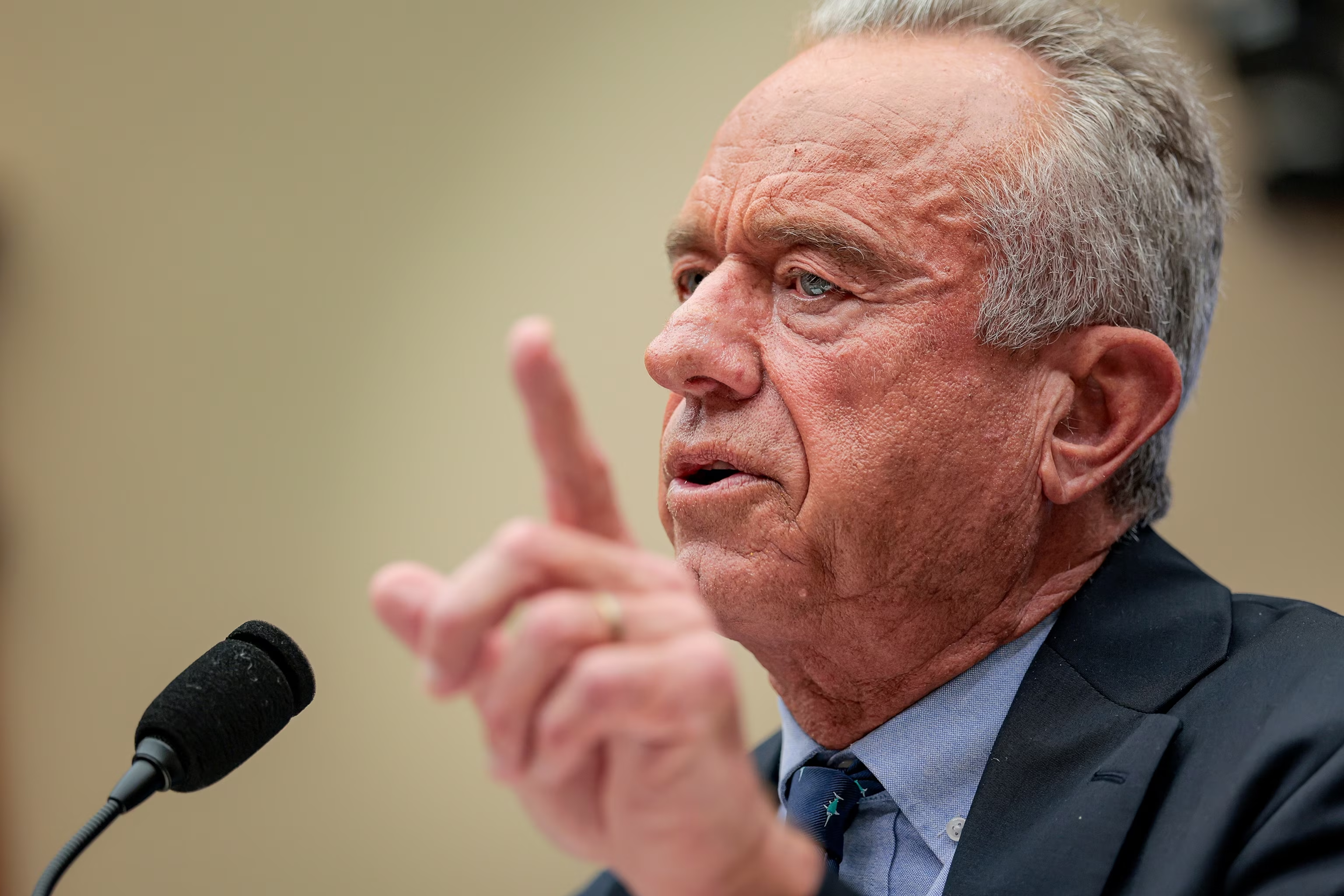
Health and Human Services Secretary Robert F. Kennedy Jr. offers testimony during a session of the House Education And Workforce Committee on Capitol Hill, April 17, 2026 in Washington.Heather Diehl/Getty Images
"I have never opposed vaccines," Kennedy stated. "I have consistently maintained that I am not anti-vaccine."
"Mr. Secretary, you have been a consistent detractor of immunization," she asserted to Kennedy.
Kennedy has long cast uncertainty on the protection and efficacy of the measles, mumps, and rubella (MMR) vaccine. Despite its mandate in all states for public school attendance, its utilization has decreased gradually over the past ten years, as demonstrated by CDC data.
This occurs as vaccine exemptions have greatly expanded, with at least 138,000 kindergarten students exempt from one or more vaccinations during the latest academic year, according to CDC figures.
"No, that's incorrect," he restated. "I do not oppose vaccines. I advocate for scientific rigor. My position is that vaccines should undergo sufficient safety evaluations to fully comprehend both their risks and their merits," he included.
Last year, two unvaccinated school-aged children succumbed to measles — representing the first U.S. deaths from measles in a decade. However, Kennedy declared that the measles-related deaths within a Mennonite enclave in Texas should not be attributed to his influence.
"I was in attendance at the burial of one of the young girls, and I spent a day with the family of the other. Both families informed me that when they brought their children to the hospital, they faced stigmatization," Kennedy recounted.
"They were denied adequate care. Both families and their personal physicians hold the view that their daughters could have been saved had the hospital provided them with the necessary treatment," he continued.
Covenant Children’s Hospital in Lubbock, which administered care to at least one of the deceased children, issued a statement last year asserting the existence of "deceptive and inaccurate statements" circulating online concerning the treatment offered at the medical center.
"What we can affirm is that our doctors and medical teams adhere to evidence-based procedures and render clinical assessments grounded in a patient’s evolving condition, diagnostic outcomes, and the most reliable medical insights attainable," the hospital clarified.
The medical institution did not promptly acknowledge ABC News’ request for a response on Friday.
Medical societies and specialists in public health have voiced criticism regarding the federal authority’s handling of the continuous outbreak of measles, notably Kennedy’s protracted public validation of the fact that the measles vaccination assists in averting infection.
Past comments on autism
A substantial segment of the nearly three-hour discussion concentrated on Kennedy’s earlier remarks about autism, which Democrats regard as detrimental to the autism community.
Lucy McBath, a representative from Georgia, requested Kennedy to apologize for his declaration that "autism destroys families" during a news conference held last year.
"I was referring to individuals with severe autism," Kennedy explained to McBath. "Individuals who experience a significant form of autism. My reference is to those who are nonverbal, not toilet-trained, and prone to head-banging."
"I find that exceptionally disheartening. It should be straightforward for you to extend an apology if that does not accurately reflect your intention," McBath conveyed.
"Those are insincere sentiments, Congresswoman," Kennedy retorted.
Kennedy was involved in an unusual discourse with a Republican legislator pertaining to predominantly unfounded assertions regarding the correlation between Tylenol consumption among expectant mothers and an elevated likelihood of their unborn offspring receiving a diagnosis of autism and further health complications.
Virginia Foxx, representing North Carolina, questioned Kennedy regarding a recent analysis indicating "no link" between Tylenol intake during pregnancy and the subsequent diagnosis of autism in infants.
"That study is fundamentally flawed," Kennedy informed Foxx. "It warrants withdrawal."
The investigation scrutinized 1.5 million children in Denmark and discerned no association between prenatal Tylenol usage and autism later in life.
Kennedy contended that the study required retraction because it determined if women had taken Tylenol during pregnancy via prescriptions, even though Tylenol is commonly available as an over-the-counter drug.
Trump's mental fitness
During the assembly, which centered on Americans’ well-being and medical care expenditures, Rep. Mark Takano, a Democrat from California, cited Trump’s posts on social media to challenge Kennedy regarding the president’s mental suitability and composure.
Takano posited that the president’s Easter publication containing profanity and a distinct publication presenting an AI-generated depiction of the president as Jesus apparently showcased that Trump was mentally "unstable."
"Millions of citizens are currently speculating whether this President is detached from reality and envisions himself as Jesus Christ," Takano remarked. "Mr. Secretary, accounting for everything I have presented before you today, would you advocate for President Trump to undergo an assessment of his psychological suitability and emotional resilience?"
"Categorically not," Kennedy responded.
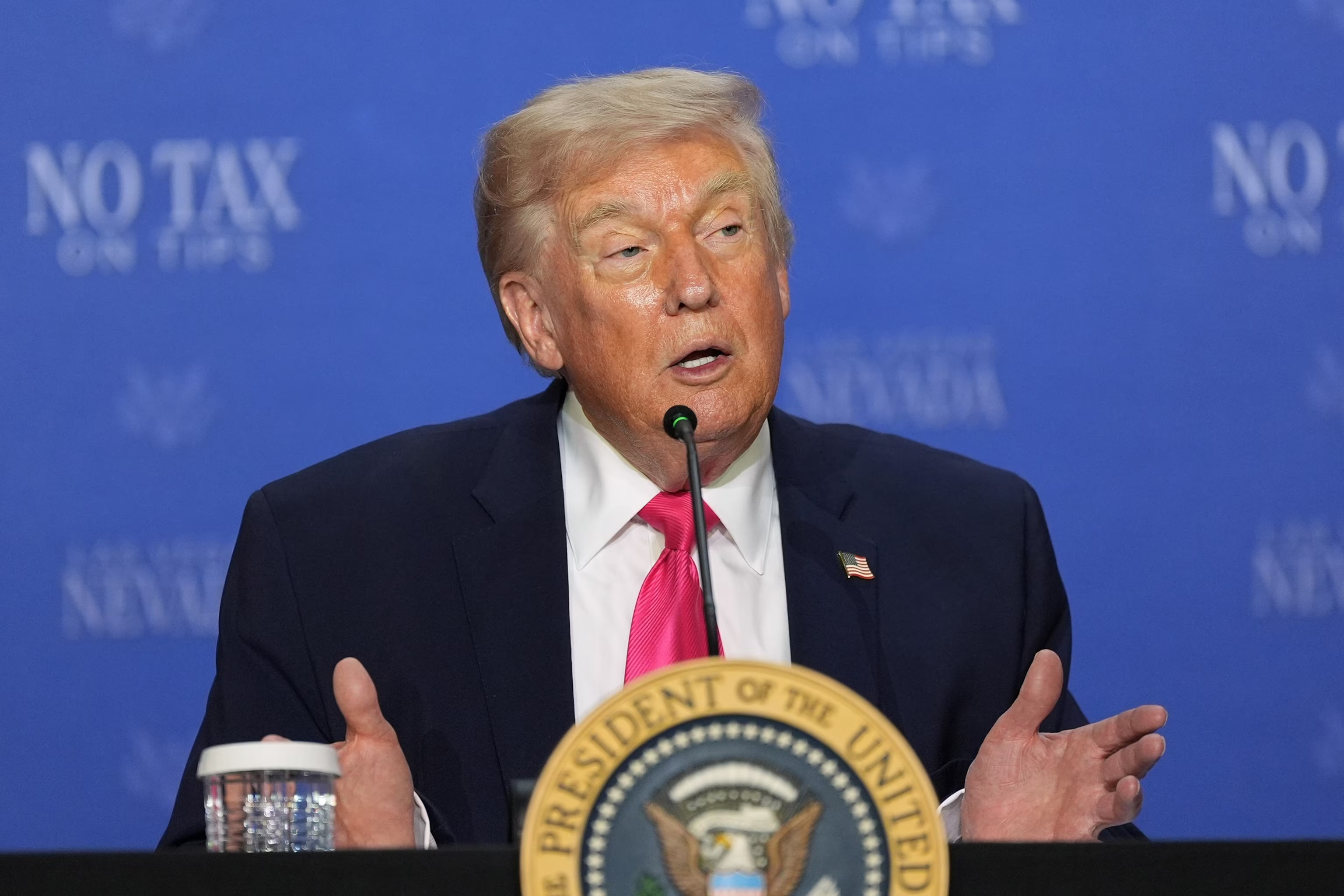
President Donald Trump delivers remarks during a panel discussion pertaining to his “No Tax on Tips” initiative, April 16, 2026 in Las Vegas, Nevada.Alex Brandon/AP
The episode spiraled into a heated exchange regarding the 25th Amendment, which defines protocols for replacing the president in scenarios of removal, resignation, or incapacity.
"Secretary, would you trigger the 25th Amendment should he fail an evaluation of his psychological stability or affective durability?" Takano enquired.
"There has not been a president more psychologically sound," Kennedy commenced, prior to being interrupted by Takano.
On Monday, Trump refuted any interpretation of the retracted post as alluding to Jesus and declared that it was intended to depict him as a physician.
Gender-affirming surgeries
Multiple Republican figures addressed the topic of gender-affirming interventions for young individuals with Kennedy, asserting that the outcomes are unfavorable for minors.
"The consequences in young individuals are catastrophic in terms of depression, self-harm, a multitude of ailments. This consigns them to a life marked by suffering, and there is no evidence-based justification for it," Kennedy expressed.
"What actions can we undertake to safeguard young individuals from medical organizations, and particularly those specializing in mental health, from inflicting harm upon our children? How may we avert them from engaging in such practices?" Rep. Glenn Grothman, a Republican representing Wisconsin, enquired.
"We have discontinued all federal allocation of funds for these categories of puberty-blocking treatments and gender-altering surgical procedures," Kennedy replied. "We have directed hospitals and medical centers across the nation that their participation in these interventions will result in the loss of all Medicaid and Medicare funding."
HHS published a conclusive iteration of a report pertaining to pediatric gender-affirming medical services in November, purporting the discovery of "health risks" imposed on young individuals and advocating for a more widespread implementation of psychotherapy.
Some significant medical associations countered, specifying that psychotherapy serves as the preliminary methodology within gender-affirming medical services and that supplementary interventions, encompassing hormonal therapies, are solely implemented subsequent to comprehensive evaluations involving both patients and healthcare providers.
Certain specialists within the gender-affirming medical services field have indicated that research suggests gender-affirming interventions are typically secure and that young individuals experiencing gender dysphoria are commonly evaluated, diagnosed, and managed in accordance with individualized assessments conducted by certified practitioners.
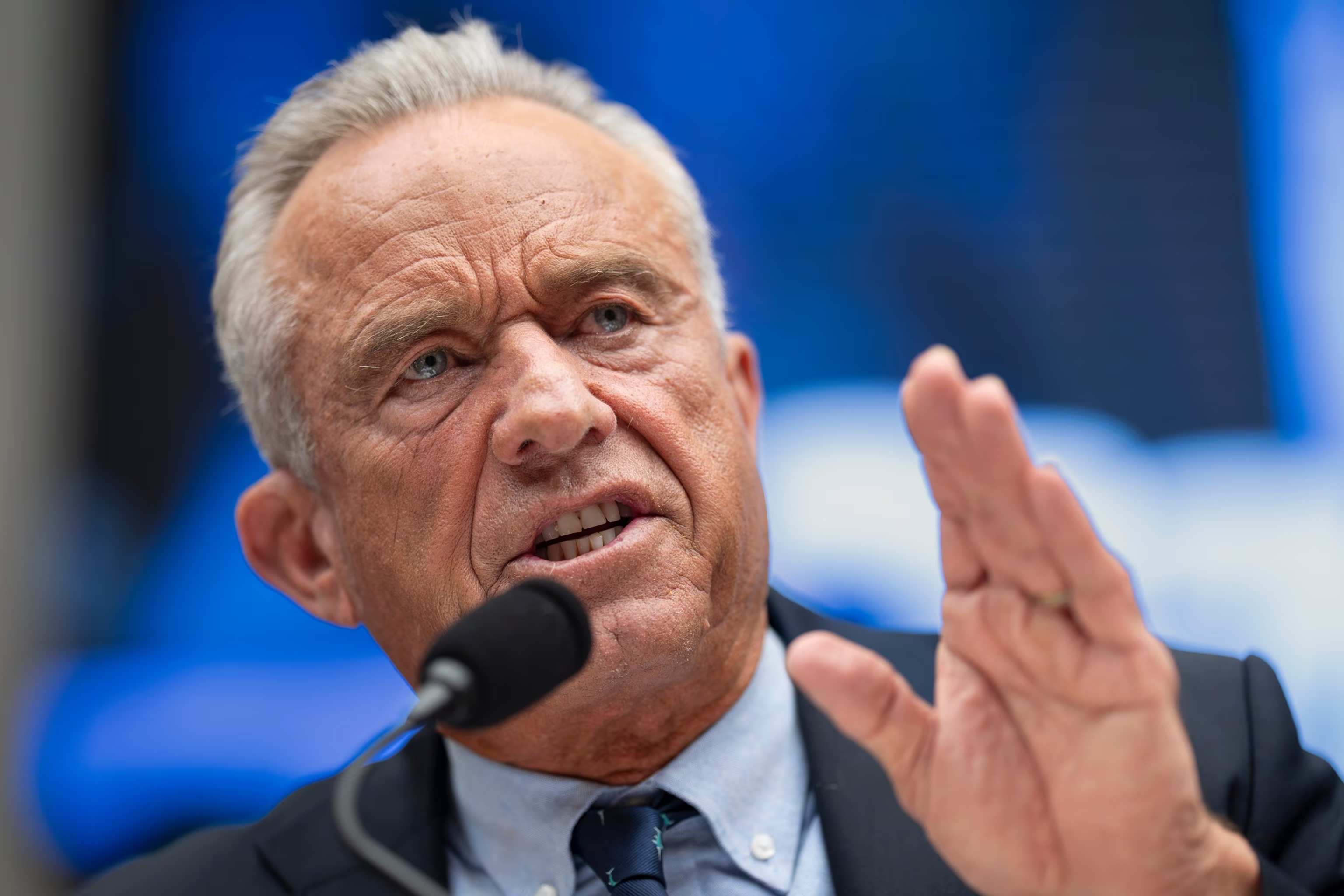
Health and Human Services Secretary Robert F. Kennedy Jr., comes before the House Education and Workforce Committee to defend his department’s strategies and objectives at the Capitol Building in Washington, April 17, 2026.J. Scott Applewhite/AP
Special education services
Rep. Tim Walberg, a Republican from Michigan and the chairperson of the committee, along with others, questioned Kennedy regarding the Department of Education’s blueprint for relocating programs to alternative agencies, including HHS, to completely dismantle the department.
Kennedy stated that special education initiatives must revert to HHS jurisdiction.
"A proportion of these initiatives should have continually been subject to the authority of HHS," Kennedy expressed. "This arrangement is logical. They are health-centered initiatives rather than strictly [educational] programs, and HHS houses several analogous programs that possess the potential to benefit from mutual synergies," he stated.
He communicated that the ultimate determination is incumbent upon Education Secretary Linda McMahon.
"She retains the authority to delegate these tasks to other agencies via contractual agreements, and this authority is wide-ranging and functions under that authority," Kennedy concluded.
-ABC News’ Mary Kekatos contributed to this report.
Sourse: abcnews.go.com