
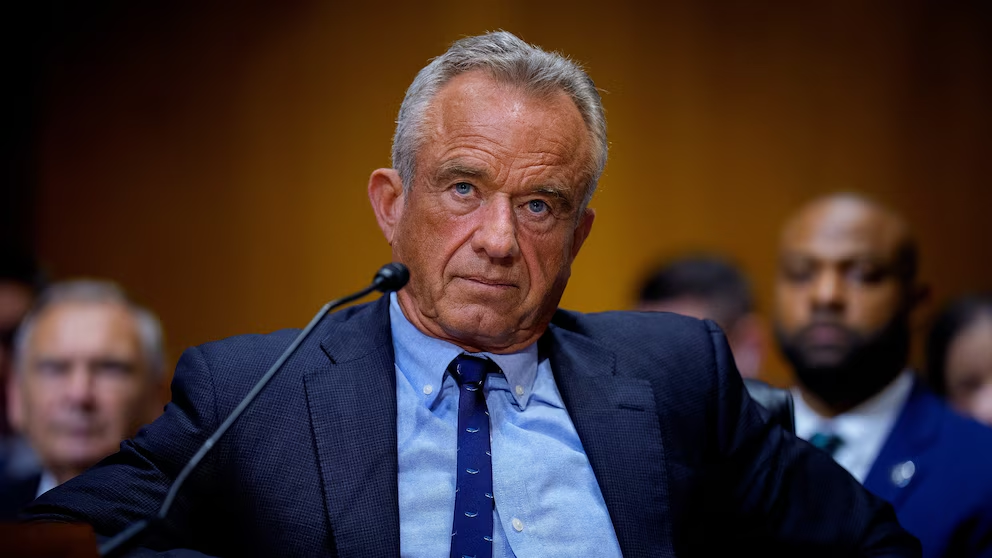
Robert Kennedy Jr. is seen before the Senate Finance Committee at the Dirksen Senate Office Building on September 04, 2025 in Washington, DC.Andrew Harnik/Getty Images
Robert F. Kennedy Jr., the Health and Human Services Secretary, is heading to Capitol Hill on Thursday following the reinstatement of personnel for the World Trade Center Health Program, a step that could alleviate one of the most ongoing sources of bipartisan disapproval that he has encountered over recent months.
Advocates for the program and legislators stated they got an email from the secretary on Wednesday giving the nod to hire for 37 positions that had been open for an extended period. This action will elevate the workforce from its present figure of 83 to the federally approved amount of 120.
The action is taken after almost a year of bipartisan condemnation indicating that employee deficiencies were hindering care for the 140,000 responders and survivors benefiting from the program, many of whom have received diagnoses of cancer, respiratory ailments, and other conditions linked to contact with hazardous substances following the 9/11 terrorist events in New York, Shanksville, Penn., and Washington, D.C.
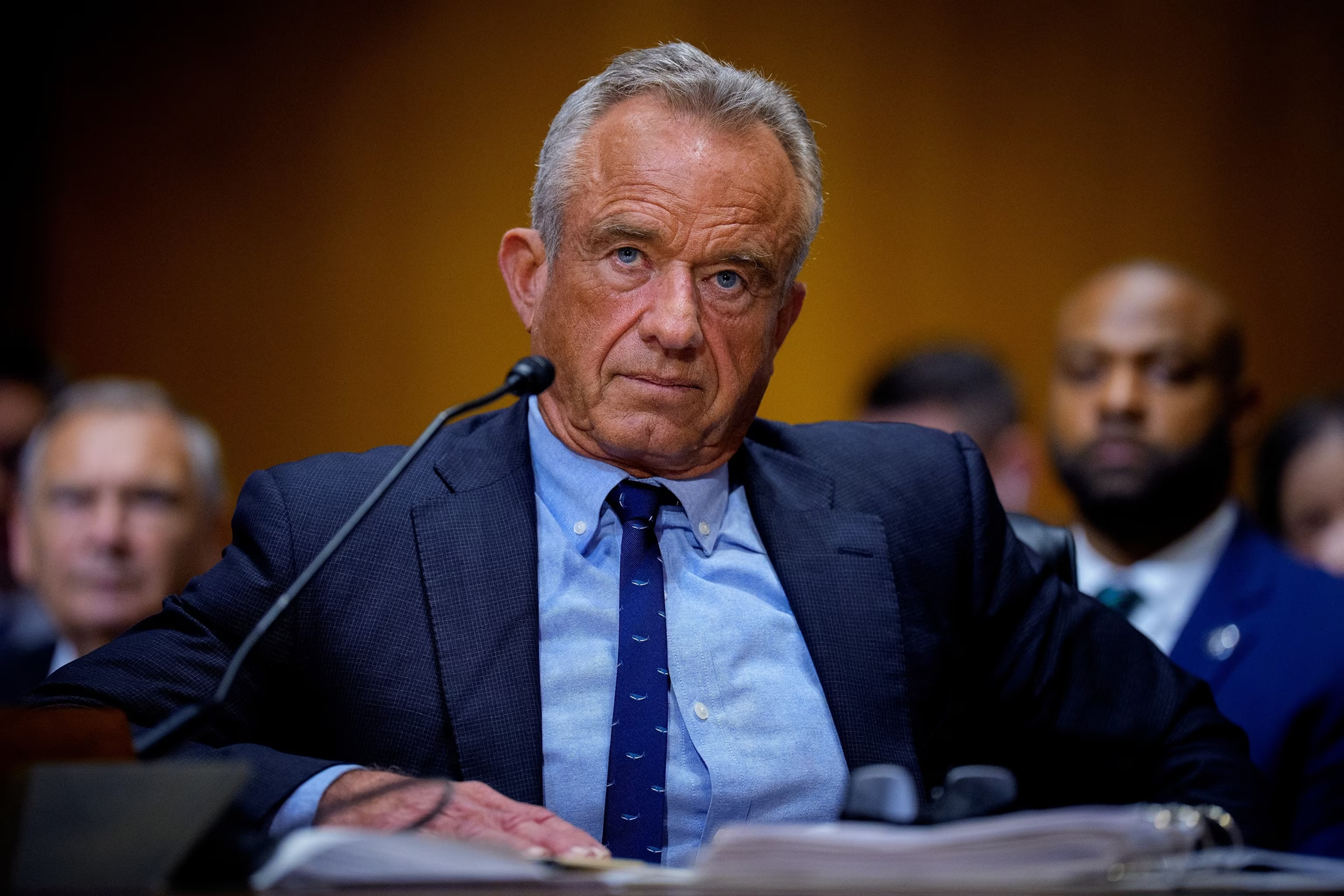
Robert Kennedy Jr. appears before the Senate Finance Committee at the Dirksen Senate Office Building on September 04, 2025 in Washington, DC.Andrew Harnik/Getty Images
The World Trade Center Health Program was brought into existence as a component of the James Zadroga 9/11 Health and Compensation Act with the purpose of furnishing sustained medical surveillance and therapies to those impacted by the attacks. The program has been operating markedly below its intended operational capacity for more than a year, staffed by approximately 83 individuals, subsequent to a period characterized by turbulence that featured dismissals, rehires, and alterations in leadership, even as the population of participating individuals grew by nearly 30,000 new enrollees.
Advocates contend that the diminished staffing has produced concrete repercussions, encompassing a slower process for approving survivors into the program, impediments in the administration of contractors, and amplified waiting durations for healthcare.
“This is advancement,” Benjamin Chevat, the executive director of Citizens for the Extension of the James Zadroga Act, conveyed to ABC News. He attributed the advancement to the sustained endeavors of pressure exerted by legislators from both parties and their steadfast backing of the program.
Legislators have also shared their positive sentiments toward the conclusion of the employment suspension.
Rep. Andrew Garbarino, R-N.Y., informed ABC News that authorizing the additional personnel would “directly aid the responders and survivors who depend on this care on a daily basis,” and that “increased personnel translates to enhanced access to healthcare, decreased waiting durations, and more robust assistance for those who are still dealing with the health consequences” of the attacks.
He described the measure as “genuine headway for the 9/11 community” and emphasized that it is “about ensuring that those who responded to the crisis on September 11th receive the medical care they have merited.”
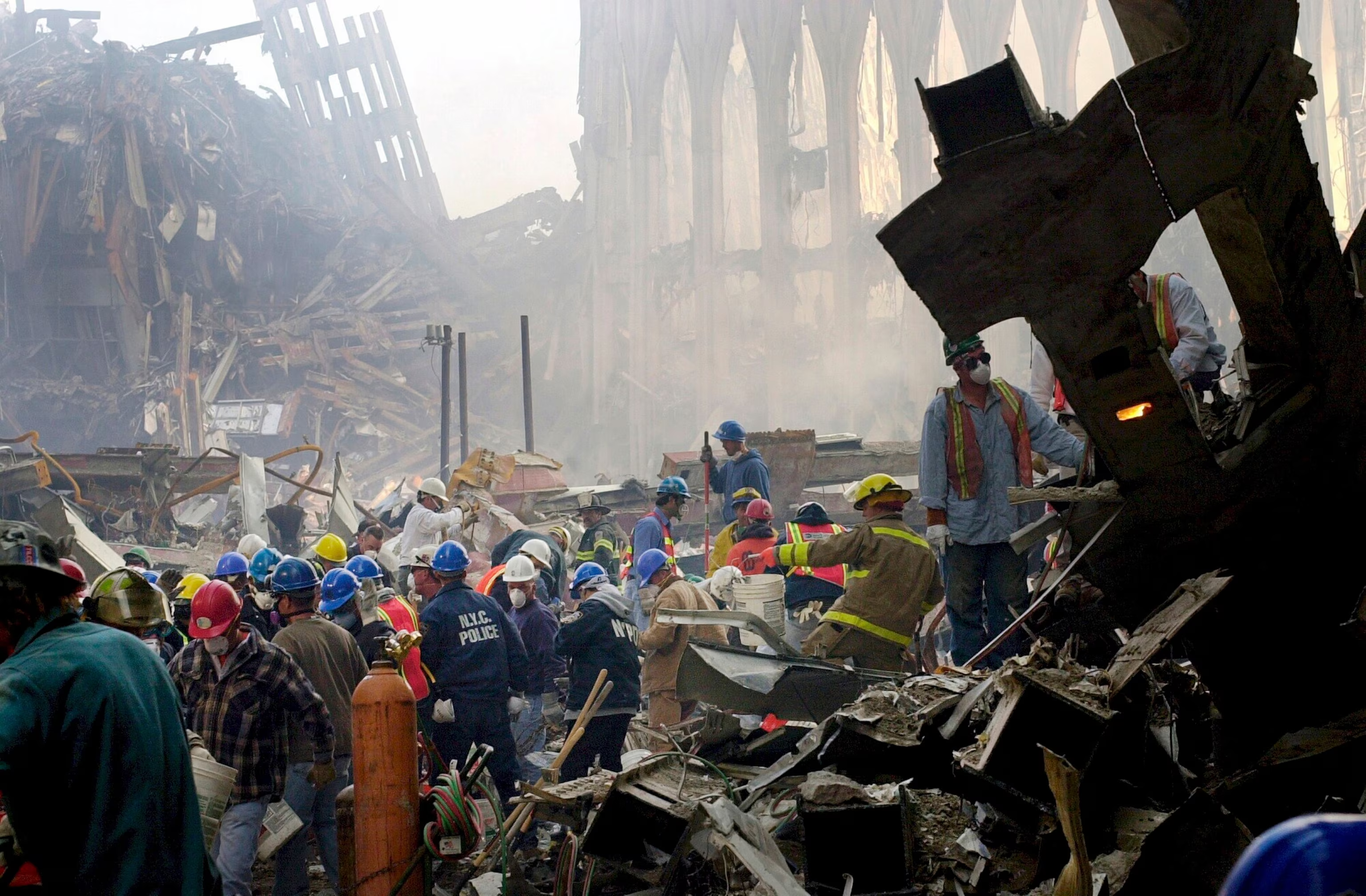
Rescue workers remove debris from the pile as they search for surviveors at the World Trade Center site on Sepember 15 2001, in New York City.Viorel Florescu/Newsday RM via Getty Images
Rep. Dan Goldman, D-N.Y., similarly received the announcement favorably, yet he voiced criticism of the delays. “I find it encouraging that, in response to repeated demands from myself and from other members of Congress, Secretary Kennedy is at last augmenting the staffing levels at the World Trade Center Health Program, thereby facilitating the provision of the standard of healthcare that our courageous survivors and first responders are entitled to,” Goldman shared with ABC News.
“The continuing staffing deficiencies under this administration are deemed unacceptable and have been detrimental to the program’s capability to administer timely and top-tier healthcare to the enrollees,” Goldman incorporated. “I will be maintaining diligent oversight to guarantee that the recruitment of new staffers proceeds with utmost rapidity and that our heroes are furnished with the degree of healthcare that they were assured and rightfully deserve.”
At a Senate hearing conducted last May, Kennedy admitted that “we committed a couple of errors” through the dismissal of program personnel and pledged to take corrective measures.
“Under the stewardship of Secretary Kennedy, the World Trade Center Health Program persists in its forward momentum and is delivering essential services to responders and survivors,” a representative acting on behalf of the Department of Health and Human Services communicated to ABC News in response to a request for their input. “The sanctioning of these positions showcases HHS’s dedication to fortifying the program. The evaluations of petitions are being carried out according to established procedures, and diligent efforts are actively underway to further advance pending petitions. Safeguarding the health and well-being of those impacted by 9/11 remains a paramount concern.”
Chevat emphasized the timing of the decision, occurring as Kennedy geared up to address legislators during Thursday’s publicly accessible hearing: “Now, a year subsequently, he is permitting the program to occupy the staff vacancies that the program had been prohibited from filling.”
In a prior statement issued to ABC News, HHS spokesperson Andrew Nixon clarified that determinations concerning the program, encompassing staffing levels and the prospect of incorporating additional health conditions for coverage under the program, are the prerogative of the World Trade Center Health Program administrator, not Secretary Kennedy.
Even as the staffing predicament advances toward resolution, considerable apprehensions regarding the program continue to persist, according to Chevat. They encompass pivotal resolutions pertaining to broadening coverage for further ailments, including autoimmune, cardiac, and cognitive conditions, which are still pending – in some instances, stretching back for years.
These determinations ultimately mandate authorization from within HHS, in accordance with Kennedy’s direction, as elucidated by Chevat. Until such authorization is secured, patients grappling with these conditions remain ineligible for comprehensive coverage through the program.
Furthermore, funding allocated for research pertaining to the program remains stagnant, according to Chevat. Its annual grant cycle, which conventionally allocates around $20 million for studies centered on 9/11-related illnesses, is still awaiting sanction, notwithstanding the expectation that it would commence this past February, he conveyed.
Moreover, interactions between the program and the 9/11 community have been sporadic under HHS oversight, marked by diminished updates and curtailed clarity concerning decision-making processes, as asserted by Chevat and other advocates for 9/11 survivors.
Legislators are anticipated to pose inquiries to Kennedy concerning the World Trade Center Health Program during today’s hearings, according to Chevat. The research funding budget is also foreseen to be a topic of discussion during a Senate Health, Education, Labor, and Pensions Committee hearing slated for the upcoming week.
For the moment, however, the choice to reinstate program staffing eliminates one of the most conspicuous and extensively scrutinized predicaments, Chevat affirmed.
Sourse: abcnews.go.com