
Adobe Stock
In April of last year, the FDA revealed a strategy to eliminate eight synthetic dyes derived from petroleum from the American food supply, intending to substitute them with natural colorants.
Since then, the regulatory body has actively encouraged food manufacturers to adopt natural coloring agents, such as beet juice, turmeric, extract of butterfly pea flower, gardenia blue, calcium phosphate, and the blue extract from the algae Galdieria.
Consumers are increasingly observing more ingredients derived from natural sources on product labels, as major producers have commenced the gradual discontinuation of artificial dyes. Leading food corporations, including Nestlé, General Mills, Kraft Heinz, and PepsiCo, have committed to fully transitioning away from synthetic additives by 2027 at the latest.
This transition has garnered approval from numerous health advocates, yet some specialists caution that natural substitutes are not necessarily more thoroughly researched than their synthetic counterparts.
“In general, natural colorants sourced from plants, animals, and minerals lack the same depth of toxicological data compared to synthetic colorants,” stated Kelly Dobos, a representative for the American Chemical Society, in a conversation with ABC News.
Dobos also pointed out that securing sufficient quantities of natural color additives could pose difficulties as food manufacturers escalate their usage.
“A further obstacle to their suitability for industrial applications is that natural sources do not yield enough to satisfy the entire demand for color additives,” she commented. “Efforts are underway to develop color additives derived from biotechnology, utilizing genetically engineered bacteria or yeast to produce these compounds in greater volumes.”
While some experts express concern that natural dyes might face less rigorous scrutiny, thereby increasing the risks of contamination and incorrect labeling, a spokesperson for Health and Human Services informed ABC News that the FDA rigorously evaluates all food color additives to ensure their safety for intended applications.
“As we continue to remind the food industry, color additives derived from natural origins are subject to the same stringent pre-market safety and purity requirements as synthetic ones,” the spokesperson affirmed.
A significant portion of the apprehension surrounding artificial food dyes stems from laboratory and animal studies, some of which employed dosages that would equate to substantially higher levels than typically consumed by humans, according to a 2021 report by the California Office of Environmental Health Hazard Assessment.
Studies involving humans suggest a correlation between exposure to artificial dyes and behavioral issues in children. However, experts indicate that there is no conclusive evidence demonstrating that artificial dyes are the cause of ADHD or any other neurobehavioral disorders, as noted in the report.
Concurrently, research on natural dyes remains limited, but current findings suggest they are safe, according to Monica Kelly, a registered dietitian and associate health and well-being manager at Montefiore Einstein.
“Natural dyes are simply produced by foods, originating from either plant-based or other natural sources. These could be fruits, various vegetables, or different spices that yield that color,” Kelly explained to ABC News.
Nevertheless, some studies have linked natural additives to health concerns.
For instance, beta-carotene, which is derived from orange produce and is the most frequently utilized natural dye, has been associated with an 18% elevated risk of lung cancer. When consumed as a supplement, research indicates it increases the likelihood of mortality, particularly among smokers.
A comprehensive French study established a connection between higher consumption of certain natural food color additives, including beta-carotene, and increased incidences of cancer and Type 2 diabetes, although it did not confirm these additives as the direct cause of these conditions.
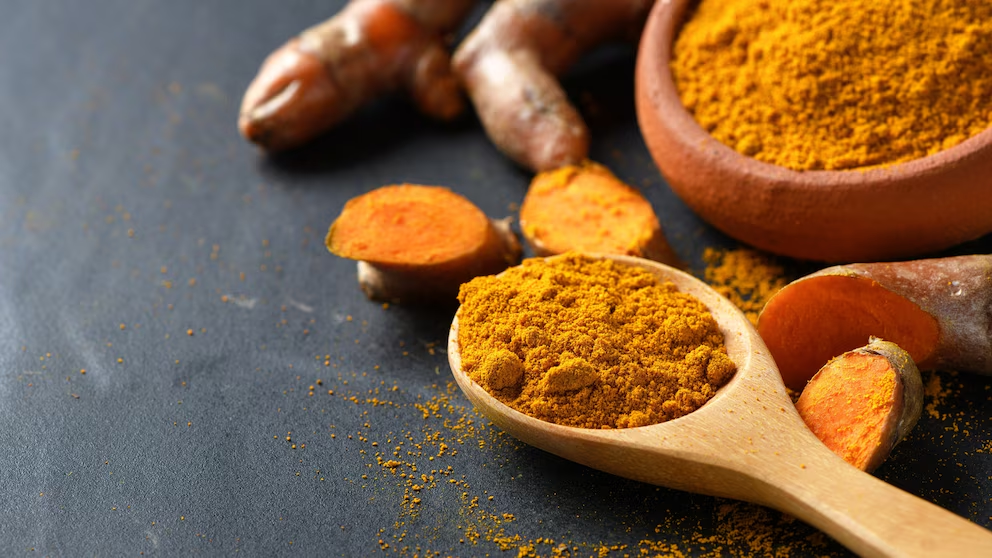
Turmeric and curcumin have been implicated in rare instances of liver damage, particularly when consumed in concentrated supplement form rather than as part of regular food intake. Two other natural additives, carmine—sourced from insects and used in confectioneries and yogurt—and annatto—derived from seeds and incorporated into snacks—are also linked to allergic reactions.
The French study further revealed that plain caramel was associated with elevated cancer rates. Turmeric, anthocyanins, and carmine were all linked to a heightened risk of developing diabetes.
“The primary natural dyes to be mindful of are carmine, also identified as cochineal extract, and to a lesser degree, annatto,” advised Kantha Shelke, a food scientist and researcher at Johns Hopkins University, in an interview with ABC News.
“The principal concern relates to allergic reactions rather than toxicity,” she stated. “Carmine is the most extensively documented, with reactions ranging from hives to, on rare occasions, anaphylaxis. Annatto can occasionally provoke a potentially severe immune response in susceptible individuals and may exacerbate chronic hives, though such occurrences are genuinely infrequent.”
Shelke noted that the majority of other commonly employed natural color additives, including those from beets, turmeric, spirulina, saffron, and grape skin extract, are regarded as low-risk and have only seldom been associated with adverse effects.
“It is important to emphasize that ‘natural’ does not automatically equate to ‘safer’; these dyes simply present a different risk profile compared to those associated with synthetic colorants,” she asserted.
A considerable number of the compounds utilized as natural food dyes are naturally present in fruits, vegetables, and spices, where evidence often indicates they confer health advantages, Kelly remarked.
However, these identical compounds might behave differently when used as ingredients, particularly when incorporated into highly processed foods.
Kelly conveyed her agreement with the FDA’s initiative to move away from artificial food additives.
“But rather than concentrating on whether or not it contains a specific food dye, the real focus should be on reducing consumption of those ultra-processed foods and prioritizing a diet richer in whole foods,” she suggested.
Megan Still, MD MSE, is a neurosurgery resident at the University of Florida and contributes to the ABC News Medical Unit.
Sourse: abcnews.go.com