
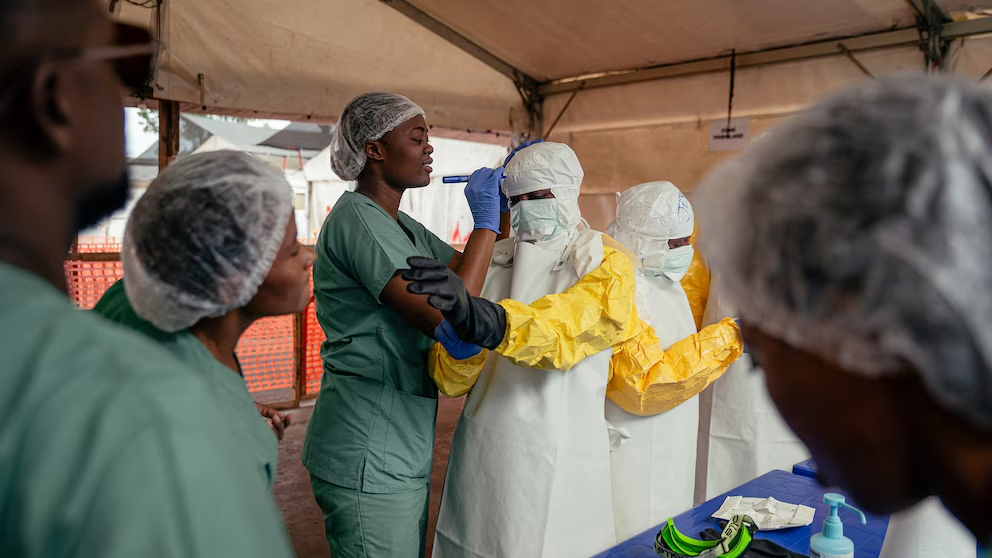
Healthcare workers put on personal protective equipment (PPE) in the dressing area under the supervision of specialists before going to examine patients in the isolation ward during their shift at the Ebola Treatment Center (ETC) following its rehabilitation by Doctors Without Borders (MSF) in Munigi on June 2, 2026.Jospin Mwisha/AFP via Getty Images
A devastating Ebola outbreak is continuing to spread across the Democratic Republic of the Congo, with global health officials warning that "we are still behind."
As of Wednesday, 363 instances of Ebola and 62 fatalities have been verified, according to the Congo Ministry of Health and the Centers for Disease Control and Prevention (CDC). In neighboring Uganda, 15 instances and one fatality have been confirmed, health officials stated.
The most recent DRC Ebola situation report indicates the outbreak has now reached Mambasa, a new health zone situated over 160 kilometers south of the mining town of Mongbwalu in Ituri province, where cases have been concentrated. This suggests the virus is continuing to expand geographically.
"The outbreak had a significant head start and we are still behind … but we're catching up," Dr. Tedros Adhanom Ghebreyesus, the director-general of the World Health Organization, remarked during a press briefing on Wednesday.
Recently, the WHO ruled out hundreds of suspected cases after thorough investigation. Although some local health officials suggested that community transmission may be abating, many public health specialists cautioned that the data is highly incomplete. The specialists also noted that contact tracing is deficient and far below the level required to contain the outbreak.
However, the specialists acknowledge that the public health response is accelerating and that health authorities are gaining a better understanding of the number of confirmed cases.
Dr. Megan Coffee, an infectious disease physician and a senior specialist in infectious diseases within the health unit of the aid organization International Rescue Committee (IRC), highlighted the importance of clarifying certain details as they endeavor to control the outbreak.
"To be able to ascertain what the case fatality rate is, what the percentage of cases that have been identified is, and what the percentage of people who are potentially in a chain of transmission may have been exposed and may develop Ebola," she told ABC News.
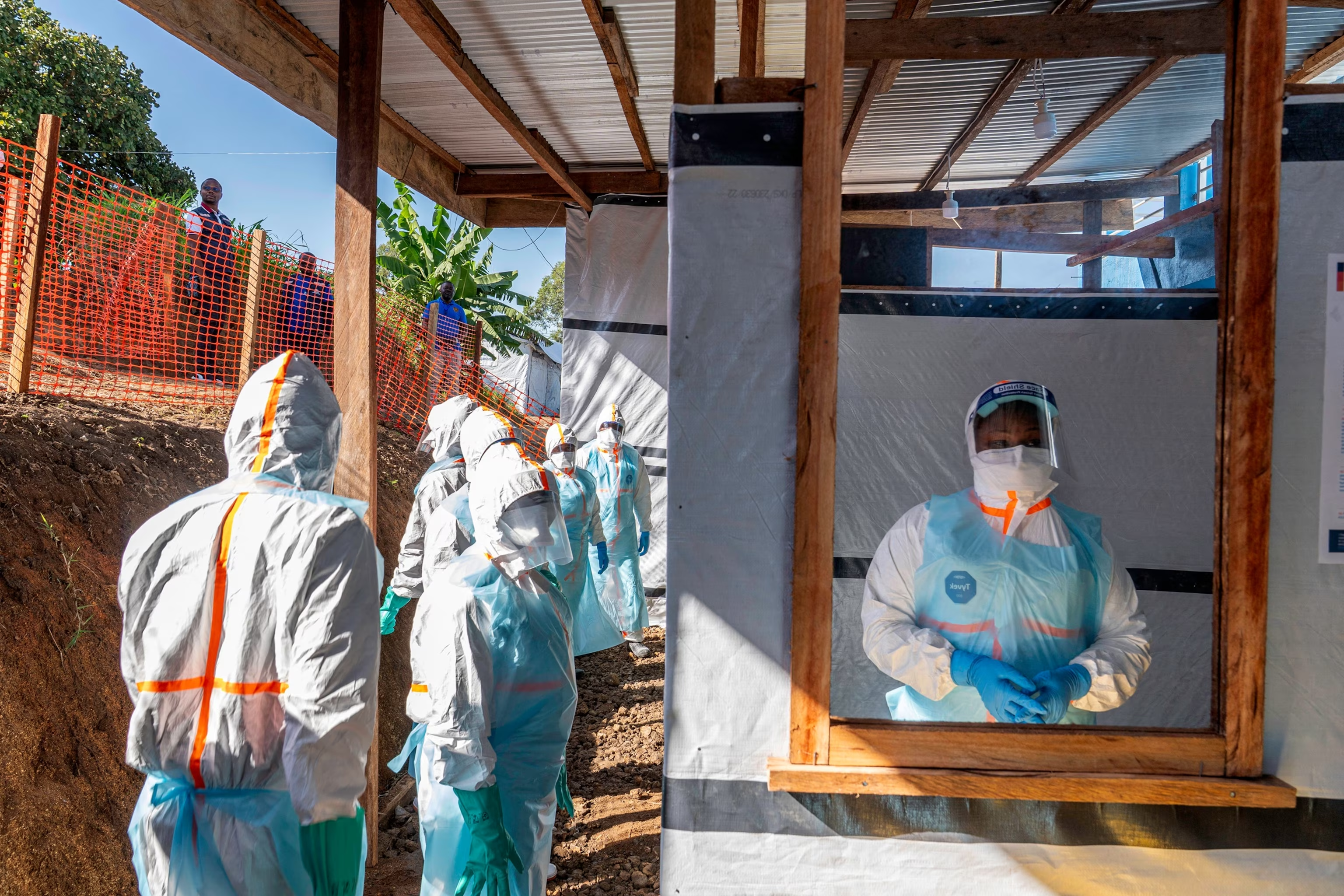
Health workers stand in a new Ebola treatment center during a visit of Tedros Adhanom Ghebreyesus, Director-General of the World Health Organization (WHO), in Bunia, in the northeastern Democratic Republic of the Congo, on May 31, 2026.Glody Murhabazi/AFP via Getty Images
Hundreds of suspected cases ruled out
On Tuesday, the WHO stated there were 116 suspected cases, with hundreds of potential cases dismissed after investigation.
This followed the global health agency’s statement on Friday that 906 suspected cases were under scrutiny. However, in an op-ed published in the Financial Times on Sunday, the director-general of the Africa Centres for Disease Control and Prevention wrote that there were over 1,100 suspected cases.
When questioned about the significant reduction, WHO spokesperson Christian Lindmeier informed reporters at the agency’s headquarters in Geneva that hundreds of cases "have been cleared out and have either other diseases or have just had fever and nothing else," according to Reuters.
Lindmeier added that the figures will fluctuate as more individuals get tested, a statement with which Coffee concurred.
"Those numbers will change somewhat because suspected cases can be included or excluded," Coffee stated. "And new individuals can be identified; new suspects can be identified at any moment. So, these are figures that are perpetually changing."
Brittany Kmush, an associate professor of public health at Syracuse’s Maxwell School of Citizenship and Public Affairs who specializes in infectious disease epidemiology and outbreak surveillance, told ABC News that it is important to bear in mind that the incubation period — the interval between exposure to a pathogen and the initial appearance of symptoms — for Ebola extends up to 21 days.
She mentioned that it has not even been 21 days since the WHO declared the outbreak a public health emergency of international concern, so "the trajectory of this epidemic" remains uncertain.
"Individuals who were exposed on May 17 may not yet be symptomatic," she stated. "And then there’s the scale of the epidemic when it was recognized … and so that implies there was considerable undetected circulation, which means there are numerous cases we are unaware of and contacts we know about."
Struggles for contact tracing
One of the most significant challenges facing the response effort is contact tracing, which involves identifying any individuals exposed to infected persons so they can receive medical attention, testing, or undergo quarantine.
Approximately 44% of contacts are being traced in Ituri, the primary affected province in the northeastern DRC. WHO chief Tedros stated on Wednesday that this figure needs to rise to around 90%.
Coffee remarked that identifying every contact is difficult in an area where some individuals may distrust the authorities, while others are in denial about Ebola being a genuine virus or about their own infection.
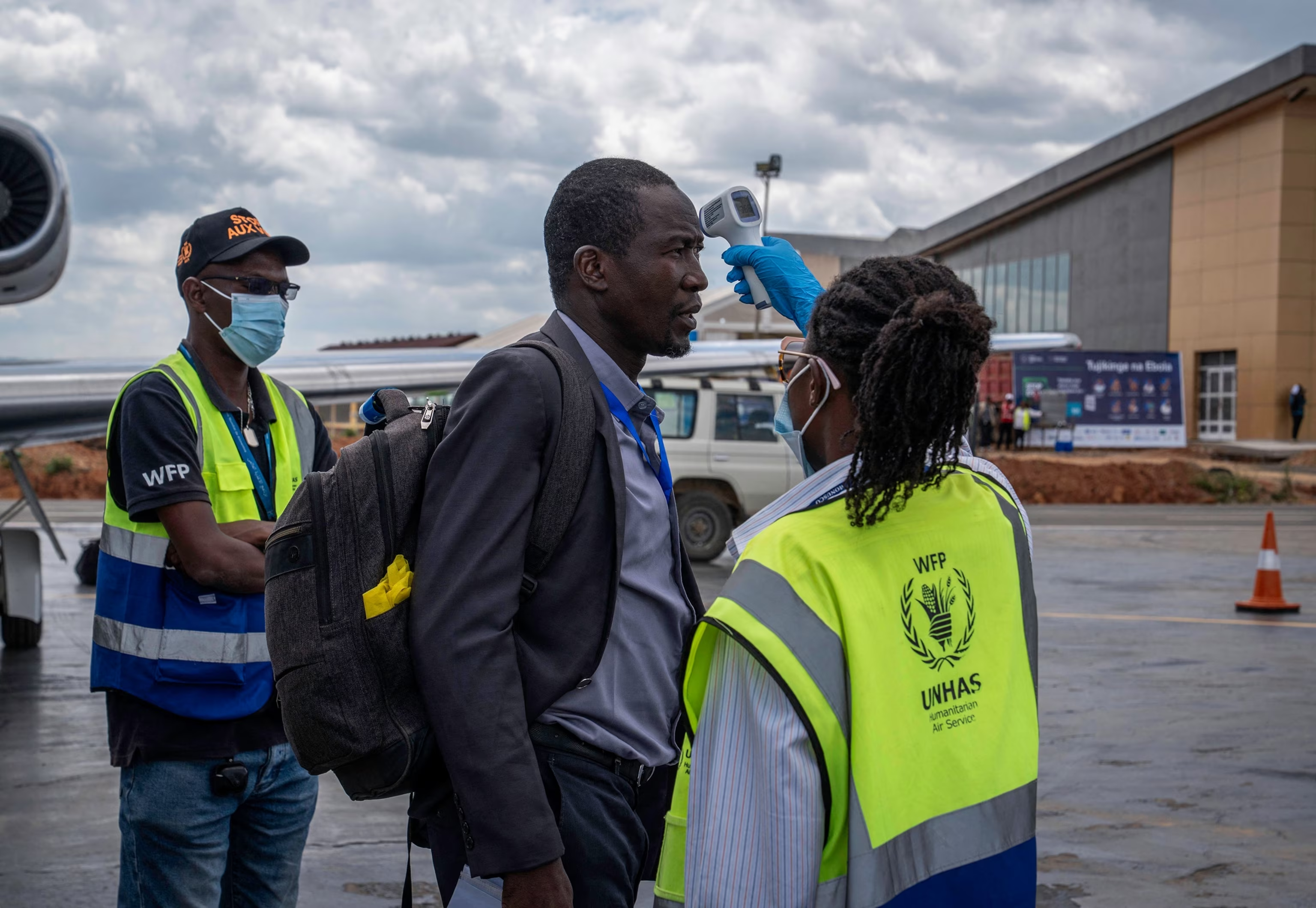
An official checks passengers’ temperatures at Bunia Airport in eastern Democratic Republic of the Congo on June 3, 2026.Glody Murhabazi/AFP via Getty Images
Additionally, she noted that it can be challenging to travel between regions, particularly in more rural or remote areas, to identify cases and contacts.
"It is exceedingly difficult early in an outbreak to know that you have identified all the chains of transmission," Coffee stated. "There will frequently be chains of transmission in a larger outbreak that you have simply overlooked."
Kmush added that there is considerable stigma surrounding Ebola, and individuals may be hesitant to report all their contacts to health authorities.
"It is going to be quite challenging to identify and properly follow all the contacts, especially since the international aid community is severely lacking in resources," she commented. "You do not want to be short on personnel and resources for contact tracing, and short on locations for people to undergo quarantine and isolation."
Coffee further noted that one of the Ebola hotspots in the DRC is an area with a gold mine and a large number of migrant workers, which has complicated the ability to track cases.
"When you conduct contact tracing, it is substantially easier when everyone has a fixed residence; they have resided at that address their entire lives, and all their neighbors know them," she explained. "When you have populations that are mobile, you will encounter greater difficulty in locating individuals. 'You know how to get in touch with Henry who was here a week ago, right?'"
ABC News’ Dragana Jovanovic contributed to this report.
Sourse: abcnews.go.com