
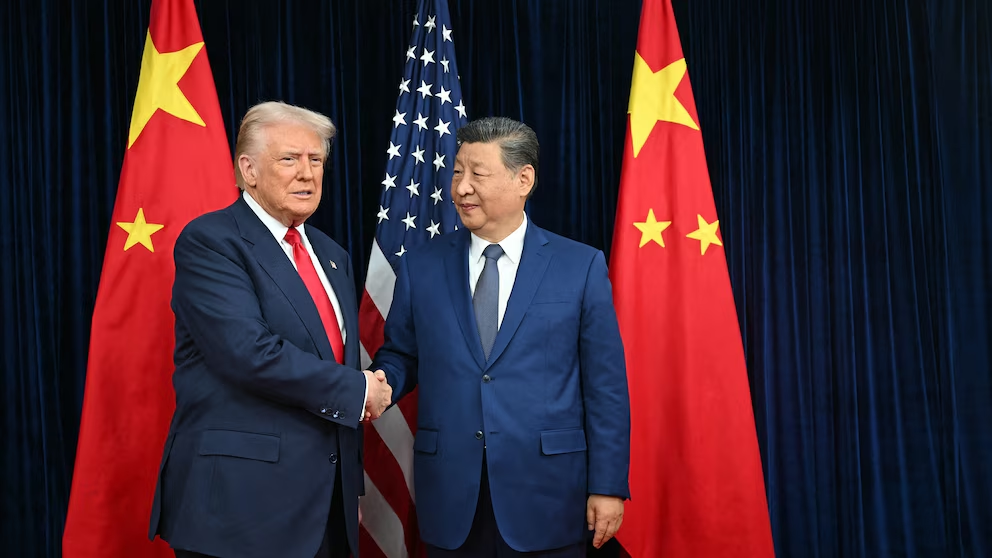
Donald Trump and Chinese President Xi Jinping clasp hands upon arriving for discussions at Gimhae Air Base, adjacent to Gimhae International Airport in Busan, on October 30, 2025.Andrew Caballero-reynolds/AFP via Getty Images
Upon touching down in Beijing next Thursday, President Donald Trump will become the first U.S. president to visit China in almost a decade. Trump’s own 2017 journey marks the most recent such instance.
He arrives from a vastly altered situation than he foresaw: the journey was initially planned for this past spring but was then delayed due to the Iran war.
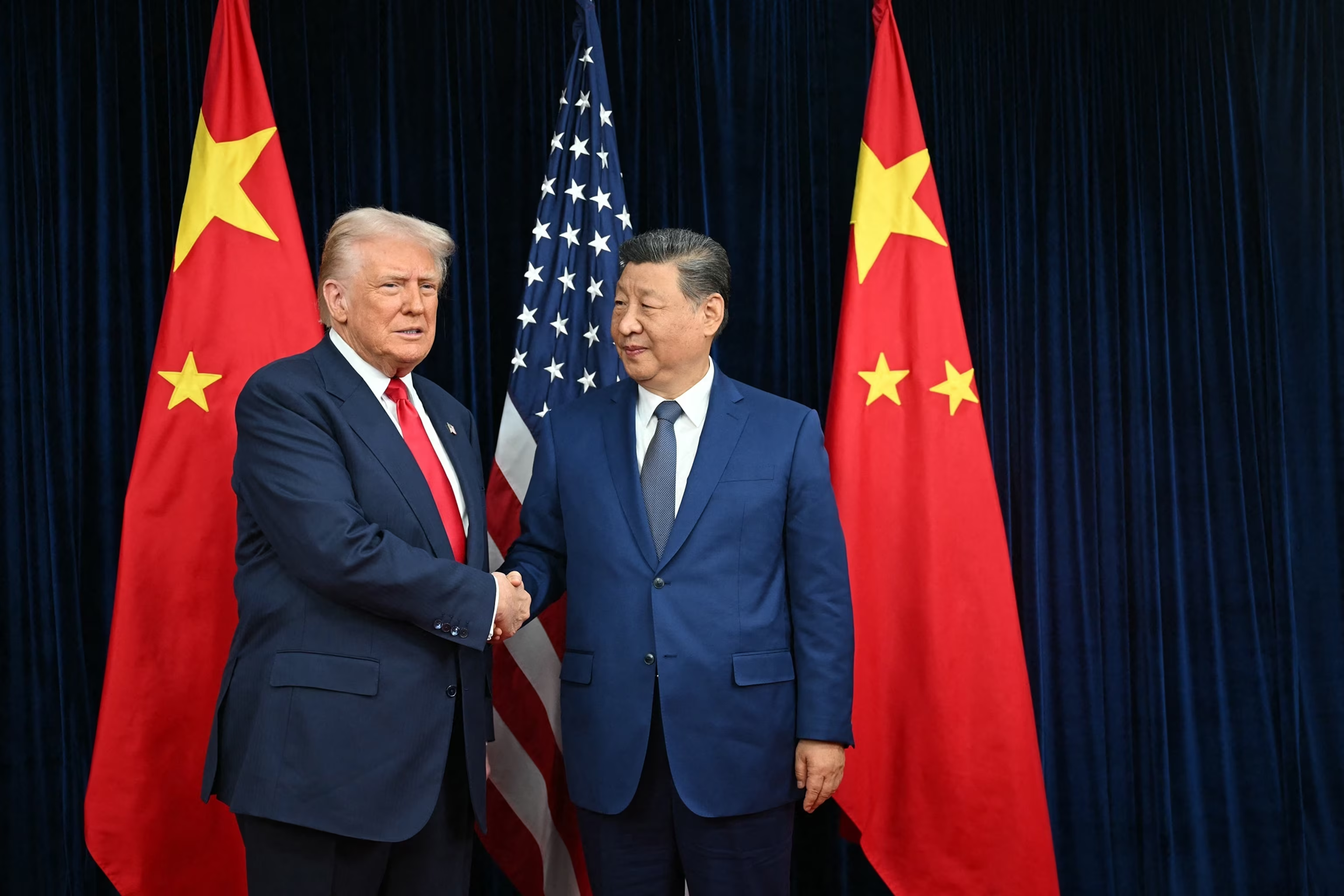
Donald Trump and China’s President Xi Jinping shake hands as they arrive for talks at the Gimhae Air Base, located next to the Gimhae International Airport in Busan on October 30, 2025.Andrew Caballero-reynolds/AFP via Getty Images
Trump had suggested the war would last merely four to six weeks. Instead, there is no resolution on the horizon with the Strait of Hormuz remaining shut down and U.S. gas prices skyrocketing — while the president is confronted with historically low approval ratings.
That setting has transformed the power balance, according to experts who analyze the region.
The altered balance
Beijing would have desired that this war never commence — the energy disruption and the impact on global demand represent genuine difficulties for an economy reliant on exports, specialists indicate. However, they assert that the strife has afforded Xi a distinct edge: Trump currently faces excessive domestic and international challenges to contemplate another escalation cycle with China.
"China currently represents a relative high point in Trump’s foreign policy," expressed Jon Czin, previously a director for China at the National Security Council.
The longer the Iran conflict persists, Czin contended, the further it diminishes the likelihood of further economic clashes — Beijing has also already proven its capacity to retaliate — such as with tariffs and export restrictions on rare earth minerals — leading to the administration’s earlier retreat.
Both factions continue striving to gain advantage in the lead-up. The Treasury Department recently penalized Chinese oil refineries and shipping companies connected to Iranian crude to impede funding. In an unparalleled action, Beijing employed a "blocking regulation" for the first time, instructing Chinese entities to disregard sanctions targeting Chinese oil refiners.
Daniel Shapiro, a former deputy assistant secretary of defense for the Middle East, observes that the war has reduced the U.S. military presence in the Indo-Pacific region, bearing long-term implications for both deterring China and defending Taiwan.
"Trump’s standing and influence at the summit will be considerably lessened if he proceeds to Beijing with the war still unsettled, or even amidst renewed escalation. And the Iranians are aware of this. Consequently, they are decreasing the conditions for concluding the war to terms far less expansive than Trump initially envisioned," Shapiro posted on X.
Trump’s objectives
The administration demonstrably hopes that Beijing will exert its leverage over Tehran. This week, Secretary of State Marco Rubio urged Beijing to capitalize on the Iranian foreign minister’s visit to China earlier this week to pressure Tehran to reopen the Strait of Hormuz.
"I hope the Chinese convey to him what he requires to hear," Rubio remarked when questioned about the meeting between China’s top diplomat and Iran’s foreign minister. "Namely, that your actions in the strait are causing your global isolation. You are the antagonist in this scenario."
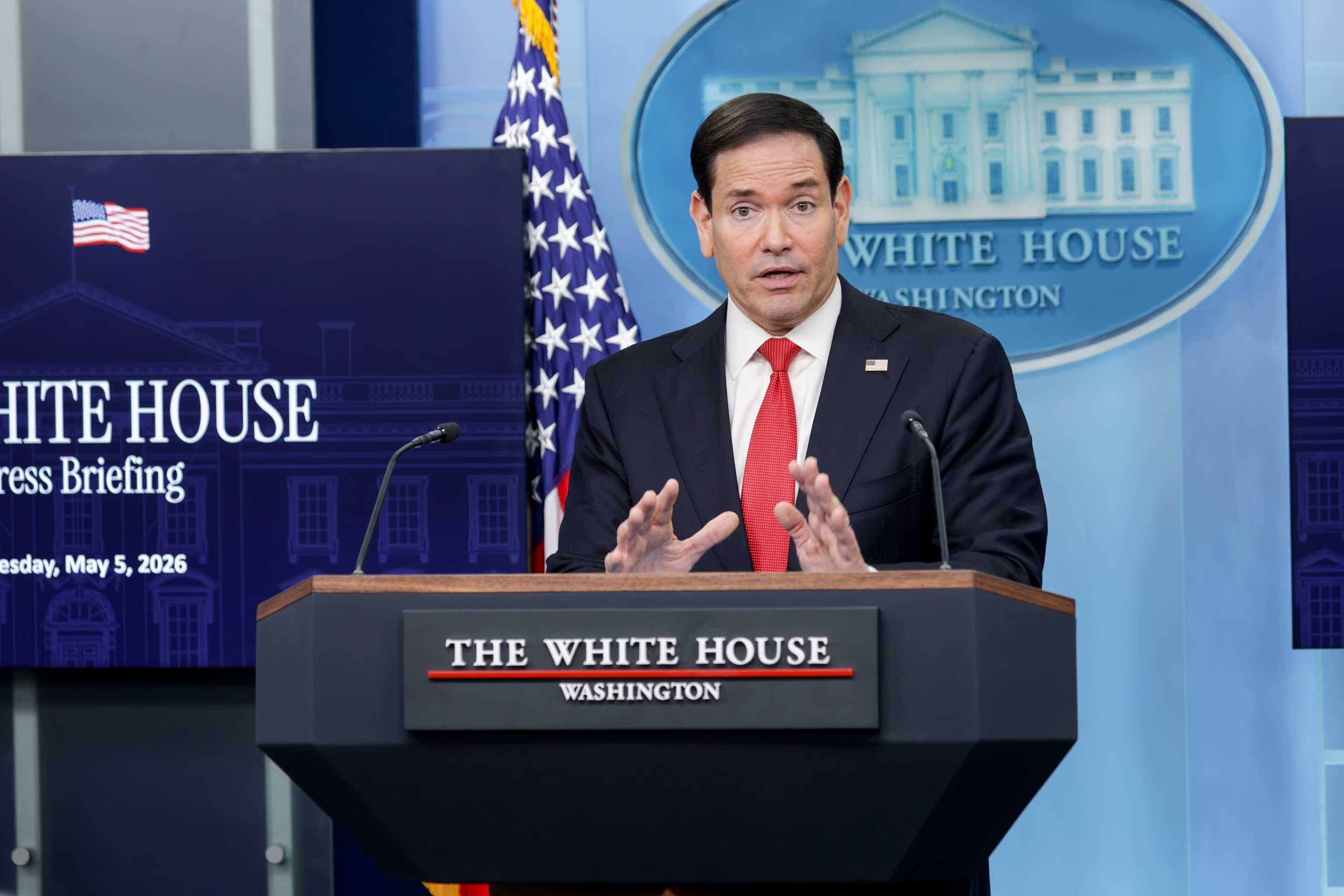
Marco Rubio speaks during a press conference in the Brady Press Briefing Room at the White House on May 05, 2026 in Washington, DC.Alex Wong/Getty Images
Beyond the conflict in Iran, Trump will pursue achievements in trade and investments: For instance, Chinese pledges to procure Boeing aircraft and U.S. agricultural products, coupled with an extension of the trade ceasefire reached during the previous Trump-Xi gathering in South Korea last year, as per expert analysis.
The administration also desires China to prolong its suspension of controls over rare earth mineral exports, analysts comment. U.S. Trade Representative Jamieson Greer has similarly advocated a “Board of Trade” to oversee economic connections among the nations and merchandise the two parties are transacting.
Beijing’s aspirations and hesitations
Here’s the disparity between the administration’s openly declared position and the perspectives of analysts who closely scrutinize China: Beijing does not genuinely intend to significantly contribute regarding Iran or engage extensively.
Beijing’s statement following the exchange with the Iranian Foreign Ministry was thoughtfully phrased to avoid blaming Iran for the crisis while concurrently urging heightened efforts to open the Strait of Hormuz.
"The Chinese display no inclination to assume any direct part in the conflict," according to Patricia Kim, senior fellow at the Brookings Institution. "They view this as a predicament that the United States must resolve and possess no motivation to intervene on Tehran’s behalf."
Czin’s assessment is congruent. While Beijing’s conference with the Iranian foreign minister this week enabled it to "pose as peace brokers," he conveys that the Chinese do not wish for Iran to occupy excessive summit time. His comparison: even concerning North Korea, situated immediately adjacent to China’s border, Beijing seldom exerts tangible pressure on Pyongyang.
China’s energy reserve partly explains why the perceived urgency is less acute than the Trump administration supposes. Beijing has accumulated strategic oil stockpiles, invested substantially in sustainable energy, and retains the capacity to shift toward domestically sourced coal. The primary hazard for China is not solely the energy deficit itself.
"The weightier issue for China is the secondary and tertiary knock-on effects stemming from this conflict," Czin articulated — encompassing a war-induced global downturn that impacts the Southeast Asian and European consumers reliant on Chinese exports.
What Beijing genuinely expects from the summit is amplified stability: securing the trade truce, opposing U.S. export restrictions on cutting-edge technology, and lessening limitations on Chinese investment within the U.S.
The degree to which Xi will press Trump regarding Taiwan remains uncertain. Any minor alteration in U.S. declaratory language concerning Taiwan would hold importance, although Czin remains doubtful Trump would adhere to revised language even if he assented to it.
Concluding perspective
Anticipate grand displays, anticipate marginal deliverables — procurement commitments or a potential Board of Trade revelation — and do not anticipate breakthroughs on the challenging matters, experts project.
The summit’s relevance resides less in its outputs than in its preservation: a fragile stability that both leaders, for divergent motives, are keen to maintain intact throughout the remainder of the year.
Sourse: abcnews.go.com