
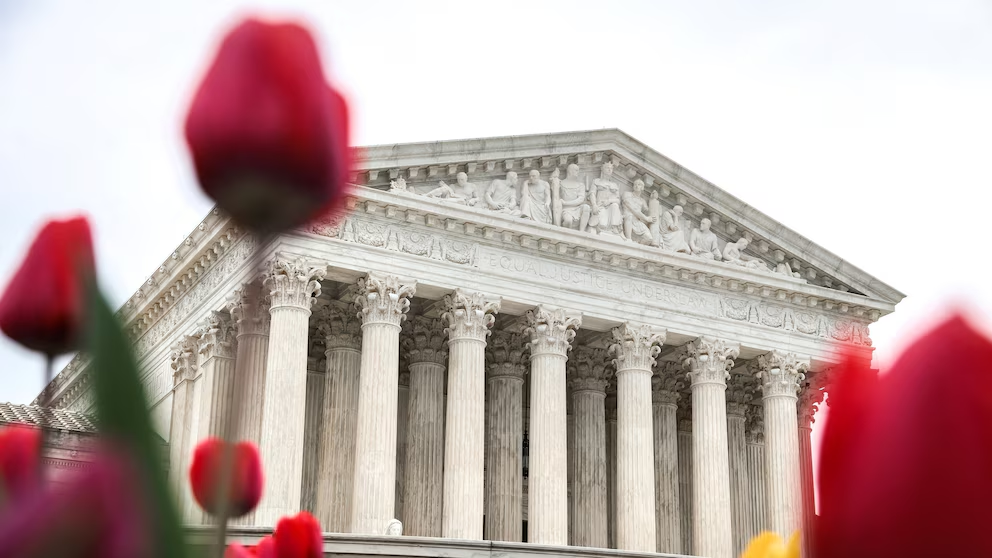
Springtime blossoms adorn the exterior of the U.S. Supreme Court building in Washington, March 30, 2026. Evelyn Hockstein/Reuters
For over a century, a birth certificate issued in the United States has served as a pivotal instrument in obtaining the privileges of American nationality.
The majority of parents with infants born within the nation’s borders have only needed evidence of birth from a medical facility to seek social security numbers, passports and early childhood benefits for their offspring. As they matured, the birth certificate became universally recognized as validation of citizenship for purposes such as voter enrollment, job procurement, mortgage acquisition, and service in the armed forces.
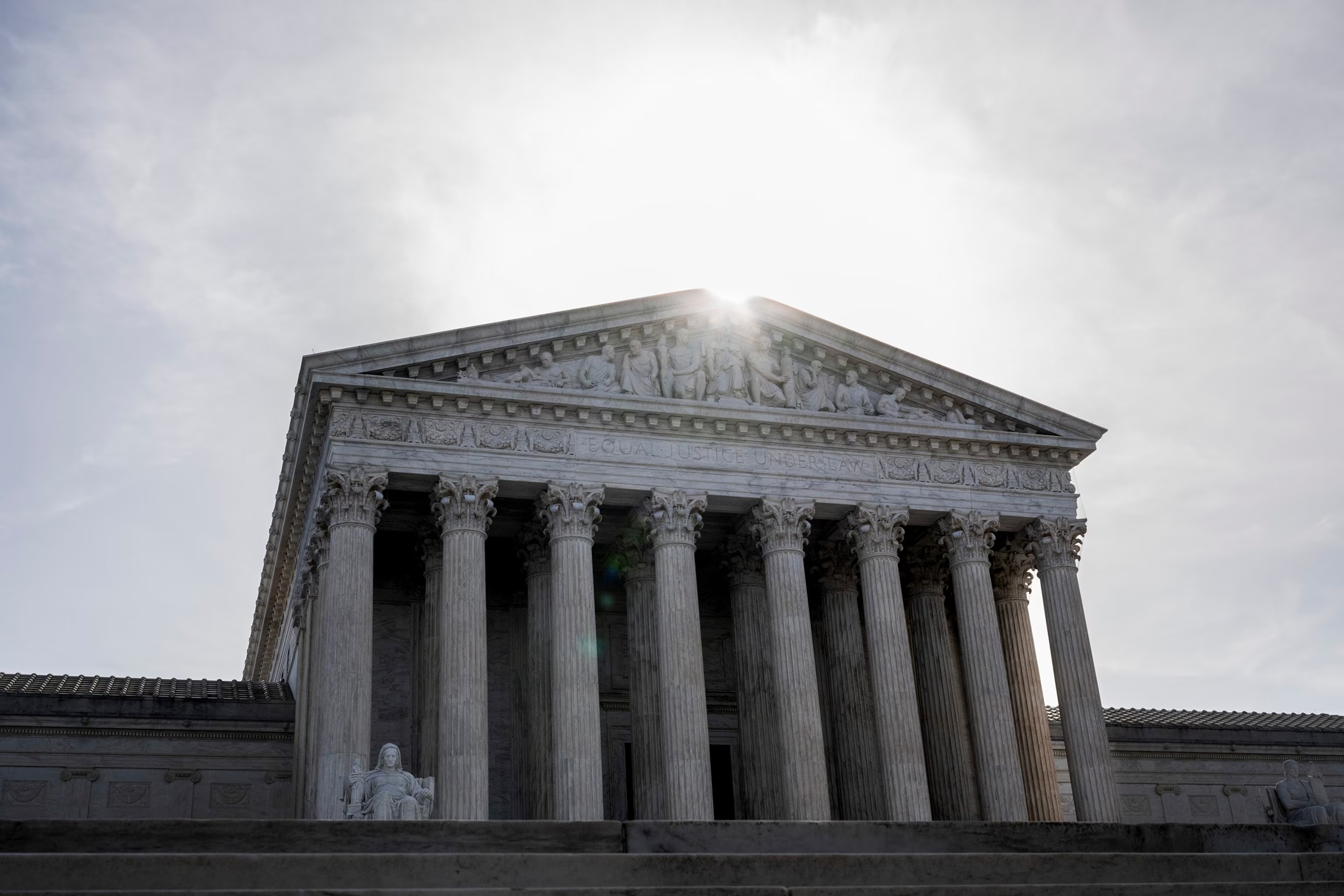
U.S. Supreme Court edifice on March 31, 2026 in Washington, DC.Roberto Schmidt/Getty Images
A significant legal challenge before the highest court this Wednesday will determine whether that well-established social practice and judicial foundation endures, or whether wide-ranging regulatory modifications that could touch millions will soon go into effect.
President Donald Trump is requesting the judges to uphold his initial executive order repealing birthright citizenship via a novel interpretation of the 14th Amendment and obligating parents to substantiate their own lawful standing prior to their children being granted citizenship.
Every lower tribunal that has reviewed the matter has dismissed the decree.
The amendment, which was approved in 1868, states that all "persons born or naturalized in the U.S. and subject to the jurisdiction thereof" are citizens. Congress subsequently affirmed that same wording in the federal law regarding citizenship in 1940.
"Take note of the age of this dated legislation – THE PRECISE CONCLUSION OF THE CIVIL WAR!" Trump exclaimed on a social media platform Monday. "It pertains to the INFANTS OF ENSLAVED PEOPLE!"
Trump posits that offspring of parents who are not citizens or legal permanent residents were never regarded as "subject to the jurisdiction" of the U.S. since they continue to owe political "allegiance" to another country.
Nevertheless, the courts and the government have consistently construed the 14th Amendment to unequivocally grant citizenship to every child delivered on American land, encompassing infants of undocumented noncitizens and temporary inhabitants, such as overseas students, foreign individuals present in the U.S. on visitor visas and seasonal employees.
"The [14th] Amendment, in clear terminology and with evident intent, encompasses the children born within the borders of the United States to all other individuals, irrespective of their race or ethnicity, residing within the United States," wrote Justice Horace Gray in a Supreme Court judgment from 1898 examining the status of children born to noncitizens.
Advocates for immigrants and groups that defend civil freedoms contend that Trump’s directive is manifestly unconstitutional — conflicting with the straightforward text of the Constitution and the historic intent of the citizenship clause — and would spark "turmoil" across the nation.
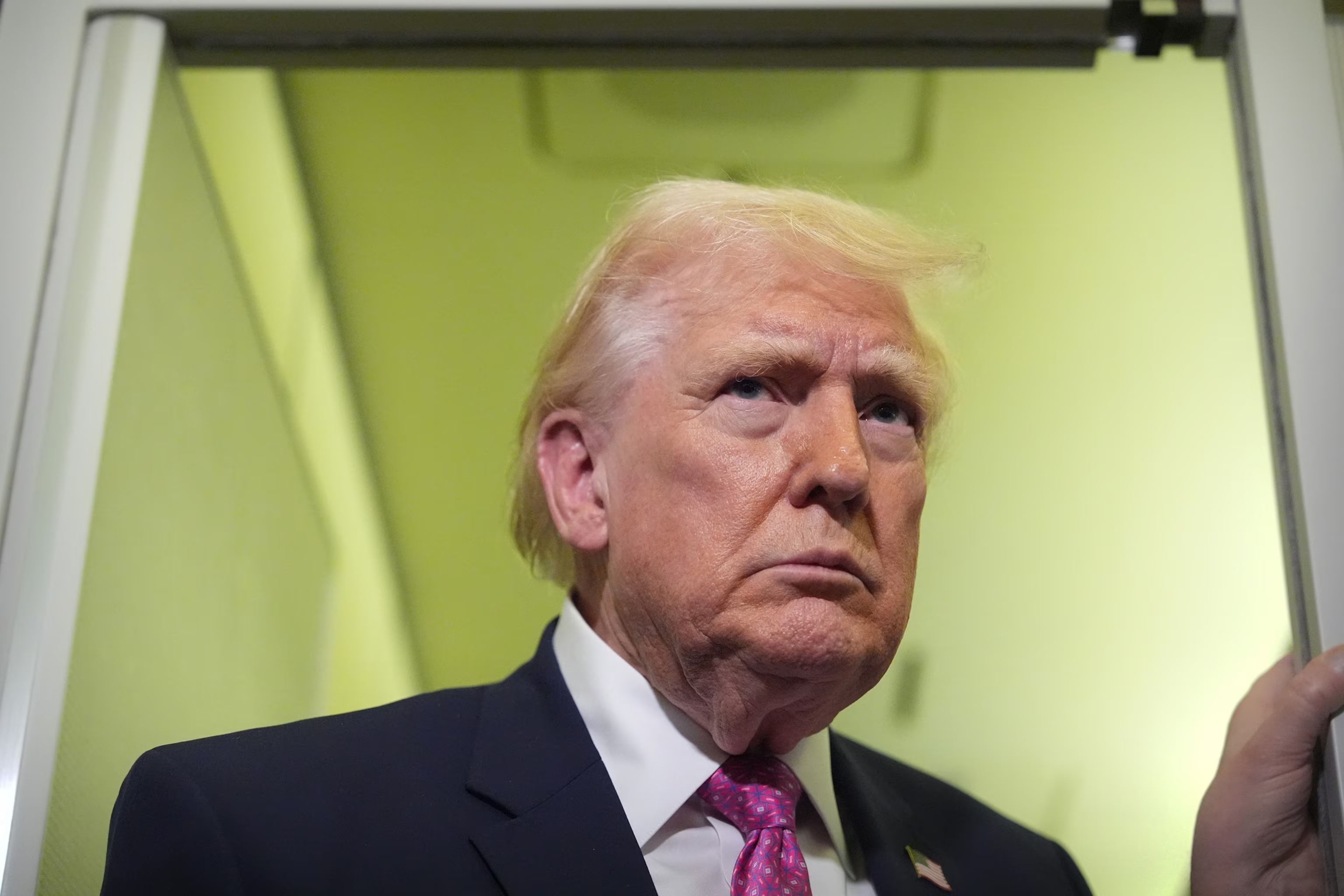
Donald Trump addresses journalists aboard Air Force One during a flight from West Palm Beach, Fla., to Joint Base Andrews, Md., March 29, 2026.Mark Schiefelbein/AP
"The consequences for this country would be earth-shattering," declared ACLU counsel Cody Wofsy, the leader of the opposition to the directive.
"Most directly, the children who would be deprived of their citizenship would be … exposed to apprehension, confinement, and expulsion from the sole nation they've ever been familiar with," Wofsy stated.
According to the Migration Policy Institute, an estimated 255,000 children born annually on American territory to noncitizen parents could forfeit legal status under Trump’s order. Some may encounter difficulties in securing citizenship within any nation, in effect being born as "stateless."
"Infants [of parents] hailing from nations such as Nepal, Afghanistan, Bhutan, where there isn’t an established route to citizenship in their native countries," Anisa Rahm, legal director of the South Asian American Justice Collaborative, mentioned. "Thus, where do they belong?"
While the administration insists that the order will be enforced exclusively on offspring born after its enactment, legal experts have cautioned that a ruling striking down birthright citizenship might generate retroactive effects.
"The nationality of additional Americans might be challenged," remarked Winnie Kao, a lawyer with the Asian Law Caucus, one of the parties that initiated a class-action lawsuit opposing the administration’s order.
"Extensive areas of U.S. law would need to be reconsidered because they are based on birthright citizenship," Kao amplified. "It would also represent a complete operational and bureaucratic quagmire for all involved — even for parents who are U.S. citizens."
Stock photo close-up of the USA flag.Simpleimages/STOCK PHOTO/Getty Images
An ABC News examination of Trump administration blueprints for implementing a revised citizenship protocol throughout federal organizations suggests a more elaborate and possibly perplexing procedure for new mothers and fathers than presently exists, should the executive order be implemented.
The Social Security Administration maintains that birth certificates will no longer be adequate documentation for obtaining a new Social Security Number for a newborn.
"SSA will require evidence that such a person’s mother and/or father is a U.S. citizen or in an eligible immigration status at the time of the person’s birth," the agency indicated in a guidance document from July 2025.
Parents would initially be required to tender their own citizenship records via mail, telephone, or the internet, the agency clarified. As an alternative, parents could supply a "self-attestation" of citizenship, susceptible to "state and federal penalties for perjury," as specified by the document.
The State Department claims it would institute analogous verification procedures for those requesting passports.
Concerning children born to lawful but temporary immigrants — who would henceforth be ineligible for citizenship — the U.S. Citizenship and Immigration Services conveys that parents would be obligated to enroll in order to attain the identical temporary legal status for their children.
Federally subsidized assistance initiatives for children, such as dietary aid and health services, furnished by the Department of Health and Human Services, would likewise demand exhaustive records from all parents to authenticate that their offspring were citizens at birth, as disclosed in an agency memo.
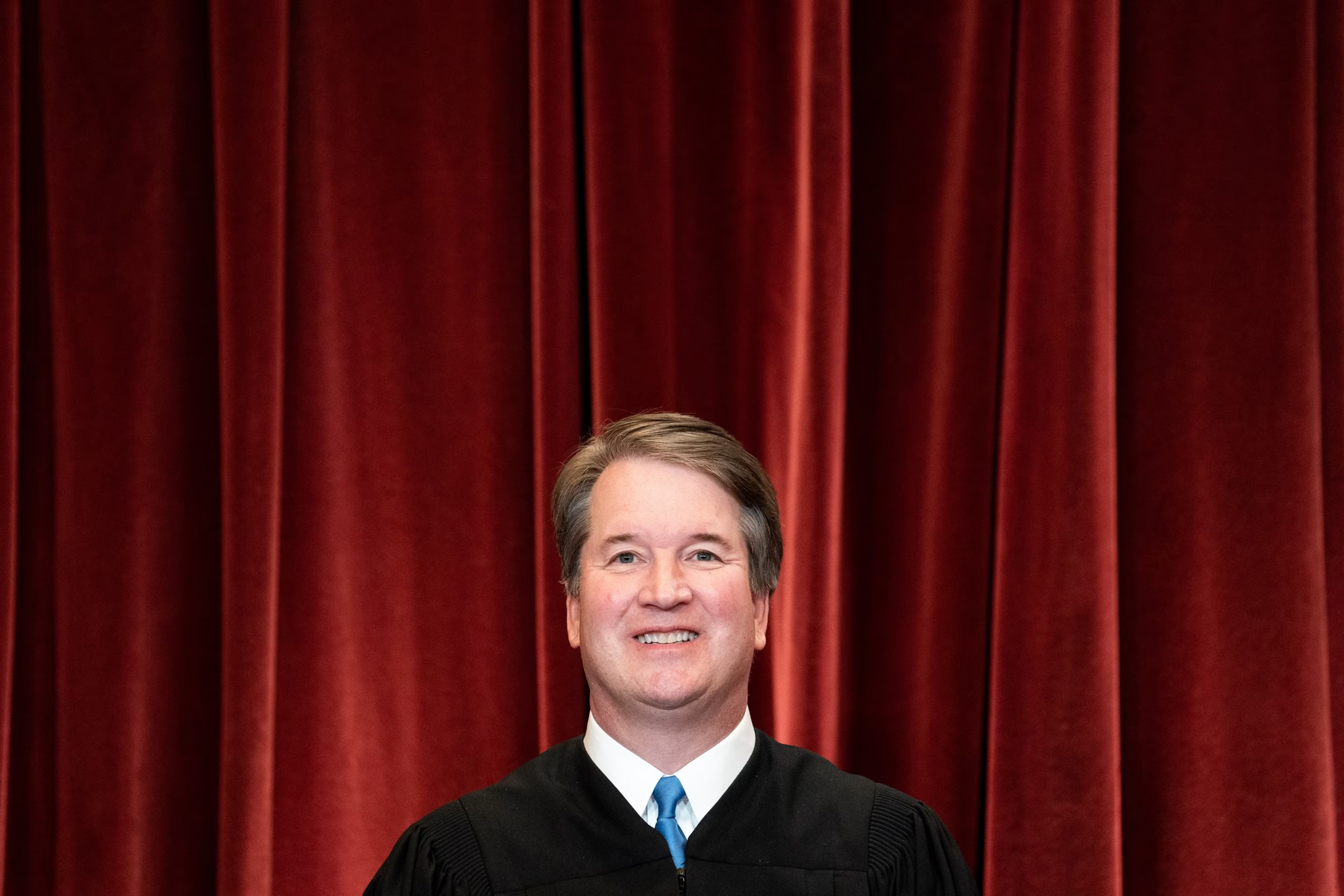
Associate Justice Brett Kavanaugh stands during a group photo of the Justices at the Supreme Court in Washington, DC on April 23, 2021.Erin Schaff/Pool/Getty Images
During verbal justifications the prior year concerning a related legal action concerning Trump’s birthright citizenship order, Justice Brett Kavanaugh — often a pivotal vote in exceedingly disputed cases — voiced apprehension concerning whether the government could conduct citizenship assessments for parents of the exceeding 3.6 million infants born in the U.S. annually.
"Federal functionaries will have to determine that essentially," U.S. Solicitor General John Sauer informed the justice while being questioned.
"How?" Kavanaugh inquired skeptically.
"Thus, you can conceive of multiple approaches –" Sauer initiated.
"Such as?" Kavanaugh retorted. "For all the newborns? Is that the operational plan?"
Sauer replied at that juncture that the administration had not finalized all the specifics because courts had obstructed the executive order in its entirety.
Surveys suggest that the nation is distinctly divided regarding the subject of American citizenship for newborn children of unauthorized immigrants. Half of the adult population — 50% — asserts they should be granted U.S. citizenship; 49% disagree, according to an April 2025 Pew Research Center study.
Sourse: abcnews.go.com