
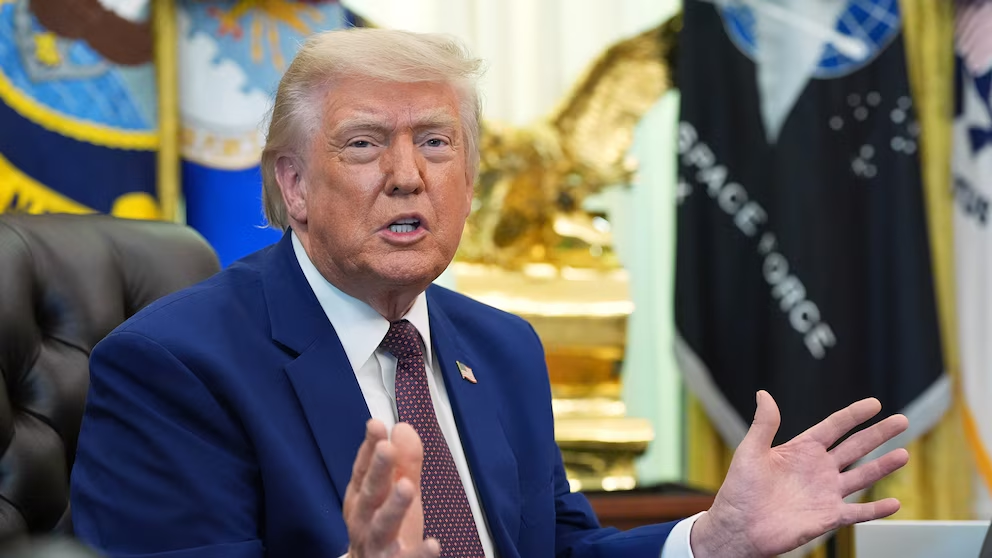
President Donald Trump speaks in the Oval Office of the White House, June 3, 2026.Alex Brandon/AP
The House of Representatives on Wednesday approved a measure to limit President Donald Trump’s authority for engaging in war with Iran, by a tally of 215-208 — marking the first significant disapproval of the administration’s strategy in the conflict that began three months ago.
Four Republican representatives — Warren Davidson of Ohio, Brian Fitzpatrick of Pennsylvania, Tom Barrett of Michigan, and Thomas Massie of Kentucky — sided with Democrats in approving the resolution. This cross-party endorsement, while mostly symbolic, conveys a significant message to the administration and reflects the sentiment of the lower legislative body.
The concurrent resolution, which urges Trump to cease the deployment of U.S. armed forces in hostile actions against Iran or any of its military or governmental entities, unless a formal declaration of war or authorization for the use of force is legislated, now proceeds to the Senate. Even if the Senate concurs, a concurrent resolution lacks the force of law and is not presented to the president for approval or veto.
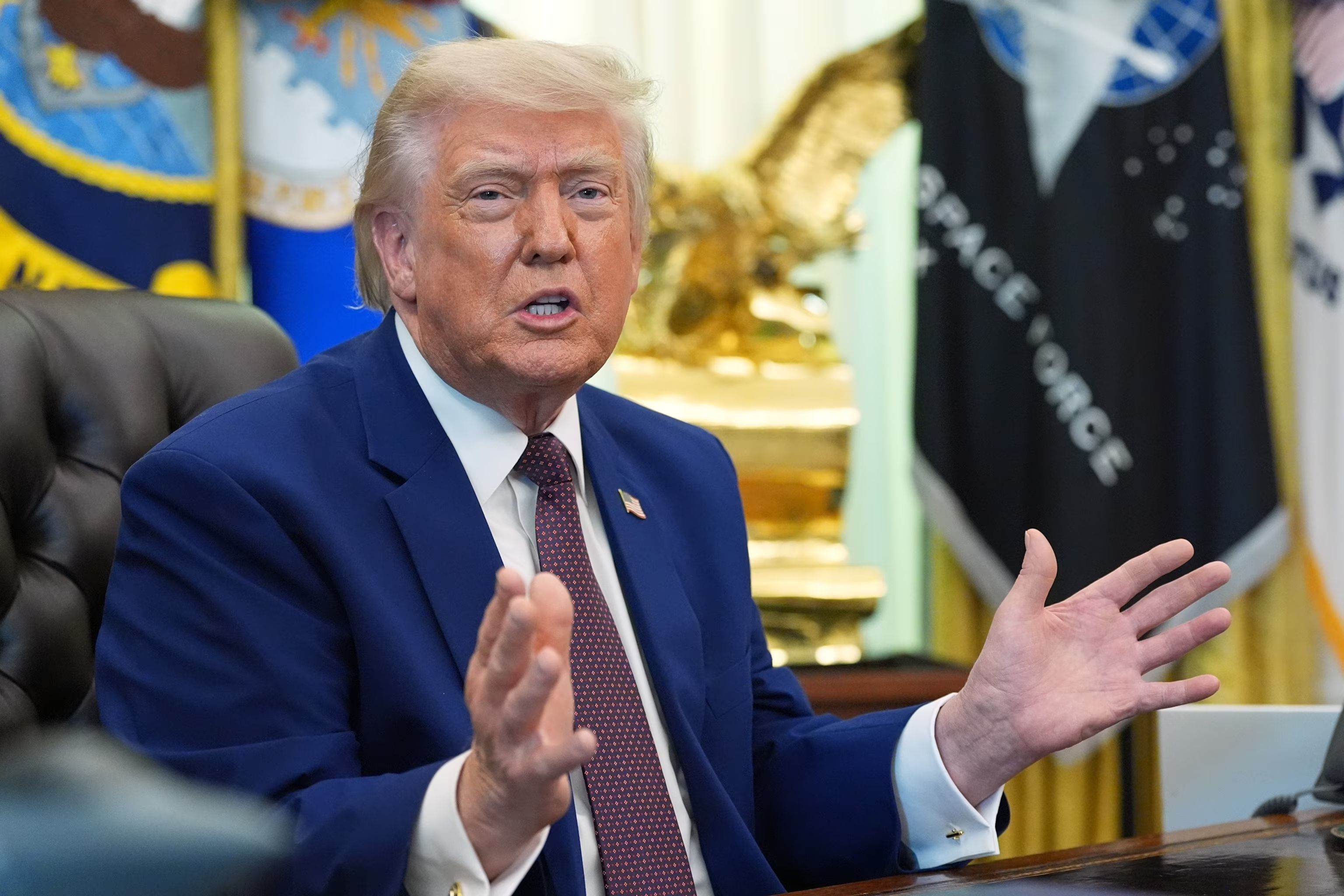
President Donald Trump speaks in the Oval Office of the White House, June 3, 2026.Alex Brandon/AP
“Today, Congress acted in accordance with the Constitution — members from both parties indicated that enough is enough. The time has come to bring this conflict to a close. It is imperative for the president to inform the American public about the reasons for our involvement in this war,” stated House Foreign Affairs ranking Democrat Gregory Meeks to reporters following the vote.
This marks the fourth occasion the House has voted on an Iran war powers resolution initiated by Democrats since the commencement of hostilities. All prior attempts narrowly failed in the House, including a vote on May 14 where a comparable resolution resulted in a tie.
“I believe it is a highly perilous course to strip the administration and the commander-in-chief of their negotiation capabilities at this juncture,” remarked Speaker Mike Johnson before the vote.
Prior to the Memorial Day recess last week, GOP leadership unexpectedly postponed a vote on this resolution due to concerns about member attendance, which sparked strong reactions from Democrats who were confident of its passage.
An official from the White House downplayed its approval on Wednesday, attributing it to Republican absences. Six Republicans were not present. However, even with full attendance, the resolution would still have garnered sufficient votes to pass.
“President Trump will continue to safeguard our national security by utilizing his constitutional authority as Commander-in-Chief, while maintaining open communication with Congress,” the official added.
Michelle Stoddart of ABC News contributed to this report.
Sourse: abcnews.go.com