

Secretary of War Pete Hegseth is scheduled to appear before the Senate Appropriations Committee concerning the FY2027 funding application on Capitol Hill, May 12, 2026 in Washington.Kevin Lamarque/Reuters
The Army is wrestling with a sudden fiscal deficit and is hurrying to curtail educational expenses across extensive portions of its personnel, according to classified papers seen by ABC News and various U.S. representatives.
The intention behind the maneuver is to compensate for a deficit ranging from $4 billion to $6 billion, according to one representative, due to the service extensively growing its operational existence both domestically and internationally.
The reductions, spanning from esteemed academies to unit-level instruction, have prompted a series of instant terminations and exceedingly intense fiscal examination several months before the fiscal year concludes on Sept. 30.

Secretary of War Pete Hegseth is scheduled to appear before the Senate Appropriations Committee concerning the FY2027 funding application on Capitol Hill, May 12, 2026 in Washington.Kevin Lamarque/Reuters
The service's multi-billion dollar shortfall stems from a growing array of operational needs and escalating prices across the force.
Significant factors, a U.S. official stated, include costs tied to the Iran conflict and an expanding operation securing the U.S. southern boundary.
Furthermore, extensive National Guard missions, encompassing the ongoing deployment in Washington, D.C., projected to cost approximately $1.1 billion this year alone, according to estimations from the nonpartisan Congressional Budget Office.
Concurrently, the service is absorbing rising personnel expenditures and intervening to address missions linked to Department of Homeland Security funding deficits, specifically at the southern border and on construction projects. The Army anticipates receiving reimbursement for covering certain DHS expenses incurred during the record 76-day DHS cessation.
The Army's III Armored Corps, a collective of the Army's heavy armor and cavalry elements, is expected to bear a substantial portion of the consequences, as demonstrated in a document outlining projections to units on the effects of funding cutbacks.
That internal directive cautions that the corps' aviation groups will be deployed next year at "a diminished level of readiness," accompanied by "career deceleration" among mid-tier officers who oversee crucial training activities, noting that rebuilding "combat effectiveness" for units would take a complete year.
The corps oversees roughly 70,000 soldiers, representing nearly half of the service's combat capability.
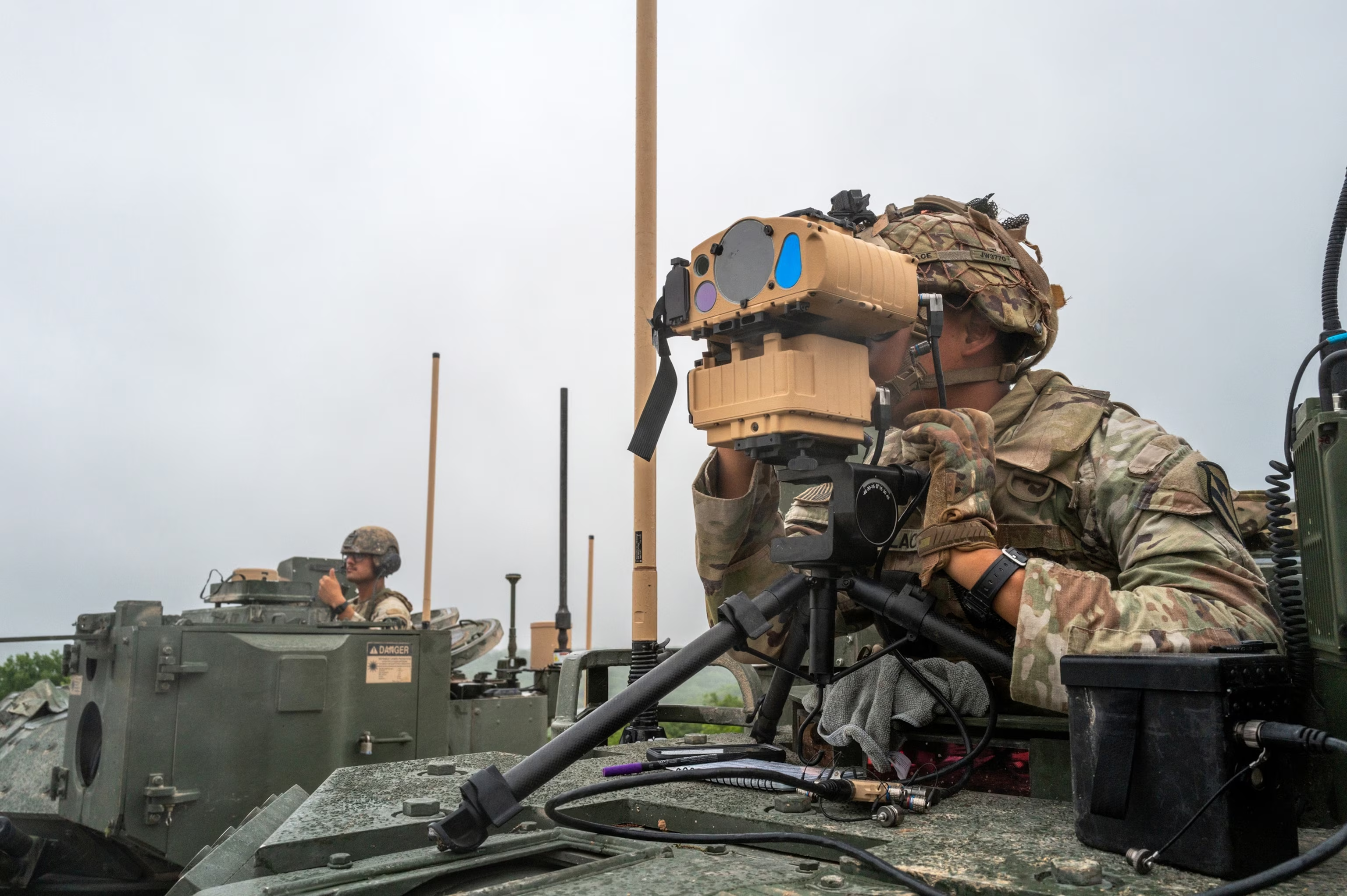
Army soldiers with the 1st Battalion, 82nd Artillery Regiment, 1st Cavalry Division artillery lookout atop a M109 A7 Paladin self propelled Howitzer during live fire training on April 29, 2026, in Fort Hood, Texas.Brandon Bell/Getty Images, FILE
The reductions there involve curtailing approximately half of the formation's financial plan and significantly reducing pilots' flight hours to the minimum required amounts.
The flight cutbacks occur as the Army's aviation sector encounters rising scrutiny following a series of significant incidents, with a substantial portion historically linked to exhaustion and reduced pilot flight durations in recent years.
Additionally, among the actions, an upcoming Army Sapper Course, recognized as the service's foremost combat engineering school, was called off, while an artillery course slated to commence Monday at Fort Campbell, Kentucky, was promptly canceled. Other units and military learning curriculums are also scrutinizing more closely the number of soldiers they can educate, according to two U.S. representatives.
"Army leaders are implementing every available action to emphasize vital readiness and operational demands, guaranteeing accountable operations within our current enacted funding thresholds," Col. Marty Meiners, an Army spokesman, conveyed in a statement.
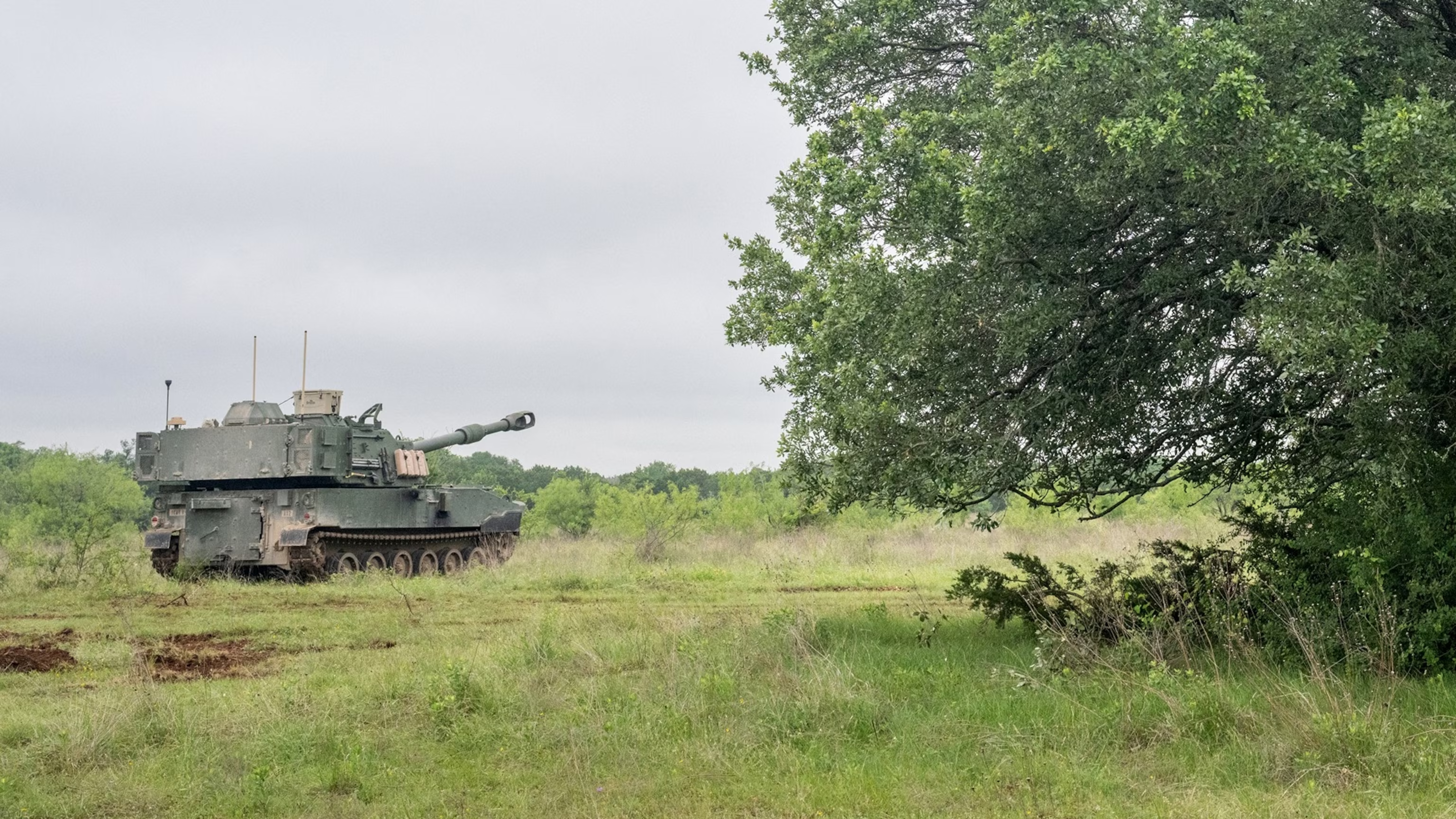
A M109 A7 Paladin self waits in a field during live fire training on April 29, 2026, in Fort Hood, Texas.Brandon Bell/Getty Images, FILE
The Defense Department opted not to specify if comparable instructional reductions are being executed across the military or are predominantly limited to the Army, instead directing ABC News to the individual services for responses.
The cutbacks are happening amid soaring fuel expenses, which could rapidly inflate the expense of comprehensive training exercises, aviation maneuvers, and travel. Nevertheless, it stays unclear whether these rising expenses are the definite instigator behind the actions currently impacting Army commands.
The Pentagon's austerity measures were briefly addressed on Capitol Hill Tuesday as Secretary of Defense Pete Hegseth appeared before lawmakers to talk about the Pentagon's plea for a $1.5 trillion budget. However, defense officials never explicitly tackled the concerns.
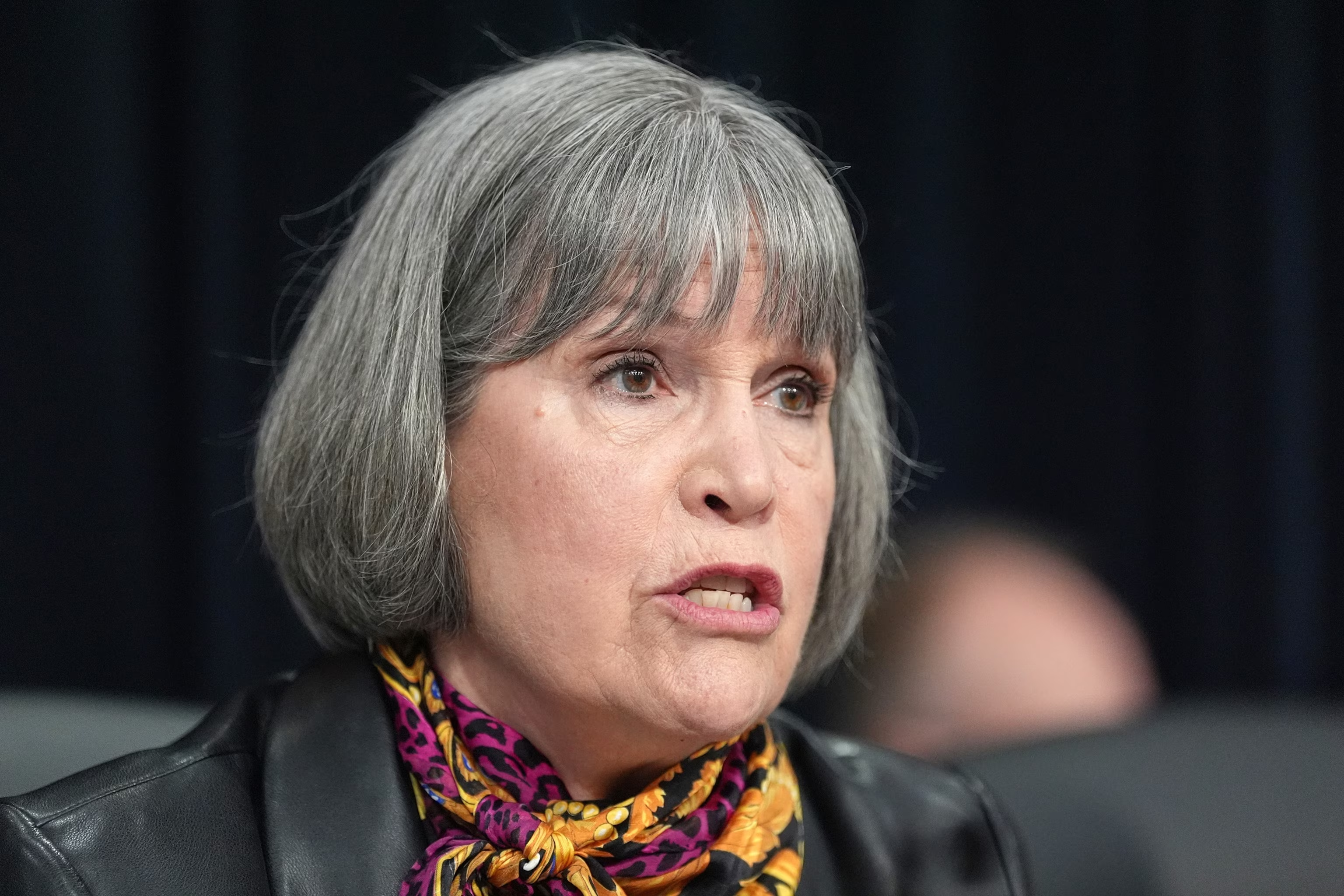
Rep. Betty McCollum speaks at a House Appropriations subcommittee budget hearing for the Department of Defense with Defense Secretary Pete Hegseth, Defense Secretary Pete Hegseth and acting Under Secretary of Defense and Comptroller Jules Hurst III, on May 12, 2026, in Washington, D.C.Alex Brandon/AP
"We need clarity on the impact on the services executing operations beyond warfare; the department informed us that the average fuel cost for the services climbed from $154 to $195 per barrel," Rep. Betty McCollum, D-Minn., expressed Tuesday during a session focused on the Pentagon's financial plan.
"That means we have to allocate more funds for fuel. Thus, less funding remains accessible for the training and exercises required by the services," she included.
Reducing training programs late in the summer, close to the fiscal year's end, represents routine protocol within the Pentagon. However, authorities indicate it is substantially less typical to witness such extensive reductions and cancellations this early in the budgetary period.
Sourse: abcnews.go.com