
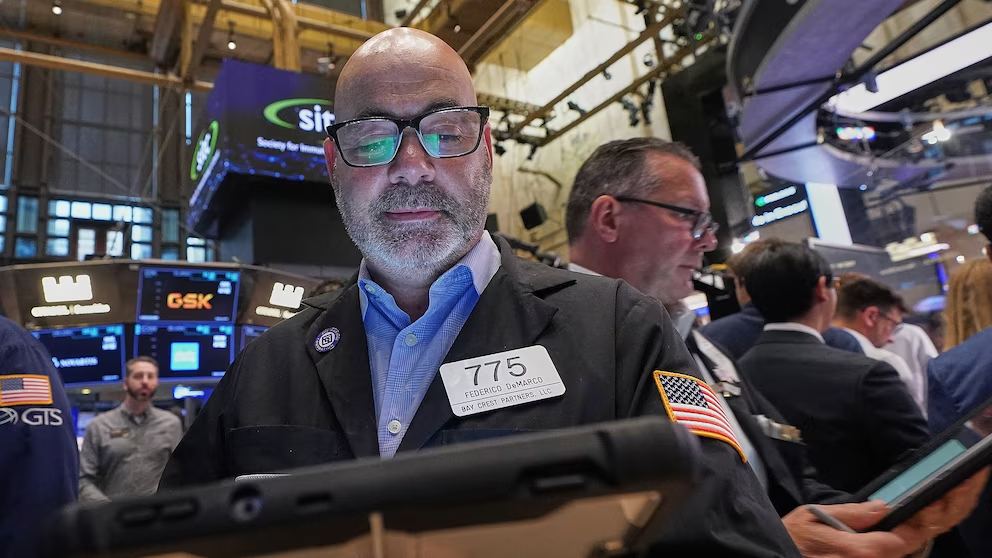
Traders work on the floor of the New York Stock Exchange, June 26, 2026.Richard Drew/AP Photo
The stock market experienced a significant upswing during the initial six months of 2026, seemingly unaffected by a conflict in the Middle East, a critical oil deficit, and apprehension regarding a potential bubble in artificial intelligence.
The Dow Jones Industrial Average is positioned for its most favorable first half of a year since 2021. This index has appreciated by 8.9% since the beginning of this year, surpassing the 52,000 mark. During the same timeframe, the S&P 500 has surged by 9.4%, and the technology-centric Nasdaq has rocketed by 12.5%.
The rise in stock valuations is predominantly attributed to a standout year for corporate profits, which has been bolstered by a robust economy and a considerable number of consumers willing to spend despite heightened prices, according to some analysts speaking with ABC News.
Exceptional performance from AI chip manufacturers has also contributed to market growth, they elaborated, enabling the primary indices to surmount a period of underperformance for many of the tech behemoths that previously propelled markets.
“Profits have been exceptionally strong,” stated Ed Yardeni, the head of market advisory firm Yardeni Research and former chief investment strategist at Deutsche Bank’s U.S. equities division.
He further commented, “In financial markets, the narrative is often more captivating than the underlying economic indicators. This year, it has been the fundamentals. The economy has defied expectations by demonstrating its resilience.”
The economy expanded at a healthy rate during the first three months of 2026, recovering from a sluggish period at the close of the previous year. Employment figures that exceeded projections helped to alleviate concerns about a potential downturn. The job market saw a substantial average addition of approximately 114,000 positions each month from January to May, according to data from the Bureau of Labor Statistics.
A combined metric of business and consumer expenditure increased at the commencement of this year, as indicated by Commerce Department statistics. Consumer spending constitutes roughly two-thirds of U.S. economic activity.
“At the end of last year, the employment landscape was uncertain, and consumer spending was rather subdued. The economy has truly impressed over the past six months,” Callie Cox, chief market strategist at Ritholtz Wealth Management, informed ABC News.
These economic advancements have served to support the expansion of the stock market, boosting corporate earnings and driving up share prices, some market observers noted.
Notwithstanding a brief decline earlier this month, the shares of rapidly advancing artificial intelligence chip manufacturers have uplifted major market indices.
Micron’s value has surged by 306% this year. Sandisk has seen a remarkable increase of 830% over the same period.
The extraordinary performance of semiconductor companies has aided markets in overcoming a lackluster year for the "Magnificent Seven," a group of prominent technology corporations that were instrumental in driving stock market gains in preceding years.
Meta, the parent entity of Facebook, has seen a decrease of 15% year-to-date. Tesla has fallen by 7%. Even Nvidia, the world’s largest company by market capitalization, has experienced its stock performance lag behind the growth of the S&P 500.
“The Magnificent Seven were highly popular in 2024 and 2025. Now they are showing sluggishness,” Tyler Richey, an analyst at Sevens Report Research, told ABC News. “We are seeing leadership emerge in other sectors of technology, particularly in chipmakers.”
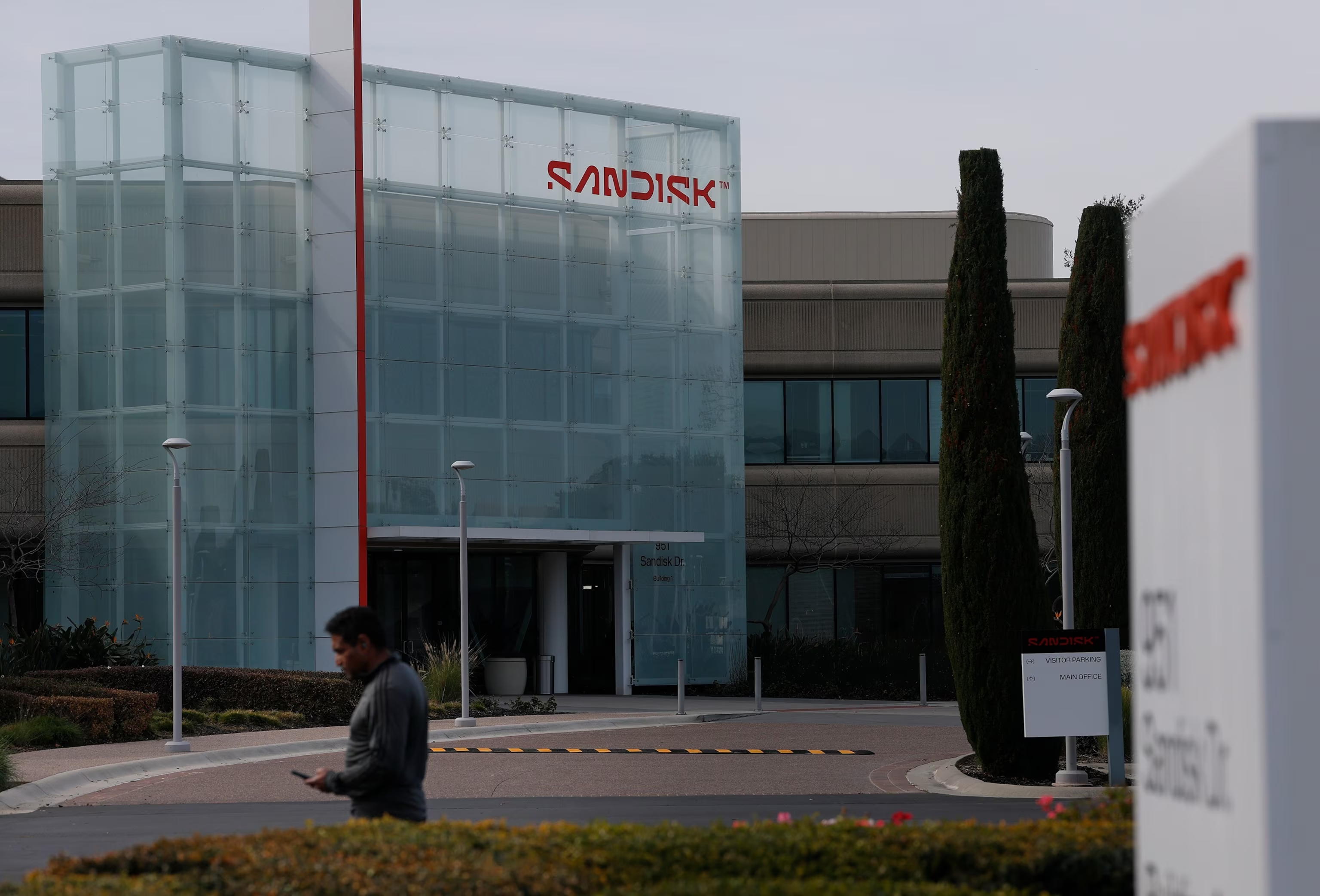
A view of SanDisk headquarters on January 30, 2026 in Milpitas, California.Justin Sullivan/Getty Images
Market analysts who have conferred with ABC News hold differing perspectives on the prospects for the markets during the remainder of 2026.
The confluence of elevated inflation and a resilient labor market has increased the likelihood of an interest rate increase, according to futures market indicators, presenting a challenge for businesses keen on maintaining low borrowing expenses.
Federal Reserve Chair Kevin Warsh caused a brief stock market decline earlier this month during his inaugural press conference leading the central bank. Warsh expressed a firm commitment to reducing inflation to the Fed’s target rate of 2%. The current annual inflation rate is more than double that level.
Futures markets indicate approximately a 66% probability of an interest rate hike in September, based on the CME Group’s FedWatch Tool, which gauges investor sentiment.
Yardeni anticipates that the stock market will continue its upward trajectory through the second half of this year, projecting an additional 9% gain for the S&P 500. Richey, however, foresees a downturn in major indices by the conclusion of 2026.
“Accommodative expectations of a rate reduction this year were a prevailing sentiment in the first half of 2026. Now, an interest rate increase is being factored into market prices. There is greater risk and diminished fundamental backing from the Fed,” Richey stated.
Nevertheless, Richey conceded that a significant degree of unpredictability exists.
“Accurately predicting the timing of this market’s movements has been exceedingly difficult,” Richey added.
Sourse: abcnews.go.com