
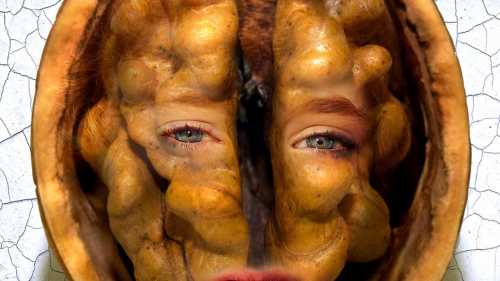
Have you ever noticed a face in the bizarre curves of tree bark? Or perhaps seen a funny smile in the foam of your morning latte? If so, you are incredibly lucky. This unique gift that allows you to see faces in completely ordinary things has its own, scientifically proven benefits.
Researchers call this phenomenon pareidolia. One can argue for a long time whether these images carry some deep meaning and hidden messages, but the fact remains undeniable: our brain's ability to recognize such pictures comes with a whole range of amazing bonuses.
People who see faces in everyday objects typically experience three scientifically proven benefits:
1. They are more creative
Two studies, conducted in 2021 and 2022, have linked the ability to pareidolia to higher levels of creativity. As science journalist Annie Murphy Paul explains, “creative people are significantly more likely to notice pareidolia in the world around them than less creative individuals.”
As evidence, she cites the artistic philosophies of Salvador Dali, Leonardo da Vinci, and Paul Klee. All of these geniuses advised artists to look closely at ordinary objects and natural elements to see what images their imaginations would conjure up. “Creativity is not just about how we think, it’s about how we see,” the researcher aptly notes.
Susan Magsamen, executive director of the Arts and Mind Lab at the Pedersen Institute for Brain Research, told Johns Hopkins Magazine, “We think pareidolia can improve focus, mood, creativity, imagination, and flexibility in problem-solving because you’re literally learning to see things from a different perspective. We’re still in the early stages of this research, but it’s exciting, and there’s a lot of potential in these glimpses of perception.”
2. They have cognitive flexibility
Cognitive flexibility is our mind’s ability to “multitask” sensory information. It’s the ability to switch between different processes: for example, learning something new while simultaneously performing routine work. Scientists also cite the ability to quickly switch attention between different interlocutors during a noisy group conversation as a basic example of such flexibility.
A 2024 study examining the relationship between creativity and cognitive flexibility states: “Our ability to imagine and create depends largely on how we perceive and model the external world. This suggests that creative individuals see it differently.”
The researchers found that ambiguous stimuli—like the same face on a tree bark—create a phenomenon called “divergent perception.” The term, coined during the study, describes the process “when a person actively engages with the perceptual possibilities provided by ambiguous sensory information.” The researchers also say that this concept could explain the heightened creativity seen in altered states of consciousness.
Simply put, your mind has an amazing ability to effortlessly switch from one thought or task to another. That's why people prone to pareidolia are so inventive: when faced with an unusual problem, they easily think outside the box. This makes them not only brilliant conversationalists, but also true innovators in the workplace.
3. They adapt easily
Another interesting advantage of the ability to see faces in ordinary objects is that they are incredibly adaptable. Professor David Elais, a psychologist and neuroscientist at the University of Sydney, told The Guardian: “One of the most evolutionarily adaptive processes in our visual system is face recognition. We want to detect them as quickly as possible, so we can tell instantly whether it’s friend or foe… But sometimes there’s a side effect and we end up seeing the wrong faces.”
Historically, this skill was developed for survival and protection, but in our modern world it works differently. It helps us make quick, effective decisions and maintain a cool head in times of high stress or chaos.
The authors of the aforementioned 2024 study also emphasized that “pareidolia is considered an adaptive skill, as it likely helped our distant ancestors to notice threats in a timely manner in an extremely complex sensory environment.”
Share
Subscribe to UkrMedia on Telegram.
⚡ Readers' Pulse
Do you often notice living images in ordinary things around you?
1 person has already voted. Join the discussion.
🎭 I see images everywhere 🧐 Only real things 💭 I have my own opinion
📊 Mind map
🎭 I see images everywhere 100% 🧐 Only real things 0% 💭 I have my own opinion 0% 💡
The discussion is just beginning. Be the first to comment!
Comments
New ones first ↕
There are no comments yet. Be the first!