
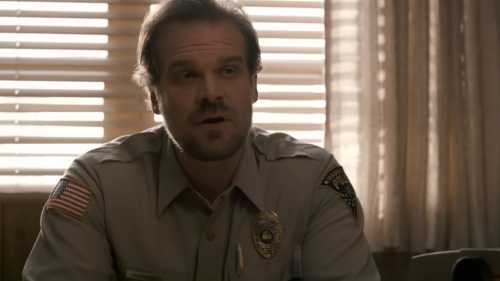
Every time I come across an old American film, my gaze inevitably catches the figure of the sheriff. Usually he is a life-weary, slightly melancholic man with a mustache. We are used to perceiving him as some kind of overseas policeman, only with better financing and a stylish hat. It seems that he is just a provincial romantic with a revolver who knows all the neighbors by name. But the longer you live, the better you understand: cinema sells us beautiful scenery, informs Ukr.Media.
If you delve a little into history, there was no cowboy romance in this position from the beginning. All this aesthetics of dusty towns has completely bureaucratic roots from medieval England. There was a kind of “shire moat” – a protege of the king, who banally collected taxes and looked after order in the county. Later, British colonists brought this position to America, where it took root wonderfully and transformed.
The human brain is so arranged that we instinctively look for a vertical line of power in everything. We want to believe that there is a strict FBI that gives orders to the state police, who issue directives to the sheriffs, and the sheriffs are already chasing the city cops. Nothing like that. The American law enforcement system is more like an administrative chaos where no one reports to anyone. They don’t have a single Ministry of Internal Affairs at all. The FBI deals with federal crimes like terrorism or kidnapping. City police work exclusively from the beginning of their city to the end of it. But everything that lies outside the city limits is the sheriff’s undivided kingdom. They simply exist in parallel realities and divide the sandbox by geography. Although the sheriff has every right to arrest someone in the center of a big city, in practice a gentleman’s agreement applies.
It is often said that sheriffs are not really police at all, but simply wardens who investigate only the theft of a farm tractor or a drunken fight in a bar. This is a big misconception. The sheriff and his deputies are full-fledged officers with every conceivable authority: from the right to make an arrest to the use of weapons. And they investigate absolutely everything. If a body is found somewhere in the woods, it is the sheriff's business. And in large counties, such as Los Angeles, the sheriff's office resembles a giant corporation with its helicopters, homicide detectives and special forces, before which the police of most European capitals would pale.
But there is one thing that makes sheriffs truly unique among other law enforcement officers. Elections. Yes, they are directly elected by local residents. If in our reality the head of the district police was not appointed by Kyiv, but was determined by voting by the residents of the district, we would live in a slightly different country. This detail automatically makes the sheriff not only a cop, but also a politician. He has to please people, report on taxes, and every few years convince the community that he is still worth something.
To run for this election, you need to have a valid law enforcement certificate. Usually, toothy police veterans with fifteen years of experience fight for this seat. And the motivation there is far from only in high ideals. The money is also good there, for not the most peaceful work. Somewhere in Texas or California, an ordinary deputy sheriff quite calmly brings home 100-150 thousand, and the boss himself in a large district can count on a quarter of a million or more.
By the way, about nerves. While on the screens sheriffs ride beautifully on horses and scatter the bad guys, in real life their main, most tedious and difficult function is prisons. Maintaining the county jail and escorting prisoners to local courts falls precisely on their shoulders. And in some places, like in the same California, the sheriff also works as a coroner part-time, dealing with sudden deaths. This is continuous stress and endless paperwork.
This is how this system works almost all over America – in 48 out of 50 states. Only Alaska, with its endless permafrost, and Connecticut somehow manage without them.
Share
Subscribe to UkrMedia on Telegram.
⚡ Readers' Pulse
Should we introduce elections for local police chiefs so that they are accountable to the community, not the ministry?
0 people have already voted. Join the discussion.
🗳️ For power to the community! 🛑 Against such an experiment 🤔 It's hard to decide
📊 Mind map
🗳️ For community power! 0% 🛑 Against such an experiment 0% 🤔 It's hard to decide 0% 💡
The discussion is just beginning. Be the first to comment!
Comments
There are no comments yet. Be the first!