

High school students utilize their mobile devices.Adobe Stock
The Department of Health and Human Services issued its latest public health advisory concerning screen usage among adolescents on Wednesday, urging young people to set aside their devices and "be present," while refraining from proposing precise screen-time restrictions.
Dr. Stephanie Haridopolos, an HHS representative and the architect behind the advisory, encouraged children and teenagers to "experience life firsthand" — a nod to the advisory’s suggestion for youngsters to limit what they term excessive screen engagement.

High school students utilize their mobile devices.Adobe Stock
The American Academy of Pediatrics stated that, given that children employ screens for school assignments, interpersonal connections, gaming, and social media exploration, families should prioritize "the caliber of digital interactions, rather than merely the duration or amount of time spent."
The surgeon general advisory doesn’t introduce any fresh research. Instead, it offers a synthesis of prior research, including material from organizations such as the American Academy of Pediatrics and the Journal of the American Medical Association.
"This means to put down your devices, go outdoors, be mindful of the moment, make eye contact, engage with your peers," Haridopolos remarked in a discussion with ABC News, further noting that the Trump administration is "reverting to fundamental practices."
The advisory, a formal declaration designed to draw the nation's attention to a "pressing public health matter" and offer suggestions for tackling it, was unveiled amidst a burgeoning debate regarding cellphone usage and its repercussions on young individuals, particularly in educational settings.
Haridopolos was recently promoted to the position of director of health communications within the surgeon general’s office, according to an HHS communication reviewed by ABC News.
The surgeon general's position remains open after two of President Donald Trump's nominations have been withdrawn since he reassumed office. The surgeon general, a role that requires Senate approval, is frequently referred to as the nation’s "chief medical officer."
Trump nominated Dr. Nicole Saphier for the position, though confirmation hearings have yet to be scheduled.
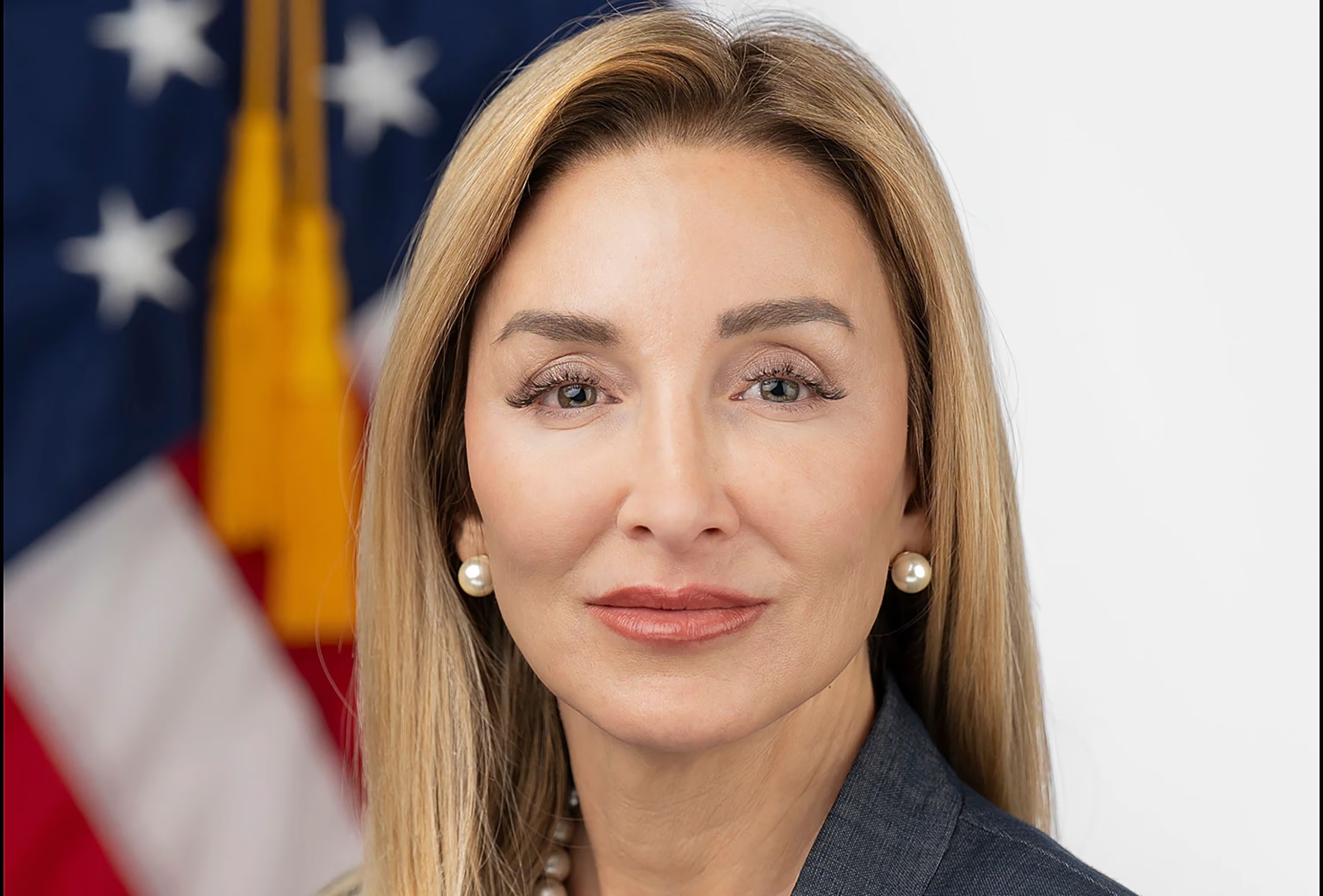
Chief of Staff and Senior Advisor at the Department of Health and Human Services, Stephanie E. Haridopolos, MD.HHS
The new advisory is intended to safeguard children and their digital privacy while proposing strategies to minimize screen time. It didn’t undergo a structured systematic analysis; rather, it was assembled by HHS officials following the Make America Healthy Again strategic plan.
Excessive screen time is defined as usage that could be detrimental when a child is unable to regulate their consumption or exhibits indications of compulsive behavior, according to the document. It encompasses the "entire digital realm" of applications, smartphones, tablets, chatbots, and other screen-related devices and interfaces – not exclusively social media sites.
The guidance is released at a time when numerous parents are seeking methods to curtail their children’s screen time.
"We have now reached a point where parents are becoming mindful of certain detrimental impacts screens can impose on their children’s mental well-being," noted Ariana Hoet, executive clinical director of The Kids Mental Health Foundation and a pediatric psychologist at Nationwide Children’s Hospital. "Yet, they feel overwhelmed regarding the steps to take."
She added: "Numerous parents concentrate on screen time limitations, but we should begin to emphasize what children are engaging with on these screens, the nature of the content they are exposed to, and the individuals they are interacting with online. Parents also need to recognize the real-world encounters, such as outdoor activities like biking or playing with friends, that children are forgoing because they prefer to be on their digital gadgets."
Concerns merit 'immediate attention'
The health department’s 40-page document indicates that children and adolescents with excessive screen time may experience impaired academic performance, heightened anxiety and depression, among other childhood developmental problems, such as diminished physical and emotional health. It points out that stakeholders, ranging from healthcare professionals to educational institutions and lawmakers, should promptly address these issues and pursue preventative measures.
The advisory delineates five recommendations under the “5 Ds”: discuss, do, delay, divert, and disconnect. This strategy suggests that stakeholders, including caregivers and school communities, should discuss screen use with children, exemplify healthy habits for them, postpone a child’s exposure to screens during their early years, redirect children’s focus with alternative pursuits, and aid them in regularly detaching from their devices.
According to the advisory, greater screen time levels have reliably been associated with physical health issues and less successful educational results.
Health experts in schools, including nurses and psychologists, acknowledge that healthy practices can improve a child’s academic achievement, but also suggest that there is insufficient evidence to conclusively establish that screens are uniquely detrimental to students in schools.
"There is educational technology, and social media, in addition to various other forms of screen time, which are not all identical," Kelly Vaillancourt Strobach, director of Policy and Advocacy at the National Association of School Psychologists, commented at a school-based health briefing on Capitol Hill earlier in the week.
Haridopolos recognized former Surgeon General Vivek Murthy for initiating the discourse concerning social media and mental wellness. Murthy’s 2021 advisory advocated for immediate recognition and intervention for youth confronting trauma in the aftermath of the pandemic. It also cautioned against the escalating strain on the mental well-being of young individuals, notably pertaining to the repercussions of interruptions to conventional in-person education.
According to Haridopolos, the latest advisory broadens the scope of Murthy’s ambition to tackle the youth mental health crisis.
"We extended it to screens," Haridopolos remarked, further stating, "we expanded it beyond solely mental health, incorporating physical well-being, cognitive and emotional growth, and academic performance, alongside mental health and substance-abuse harms."

Secretary of Health and Human Services Robert F. Kennedy Jr. speaks during the inaugural Make America Healthy Again summit in Washington, November 12, 2025.Nathan Howard/Reuters
The Trump administration’s MAHA initiative has emphasized its commitment to battling chronic illnesses and enhancing children’s health. In the advisory, Health Secretary Robert F. Kennedy Jr., who has openly addressed his personal history with substance-abuse addiction, contended that the pervasive presence of screens and their features fosters "addiction-like behavior."
Cellphone bans
The advisory also underscores the necessity of cellphone prohibitions in K-12 schools.
As schools grapple with the effectiveness of cellphone bans, the advisory advocates for adopting comprehensive ban policies to "limit or eradicate" cellphone use during instructional time.
Most states have instituted at least partial restrictions on these devices throughout the school day, and the National Defense Authorization Act – Congress’ principal legislation for defense policy and expenditures – proscribed cellphones for K-12 pupils attending schools on military installations.
Some studies indicate that comprehensive bans haven’t been highly effective this school year; however, Thomas Toch, the director of FutureEd – an education policy center at Georgetown University – proposed that cellphone bans can be a "vital step" in improving student educational outcomes.
Child Mind Institute President Harold Koplewicz concluded that phones are "disruptive."
"Children shouldn’t possess phones in school," Koplewicz, a child psychiatrist, stated to ABC News. "If a parent or guardian needs to reach you urgently, they can contact the office," he said.
"There is no positive aspect to distraction," he added.
Sourse: abcnews.go.com