

A test tube marked “Hantavirus positive” appears in this representation from May 7, 2026.Dado Ruvic/Reuters
Health authorities informed ABC News that current scientific understanding regarding the hantavirus that spread on the MV Hondius doesn’t demonstrate similar transmission rates as those seen with COVID-19, yet they do recognize the scenario may bear resemblance to the inception of the 2020 pandemic.
"Our present assessment indicates that human-to-human dissemination of Andes virus is comparatively unusual and typically linked to extended, intimate proximity," stated the current assessment from the Centers for Disease Control and Prevention. "Moreover, there is no existing proof of transmission before symptoms appear."
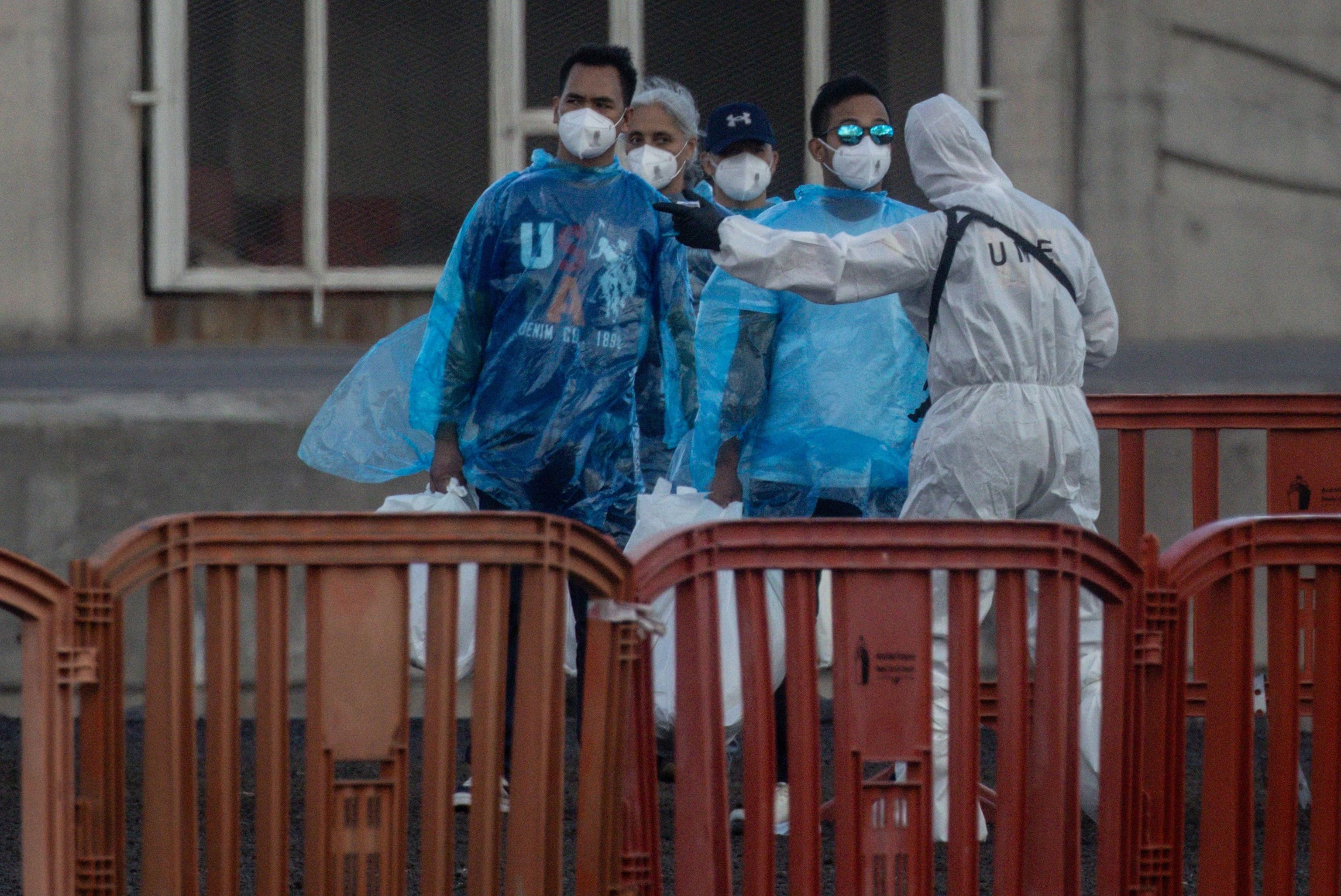
Medical personnel guide some of the final passengers as they are evacuated from the MV Hondius on May 11, 2026, in Tenerife, part of Spain’s Canary Islands.Chris Mcgrath/Getty Images
Government bodies across the globe have implemented considerable measures to curtail the escalation of the hantavirus, and an American physician who was present on the cruise ship pointed out that circumstances aboard the vessel might have aided in the virus’s propagation.
Within the U.S., 16 of the vessel’s 18 American travelers have undergone quarantine in Nebraska, while two others are in Atlanta, and over 40 individuals who were exposed to the infected are being monitored for any signs of developing the ailment.
"It largely transpires when individuals inhale secretions from rodents," shared Dr. Emily Abdoler, a clinical associate professor of medicine specializing in infectious diseases at the University of Michigan, during an interview with ABC News.
"The Andes type, prevalent in Chile and Argentina, carries the potential for transmission among humans, though that typically entails exceptionally intimate contact. It surpasses mere cohabitation," she elaborated. "It approaches sharing the same sleeping quarters."
Dr. Stephen Kornfeld, an American oncologist who took on the role of the ship’s acting medical professional subsequent to the Hondius’s designated doctor contracting the virus, initially obtained inconclusive findings from specimens gathered on the ship but later received a negative result.
In a discussion with ABC News conducted from his quarantine location on Thursday, Kornfeld remarked that variables such as ventilation and cabin dimensions aboard the ship might have fostered a "challenging" environment for spread, while also noting instances of relaxed social engagement.
"If casual contact does occur, it occurs recurrently," he observed. "There were three rooms where we would congregate frequently, often for periods ranging from one to one and a half hours, for lectures, conversations, and meals. I can easily picture repeated casual interactions, which over time could cumulate into something beyond a singular, fleeting contact."
Abdoler, who aided in diagnosing a hantavirus case in Michigan in 2021 — the strain indigenous to the U.S., which doesn’t disseminate among humans — highlighted that the benefit currently possessed by medical experts and entities such as the World Health Organization stems from over 30 years of research into the hantavirus. It is not a virus that is newly discovered.
While the evidence pertaining to the Andes strain, believed to be present on the vessel, remains limited given the scarcity of instances outside South America, Abdoler stated that there’s no apparent indication of altered transmission mechanisms for the Andes variant.
ABC News medical expert and epidemiologist Dr. John Brownstein concurred, indicating that existing studies suggest hantavirus manifests as a respiratory illness. Consequently, he noted, germs can be expelled through coughing, but the virus is not airborne.
"It differs from viruses such as COVID or measles, which can persist in the atmosphere for a duration," he clarified.
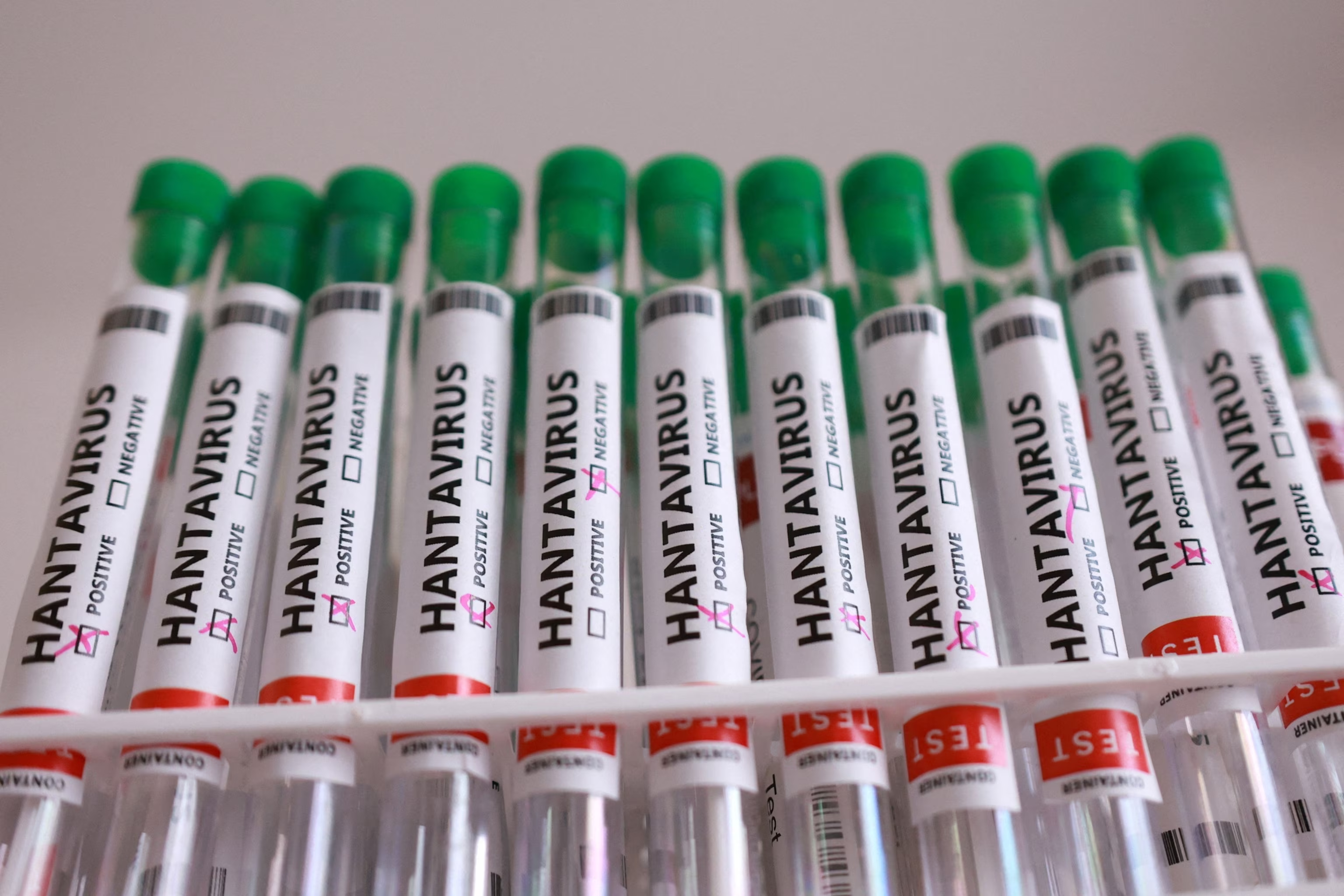
Test tubes marked “Hantavirus positive” in this illustration taken May 7, 2026.Dado Ruvic/Reuters
Brownstein further mentioned that the incubation period for the virus is prolonged, and despite the decreased likelihood of transmission between individuals, it remains crucial for health authorities to maintain established protocols for isolation and observation for anyone linked to the Hondius. Quarantine can then be started should they be shown to be a positive case.
"Incubation durations span from one to eight weeks," he specified.
During a press conference on Friday, WHO officials emphasized that there remains no evidence suggesting the virus has mutated to become more contagious or cause more severe symptoms.
Officials communicated that transmission is thought to be influenced by multiple contributing factors, namely the degree of the patient’s infectiousness, the immediate environment, and the utilization of protective measures and PPE.
On Friday, acting Centers for Disease Control and Prevention director Jay Bhattacharya informed the press that zero cases of hantavirus have been documented within the U.S.
At present, there exist a minimum of 10 instances connected to the vessel’s outbreak. Two passengers succumbed to the virus, while a third fatality has been tentatively attributed to it by WHO.
Sixteen Hondius travelers, Kornfeld included, are presently quarantined at the University of Nebraska Medical Center, displaying no indications of symptoms as of early Friday. Kornfeld was initially confined to a biocontainment ward at the facility.
Two further American passengers were transported to Atlanta for "evaluation and treatment," as per statements from authorities.
The remaining travelers are under quarantine in their residences and are undergoing surveillance.
WHO advised that supplementary positive cases might yet emerge during quarantine given the virus’s extended incubation period, but clarified that such an occurrence wouldn’t automatically signify the outbreak’s expansion.
Abdoler stated that the restricted number of positive cases both from the ship and their subsequent contacts bolsters the data concerning Andes transmission, and there are no indications that the virus has the capacity to propagate as easily as other pathogens.
She remarked that she is appreciative that the risk is being addressed seriously and those who potentially have been exposed are being monitored.

Travelers disembarking from the cruise liner MV Hondius, impacted by a hantavirus incident, walk with their luggage post-disembarkation at Eindhoven Air Base, Netherlands, on May 12, 2026.Piroschka Van De Wouw/Reuters
"My impression is that there is fundamentally no reason to be alarmed, but [WHO] is engaging a highly cautious tactic towards the outbreak, requesting that everyone isolate during the intubation duration," she expressed.
"I believe adopting a cautious stance is prudent given the unknowns, but I am not individually adjusting my customary habits pertaining to travel or external engagements," she appended.
– ABC News’ Dragana Jovanovic contributed to this report.
Sourse: abcnews.go.com