
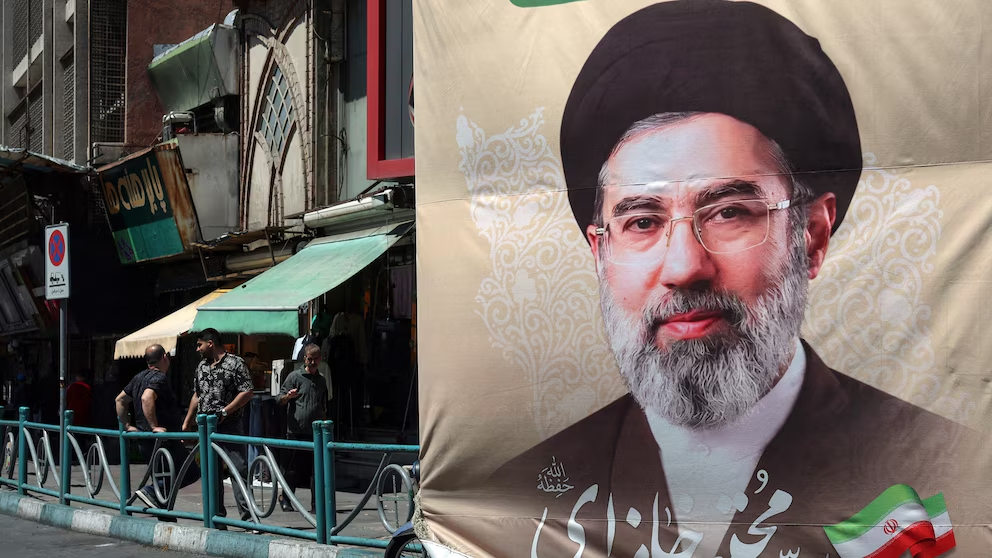
Iranians are seen on a sidewalk beside a street near a placard portraying Iran’s Supreme Leader Ayatollah Mojtaba Khamenei, in Tehran, on April 24, 2026. AFP via Getty Images
President Donald Trump has asserted that Iran is struggling to determine its head of state and that there is internal conflict among conservatives and reformists. He has continually stated over the past week that disagreements or fissures exist within the leadership as an explanation for the lack of advancement in discussions.
However, ABC News has conferred with numerous sources involved in both security and policy, alongside a former director of the Iran division within the Research and Analysis Division (RAD) of Israeli defense intelligence, all of whom depict a markedly contrasting perspective.
The prevailing viewpoint suggests that Iranian decision-making is no longer focused around the supreme leader to the extent it was before the conflict, and there is widespread agreement that there is not a substantial divide between various groups inside the regime, despite Trump’s statements.
One source with regional policy expertise and intelligence knowledge remarks, "Variations in emphasis and approach might exist within the Iranian establishment, but tangible evidence of fractures at the level of essential decision-making is lacking."
Concerns are present that Iran has evolved into an increasingly militarized nation, firmly under the authority of the Islamic Revolutionary Guard Corps. Ayatollah Ruhollah Khomeini founded the IRGC in 1979 to serve as the military guardian of the revolution and the governing system.
Unlike the period preceding the war, sources indicate that decisions are now made on a more decentralized basis. Mojtaba Khamenei ascended to the position of supreme leader after the demise of his father, Ali Khamenei, during the U.S.-Israeli attacks on Iran on Feb. 28, yet he remains concealed and challenging to reach. This circumstance contributes to slow and challenging decision-making processes.
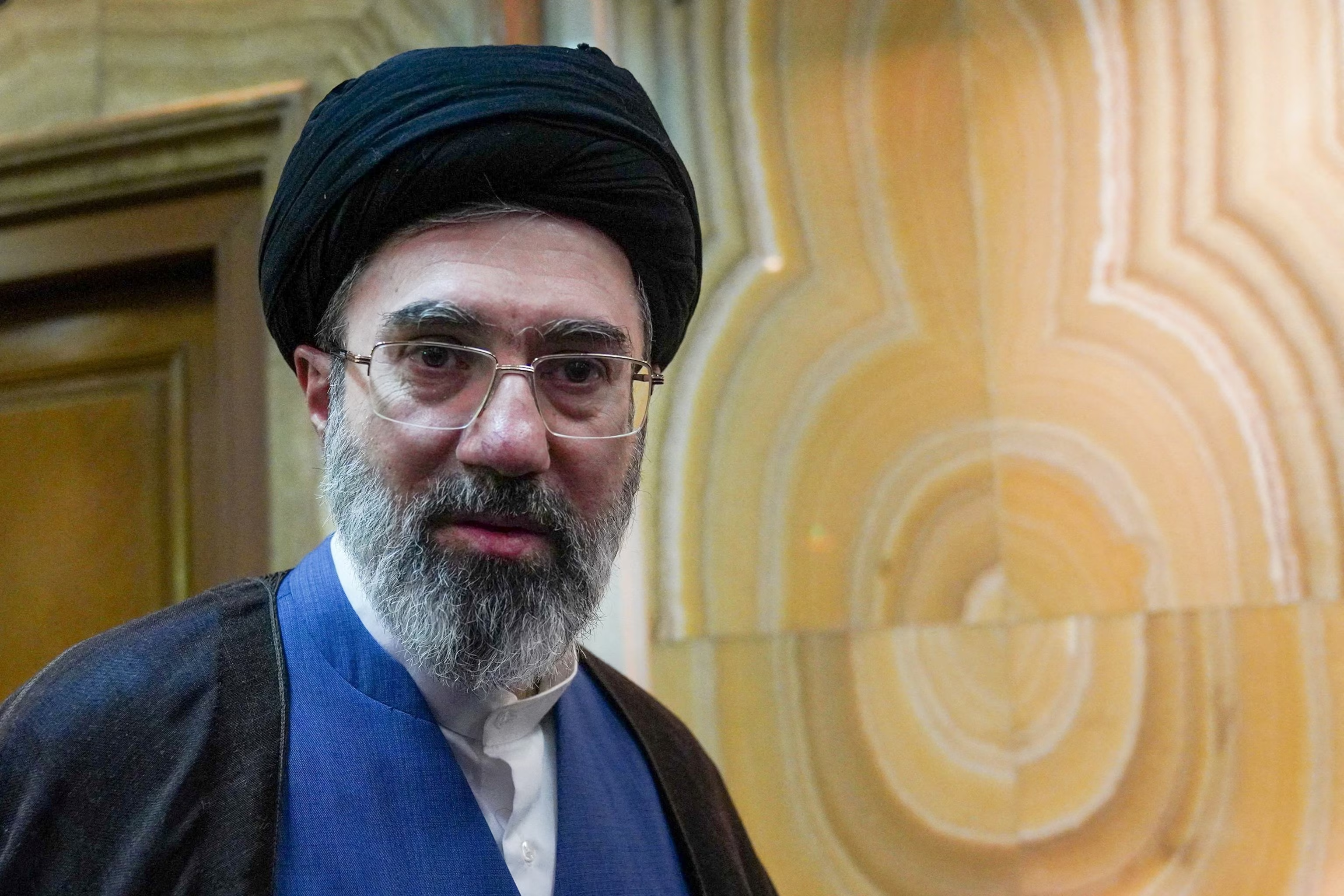
Iran’s new supreme leader, Mojtaba Khamenei, the second son of late Iran’s Supreme Leader Ayatollah Ali Khamenei, attends a meeting in Tehran, Iran, October 13, 2024.Hamed Jafarnejad/West Asia News Agency via Reuters
Multiple security sources have detailed the crucial individuals within this evolving political structure. The single factor connecting them all is their affiliation with the IRGC.
These individuals encompass:
- Mojtaba Khamenei, who also participated in the Iran-Iraq War as a member of the IRGC.
- Brigadier General Ahmad Vahidi, the chief commander of the IRGC.
- General Mohammad Bagher Zolghadr, leader of the Supreme National Security Council and previously the deputy commander of IRGC.
- General Yahya Rahim Safavi, who serves as a military consultant to Mojtaba (similarly to his role with his father) and is also a past chief commander of the IRGC.
- Mohammad Bagher Ghalibaf, the speaker of parliament, leading negotiator, and a previous commander in chief of the IRGC.
Conjecture Regarding the New Supreme Leader
Persistent speculation has revolved around Mojtaba Khamenei’s well-being in the aftermath of severe injuries incurred during the bombing at the onset of the war.
Nevertheless, the general consensus suggests that he remains alert and actively participates in decision-making. According to a senior security official, while not every issue reaches the supreme leader’s desk, he continues to make choices.
Another security source notes that the supreme leader is still concealed and lacks genuine communication with others. Despite this, a communication system exists, involving discussions with individuals and message relay, although he refrains from telephone usage and meetings with prominent figures.
The source added, "A country cannot be governed in such a way… They are in disarray, but they still maintain authority. I would hesitate to claim they have relinquished control."
U.S. Secretary of Defense Pete Hegseth states that Mojtaba Khamenei suffered severe injuries and disfigurement. The New York Times indicates that he is "recovering from critical injuries, including facial and lip burns, which impair his speech — this could be a factor in his limited public appearances."
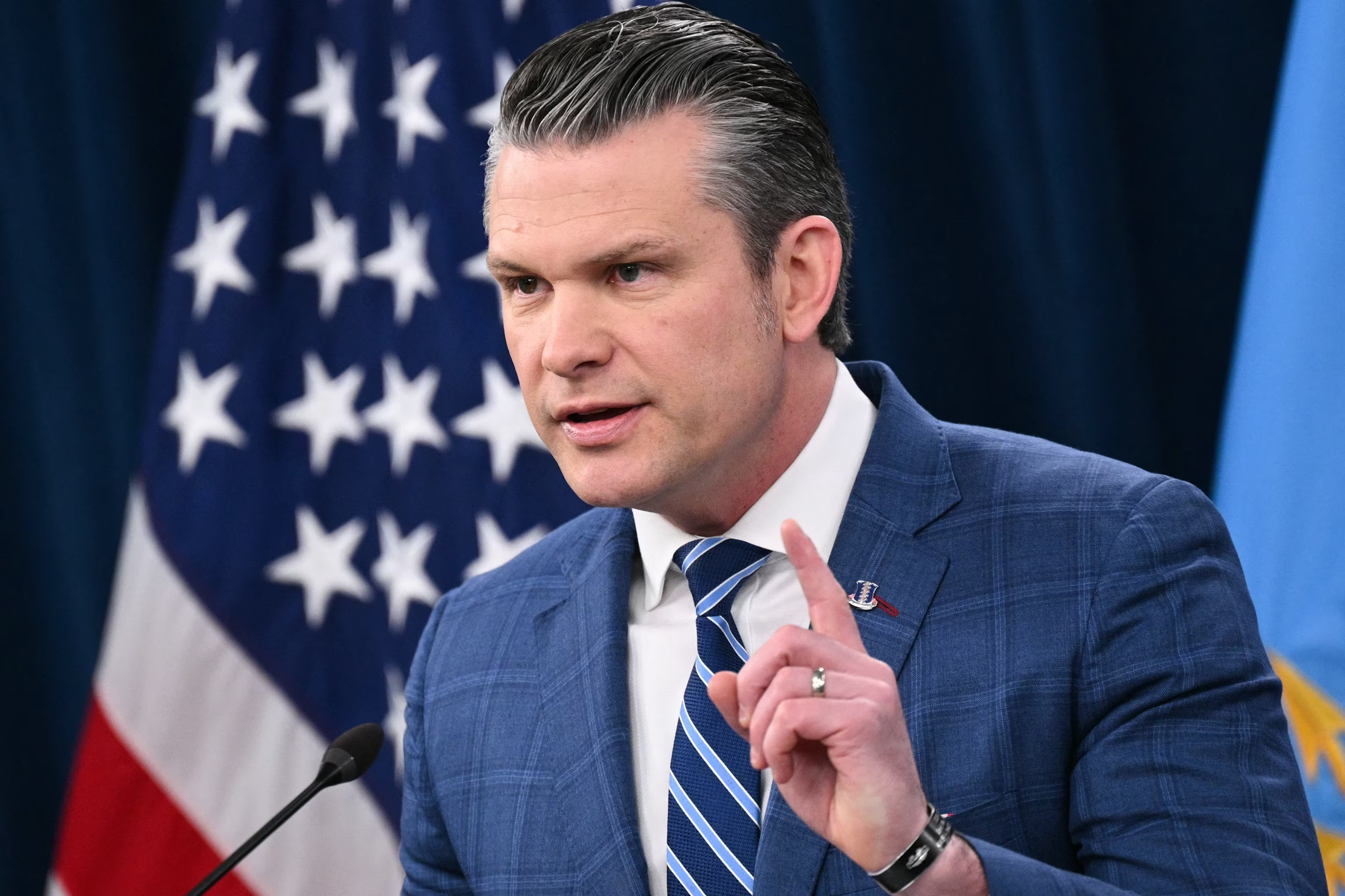
Secretary of Defense Pete Hegseth speaks during a press briefing at the Pentagon in Washington, April 8, 2026.Mandel Ngan/AFP via Getty Images
However, the primary concern for the Trump administration and Israeli Prime Minister Benjamin Netanyahu’s administration seems to be not the identity of current decision-makers, but the lack of a collaborative mindset.
An Israeli official refuted this interpretation, informing ABC News, "The military gains are immense… the fundamental truth is that Iran has never been weaker, not even remotely."
Nevertheless, he emphasized, "considerable work remains to be done. Substantial progress has been achieved, exceeding initial expectations for a 40-day period. Yet, additional tasks are pending, and they will be accomplished through negotiation, which I view with skepticism, or by alternative means."
Reports have suggested that Netanyahu urged Trump to support regime alteration. The Israeli official refuted this, stating, "The Prime Minister never aimed to, nor attempted to persuade the President or the United States, or anyone else, that the objective was to alter the regime."
The U.S. blockade of the Strait of Hormuz has taken center stage in this dispute, as Trump seeks to leverage economic pressure to secure concessions from Iran. The Israeli official says, "He [Trump] seems to recognize the effectiveness of the blockade, eliminating the necessity for concessions to Iran. Many individuals underestimated his resolve."
Danny Citrinowicz, previously the director of the Iran division within the Research and Analysis Division (RAD) of Israeli defense intelligence and currently a senior researcher in the Iran and the Shi’ite Axis Program at the Institute for National Security Studies, asserts that "ultimately, our actions have led us to where we are. This outcome is a result of our creation, specifically, a militarized nation governed by the IRGC."
He posits that the issue with Trump’s strategies — and those of Netanyahu — is that "he is pursuing a quick fix for the (Military) campaign, the blockade, or something of that nature to shift the circumstances. However, this is unlikely to occur, resulting in a highly reactive approach."
Citrinowicz cautions, "This is not a system amenable to compromise," criticizing Trump’s online activity as futile and fostering the impression among Iranians that "he is desperate."
Apart from the notable reduction in Iran’s offensive capabilities, he suggests that the war has not met its main objectives.
Remaining Iranian Capabilities of Note
This week, the U.S. Defense Intelligence Agency disclosed that Iran still possesses substantial capabilities, including thousands of missiles and attack drones. This sentiment is echoed by Israeli officials. The current estimate places battle damage at 60% of missile launchers, yet it is recognized that, in certain instances, these can be excavated and restored to functionality.
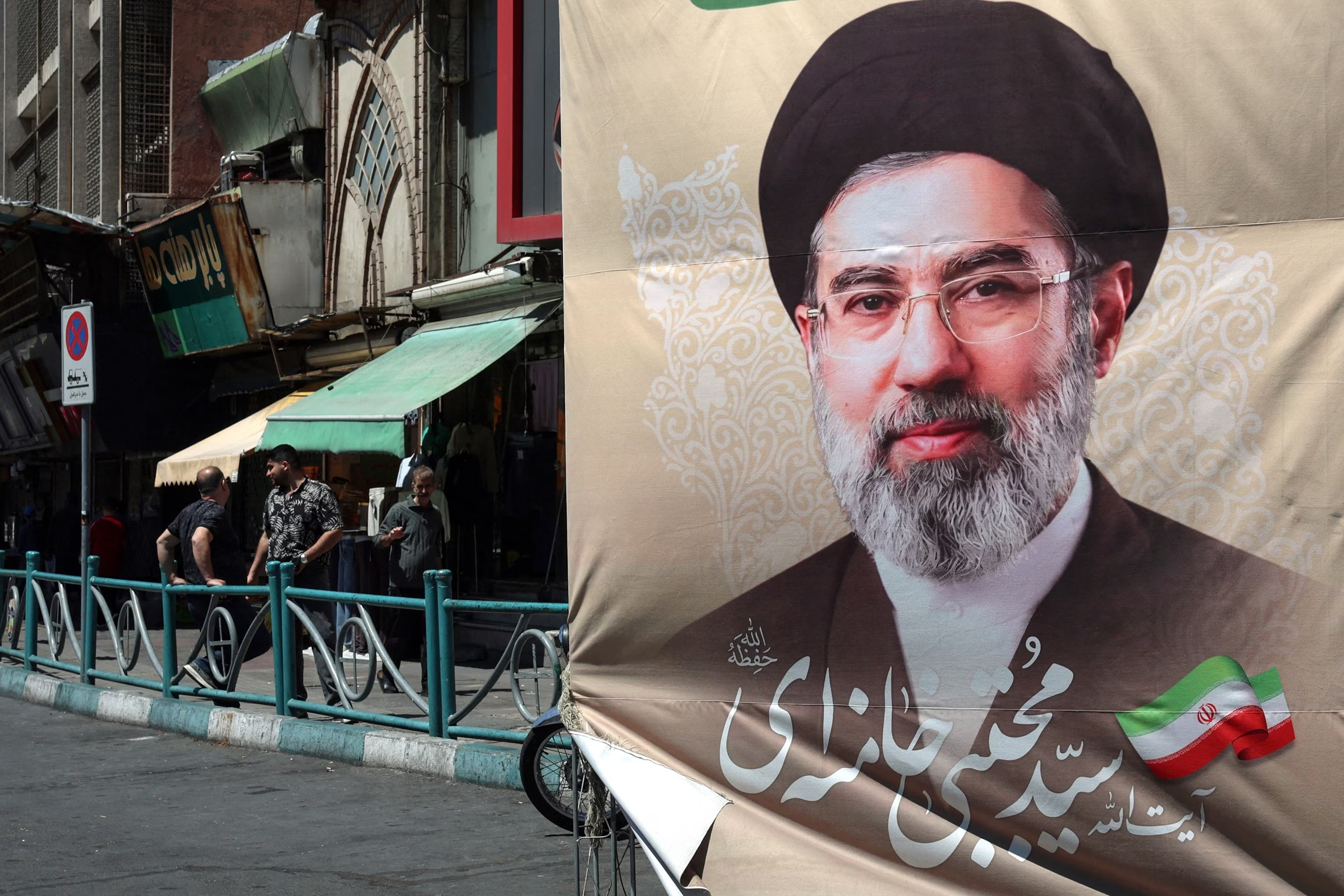
Iranians stand on a pavement along a street next to a billboard depicting Iran’s Supreme Leader Ayatollah Mojtaba Khamenei, in Tehran, on April 24, 2026.AFP via Getty Images
Based on evaluations from Israeli security officials, intelligence suggests that Iran still maintains an arsenal of ballistic missiles numbering in the thousands. The Israel Defense Forces reports that Iran launched over 550 long-range missiles at Israel between Feb 28 and the beginning of the ceasefire in early April.
At the war’s outset, the IDF projected Iran’s ballistic missile inventory to be approximately 2,500. That figure was a conservative estimate and excluded short-range missiles incapable of reaching Israel.
Concerning Iran’s nuclear potential, Citrinowicz cautions that, while "they lack industrialized capability, this does not imply a complete absence of such capabilities." He further states that Iran possesses almost a ton of enriched material (ranging from 20 to 60%) that could be enriched to 90% (nuclear capable) within weeks.
Both he and a senior intelligence source warn that Iran retains the capacity to cascade centrifuges and enrich uranium. Thus, simply removing the nearly 1,000 pounds of highly enriched uranium discussed thus far would not suffice to deny Iran the possibility of developing nuclear capabilities.
However, the IAEA, the UN’s nuclear monitoring agency, has declared that the specific state of Iran’s nuclear program is unclear. In February, the IAEA stated that it could not verify "Iran’s inventories of centrifuges and associated equipment."
Israel’s intentions are evident. Israeli Defense Minister Israel Katz stated that the country "is prepared to resume war with Iran. We await the green light primarily from the U.S. to complete the elimination of the Khamenei dynasty and return Iran to the Dark and Stone Ages."
However, fulfilling this ambitious goal has proven elusive to date.
Sourse: abcnews.go.com