
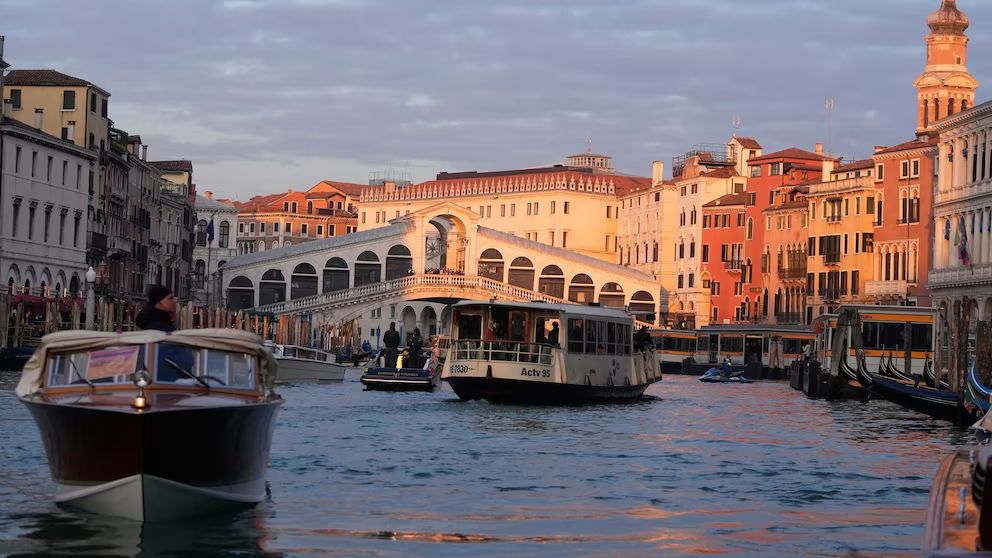
A perspective of the Rialto bridge is captured at dusk on the Grand Canal in Venice, Italy, Jan. 22, 2026. Luca Bruno/AP, FILE
One of the globe’s most recognized metropolises may be significantly affected by shifts in the climate and a rise in sea levels in the years ahead, prompting specialists to seek solutions for its safeguarding.
Venice, the storied Italian locale celebrated for its waterways that act as transit arteries, is rumored to be subsiding for almost a century. The area situated near the Venetian Lagoon has experienced increasingly frequent inundations during the previous 150 years, according to an analysis released in Scientific Reports on Thursday.
Throughout history, there have been 28 instances where ocean flooding influenced at least 60% of the city, as stated in the analysis. Eighteen of these occurrences have transpired in the past century.
Piero Lionello, a professor specializing in atmospheric physics and oceanography at the University of Salento in Italy and a Venetian by birth, has observed a surge in inundation incidents throughout his lifetime, he conveyed to ABC News.
“The tempo has been quite remarkable in the last three decades,” he stated.
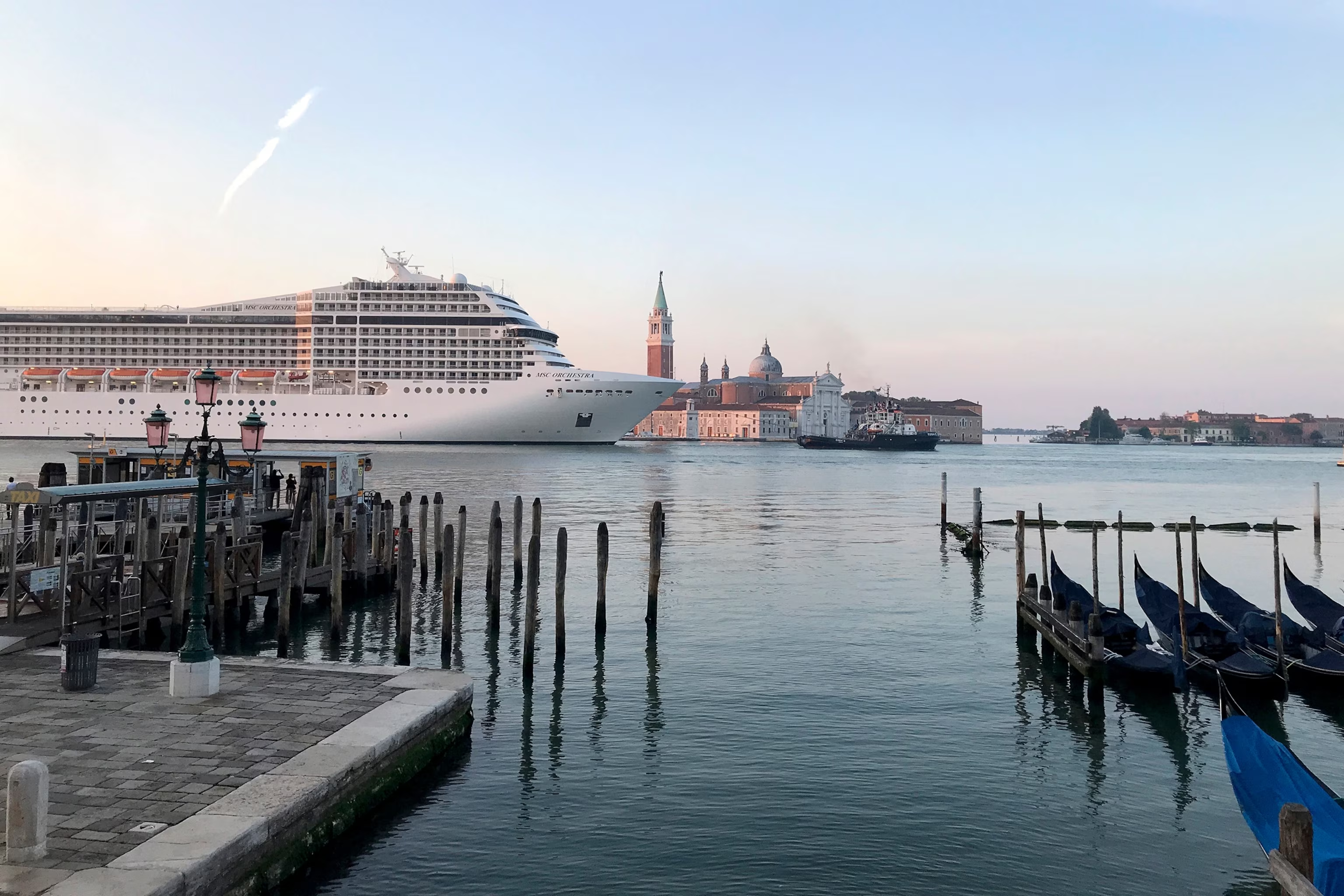
In this June 3, 2021, file photo, cruise ship MSC Orchestra passes in the Giudecca Canal in Venice, Italy.JC Viens/AP, FILE
Climate authorities are now advocating for enduring blueprints to defend the city against mounting sea elevations over the forthcoming centuries.
The Venetian Lagoon represents a “distinctive system” due to its strong linkage with the Adriatic Sea, according to Lionello, who is also the primary writer of the study.
Suggested methods to avert inundation as sea elevations escalate encompass deployable barricades, ring levees — which are round or ellipsoid embankments crafted to shield specific zones from floodwaters — or potentially sealing off the Venetian Lagoon and migrating the city, as per the analysis.
Presently, the city is safeguarded by a collection of three deployable barriers at the boundary of the Venetian Lagoon. The MOSE endeavor, established in the 1990s, constitutes a framework of transportable flood shield barriers as elevated as a five-story structure that can be propelled upwards to segregate the lagoon from the Adriatic Sea amidst elevated tides.
The system facilitates the normal operation of Venice’s waterways during elevated tides and has preempted flood disasters from storm surges. Nonetheless, it will prove insufficient going forward, Lionello expressed.
“The current framework, it will undeniably become deficient,” he commented.
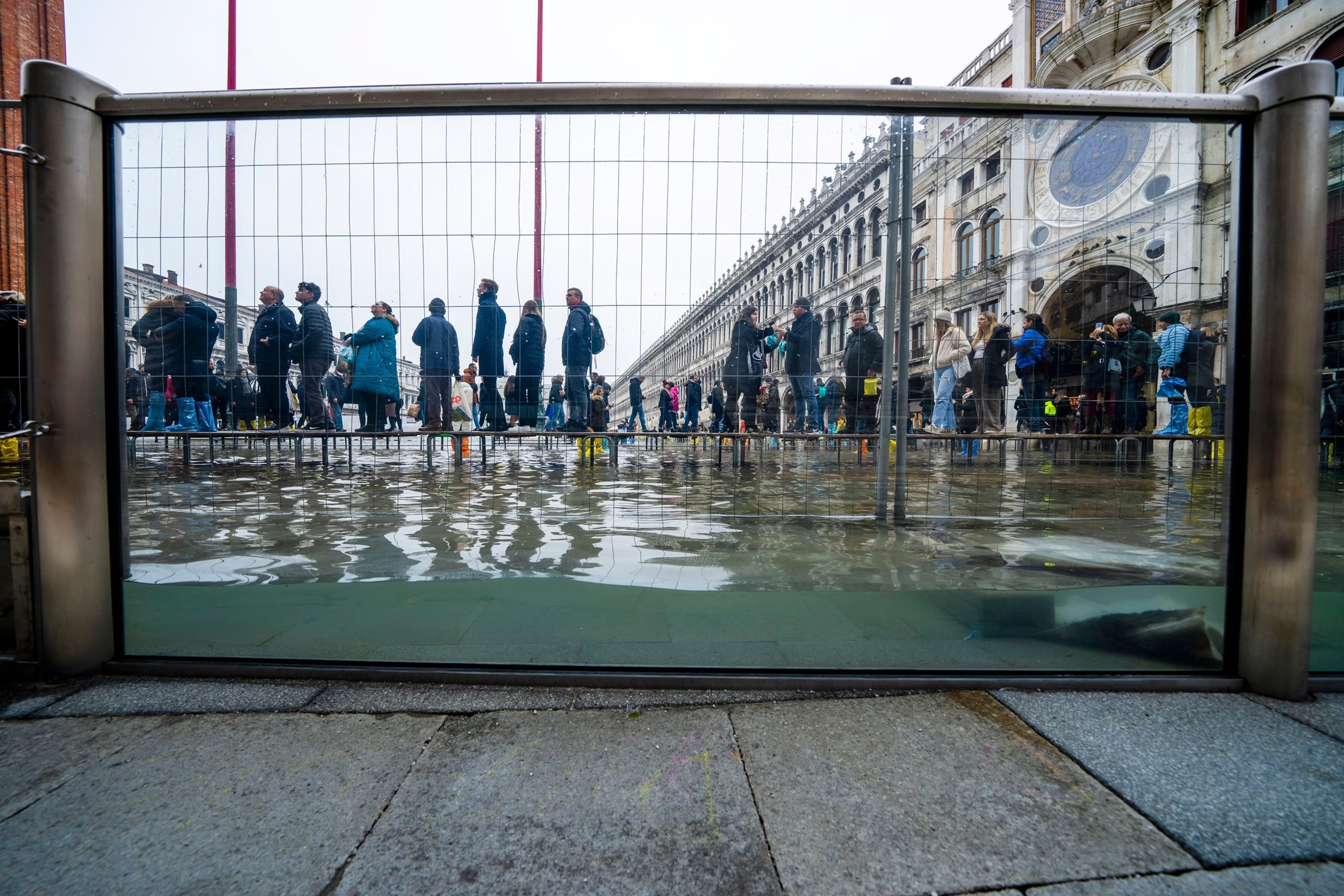
In this Dec. 10, 2022, file photo, tourists and residents walk on catwalks during a sea tide of around 38.18 inches, to cross a flooded St. Mark’s Square in Venice, northern Italy. Recently installed glass barriers prevent seawater from flooding the 900-year-old iconic St Mark’s Basilica. St. Mark’s Square is the lowest-laying city area and frequently ends up underwater during extreme weather.Domenico Stinellis/AP, FILE
The operational deployable barriers may be potent against sea level rise up to 1.25 meters, or roughly 4.1 feet, according to the analysis. Nevertheless, this standard is projected to be surpassed by the year 2300 under a minimal-emissions circumstance owing to increasing global temperatures and land subsidence — the steady decline of the land’s surface — the scientists noted.
Levees may be vital to shield Venice’s city core from the remaining portion of the lagoon, according to the analysis. The levees would integrate walls encircling the city, isolating it from the lagoon, Lionello explained.
The construction of levees could range between $600 million and $5.3 billion, as indicated in the analysis.
A “superior embankment” potentially costing more than $35 billion to construct might be essential to seal off the lagoon and defend the land already situated below sea level.
Should sea levels elevate substantially, it could become imperative for the city’s denizens and significant historic sites to be shifted inland, the researchers suggested. The relocation of the city could be essential beyond a 4.5-meter, or approximately 15-foot, sea level augmentation, which is anticipated to materialize beyond 2300 under an elevated emissions scenario, according to the analysis. The city’s relocation could mount up to $118 billion, according to the investigators.
This resolution stands as the most “incendiary” and would entail shifting individual constructions and monuments inland, Lionello articulated.
“You can preserve a building. You can have different solution to keep people living there, but it will be a completely different Venice from the Venice that we have now,” Lionello stated.
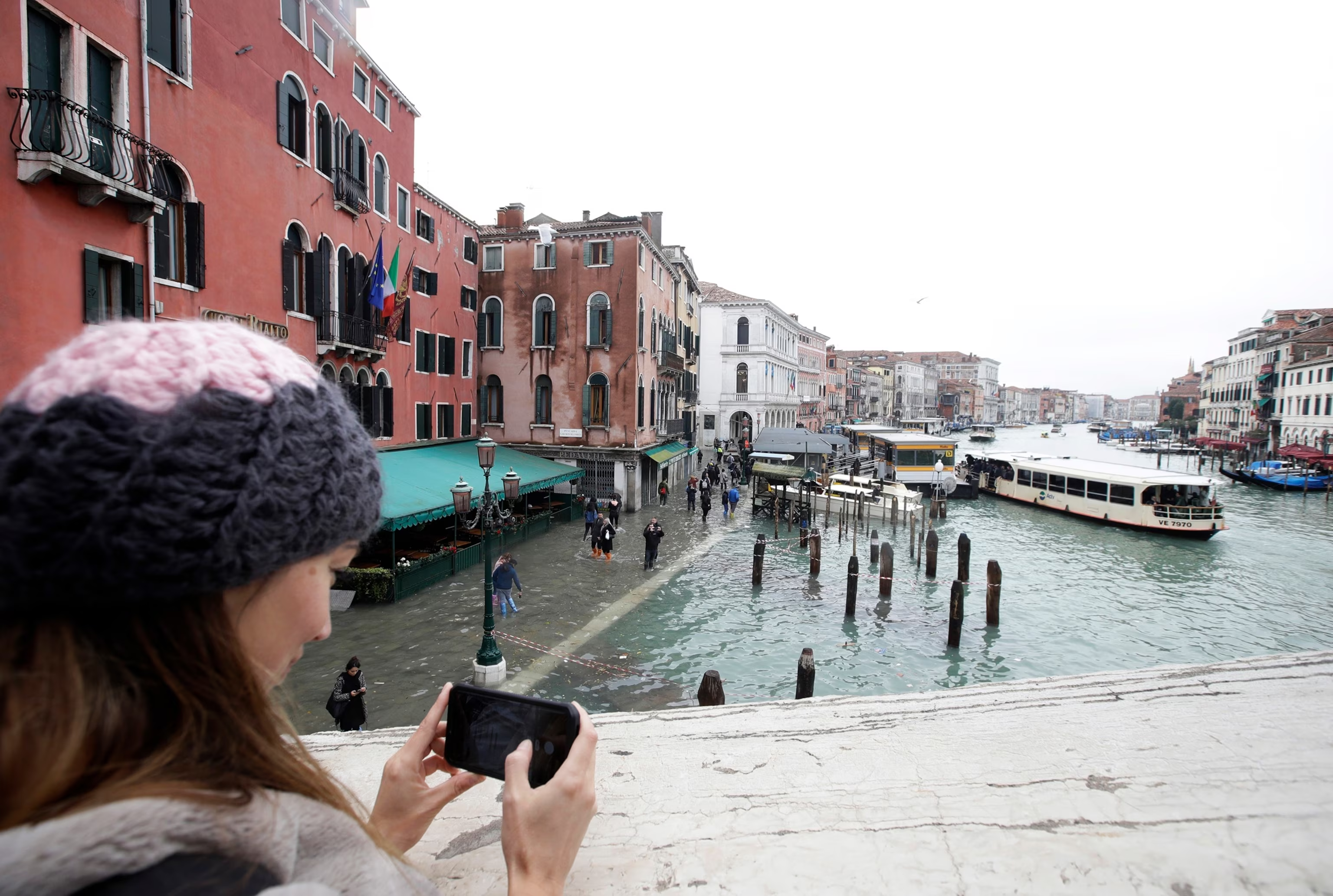
In this Nov. 12, 2019, file photo, an overflowed canal is shown in Venice, Italy.Luca Bruno/AP, FILE
The framework of mobile barriers has been operating overtime, according to authorities. The MOSE barriers were elevated from the seabed to impede water from the Adriatic Sea from permeating the lagoon on 31 occasions during a six-month duration spanning from October 2023 to April 2024.
Climate analysts have forecast a consistent escalation in sea elevations within the Adriatic Sea — with the lagoonal ecosystem in Venice undergoing a relative sea level augmentation of approximately 2.5 millimeters per year, as discovered in a 2021 survey.
Throughout the prior 60 years, elevated tides in the Venetian Lagoon have grown more commonplace.
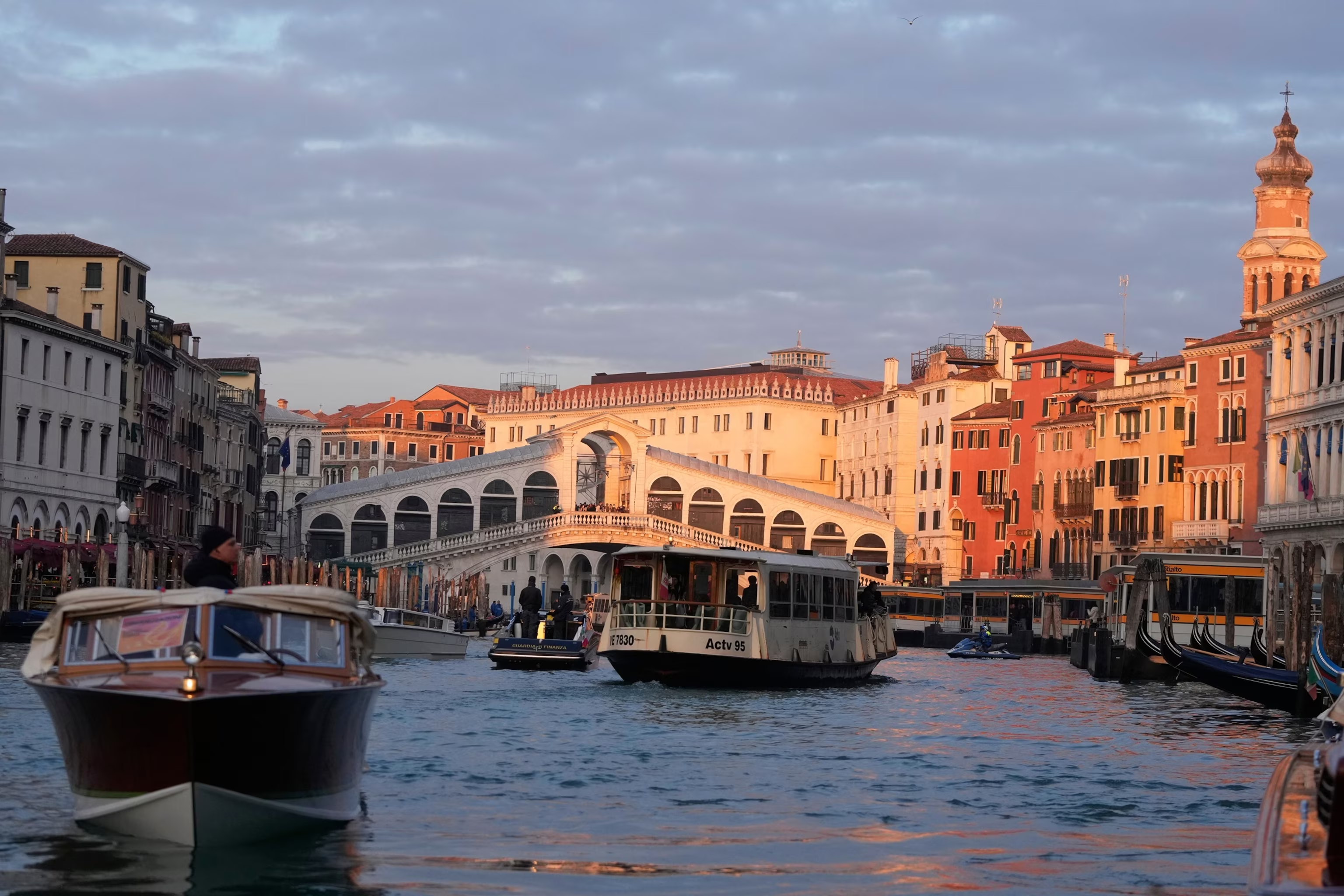
A perspective of the Rialto bridge is captured at dusk on the Grand Canal in Venice, Italy, Jan. 22, 2026. Luca Bruno/AP, FILE
Between 1870 and 1949, 30 elevated tides exceeded 1.1 meters — or 3.6 feet — the benchmark beyond which the MOSE barrier framework is triggered, according to the Venice Tide Study Center. There were 76 such elevated tides between 2015 and 2024 alone.
Swift measures to safeguard the metropolis of Venice from climate variations are “vital,” notably given that the building of extensive interventions could span decades, the scientists cautioned.
Sourse: abcnews.go.com