

Daria Kolomiec is pictured in a photograph from July 2022, taken at The Lot Radio in New York. Courtesy of Daria Kolomiec
LONDON — It was a "night without sleep," expressed Daria Kolomiec, a Ukrainian cultural advocate, artist, and DJ living in Kyiv. Blasts resounded near her residence as she sought refuge in the restroom. Earlier that Wednesday night, she had been to a concert in Kyiv performed by the group DakhTrio.
"Even with the commencement of the air raid warning, the performance carried on," she conveyed on Thursday. "As I sat there, I felt a major assault was likely, but I simply yearned to be around others."
Air raid sirens blared in urban centers across the nation from overnight into Thursday morning, presaging calamitous Russian aggressions that have, as stated by Ukrainian authorities, resulted in a minimum of sixteen fatalities and injuries to over one hundred individuals.
Amidst that onslaught and numerous parallel Russian aerial incursions overnight, both recent and time-honored Ukrainian melodies have, for many, turned into a kind of rejoinder to the sirens that wail throughout the land nearly each night, several musicians active in Ukraine informed ABC News.
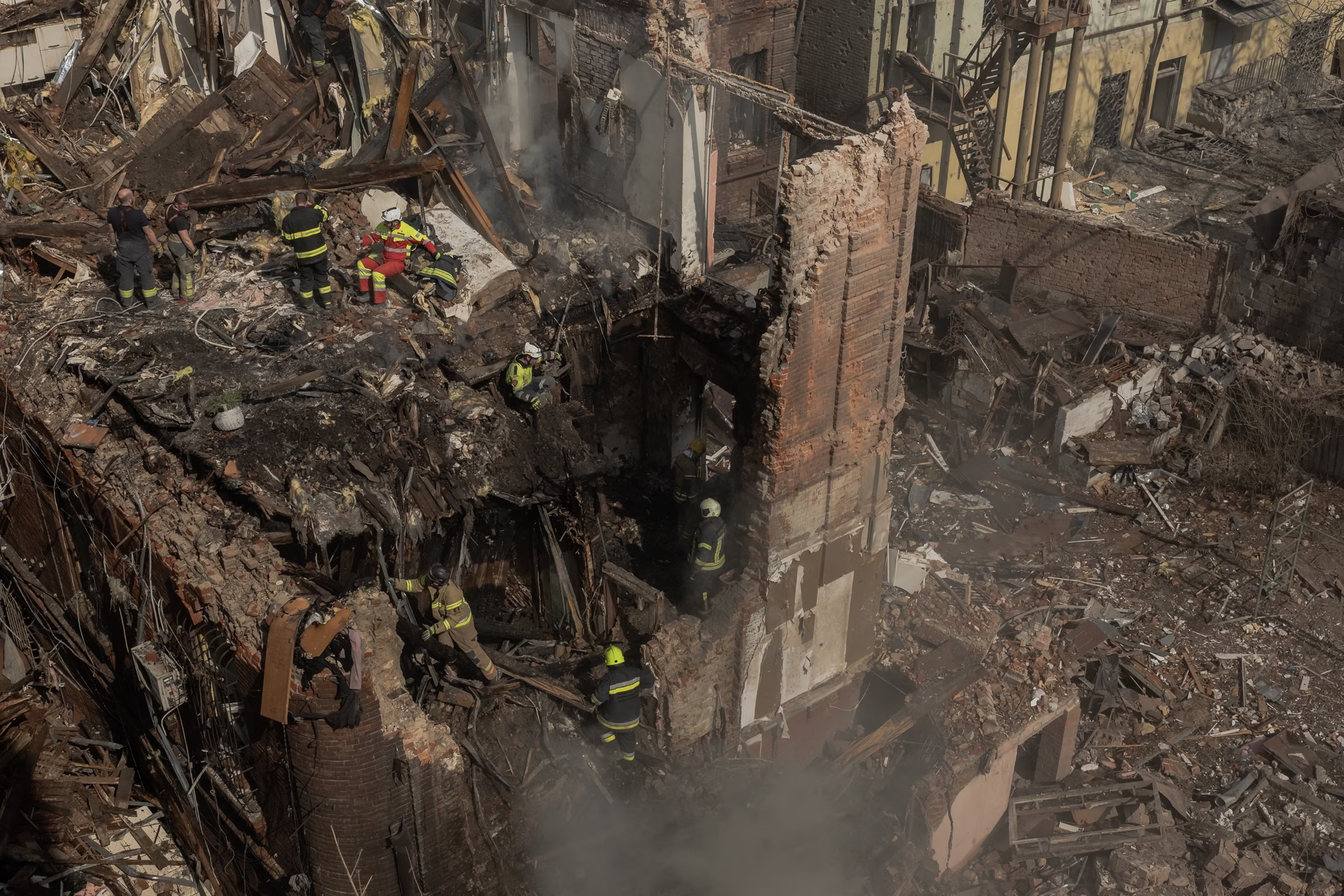
Ukrainian emergency personnel operate at the locale of severely damaged buildings following a Russian air attack in Dnipro, on April 16, 2026, amidst the Russian invasion of Ukraine.Roman Pilipey/AFP via Getty Images
Approximately 300 miles from Kolomiec in Kyiv lies Odesa, the third most populous Ukrainian city, situated by the Black Sea. It was likewise targeted during Thursday’s large-scale Russian offensive, according to officials.
Hobart Earle serves as the director of the city’s Odesa Philharmonic Orchestra. They have persistently performed throughout the conflict, even after the orchestra’s auditorium sustained damage in January 2025. Three ballistic projectiles launched from Russian-occupied Crimea directly impacted the proximate Hotel Bristol. The impact caused the concert hall’s stained-glass features to shatter, and the main entryway was wrenched off its attachments.
“That entrance withstood the Russian Revolution, the Civil War, the Second World War, and all of nature’s adversity, but this missile explosion possessed insurmountable force,” stated Earle.
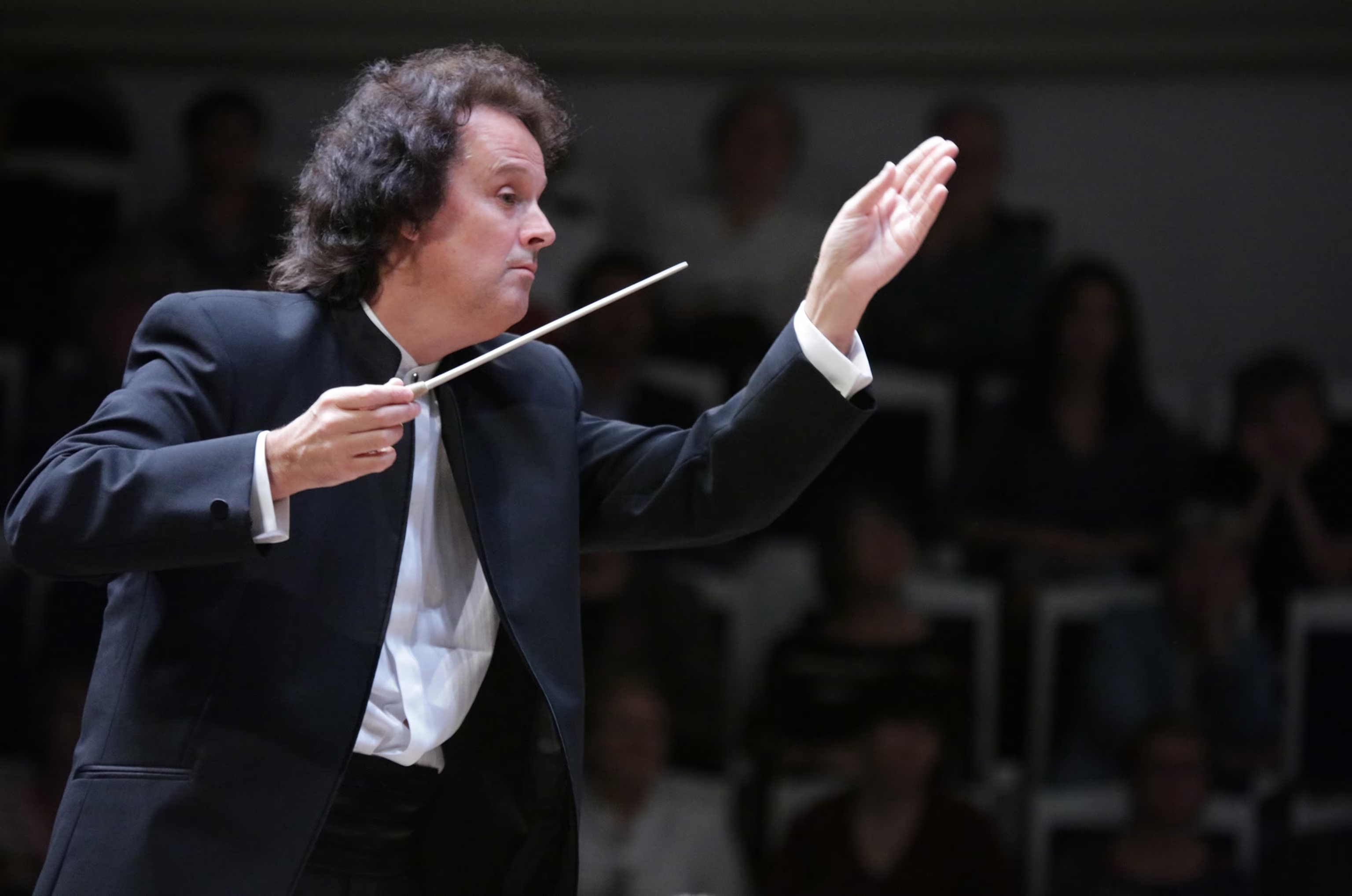
Hobart Earle is featured in a timeless image supplied by the Odesa Philharmonic Orchestra.Courtesy of the Odesa Philharmonic Orchestra
The orchestra was planned to put on a show that evening. With less than six hours’ notice, Earle relocated the performance to the Odesa Conservatory.
“The venue reached maximum capacity. It was an extremely telling occasion because it revealed that individuals genuinely require music. When trials are prevalent, the arts become more crucial to society. Conflict transforms music,” Earle expanded.
During Thursday’s aggressions, the Conservatory’s lodging for students was impacted by a Russian drone, resulting in five injuries, as reported by officials.
Earle’s view was echoed by SI Process, also known as Stanislav Ivashchenko, an electronic composer in Kyiv. He composed the melody "Kyiv Future" during the winter of 2025, a period when Russian strikes hit vital energy infrastructure, leaving Ukrainians freezing, devoid of power or thermal energy.
“I crafted it using my laptop’s final charge, which instills it with a particular ‘dark-groove emblematic of our existence,’” he stated. “Innovation under those conditions is immensely challenging, but there’s a distinct consciousness of the uniqueness of the moment.”
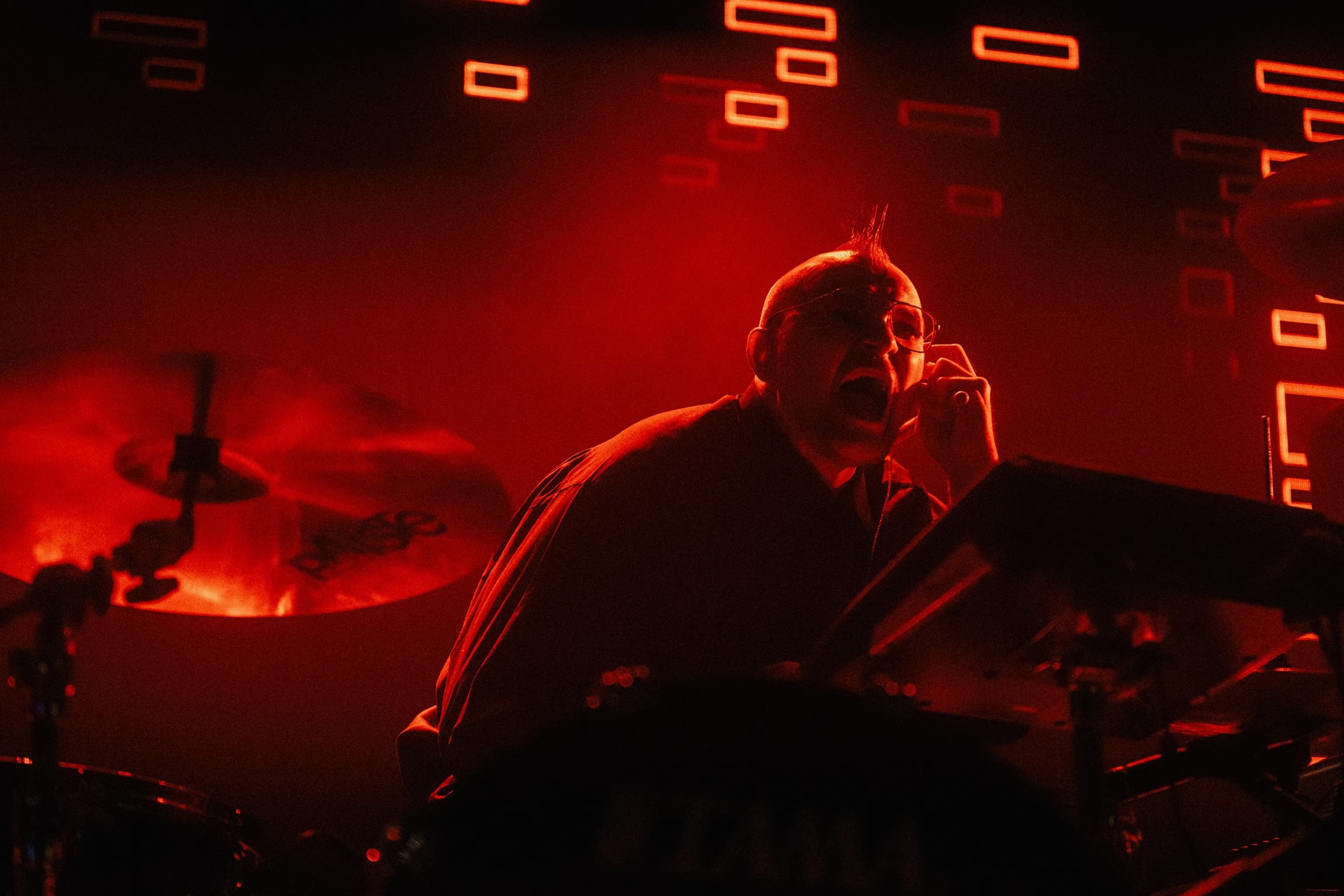
Stanislav Ivashchenko is seen at Origin Stage in Kyiv, Ukraine, on November 21, 2025, in this photo supplied by the artist.Yuri Gryaznov courtesy of Stanislav Ivashchenko
When the war commenced with Russia’s incursion in February 2022, Kolomiec understood the importance of keeping in touch with comrades. In residences throughout the urban landscape, they have convened and performed Ukrainian songs, both modern and classic, during the intervening years — “this sustains my mental well-being.”
Musical events spanning from informal gatherings to electronic musical celebrations and classical performances serve an “essential purpose,” Ivashchenko declared, “to unite individuals, to foster a sensation of mental restoration to normalcy, and naturally, to bolster our soldiers. Each festival generates funds for assistance.”
However, the somber realities of conflict are consistently near, as events are periodically halted during air raid notifications when individuals move to shelters. Moreover, numerous musicians are actively involved in combat on the front lines.
On the night of the 15th, DakhTrio performed musical adaptations of writings by Ukrainian poets. Kolomiec remarked that a composition centered on a poem by Vasyl Stus resonated as particularly applicable. Stus perished in 1985 within the Russian Perm-36 penal colony, where he had been incarcerated for anti-Soviet agitation and propaganda.
His oeuvre concentrated on Ukrainian identity when confronted by Soviet subjugation: “There is a fight; I’m on the battlefield, / Where all my soldiers are the words I wield,” Stus inscribed, according to an interpretation by Artem Pulemotov.
“Creating music in Ukrainian was not only discouraged but dangerous” Kolomiec said.

Daria Kolomiec is seen in a photo taken in July 2022 at The Lot Radio in New York.Courtesy of Daria Kolomiec
Earle presented "Up in Flames" by Ukrainian composer Eduard Resatsch in the early part of 2024. These five symphonic pieces are inspired by verse from Ukrainian poet Lina Kostenko. The fifth piece portrays Russian President Vladimir Putin as “the Loch Ness of the cold Neva,” Earle mentioned, the Neva signifying the primary waterway coursing through St. Petersburg.
Earle also recently showcased Resatsch’s "Nadiya," which translates to "Hope." He is scheduled to conduct its second rendition in Kyiv on April 24. Elements within the composition may invite comparisons to the ubiquitous sounds inherent in life within a war zone — when questioned if listeners might interpret sweeping musical motifs as air raid sirens, Earle concurred.
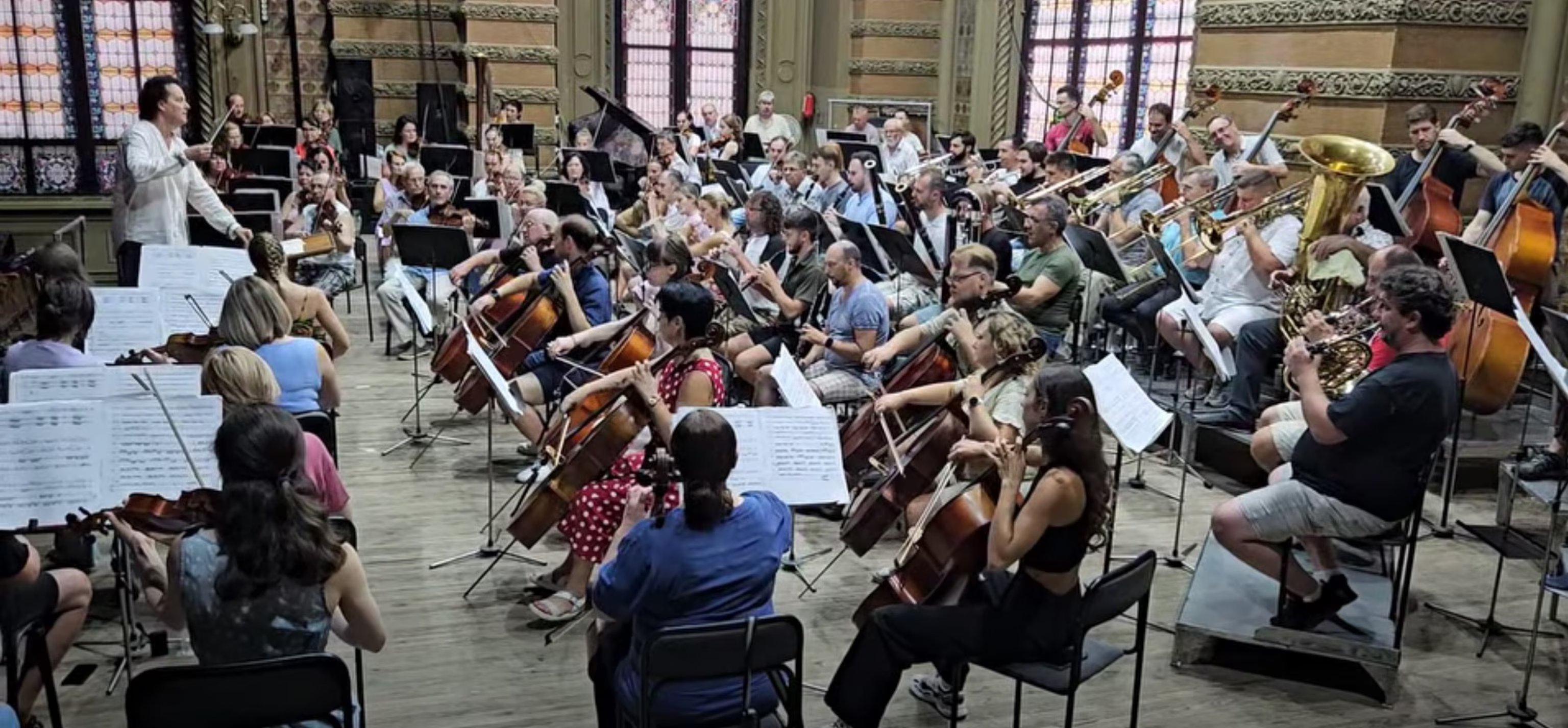
Hobart Earle is seen researching with the Odesa Philharmonic Orchestra in an undated image provided by the orchestra.Courtesy of the Odesa Philharmonic Orchestra
Certain musical pieces have undergone a reevaluation in light of the war. Violinist Stepan Andrushchenko, a co-founder of the contemporary folk band ShchukaRyba, elucidated how traditional Ukrainian folk songs, once “simply regarded as beautiful songs, now resonate acutely and almost portray current reality directly.”
“There Stands a Steep Mountain” constitutes one such folk melody:
I will go to the steep mountains, I will cry there alone,
I will ask the falcon, I will ask the grey falcon:
Have you seen my beloved?
After the war’s inception, Andrushchenko discerned a desire among numerous Ukrainians to reconnect with their heritage. Music, notably folk music, could furnish the sense of belonging many sought, and address the persistent queries, he clarified, encompassing “What are we fighting for? What are we defending?” His ensemble believes “tradition should stay alive,” he expressed, “We want people not only to listen but to join in.”
Amidst the din of combat, a degree of hope can be discovered through music, artists who engaged with ABC News commented. An adage persists in Ukrainian culture, Earle mentioned, “Hope dies last.”
Even if Russia obliterates Ukrainian sovereignty, Kolomiec stated, "the songs will stay."
ABC News' Yulia Drozd contributed to this report.
Sourse: abcnews.go.com