
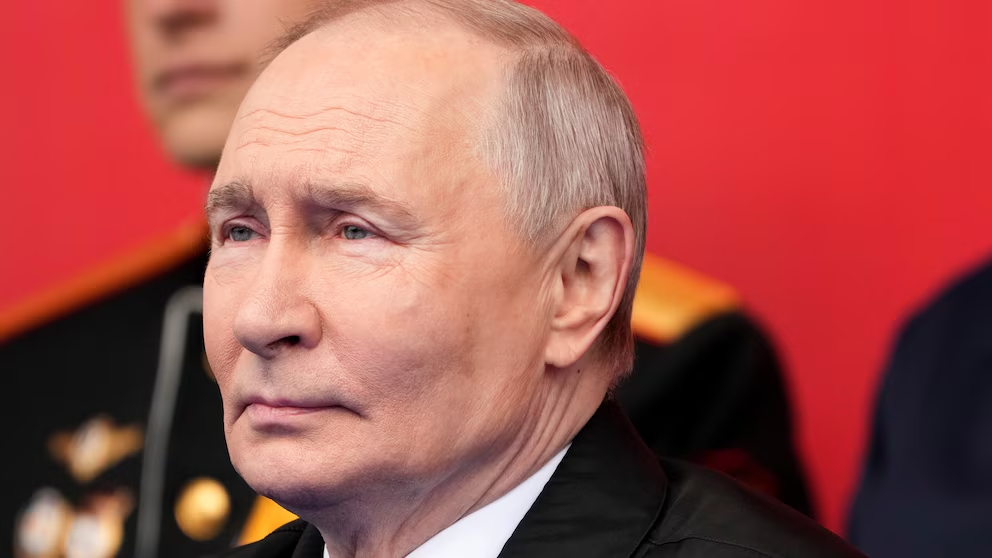
The Russian Federation’s President, Vladimir Putin, is present at the Victory Day military parade in Moscow, May 9, 2026, during the celebrations of the 81st year since the Soviet Union’s triumph over Nazi Germany in the Second World War. Pavel Bednyakov/AP
Is there a transformation occurring within Russia? This is the query being posed by keen observers of the Kremlin in recent weeks.
Certain prominent experts and journalists have discerned a slight alteration in the disposition concerning Vladimir Putin and the conflict in Ukraine, now significantly into its fifth year. They suggest that there’s a perception within Russian society that Putin appears somewhat less in command of situations, coupled with an increasing despondency regarding the war and mounting dissatisfaction with the governing body over financial matters and oppression, notably the recent intense limitations imposed on the internet.
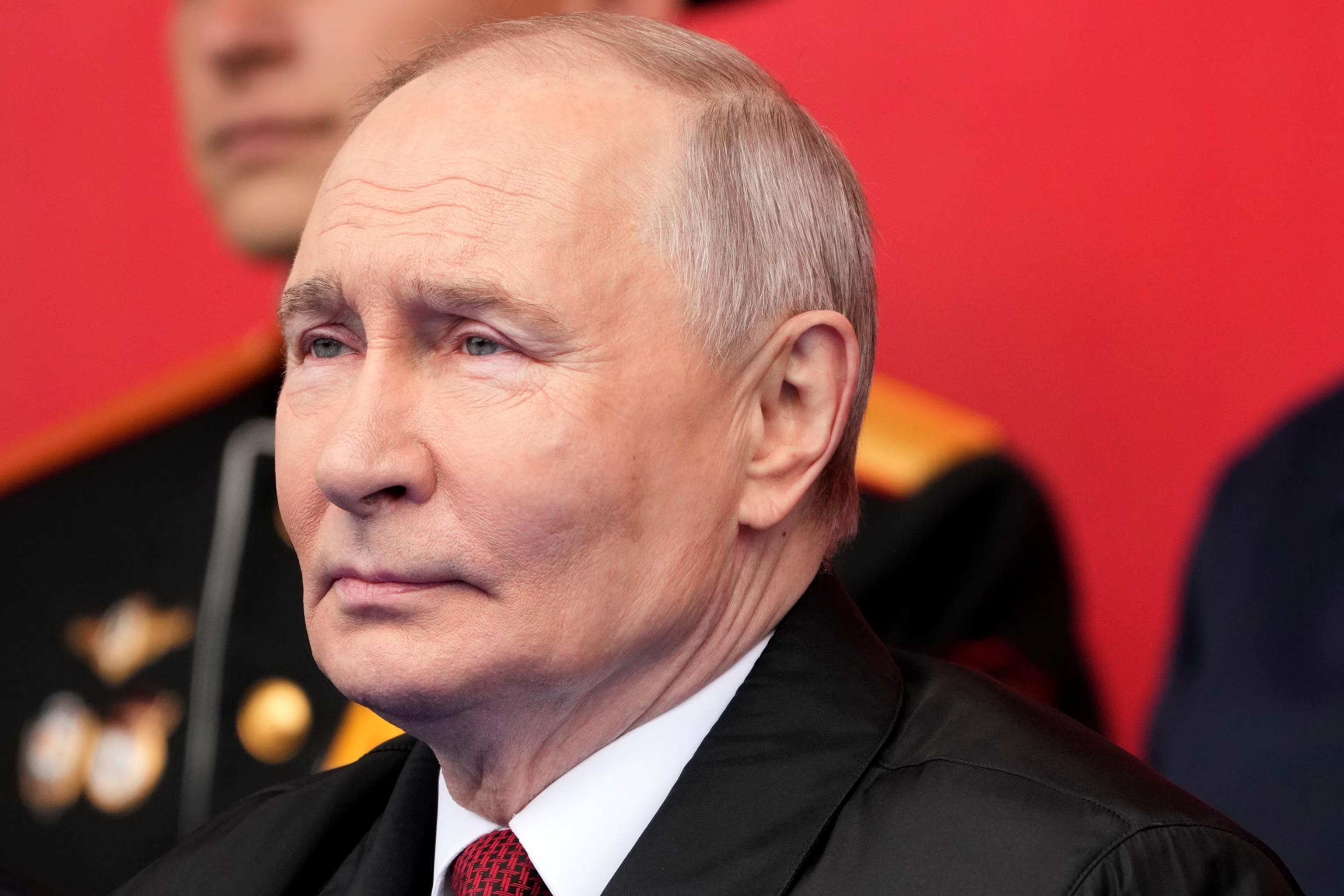
Russian President Vladimir Putin attends the Victory Day military parade in Moscow, May 9, 2026, during celebrations of the 81st anniversary of the Soviet Union’s victory over Nazi Germany during the World War II.Pavel Bednyakov/AP
“Putin is forfeiting his allure,” Alexander Baunov, a distinguished political intellectual, expressed not long ago in an article for the Carnegie Endowment for International Peace. “Victors face no judgment, as the Soviet leader Joseph Stalin was fond of saying. However, those who fail to triumph can be – and individuals are starting to evaluate Putin.”
This alteration was manifested during Russia’s yearly Victory Day commemorations on May 9, when Putin traditionally oversees a military procession in Red Square. This occasion, commemorating the Soviet victory in the Second World War, has historically symbolized Putin’s influence. However, for the first time in two decades, hundreds of tanks and armed vehicles were absent, following the Kremlin’s admission of concerns regarding their defense against Ukrainian assaults.
It represented a noteworthy concession of vulnerability. Aiming to safeguard the parade, Putin pursued a three-day cessation of hostilities, successfully persuading President Trump to pressure Ukrainian President Volodymyr Zelenskyy into agreeing.
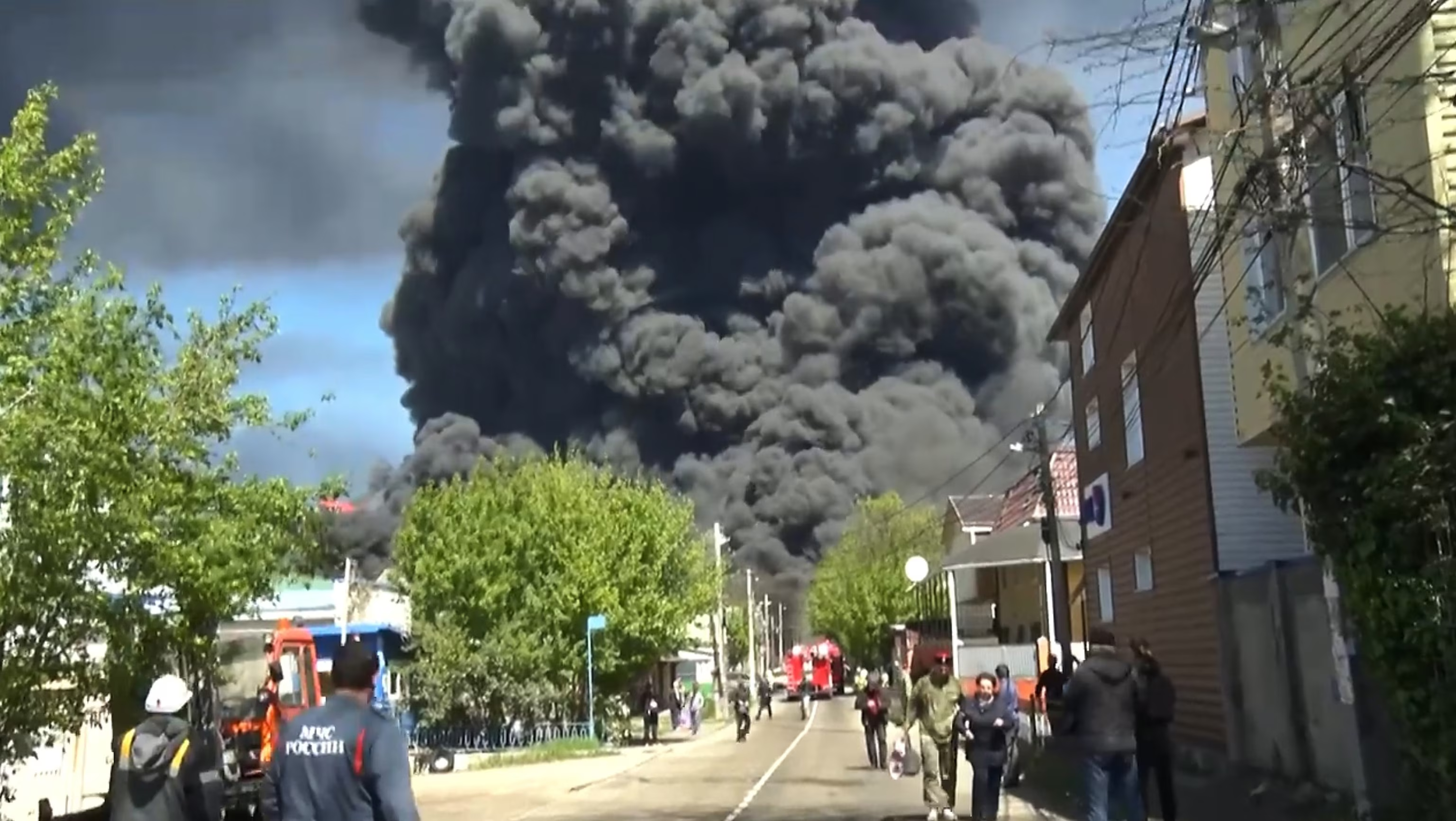
In this image taken from video released by Gov. Veniamin Kondratyev’s Telegram channel, smoke rises after a drone attack on the oil refinery and terminal in Tuapse, Russia, April 29, 2026.Gov. Veniamin Kondratyev Telegram channel via AP
Putin’s charisma is being diminished by the situation in Ukraine. While Russians were already aware that the war wasn’t progressing favorably, Ukraine has lately begun extending the conflict into Russia using increasingly potent long-range unmanned aerial vehicles. Ukrainian drones and locally manufactured cruise missiles are now striking targets deep within Russia on a near-weekly basis, causing considerable harm to petroleum and natural gas installations. This month, Russians watched in horror as the harbor of Tuapse was shrouded in thick, suffocating fumes following continuous strikes on a significant refinery there.
On the warfront, indications also suggest that Russia may be forfeiting its leading position. At various points this past winter and spring, Ukraine has reclaimed a larger expanse of territory than Russia has captured, according to the Institute for the Study of War (ISW). Russian commentators who support the war are cautioning that Ukraine is progressively establishing an advantage in drone technology and is now capable of consistently targeting Russian support systems behind the battle lines. Ukraine’s swiftly advancing drone capabilities also imply that Russia’s already devastating casualty figures are growing – occasionally reaching roughly 30,000 each month, according to intelligence from British and American sources.
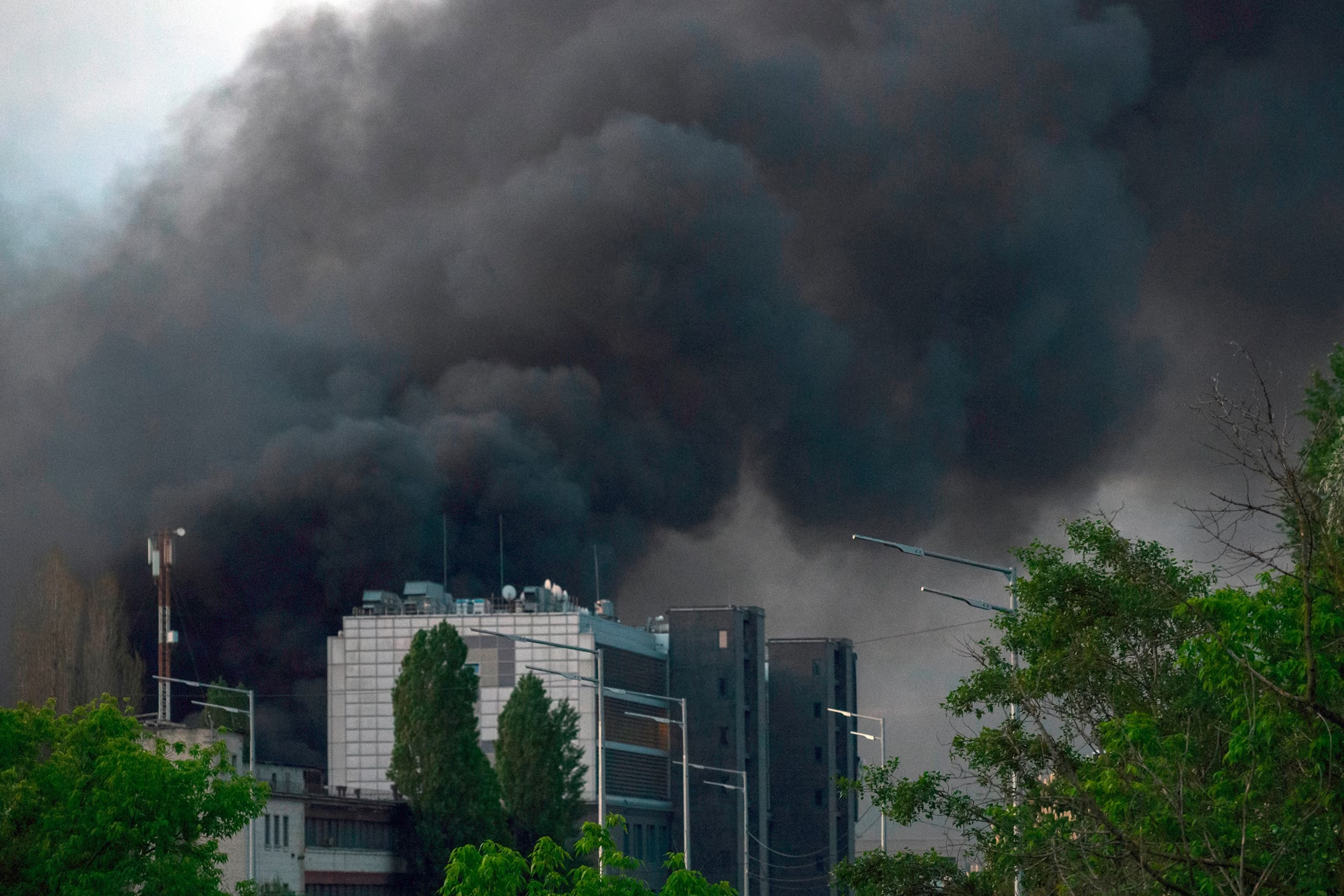
Thick black smoke rises over Kyiv, Ukraine, on May 14, 2026, following a large missile and drone operation targeting the Ukrainian capital.Maxym Marusenko/AP
As the Kremlin unexpectedly appears more exposed, its domestic security services have undertaken swift, unsophisticated, and extensive measures to control Russia’s internet access, obstructing access to widely used social media and messaging services, like Instagram and Telegram, while endeavoring to compel individuals to utilize a state-regulated application. Authorities have enforced internet outages on mobile devices, attributing this to the threat posed by Ukrainian drones.
The limitations on internet access, which have severely impacted businesses, have provoked widespread resentment and discontent. This was exemplified by an Instagram posting that gained rapid popularity last month from Victoria Bonya, a prominent social media personality and well-known figure in Russia who currently resides overseas. In this post, which has been viewed over 30 million times, Bonya directly addressed Putin, voicing her concerns regarding the internet restrictions and partly conveying that Russians are intimidated by him.
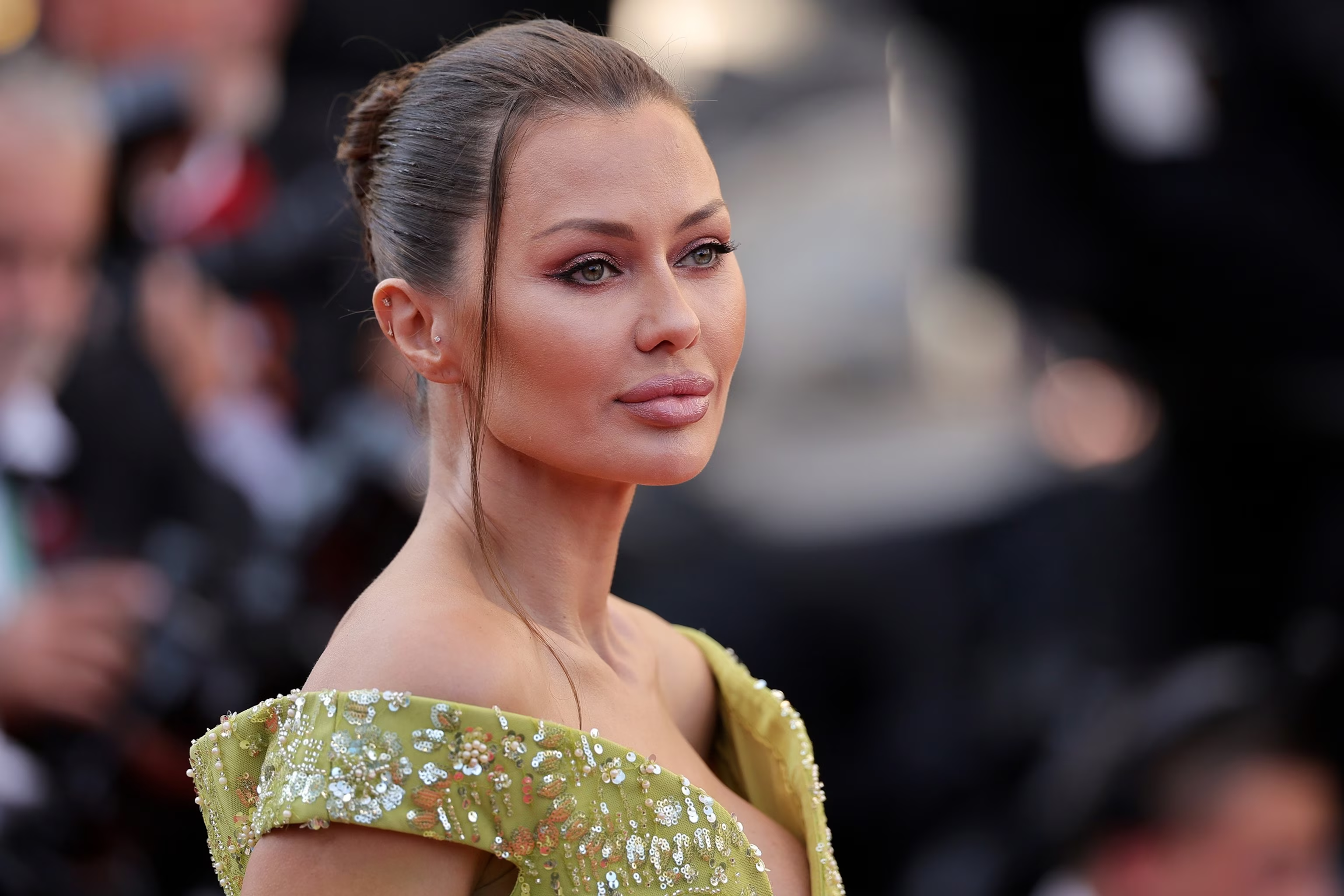
Victoria Bonya attends the Red Carpet of the closing ceremony at the 77th annual Cannes Film Festival at Palais des Festivals on May 25, 2024 in Cannes, France.Neilson Barnard/Getty Images
“The citizens are in fear of you, bloggers are in fear of you, performers are in fear of you,” she declared, further informing Putin that there exists a “substantial divide” separating him from ordinary individuals.
“You serve as the leader of our nation. It is my belief that we should not be required to feel afraid of you,” Bonya stated.
Prior to the 2022 invasion of Ukraine, the Kremlin generally proceeded cautiously in its endeavors to limit the internet, careful not to disturb the wider populace. These crude measures to restrict it now, regardless of their apparent lack of popularity, imply a system under duress and exhibiting less assurance.
“Something is undergoing transformation within Russia,” Tatiana Stanovaya, a Russian analyst and co-founder of R.Politik, noted earlier this month. “Recent events within Russia indicate that the system is struggling to contend with escalating pressures. … Acceptance of the established order is diminishing.”
Amidst the discussions regarding a weakened Putin, an anonymous European intelligence agency recently disseminated a report to various media outlets, encompassing CNN and the Financial Times, asserting that Putin is displaying increasing paranoia concerning a potential revolt.
While the majority of analysts have dismissed the likelihood of a coup against Putin as quite improbable, the growing issues associated with the conflict in Ukraine will be diminishing his standing in the eyes of Russia’s elite.
“While portraying it as a coup is an exaggeration, the gradual erosion of Putin’s credibility is genuine,” Stanovaya expressed.
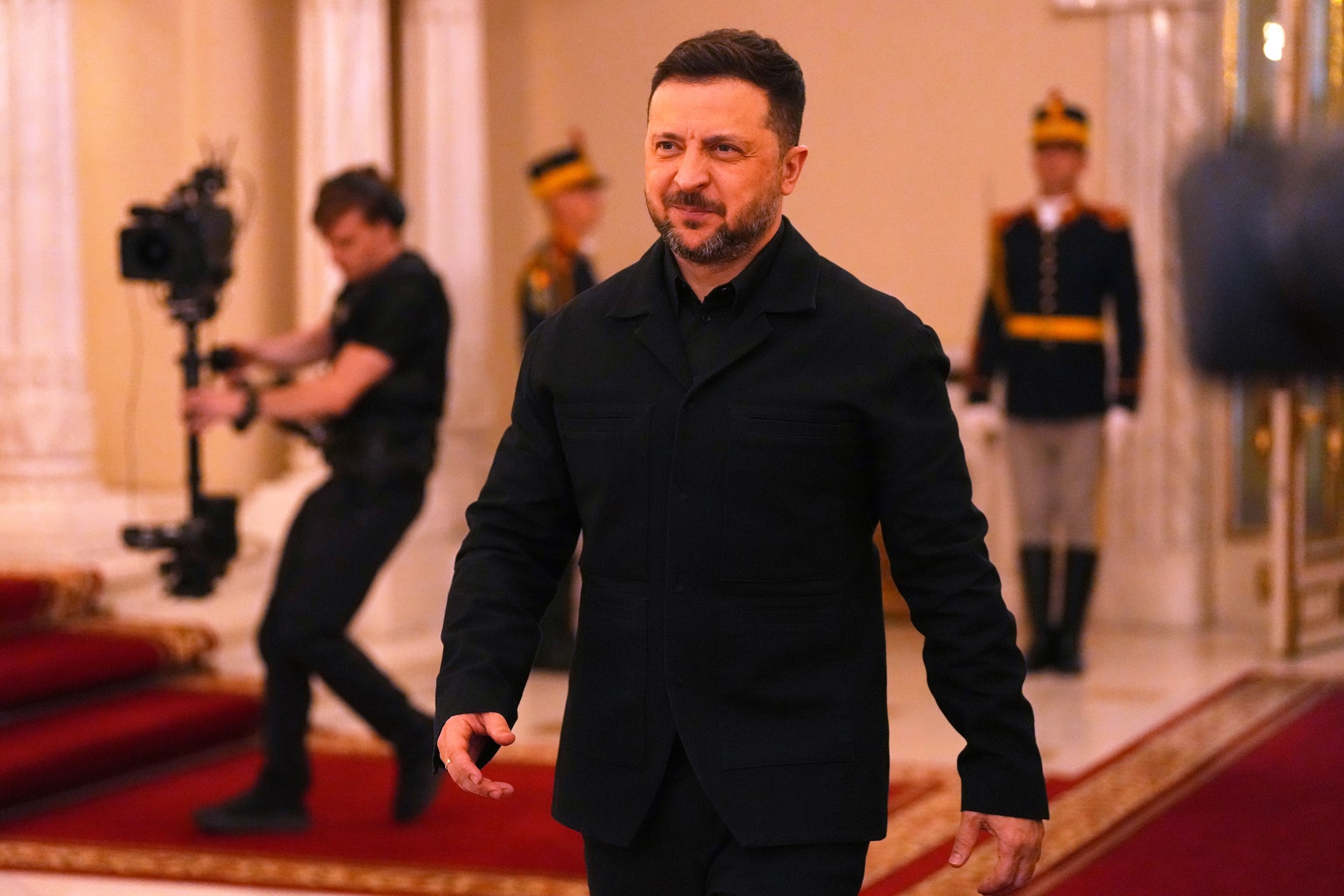
Ukraine’s President Volodymyr Zelenskyy arrives at the Bucharest B9 summit held at the Cotroceni Presidential Palace in Bucharest, Romania, May 13, 2026.Vadim Ghirda/AP
Beyond a collapse in the regime, the repercussions of Putin’s forces weakening in Ukraine could be rendering him more agreeable to a cessation of hostilities. The founder of a significant Ukrainian volunteer brigade informed me the prior year that Putin will solely commence earnest negotiations upon Ukraine’s successful full halt to the progression of Russian forces.
Shameful reverses in Ukraine could equally impel Putin to further entrench himself. His recent remarks intimating his belief that the war is “nearing its conclusion” sparked expectations, yet his statements could equally be interpreted as a mere endeavor to reassure a displeased Russian public. Subsequently, he has initiated the most extensive sustained aerial bombardment of Ukraine since the onset of the war.
The optimism surrounding Ukraine on the warfront could likewise shift once more. Russia is already transitioning into its summer offensive, aimed at seizing key urban centers within Ukraine’s eastern Donbas region, and Ukraine persists in grappling with considerable challenges, notably severe deficiencies in manpower.
Another summer marked by intense combat appears more probable than the attainment of peace.
Sourse: abcnews.go.com