
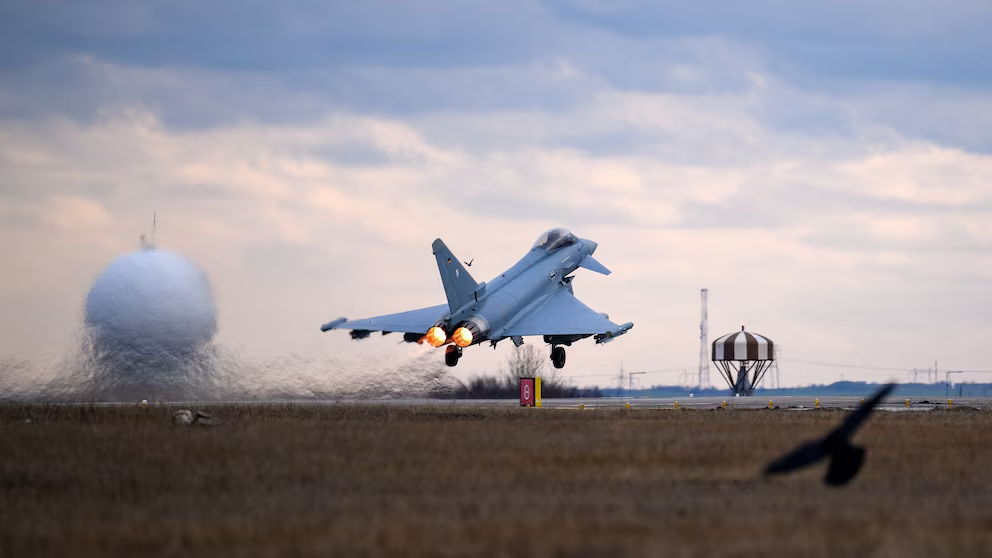
A German Eurofighter jet departs from Mihail Kogalniceanu airport, situated near Constanta, Romania, on December 5, 2023.Picture Alliance/dpa/picture alliance via Getty I
LONDON — On NATO's southeastern edge, a member state is observing a rising amount of Russian drone infringements and related air defense actions, as Moscow intensifies its extensive offensive operation against objectives throughout Ukraine.
Romania, a country with roughly 19 million inhabitants, possesses approximately 400 miles of shared frontier with Ukraine. Towards its eastern side, Romania borders the Black Sea, the Danube River, and subsequently Ukraine, situating that specific portion of the country directly at the forefront of Russia's conflict with its neighbor and Moscow's broader confrontation with the NATO alliance.
The zone of engagement there encompasses the Danube, with a river width of roughly 1,640 feet – shorter than three football fields – separating Romania and its NATO protective measures from the Ukrainian river terminals, which have consistently been a prime target of Russia’s extensive drone and missile assaults for several years.
Information provided to ABC News by the Romanian Defense Ministry indicates an acceleration in the frequency of Russian attacks directed at Ukrainian locations proximal to the NATO boundary, leading to more frequent deployments of NATO combat aircraft for safeguard operations, a greater number of incursions into NATO airspace by Russian drones, and the identification of additional ordnance remnants on allied land.
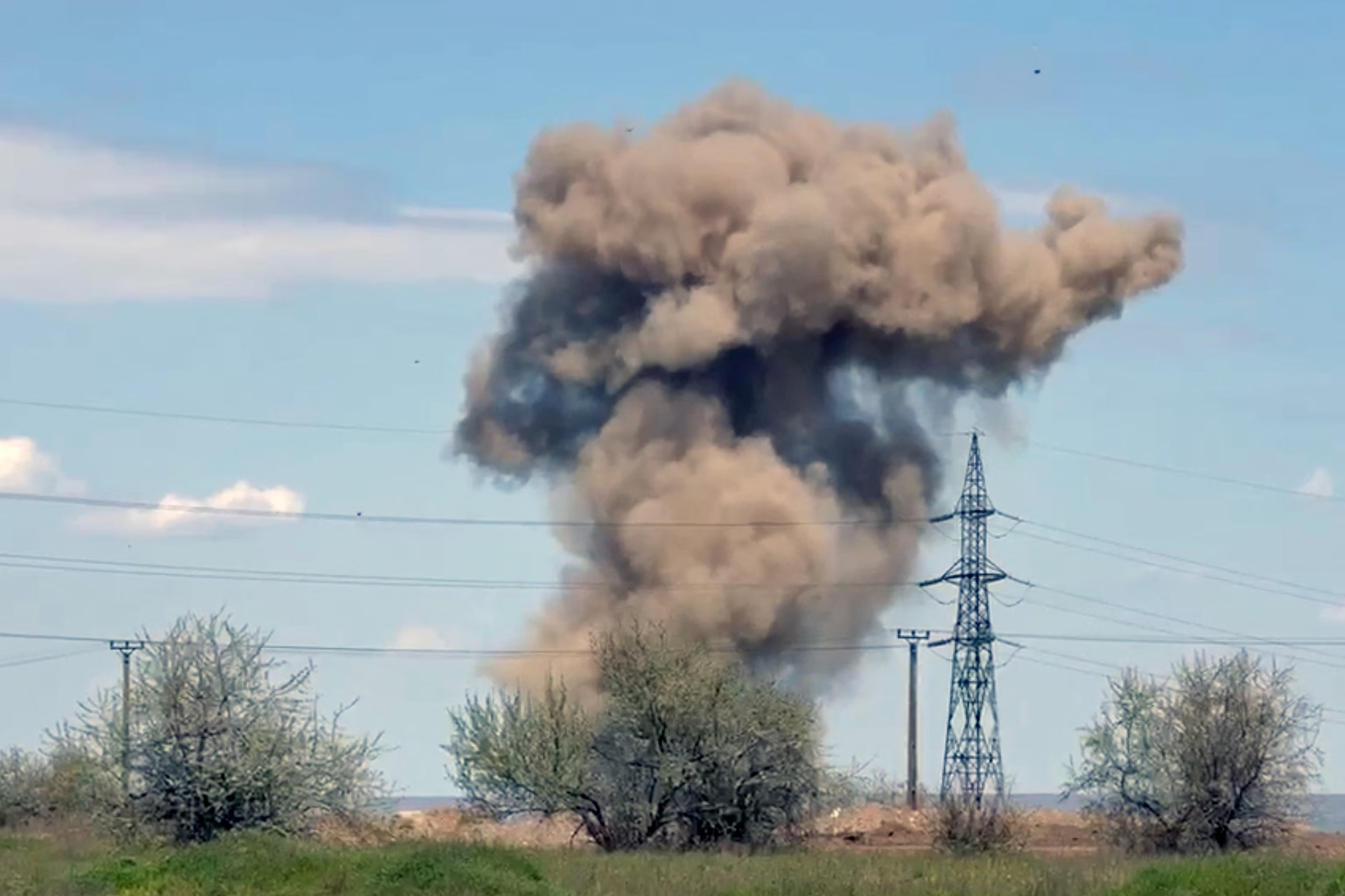
This video snapshot, derived from resources provided by the Inspectorate for Emergency Situations in Romania, presents the supervised detonation of remnants from a downed drone within an inhabited area adjacent to Lake Brates, located on the periphery of the eastern Romanian city of Galati, recorded on April 25, 2026.-/Romanian Emergency Inspectorate-
In all of these metrics, 2026 is poised to be a record-setting year, according to assessments from Bucharest.
As of April 28, since the commencement of 2026, Romania has documented seven instances of airspace breaches by Russian drones, 11 instances of ordnance fragment discoveries, and 18 deployments of "Air Policing" operations, as communicated to ABC News by a Defense Ministry representative. These events resulted from the 25 Russian offensives targeting Ukrainian areas in proximity to the Romanian border.
Within the initial four months of this year, the statistics are already drawing near the highest annual marks recorded throughout 2025, during which Romania reported nine incursions into its airspace, 16 occasions of discovering fragments, 21 air patrol activities, and 28 attacks directed at Ukrainian objectives situated close to Romania.
In totality, from when Russia initiated its incursion, Romania has registered 25 airspace violations, 47 fragment discoveries, 53 air patrol launches, and 91 assaults on Ukrainian objectives located near the mutual frontier, as indicated by data from the Defense Ministry.
Accordingly, the initial third of 2026 alone accounts for around 28% of all airspace infringements since 2022, 23% of fragment discovery occurrences, almost 34% of all air patrol missions, and 27% of attacks near Romania’s borderline.
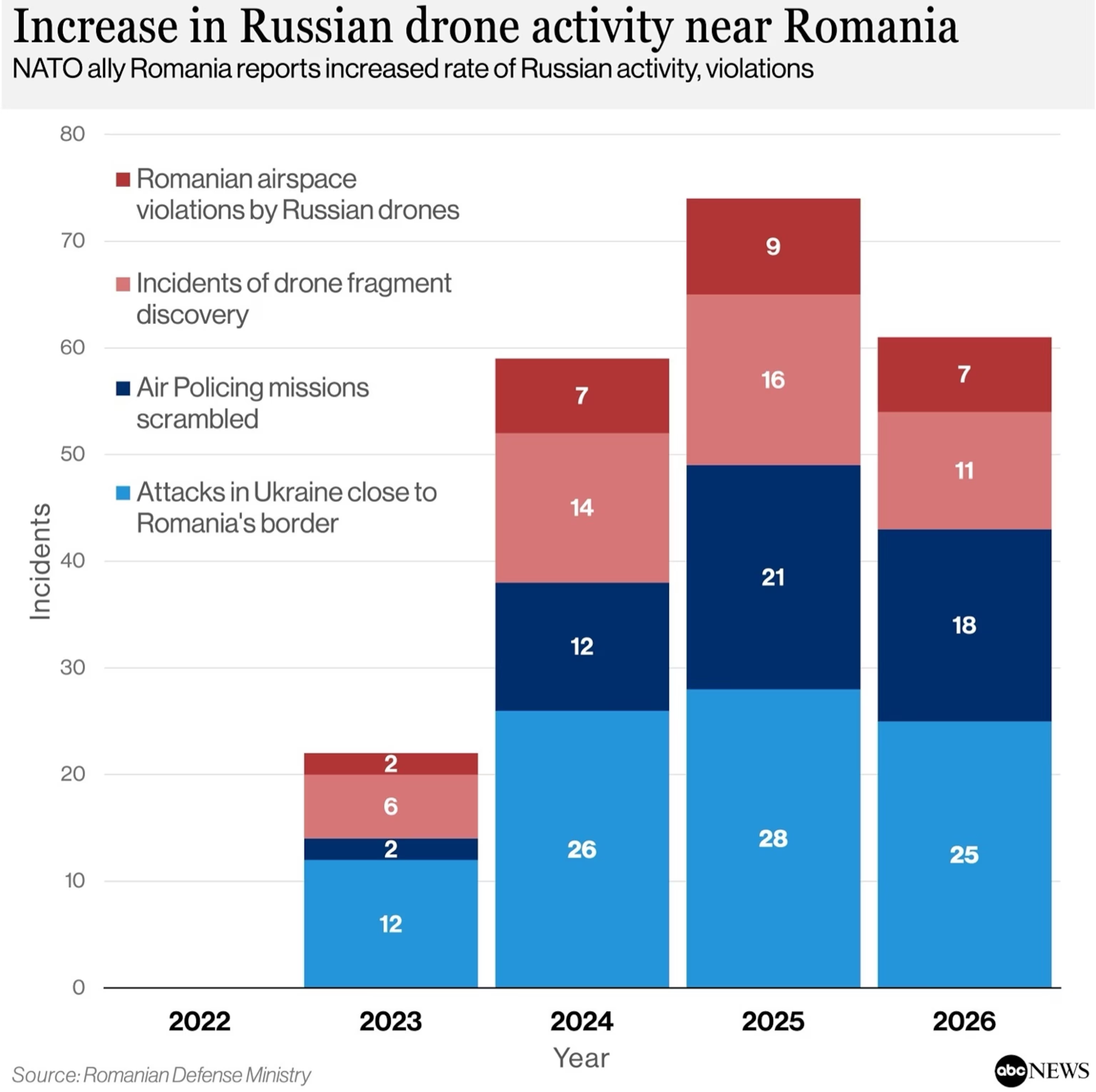
Increase in Russian drone activity near RomaniaRomanian Defense Ministry
Constantin Spinu, formerly of the Romanian Ministry of Defense until 2025, conveyed to ABC News that Bucharest had anticipated an escalation in Russian attacks alongside their shared boundary with Ukraine, notably subsequent to the suspension of the Black Sea Grain Initiative in 2023 – brokered between Russia and Ukraine in 2022 – intended to safeguard the secure transit of grain exports from Ukrainian and Russian ports located in the southern region.
"We were highly conscious that this was imminent," Spinu remarked. "The degree of these attacks was not foreseeable at that juncture."
The inaugural discovery of a Russian drone on Romanian land occurred in the autumn of 2023, as reported by authorities in Bucharest, though that specific apparatus lacked explosive armaments. "We once more recognized that it was a subject of ‘when,’ not ‘if,’ drones carrying explosives would make impact on Romanian land," Spinu stated.
The Defense Ministry’s records, as per Spinu, reveal a "distinct" and "heightening frequency" of Russian incursions aimed at Ukrainian targets along the Romanian periphery.
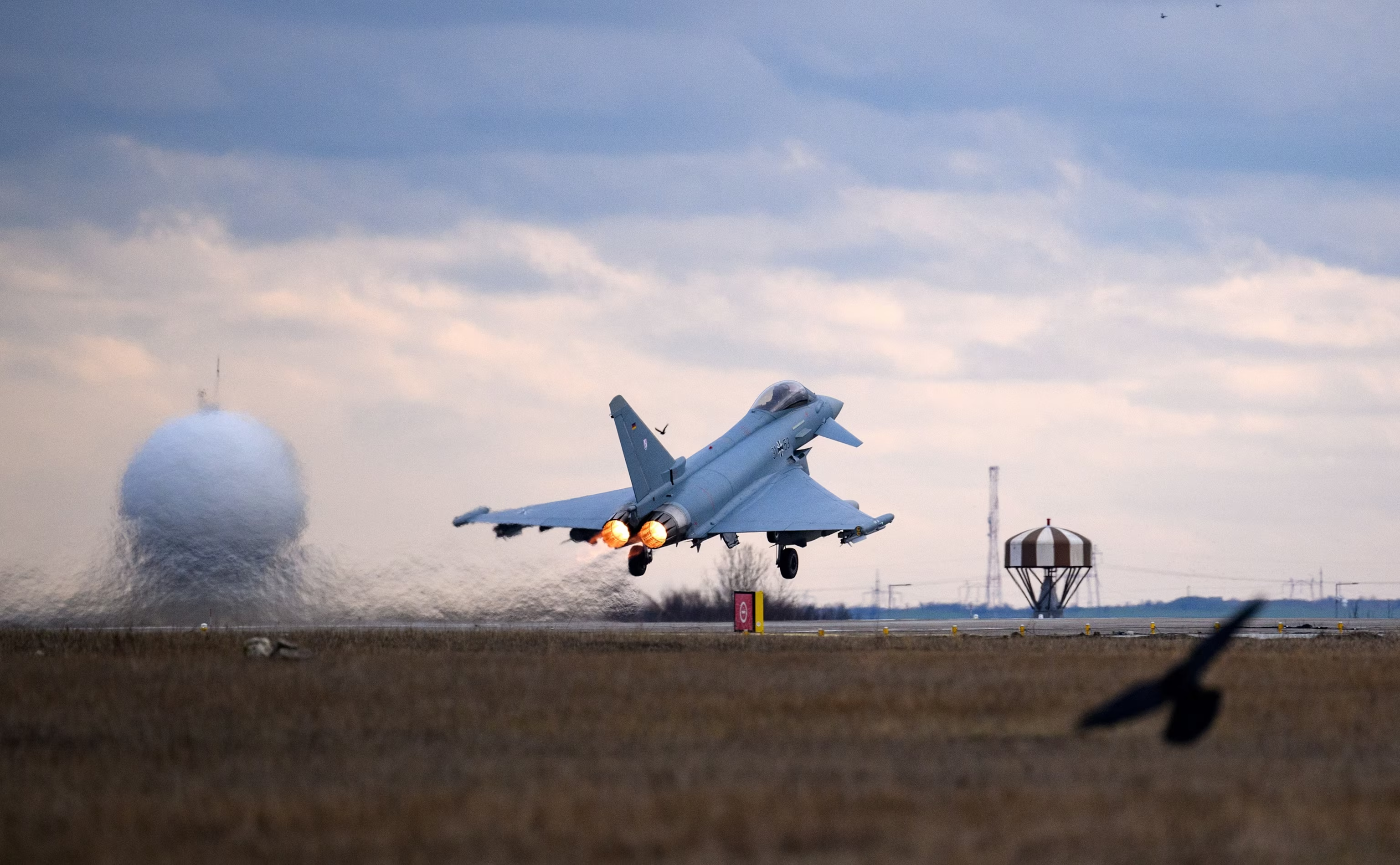
A German Eurofighter aircraft takes off from Mihail Kogalniceanu airfield near Constanta, Romania, on Dec. 5, 2023.Picture Alliance/dpa/picture alliance via Getty I
'Emphasis on restraint'
Romania has yet to engage and down any Russian drones or other ordnance within its airspace, although national statutes authorize forces to intercept aerial drones in Romanian territory during peacetime, contingent upon the endangerment of lives or properties.
There is no indication that Russian drones have intentionally targeted sites within Romania, Spinu clarified. "The events were all due to their strikes on objectives in Ukraine," he noted. "I foresee no change in this pattern going forward."
In the past week, British fighter planes were mobilized to monitor numerous drones attacking locations in Ukraine, situated in close proximity to the Romanian boundary.
Initial reports suggested that the British aircraft intercepted these crafts whilst they were in Ukrainian airspace, although defense ministries in the U.K. and Romania subsequently qualified that the allied aircrews trailed the drones, without firing upon them.
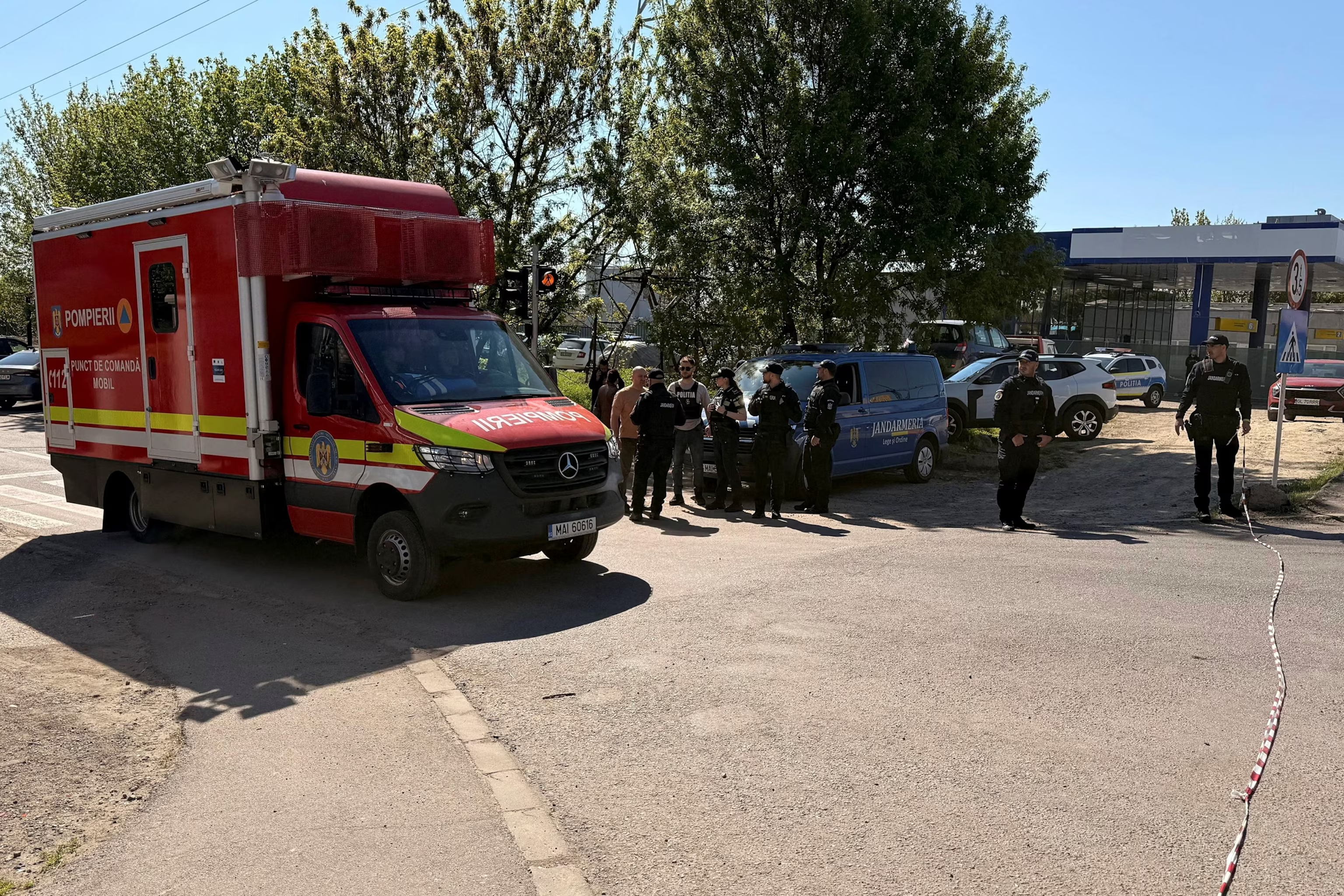
Police cordon off an area that was evacuated following the crash of a Russian drone in Galati, Romania, April 25, 2026.Inquam Photos/via Reuters
Romanian authorities indicated that approximately 200 individuals were evacuated during the intrusion, which included a drone landing in the southeastern border city of Galati. Romanian President Nicusor Dan noted that this was "the inaugural occasion of actual damages to Romanian property, a benchmark that we are addressing with extreme gravity."
Post this incursion, Vladimir Lipayev, Russia's ambassador based in Bucharest, informed the state-affiliated Tass news source that the occurrence represented a "provocation" orchestrated by Kyiv.
Romania’s Foreign Ministry summoned Lipayev in protest of the infringement. The ambassador, however, conveyed to Tass following their assembly, "Given the absence of definitive proof concerning the drone's country of origin, the formal objection was dismissed as tenuous and unsubstantiated."
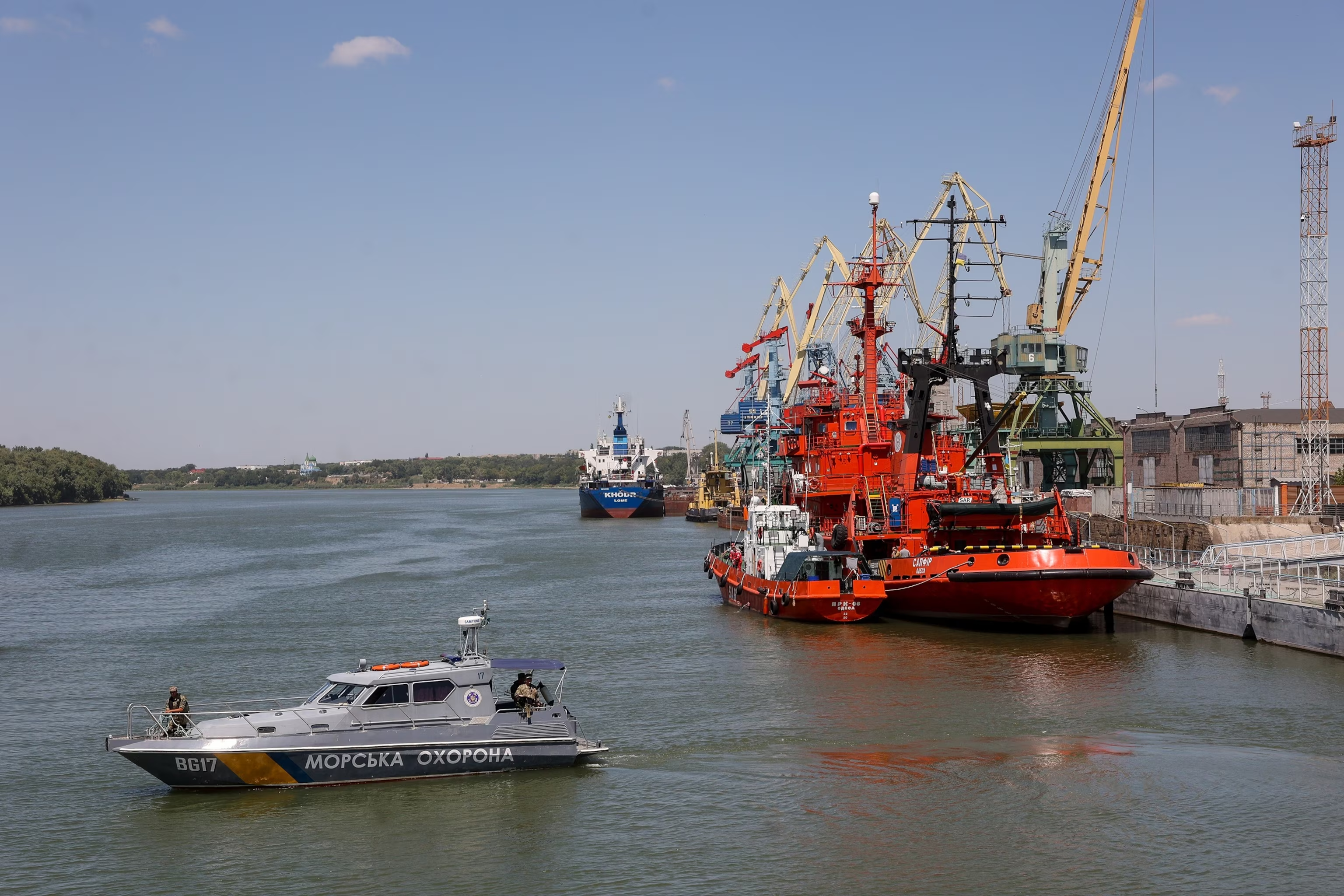
Vessels are pictured at Izmail river port on the Danube River, in Odesa region, Ukraine, on July 21, 2022.Nurphoto/NurPhoto via Getty Images
This event reignited queries concerning whether NATO forces should be authorized to intercept Russian munitions as they encroach upon allied boundaries but while they are still within Ukrainian airspace.
Ionela Ciolan, a research official associated with the Wilfried Martens Centre for European Studies think tank located in Brussels, told ABC News that the political leaders in Romania have manifested "an enduring emphasis on exercising restraint" regarding misdirected Russian drones.
"Authorities in Bucharest are wary of initiating any actions that may be construed as direct involvement in the dispute," Ciolan stated. Deliberations regarding a more forceful NATO stance "remain largely excluded from the domestic discussion," she appended.
Oana Popescu-Zamfir, director of the GlobalFocus Center think tank situated in Bucharest, shared with ABC News that the Romanian government tends to "de-emphasize these incidents and refrains from extensive commentary on them."
"The prevailing view remains that although the conflict is on our doorstep, it maintains a degree of remoteness," Popescu-Zamfir elucidated. The recognized understanding suggests that these infringements "do not represent a direct act of aggression from Russia," she further mentioned.
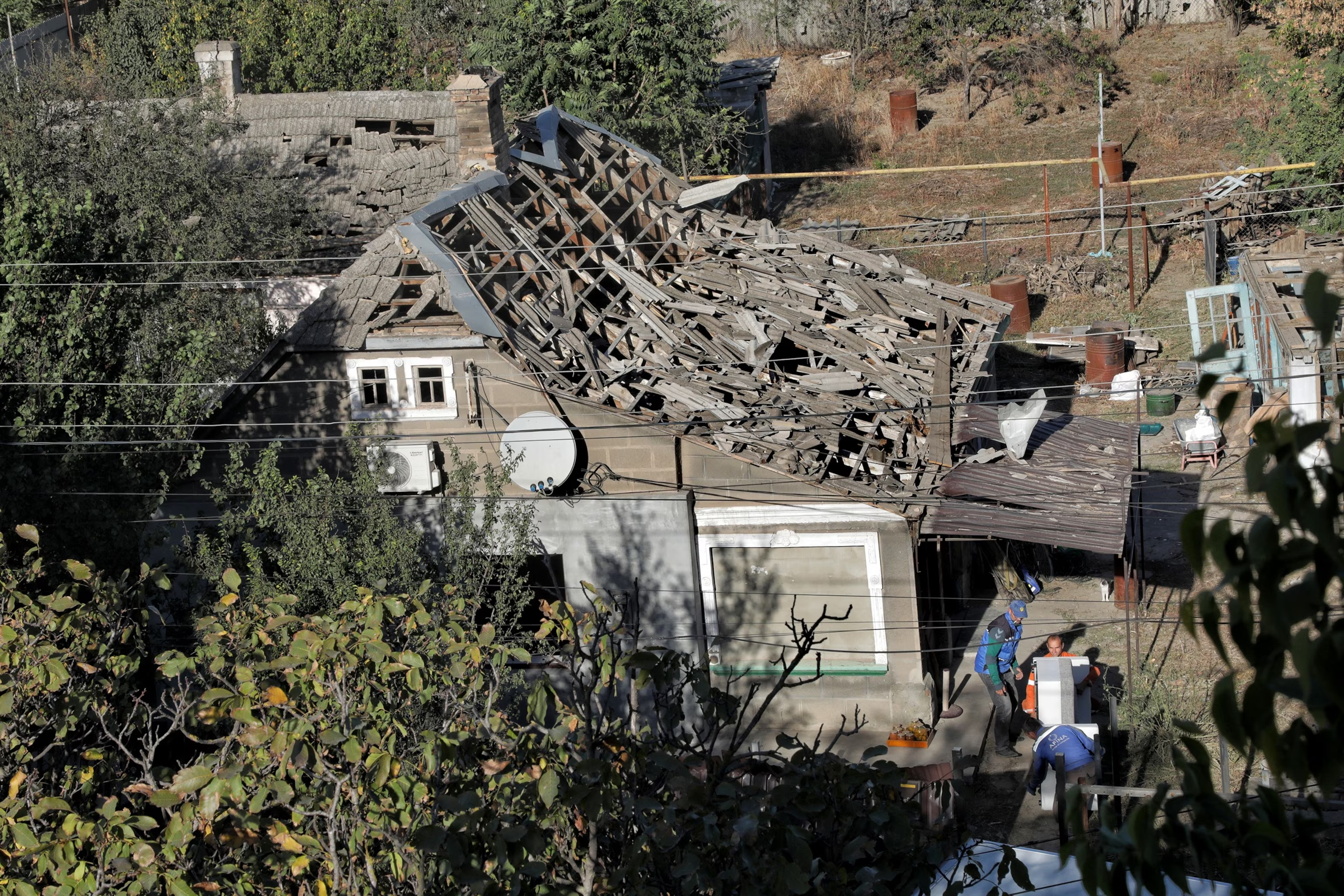
A residential building damaged by a Russian attack in Izmail, in the Odesa region of southern Ukraine, on October 12, 2023.Future Publishing via Getty Images
This outlook could partly be attributed to considerations surrounding domestic politics, as per Ciolan. "Romanian society exhibits increasing polarization," Ciolan observed. Current statistics propose that only approximately 55% of Romanian citizens primarily hold the Kremlin accountable for the war, whereas roughly 14% assign culpability to Ukraine, with others citing the U.S. or the European Union," she elaborated.
Russia commenced its full-scale invasion of Ukraine in February 2022, articulating the objective of unseating the administration of Ukrainian President Volodymyr Zelenskyy in Kyiv.
The "special military operation," as termed by the Kremlin to characterize the intrusion, ensued following eight years of ongoing clashes in eastern Ukraine, instigated by Russia's annexation of Crimea and the orchestration of separatist insurgencies within the eastern Donbas zone.
The cost of action
The initial instance of NATO member states intercepting drones occurred during the prior year, when Polish and Dutch warplanes obliterated three Russian aerial drones over Polish territory. On that occasion, no fewer than 19 drones entered Polish airspace, as detailed by Warsaw.
In response to this event, NATO Secretary-General Mark Rutte condemned Moscow for exhibiting "irresponsible behavior" and asserted that the intrusion was not "an isolated case."
"All allies are committed to securing every portion of allied land," Rutte affirmed. "We shall meticulously oversee the situation along our eastern border, maintaining perpetual readiness with our air defenses."
Russian representatives have generally disclaimed any accountability regarding ordnance incursions into neighboring territories, while concurrently accusing NATO states of enabling Ukraine to utilize their airspace in order to route drone attacks into Russia – a contention refuted by allied leaders.
As incursions escalate, political figures in NATO affiliated states are facing mounting public pressure to implement countermeasures. Nevertheless, a more assertive response could engender political, military and economic perils, according to the analysts who interacted with ABC News.
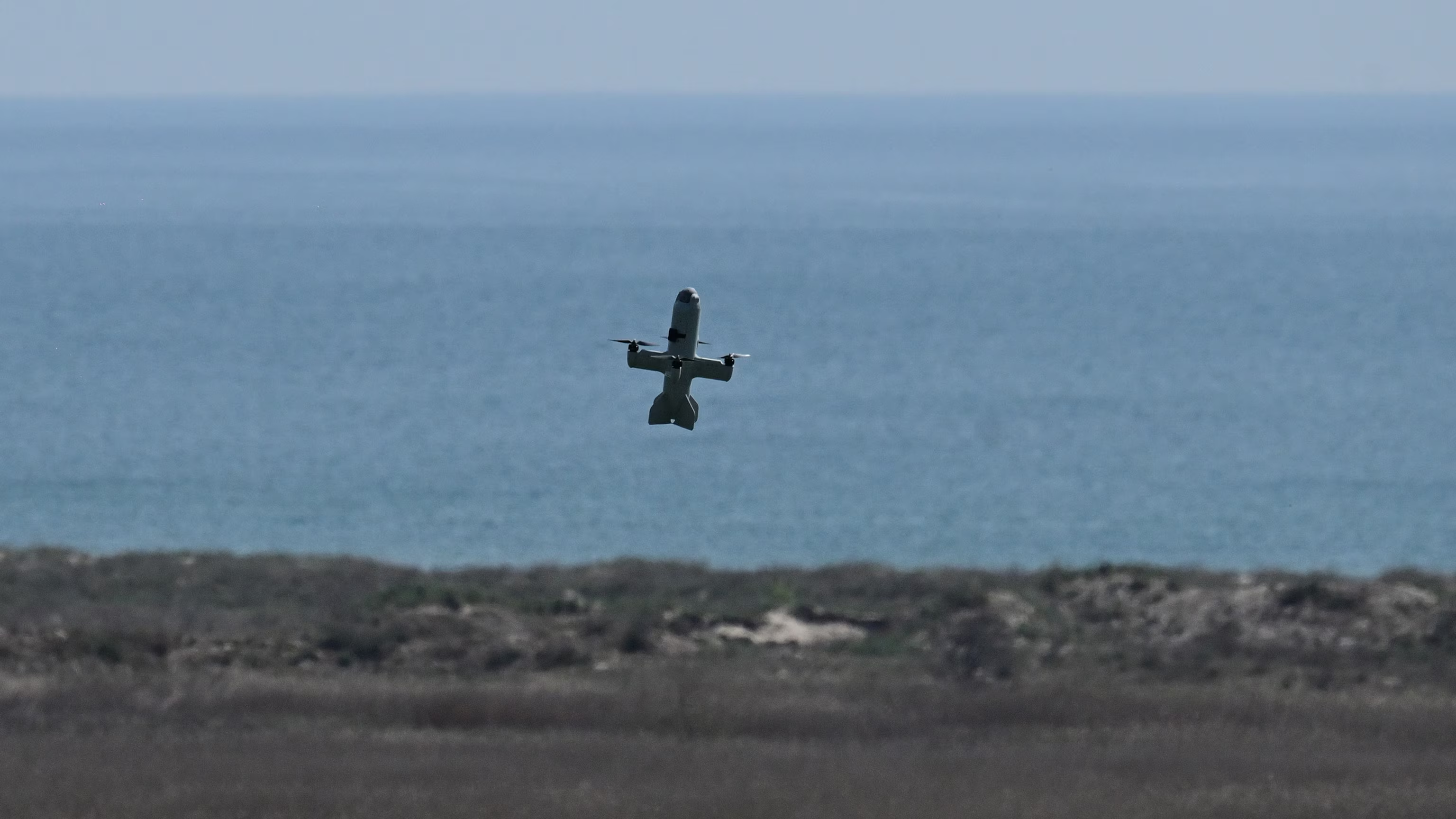
An interception drone is pictured during exercise EASTERN PHOENIX 26 at Capu Midia firing range in Romania, on April 24, 2026.Daniel Mihailescu/AFP via Getty Images
"Employing missiles that command valuations in the hundreds of thousands, or possibly millions, of euros to eliminate drones valued at only a few thousand euros is excessively uneconomical," Ciolan articulated. Engaging invading Russian drones could additionally grant Moscow invaluable military insights pertaining to NATO capacities.
Romania, in conjunction with other NATO associates, is proceeding promptly to integrate less costly counter-drone ordnance, akin to those utilized by Ukraine. By way of illustration, in January, Romanian military director Gen. Gheorghita Vlad communicated Bucharest’s intentions to procure the U.S.-manufactured MEROPS interceptor drone.
The ramifications of intercepting could also surge if engagements transpire over densely populated regions, with drones, defensive munitions, and resultant debris presenting hazards to the safety of individuals and infrastructure on the terrain.
"It constitutes an imprudent course of action, not solely from a fiscal perspective but also regarding communal security," Spinu commented.
Popescu-Zamfir remarked that while Romania has "registered advancements" on this matter, the nation essentially lacks the essential political resolve and capabilities to engage.
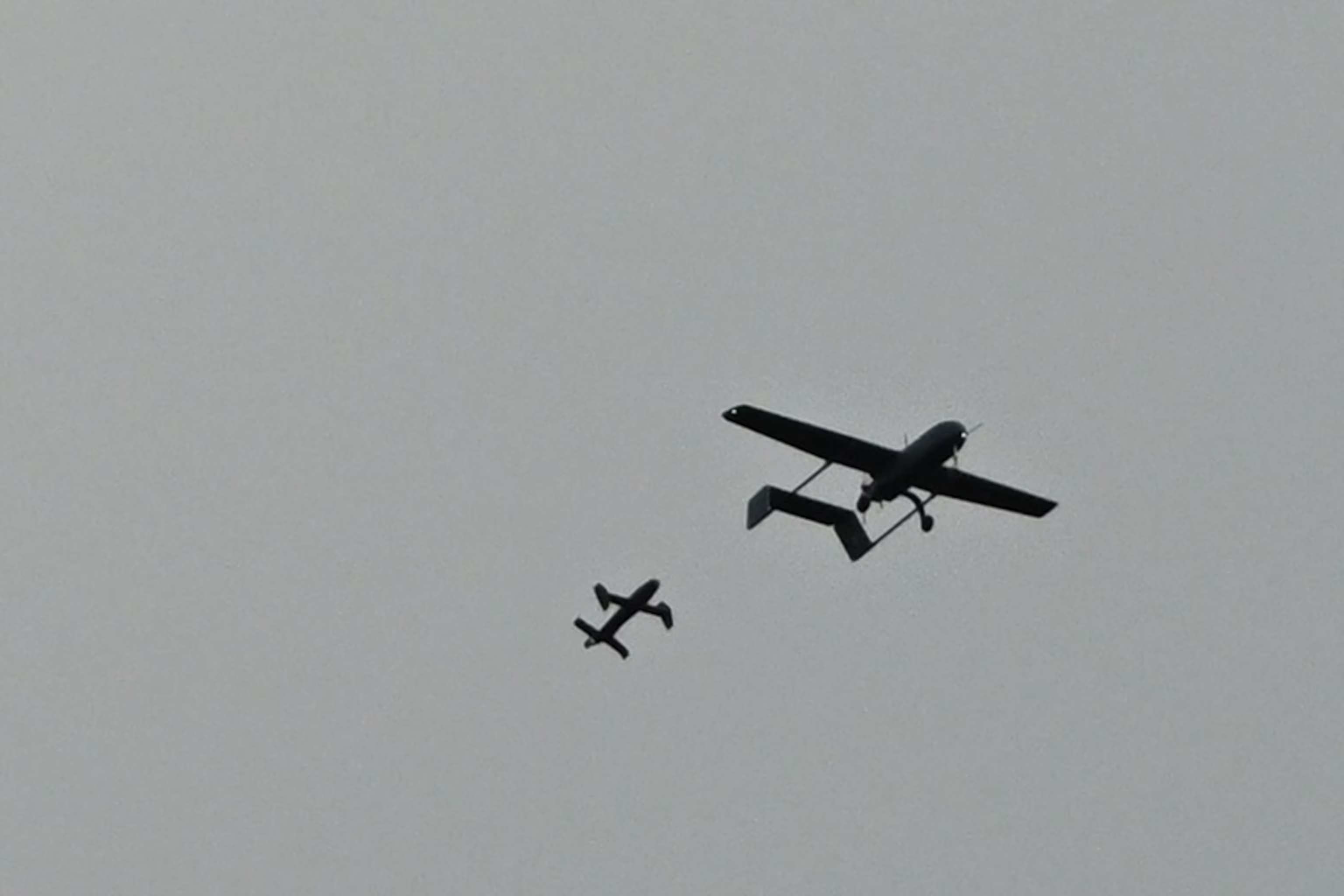
The photo shows a live-fire demonstration on NATO’s eastern flank at the Deba training grounds in Deba, Subcarpathian Voivodeship, Poland, on Nov. 18, 2025.Anadolu via Getty Images
"We have presently formulated a precise statutory structure that indeed authorizes us to engage the drones directly," she clarified, "additionally endowing the pilots, in scenarios necessitating fighter jets, with the authority to execute such judgments."
"Nevertheless, we are without the prerequisite apparatus," Popescu-Zamfir included. "We have commenced the strategic positioning of supplementary radars and sensors throughout the Danube Delta; however, our current standing is notably subpar relative to where it should be."
Romania, coactively with its NATO partners, confronts an arduous and perpetually evolving threat, Spinu specified.
"The deployment of defensive resources capacitating the protection of the entirety of Romania’s boundary with Ukraine is infeasible," he elaborated. "This is neither militarily nor economically viable. And no nation globally would be in a position to accomplish such a feat."
"It is fundamentally a matter of evaluating risks," Spinu remarked, implying that the fortification of populated sectors and vital infrastructure warrants precedence over sparsely inhabited border provinces where Russian drones have predominantly crashed.
"I do not presuppose that an exhaustive solution exists," Spinu concluded. "Not even within the ranks of the most sophisticated armed forces in NATO."
Sourse: abcnews.go.com