
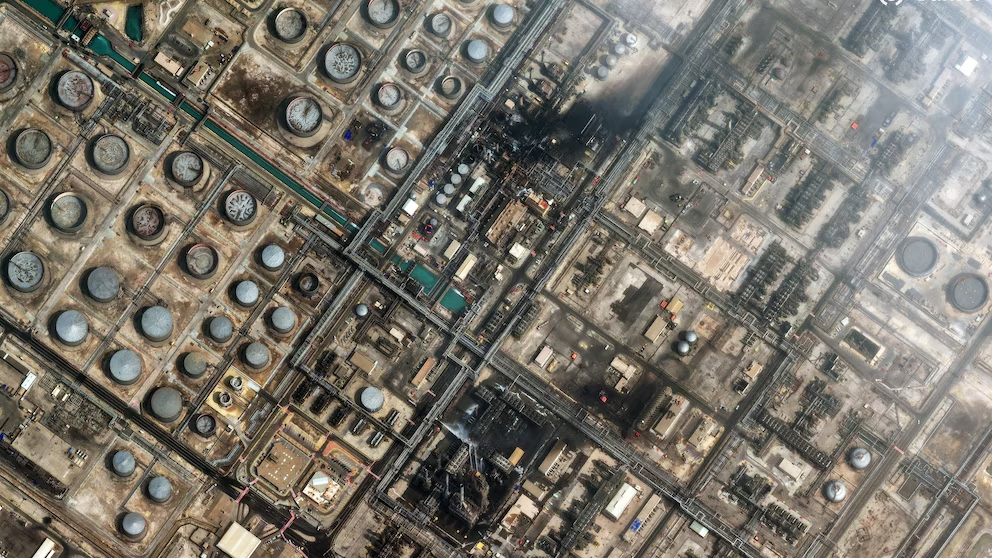
Aramco Ras Tanura Refinery sustains damage in Saudi Arabia on March 2, 2026. Vantor
An ABC News review reveals that since the U.S. and Israel initiated attacks on Iran three weeks prior, at least 23 oil and gas installations situated across nine nations in the Middle East have endured military impacts from Iranian, Israeli, and American forces.
Specialists suggest that these attacks, along with the looming threat of further assaults, could plunge international energy markets into a prolonged period of disarray.
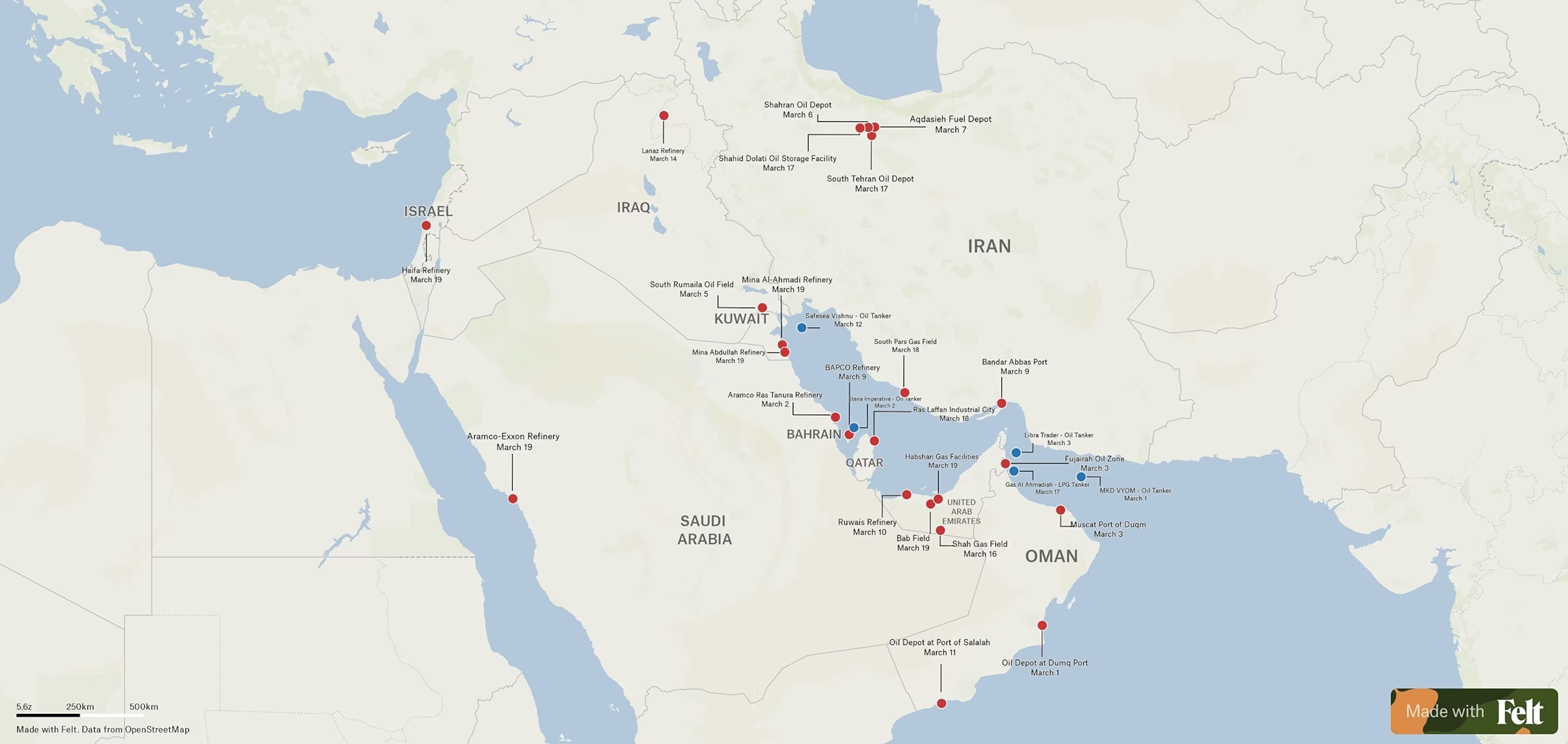
ABC News has independently corroborated the locations of energy infrastructure that have been targeted. ABC News/FELT
Energy authorities informed ABC News that the escalation of the conflict to encompass vital energy infrastructure, when paired with the closure of the Strait of Hormuz, might give rise to a costly, extended constraint on the global delivery of oil and gas.
“For each day this persists, we will require at least one week, and perhaps two weeks subsequently, to remedy the deficit,” stated Philip Jones-Lux, a distinguished analyst at Sparta Commodities, a market intelligence organization based in Switzerland. “We will not see a return to pre-conflict oil prices at any point this year, and probably not even by mid-2027.”
ABC News authenticated the targets and pinpointed the geographic coordinates of numerous sites by comparing social media videos and satellite imagery with formal pronouncements and accessible data, encompassing maritime details. This investigation empowered ABC News to chronologically sequence each occurrence and delineate the scope of the incursions on energy infrastructure.
Although parallel offensives on gas installations in Qatar and Iran last week engendered anxieties regarding the widening extent of the dispute, oil and gas facilities throughout the region have been the subject of attacks by Iranian, American, and Israeli forces from the onset of hostilities.
According to ABC News’ examination of satellite imagery and validated videos, Iran and its allied groups have struck a minimum of 17 oil and gas locations spread across nine countries in the Middle East. As of March 22, at least six oil and gas sites within Iran itself have been impacted by strikes from Israeli and U.S. forces since the initiation of the conflict.
The destruction sustained by these installations transpires amidst the ongoing virtual obstruction of the Strait of Hormuz, a pivotal marine bottleneck responsible for the transit of over 20% of the world’s oil and liquefied gas. With Iran issuing threats to engage vessels attempting to traverse the strait, a minimum of five tankers transporting oil and gas have already been targeted by Iranian strikes in the Persian Gulf, as per an ABC News analysis.
Even in the hypothetical scenario of an immediate cessation of hostilities, the disruption to the supply chain stemming from the closure of the Strait of Hormuz, in conjunction with the damage incurred by oil and gas facilities, could exert influence on energy costs extending into the following year, energy analysts cautioned.
“The protracted duration of this conflict, the extended closure of the strait, and the heightened damage to facilities in the Gulf collectively amplify the gravity of the situation, which the market will reflect,” noted Kristy Kramer, who heads LNG Strategy and Market Development at Wood Mackenzie, a research and consulting firm concentrating on the energy and natural resources sector.
Liquified natural gas
Experts indicate that the two most significant incursions on energy sites transpired last week, exemplified by Israel’s strike against the South Pars Gas Field in Iran and Iran’s offensive targeting Ras Laffan Industrial City in Qatar, recognized as the world’s premier LNG processing center.
Video footage validated by ABC News depicted a conflagration enveloping the South Pars Gas Refinery in Asaluyeh, Iran, on March 18, subsequent to an Israeli attack.
This South Pars gas field is regarded as indispensable to Iran’s economic infrastructure, fulfilling 70% of the nation’s gas requirements, according to the Middle East Council on Global Affairs.
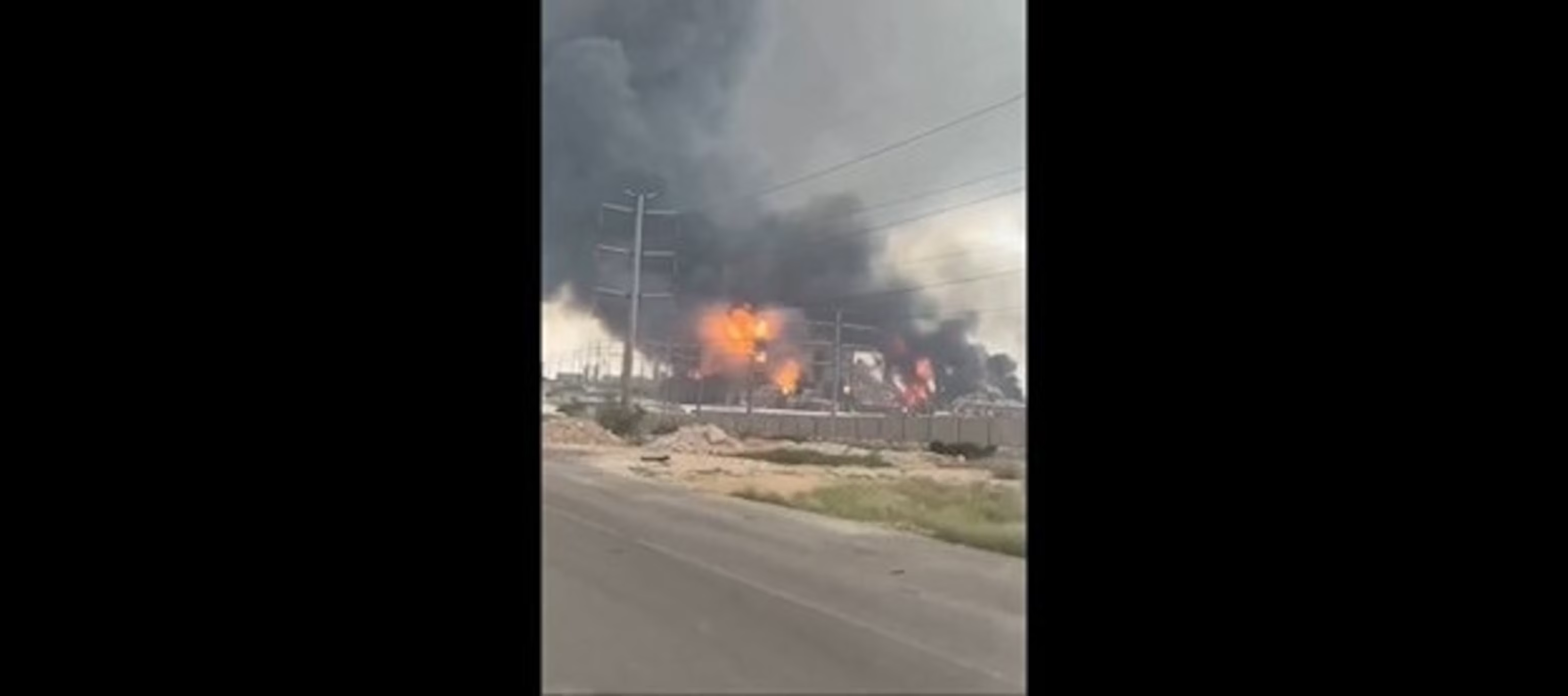
A screen capture from a video verified by ABC News, posted on X, exhibiting smoke and flames engulfing the South Pars Gas Refinery in Asaluyeh, Iran on March 18, 2026, following an Israeli strike. Verified by ABC News.
“The importance of striking the South Pars Gas Field is not merely the immediate cessation of output, but the pivotal position it occupies. South Pars serves as the foundation for Iran's power generation,” stated Dr. Nima Shokri, an environmental authority at Hamburg University of Technology in Germany. “Any disruption to this flow permeates through the systems sustaining daily existence. The implications, however, transcend Iran's territorial boundaries: any impairment to South Pars harbors the capacity for escalation.”
Although satellite imagery does not explicitly reveal the extent of the damage to the Ras Laffan site in Qatar, data procured by NASA identified an upsurge in heat signatures subsequent to the reported strike on the installation on March 18. In a formal declaration, QatarEnergy, a state-operated entity, indicated that an Iranian missile strike inflicted damage on two LNG trains, anticipating a decrease in their export capability by 17% and a corresponding annual revenue depletion of $20 billion.
According to Jones-Lux, while the LNG originating from Qatar is chiefly destined for Asian markets, fluctuations in natural gas prices could resonate on a worldwide scale.
“It's an extraordinarily vital engineering component of that facility,” Jones-Lux remarked concerning the harm inflicted upon Ras Laffan. “There exists no easily accessible manufacturing competence to achieve its repair. It constitutes a customized apparatus.”
According to Kramer, the assault on Ras Laffan undermined the market consensus that the ramifications of the conflict would remain restricted to a few months, with QatarEnergy now forecasting that the restoration endeavors could span up to five years to finalize.
“Initially, it appeared to be a potential disruption lasting approximately a couple of months,” she stated. “Considering the strikes directed at the facilities this week, perspectives are shifting. It denotes a rather critical juncture.”
Alex Munton – director of research at Rapidan Energy, a D.C.-based firm specializing in energy market analysis, policy, and geopolitics – characterized the attack on Ras Laffan as a “worst-case scenario.” This expansive LNG installation constitutes the core of Qatar’s export sector; however, Ras Laffan is intrinsically susceptible to assault owing to the methodology of transforming combustible gas into liquid through an extensive network of pipelines.
“Infrastructure will be constructed around the facility to mitigate anticipated risks. Safeguarding against a ballistic missile impact is not typically a foundational element in defending this installation,” he clarified.
As per Munton, Qatar’s approach to safeguarding Ras Laffan has revolved around adopting a foreign policy designed to diminish the probability of being targeted during a conflict. Cultivating beneficial ties with regional neighbors, organizing peace talks, and enabling international firms to invest have all augmented this overarching strategy, he articulated.
“All these initiatives function as an insurance mechanism against the very event that has now transpired, and they have proven insufficient,” Munton noted. “The susceptibility of Ras Laffan has now been unequivocally substantiated. Iran possesses the full capacity to virtually decimate the facility, should it opt to do so.”
Oil refineries and depots
Satellite imagery reviewed by ABC News exhibited destruction inflicted upon 19 oil refineries and depots dispersed throughout nine nations.
According to the Kuwait Petroleum Corporation, Iranian drones targeted two of the nation’s three major refineries – Mina Abdullah and Mina Al-Ahmadi – which collectively account for over half of the country’s refining output. Video footage validated by ABC News on Thursday showcased flames and a column of dark smoke ascending from a unit within the Mina Al-Ahmadi Refinery, an installation capable of yielding 346,000 barrels daily, which was then struck a second time on Friday. The magnitude of the damage remains ambiguous at this juncture, with the Kuwait Petroleum Corporation asserting that they have adopted “all requisite protocols” to sustain continuous functionality.
Within the UAE, fragments falling from intercepted drone strikes have ignited fires on at least four occasions at the Fujairah Oil Industry Zone, recognized as the Middle East’s preeminent storage hub for refined petroleum commodities.
A minimum of two major refineries in Saudi Arabia have also been targeted by Iran. Satellite representations unveiled extensive damage to the country’s largest refinery, Aramco Ras Tanura – which maintains a refining capacity of 550 million barrels per day – following the interception of two drones directed at the facility. Video evidence authenticated by ABC News likewise depicted plumes of smoke emanating from Saudi Aramco-Exxon’s refinery in Yanbu, culminating in a transient suspension of crude loading operations at the critical Red Sea port.
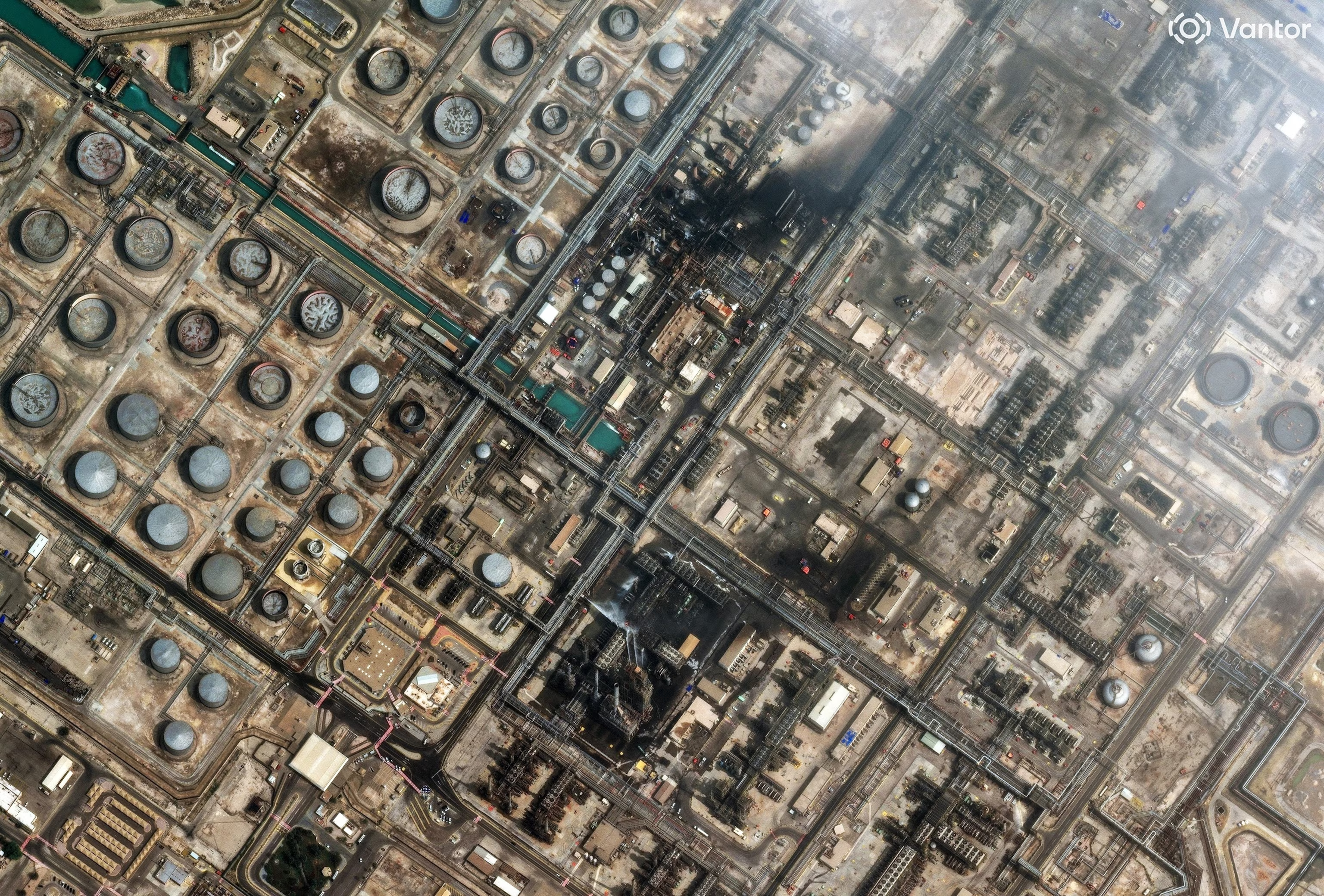
Damage sustained by the Aramco Ras Tanura Refinery in Saudi Arabia on March 2, 2026. Vantor
Across the Gulf region, ABC News has also substantiated strikes on installations in Bahrain, Israel, Iraq, and Oman. The BAPCO establishment in Manama, Bahrain, communicated a force majeure declaration subsequent to being struck during the initial week of the conflict. In Oman, multiple oil storage silos were ignited by aerial strikes directed at three separate ports. In Iraq, a minimum of two refineries were targeted. Most recently, the Haifa refinery in Israel sustained damage as a result of an aerial assault on March 19, according to Bazan, the entity administering it.
Within Iran, Airbus DS satellite depictions revealed damage to the Aqdasieh fuel depot in Tehran following a strike in the region on March 7. Alongside at least nine fuel storage facilities damaged at Aqdasieh, strikes have also impacted a minimum of three other expansive fuel depots throughout the nation, as per videos verified by ABC News.
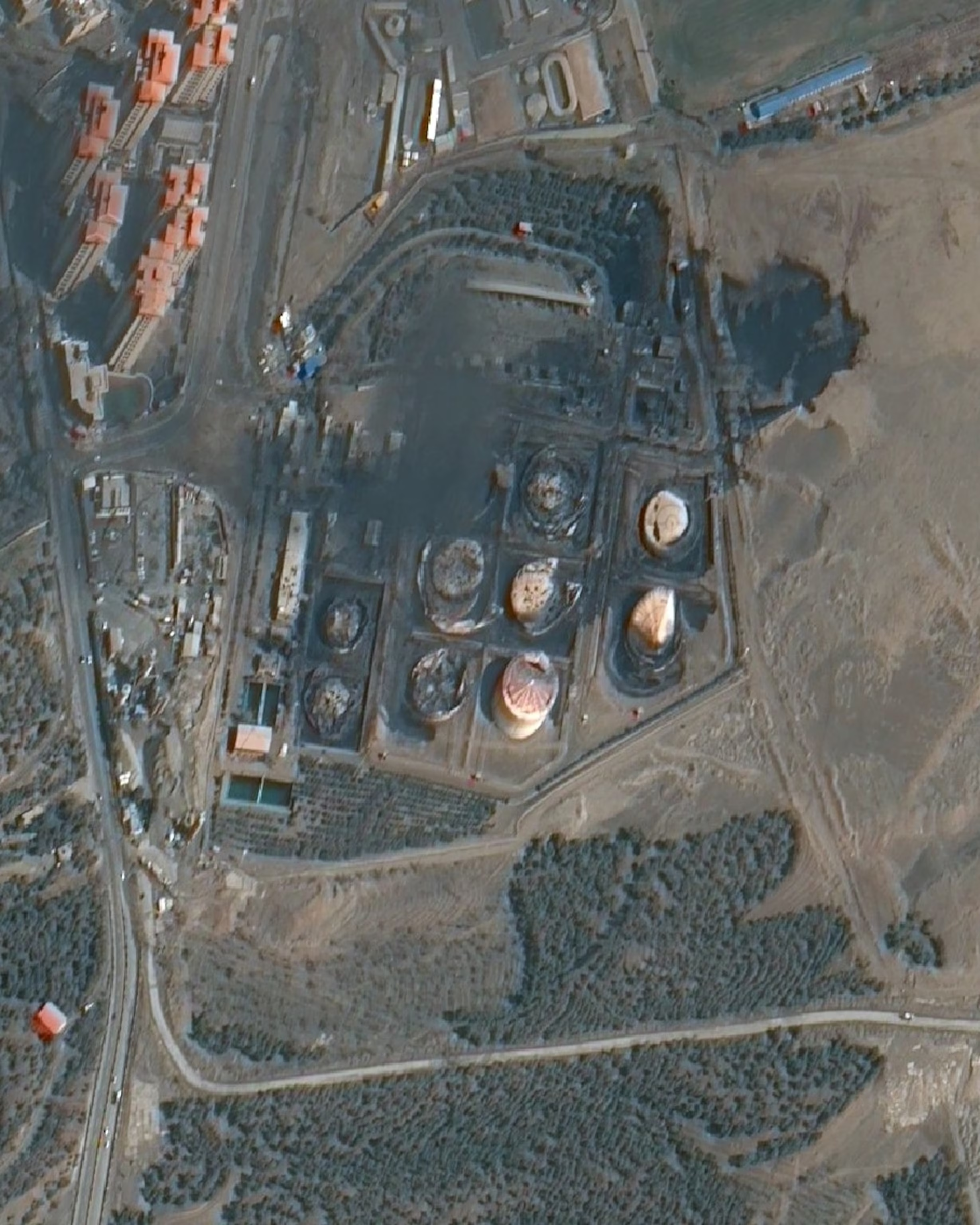
Airbus DS Images exhibiting the devastation at the Aqdasieh fuel depot in Tehran, Iran. Airbus DS and Pléiades © CNES 2025
Following U.S.-Israeli airstrikes on oil storage infrastructure in Tehran, the Iranian capital has encountered alarming levels of pollution, with local authorities reporting acid and toxic rainfall. Validated videos illustrate plumes of smoke so opaque that they obstructed sunlight subsequent to the strikes in Tehran.
Although the extent of the damage to the facilities fluctuates, the consequence of the strikes on oil installations, when coupled with the shutdown of the Strait of Hormuz, has proliferated throughout the supply infrastructure, as per Jones-Lux.
“You're dealing with damage to facilities, implying that supply is durably diminished or will be diminished for an interim period, irrespective of whether [the Strait of Hormuz] reopens. Subsequently, you have this backlog that necessitates resolution,” Jones-Lux elucidated. “We will not observe a return to pre-conflict oil prices at any juncture within the coming year, at minimum.”
ABC News' Helena Skinner and Gaby Vinick provided contributions to this article.
Sourse: abcnews.go.com