
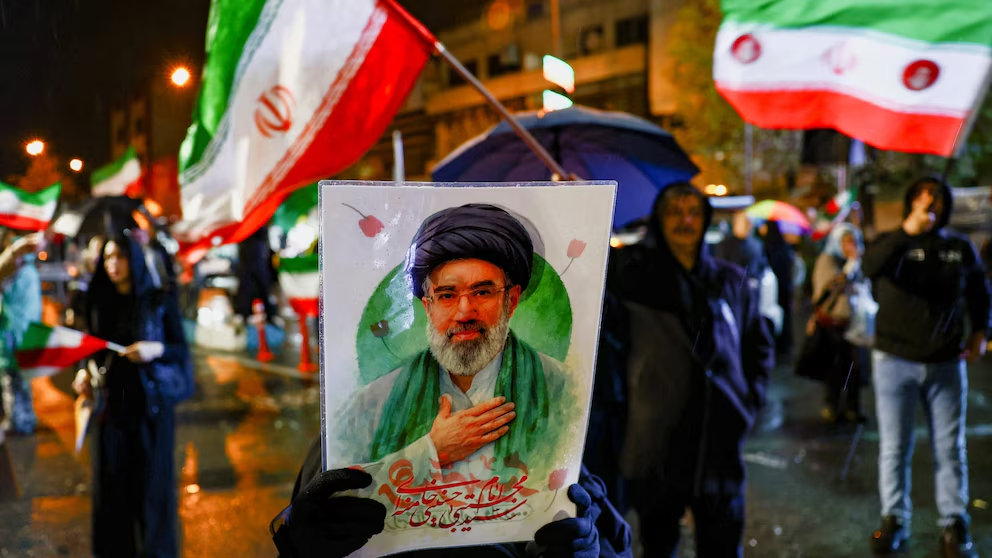
A woman displays a placard featuring Iran’s new Supreme Leader Mojtaba Khamenei at a gathering in Tehran, Iran, on March 26, 2026.Majid-asgaripour/via Reuters
LONDON — President Donald Trump and Israeli Premier Benjamin Netanyahu initiated their collaborative military undertaking against Iran in late February, advocating for the collapse of the Islamic Republic.
"When we have concluded, seize control of your government. It shall be yours to claim. This will likely represent your singular opportunity for generations," Trump stated, addressing Iranians while announcing the commencement of "significant military engagements."
A month of constant combined U.S.-Israeli offensives seems to have markedly weakened Iran's military strengths and resulted in the deaths of many of its highest-ranking officials, notably Supreme Leader Ayatollah Ali Khamenei, who perished alongside scores of prominent Iranian figures in a succession of aerial bombardments on his official residence in Tehran during the initial volleys of the conflict.
However, notwithstanding Trump's pronouncement that the "war has been secured," Iranian forces persist in launching assaults on Israel, regional U.S. outposts, and American allies across the Middle East, while commercial navigation via the vital Strait of Hormuz remains restricted, with substantial numbers of freighters stranded on both sides of the narrow waterway at the southern gateway to the Persian Gulf.
Trump has further asserted that there had been a "total change of government," with the leaders the U.S. is currently engaging with in newly revealed discussions being "more tempered" and "far more amenable," the president informed ABC News' Jonathan Karl.
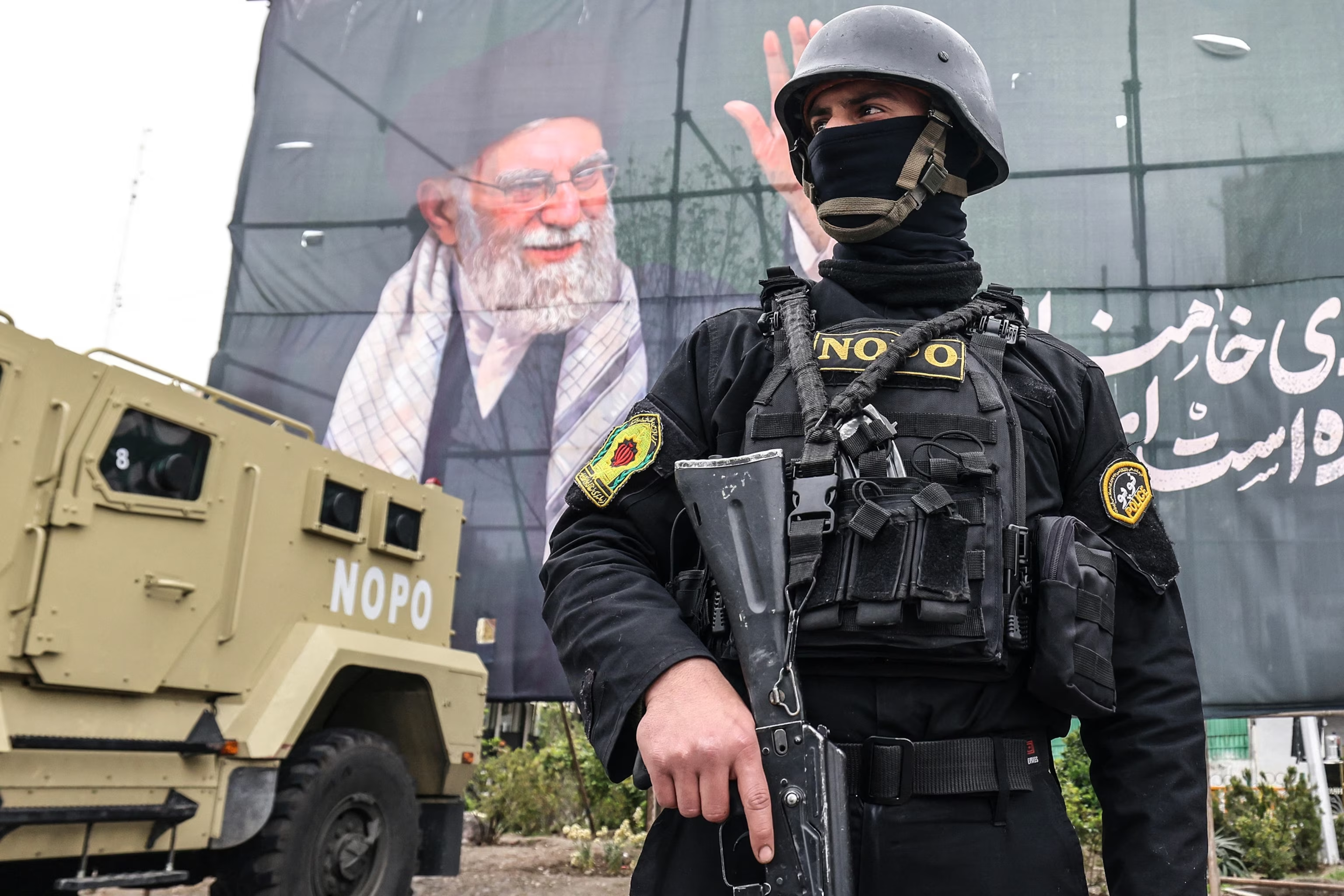
An Iranian security operative stands sentinel by a banner honoring Iran’s deceased supreme leader Ayatollah Ali Khamenei in Tehran on March 31, 2026.Atta Kenare/AFP via Getty Images
Trump cited Mohammad Bagher Ghalibaf, the influential speaker of the Iranian assembly, as the direct U.S. interlocutor, although Ghalibaf has refuted the claim.
Yet in Tehran, the group of functionaries – Ghalibaf among them – rising to assume the responsibilities of authority seem equally devoted as the fallen figures they are replacing, many of whom are veterans of the formidable Islamic Revolutionary Guard Corps (IRGC), analysts have noted.
The governing structure in Tehran, according to Danny Citrinowicz – the Israel Defense Forces' prior senior Iran researcher, presently at the Institute for National Security Studies think tank in Israel – "is weaker than it was prior to the hostilities, yet it is also more extremist. The IRGC has additionally solidified its sway over decision-making, diminishing what limited internal equilibrium formerly existed within the regime."
The war appears to have afforded Tehran lasting dominance over the Strait of Hormuz – a "weapon of significant disturbance," as characterized by Ali Vaez of the International Crisis Group during an online briefing convened by the think tank this week.
Should the Islamic Republic endure the war, and its direct consequences by suppressing burgeoning anti-regime activities, its new leaders might feel encouraged to preserve perceived strategic merits, most prominently command of the Strait of Hormuz, according to analysts who conversed with ABC News.
That governmental mindset appears to be solidifying. Ghalibaf, for example, conveyed to the IRNA state news agency that Iran's strategy now hinges on its mastery of three foundations: "missiles, the streets, and the Strait."
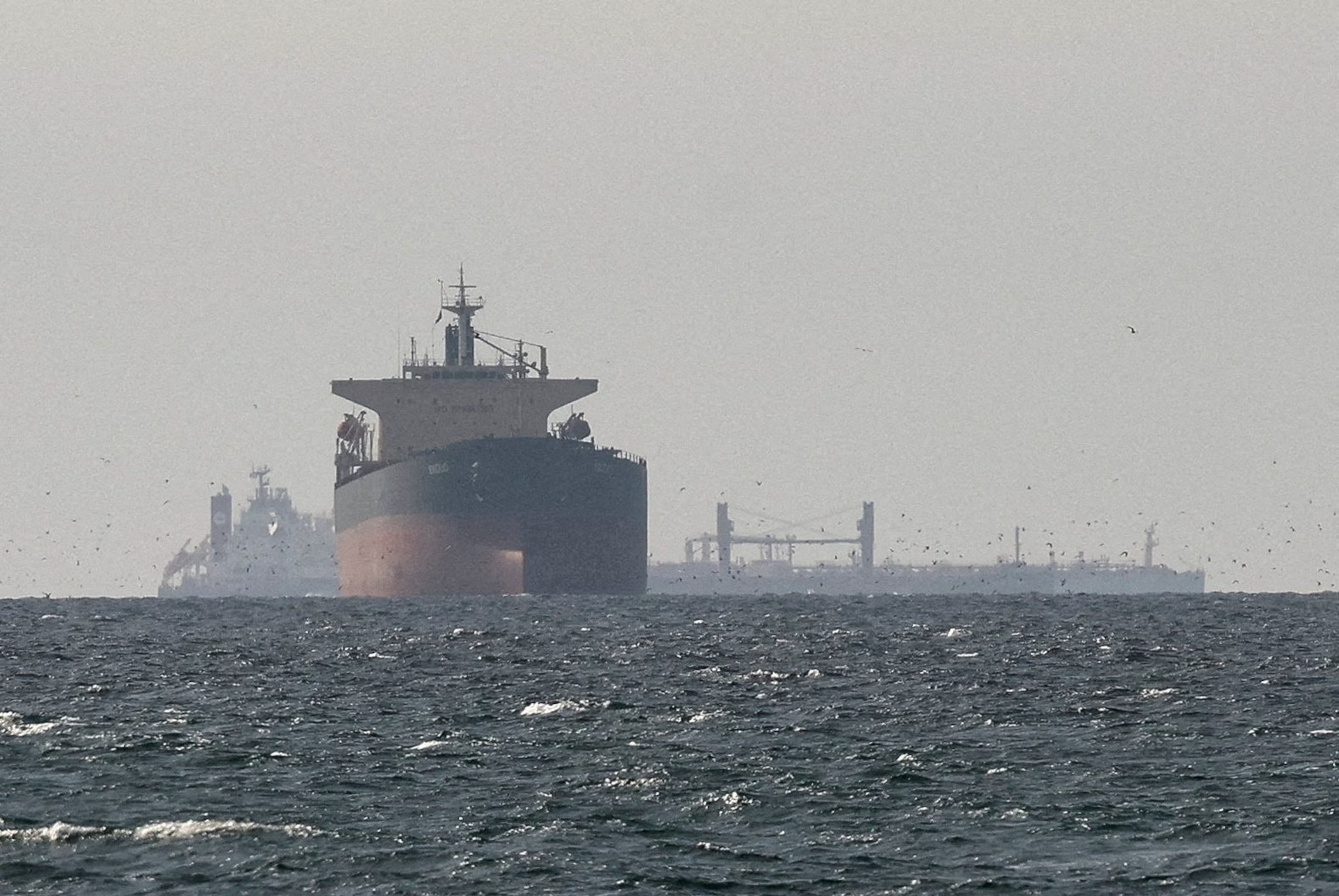
Merchant vessels in the Gulf, adjacent to the Strait of Hormuz, as viewed from northern Ras al-Khaimah, near the boundary with Oman’s Musandam governance, amidst the U.S.-Israeli conflict with Iran, in the United Arab Emirates, March 11, 2026.Reuters
Within Iran, some perceive that alteration. Darius – who opted not to use his true identity for fear of retribution – informed ABC News from Tehran of a mounting perception that "the origin of authority for the Islamic republic is changing" from the clerical establishment to the IRGC.
"Currently, the actual leaders of the nation are the generals in the IRGC. And they are essentially in charge at the moment," Darius conveyed.
IRGC in ascendancy
The IRGC was established shortly after the Iranian Revolution by Ayatollah Ruhollah Khomeini in 1979, ultimately emerging as the novel Islamic Republic's foremost instrument for broadcasting its ideology and influence beyond its individual boundaries.
The IRGC solidified and broadened its influence during the Iran-Iraq War from 1980 to 1988. Through its battlefield triumphs and ideological fervor, the IRGC came to embody the wartime notion of "sacred protection," Johns Hopkins University professor Vali Nasr documented in his recent publication, "Iran's Grand Strategy."
Observers have traditionally regarded the IRGC as the most dominant military, political, and economic entity in Iran.
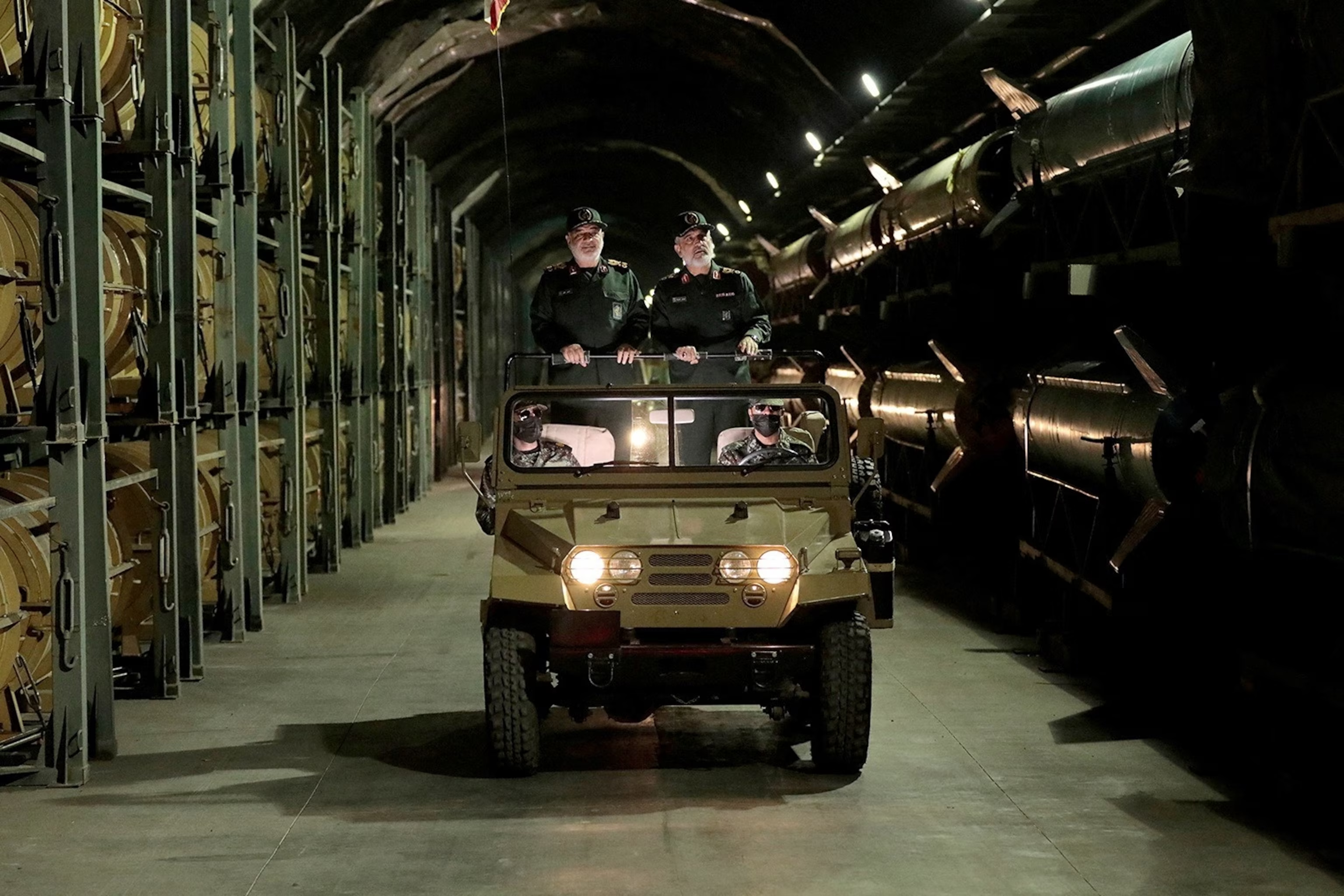
Then-commander-in-chief of the Islamic Revolutionary Guard Corps, Maj. General Hossein Salami, and commander of the IRGC Aerospace Force, Amir Ali Hajizadeh, tour an underground armory at an unspecified location in Iran, in this image procured on Jan. 11, 2025.Irgc/wana/via Reuters
Even prior to the most recent U.S.-Israeli operation against Iran, numerous experts cautioned that targeted strikes or an endeavor for governmental alteration risked enabling the IRGC to seize the state's other mechanisms of authority – although others implied the force had no necessity to openly commandeer control, given its existing hold over the country.
The new supreme leader, Mojtaba Khamenei, the son of Ali Khamenei, served in an elite IRGC division during the Iran-Iraq War, and analysts have proposed his candidacy was strongly endorsed by the force.
Mojtaba Khamenei's recently designated military advisor, Mohsen Rezaei, was recruited from the upper echelons of the IRGC, as was the new secretary of Iran's Supreme National Security Council, Mohammad Bagher Zolghadr, who was chosen to succeed Ali Larijani when the latter was killed by Israeli airstrikes in mid-March.
Meanwhile, IRGC veteran Ghalibaf – who has reportedly maintained a close association with Mojtaba Khamenei – remains alive and seems to be in a position of influence, one of the few senior prewar officials to have survived the U.S.-Israeli operation.
Within Iran, some perceive that alteration. Darius informed ABC News from Tehran of a growing perception that "the origin of authority for the Islamic republic is changing" from the clerical establishment to the IRGC.
"Currently, the actual leaders of the nation are the generals in the IRGC. And they are essentially in charge at the moment," Darius conveyed.
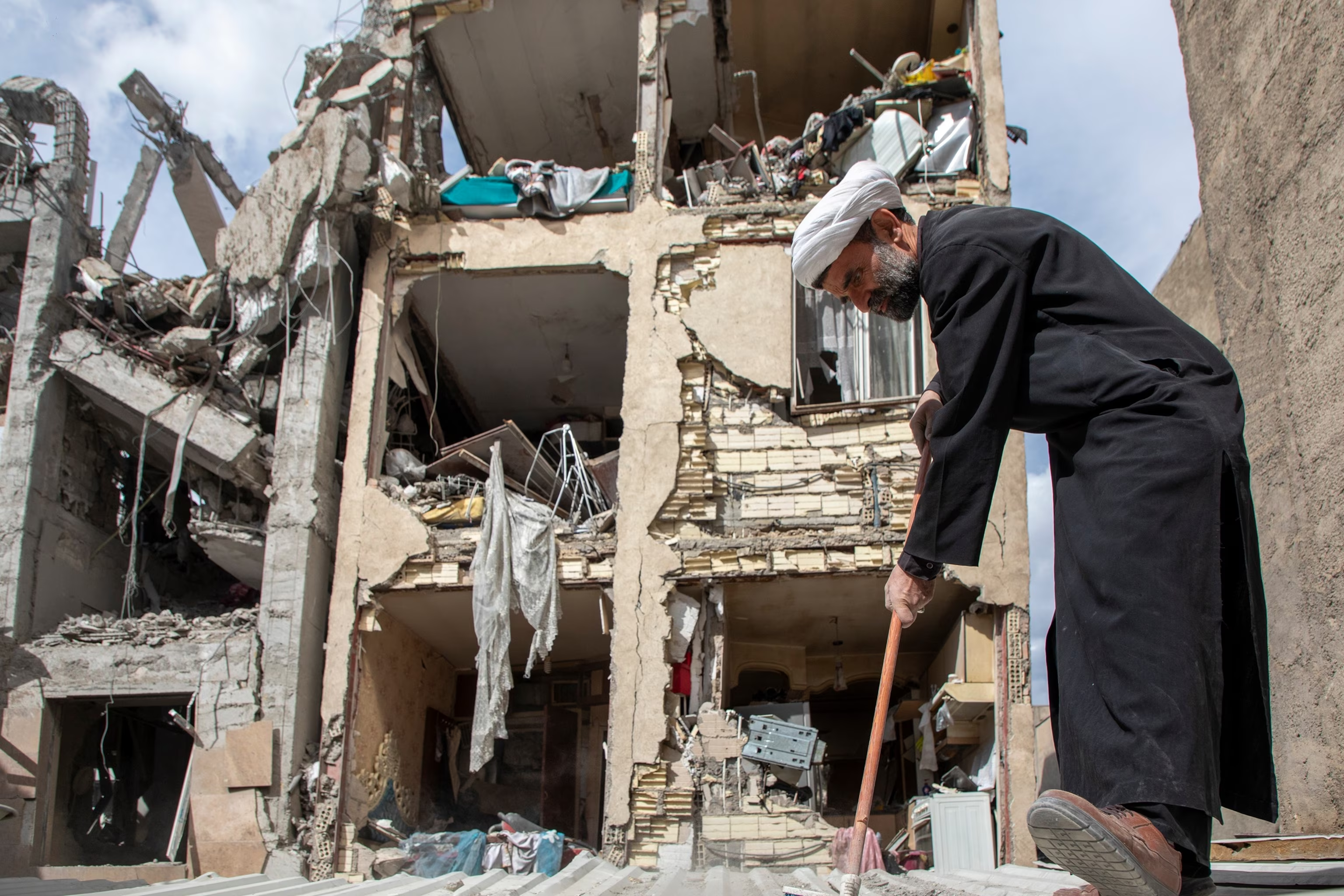
A man clears away rubble close to a residential structure that was impacted in an aerial assault in the early hours of March 27, 2026 in Tehran, Iran.Majid Saeedi/Getty Images
Interpreting the 'mosaic'
Iranian Foreign Minister Abbas Araghchi credited a "mosaic defense" strategy with permitting the Iranian military to initiate retaliatory strikes despite the demise of numerous senior military officers during the opening hours of the U.S.-Israeli operation.
That decentralized methodology also appeared to provoke some tactical ambiguity. Araghchi and Iranian President Masoud Pezeshkian, for instance, both disclaimed Iranian accountability for several reported Iranian drone and missile strikes in the region in the days following the war's escalation.
A leaderless regime in Tehran may present difficulties for American negotiators seeking a peace accord, Citrinowicz remarked, conveying to ABC News that the killings have engendered a "worse" strategic scenario by scattering authority.
The centralized decision-making ability enjoyed by Ali Khamenei is defunct, he observed. "Currently, how will you engage with them? It's going to be exceptionally challenging to reach an agreement with them," Citrinowicz stated, alluding to the newly arising group of leaders.

This video capture obtained from handout footage disseminated by the Iranian Revolutionary Guard Corps on March 21, 2026, seemingly depicts the launch of a ballistic missile.-/SEPAHNEWS.COM/AFP via Getty Images
Trump himself appeared to acknowledge a dispersion of authority in Iran as a result of the American-Israeli assassination campaign. "We possess nobody to negotiate with, and you know what, we prefer it that way," the president declared earlier this month.
Secretary of State Marco Rubio told "Good Morning America" this week there are "divisions" within the Iranian leadership, although he refrained from specifying with whom the administration is in contact.
Yossi Kuperwasser – the former chief of the IDF's military intelligence research division – informed ABC News that the rise of hardliners "was to be anticipated."
"Once you take out Khamenei, he's not going to be substituted by some indecisive individual, but someone who is dedicated to the cause, and the IRGC is going to be in command," Kuperwasser — who now heads the Jerusalem Institute for Strategy and Security think tank in Israel — stated.
However, Kuperwasser also observed that individuals presently promoted as Iranian negotiators, such as Ghalibaf, might not survive to witness the conclusion of the war. Indeed, Larijani was frequently highlighted as among the principal negotiating prospects before his demise. "I'd surmise there are going to be further eliminations," Kuperwasser suggested.
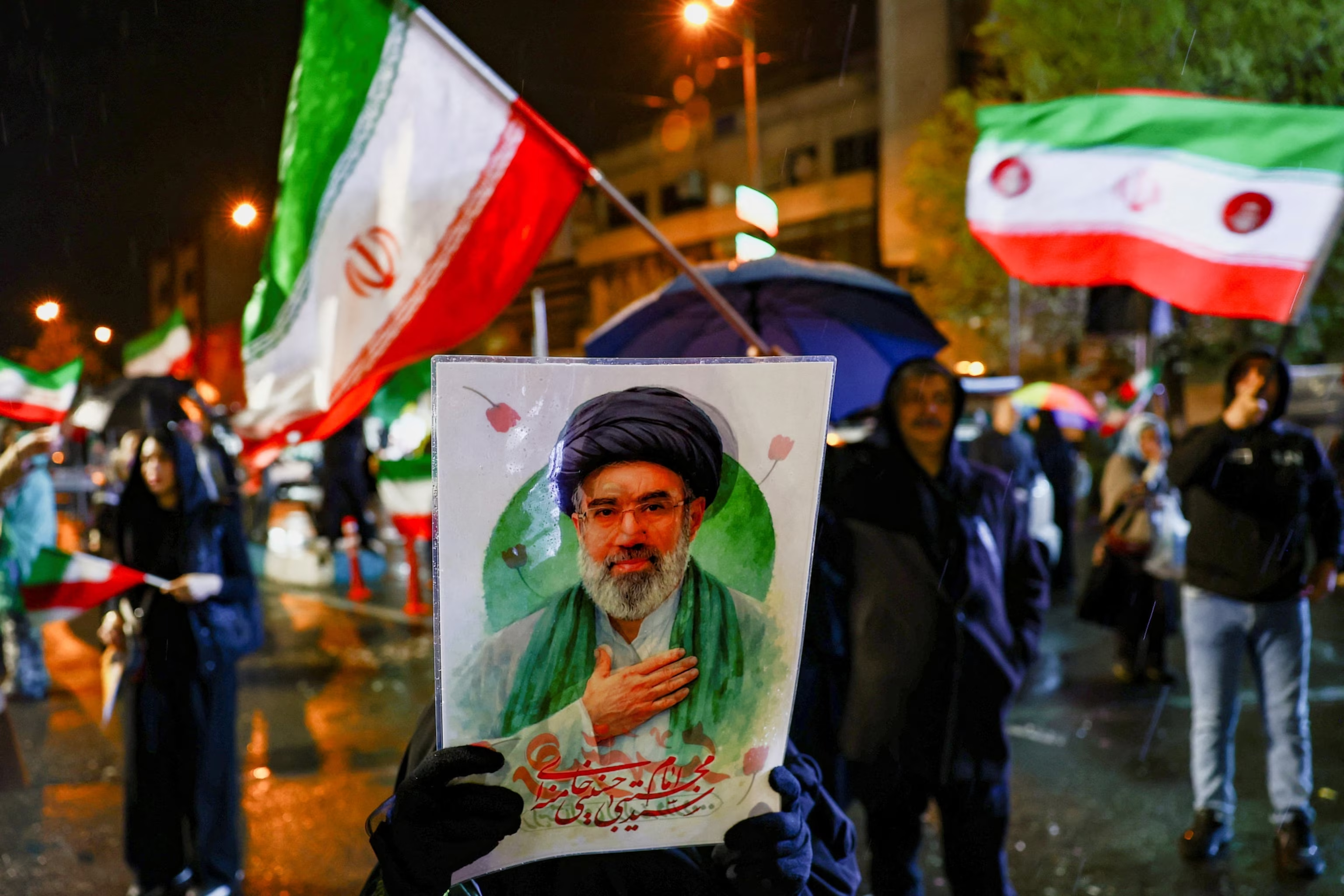
A woman displays a placard featuring Iran’s new Supreme Leader Mojtaba Khamenei at a gathering in Tehran, Iran, on March 26, 2026.Majid-asgaripour/via Reuters
As the war advanced, both U.S. and Israeli officials have distanced themselves from earlier intimations of governmental alteration. Instead, officials recentered the strategic narrative on their aspirations to weaken Iran's conventional military – particularly ballistic missile – and nuclear programs.
These objectives, according to Kuperwasser, were invariably the Israeli priority.
"Concurrently, we are endeavoring to weaken the regime so as to generate the circumstances that can be utilized by the people of Iran to instigate something that can prompt the removal of the regime from power," Kuperwasser stated. However, that will not necessarily transpire imminently, he added.
'Missiles, the street, the strait'
Citrinowicz conveyed that whatever framework arises to confer with the Trump administration will likely be inclined toward more rigid demands by the demise of its predecessors.
On the nuclear dossier, as well, "it is self-evident" that Tehran's perspective will have altered, Citrinowicz noted. Prior to the war, Iranian leaders had already openly pledged not to seek nuclear arms, although Tehran was refusing to concede to Trump's demands of zero enrichment. Now, Citrinowicz said, the new Iranian leadership "might discover themselves hastily pursuing a bomb."
Iran also possesses greater sway in the Strait of Hormuz than it did prior to the conflict, even with the significant military weakening that the U.S. and Israel seem to have inflicted. Authorities in Tehran have indicated that Iranian command over the strait – and the necessity for those traversing it to coordinate with Tehran and remit tolls – is the new standard.
Rubio alluded to lasting disruption in the Persian Gulf last week. "Immediately following this matter concluding, and we're finished with our objectives, the immediate challenge we're going to confront is an Iran that may resolve to establish a tolling arrangement in the Strait of Hormuz," Rubio stated.
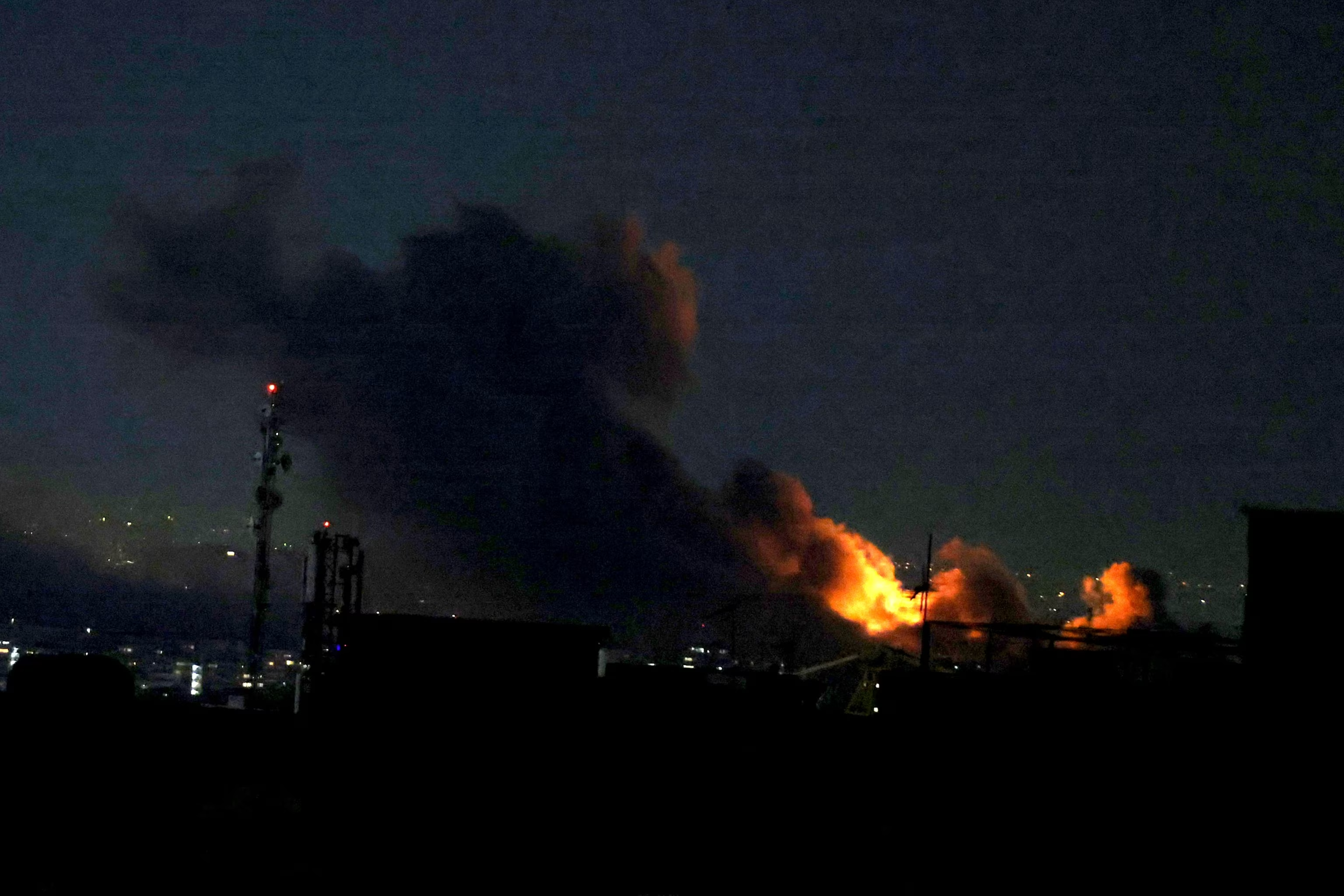
A trail of smoke ascends from the site of a strike in Tehran on March 29, 2026.Atta Kenare/AFP via Getty Images
Hamidreza Azizi of the German Institute for International and Security Affairs think tank stated during the Crisis Group briefing that Tehran will be intent on a conclusive resolution, not merely a ceasefire that would enable the U.S. and Israel to rearm and recommence the hostilities at a later juncture, as was the circumstance following the 12-day conflict in June.
"Profoundly ingrained within Iran's strategic rationale, there is a comprehension that ceasefires are solely a means for the United States and Israel to gain time," Azizi stated. While prior to the conflict, Tehran seemed amenable to making concessions on the nuclear dossier and other matters, Iranian leaders now perceive an opportunity to attain what they were unable to across years of negotiations.
The final outcome, Azizi stated, could be one in which Iran preserves "some form of control" over the Strait of Hormuz or secures "significant sanctions elimination."
For its part, Citrinowicz conveyed the U.S. appears to be scrambling. "There are numerous individuals in the U.S. who comprehend this regime, but the administration is conducting itself as if it's Venezuela. It's absurd," Citrinowicz stated, alluding to the American operation in January to apprehend Venezuelan President Nicolas Maduro and endorse his vice president, Delcy Rodriguez, as Maduro's successor.
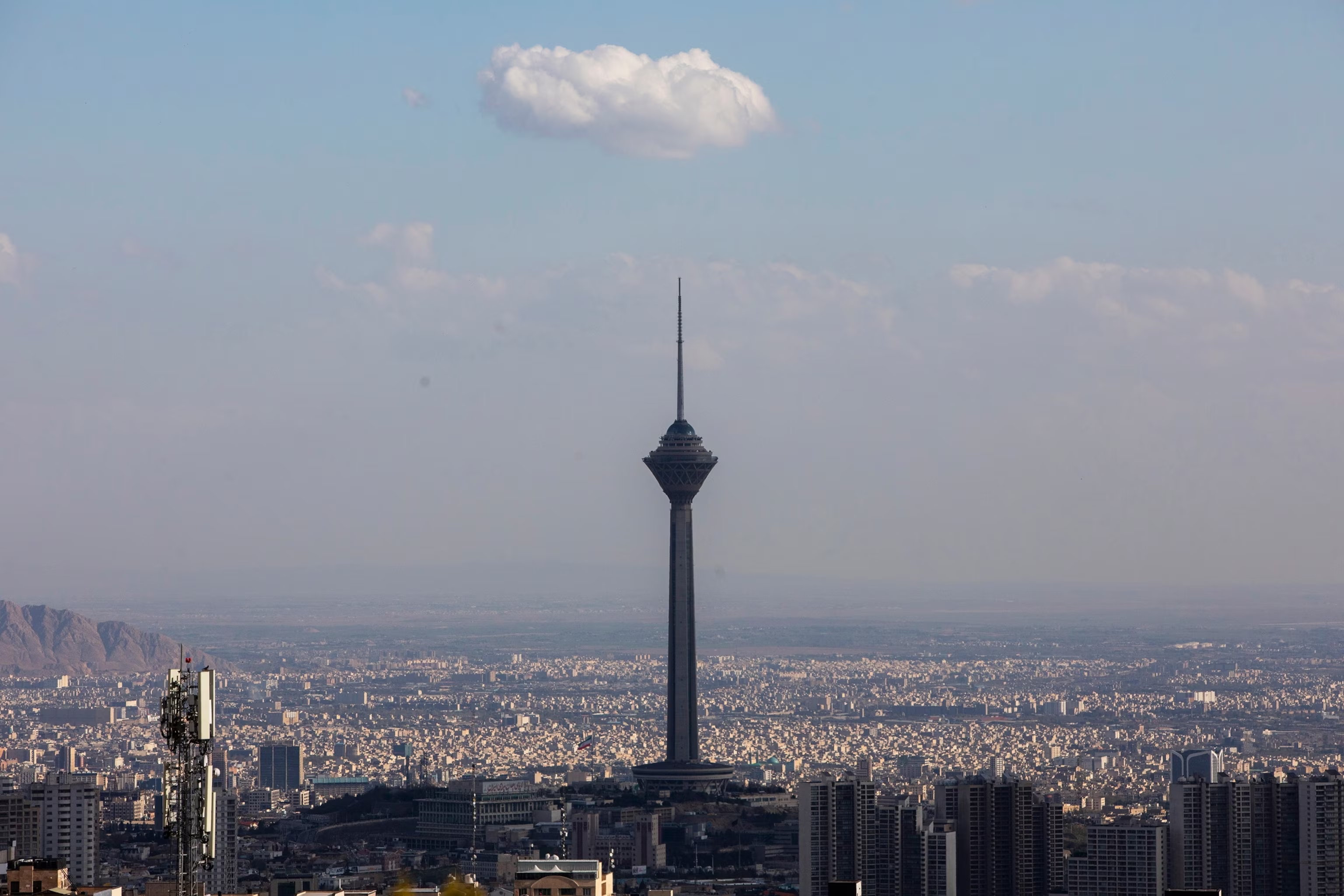
A view of Milad Tower on March 30, 2026 in Tehran, Iran.Majid Saeedi/Getty Images
Last week, the U.S. presented a 15-point strategy to terminate the war, which was broadly interpreted as a blueprint for Tehran's surrender. Iranian demands are similarly maximalist, calling for reparations and for the U.S. to relinquish its regional outposts.
"Nobody is acquiring their wish list," Dalia Dassa Kaye of the UCLA Burkle Center for International Relations remarked during this week's Crisis Group briefing.
Meanwhile, the battlefield expenditures will escalate, and geopolitical ramifications will deepen across the Middle East. "Even if this concludes tomorrow," Kaye stated, the costs have already been defrayed. "It's going to necessitate years to recover the damage."
"This is not something you can undo," she appended.
ABC News' Desiree Adib and Somayeh Malekian added to this report.
Sourse: abcnews.go.com