
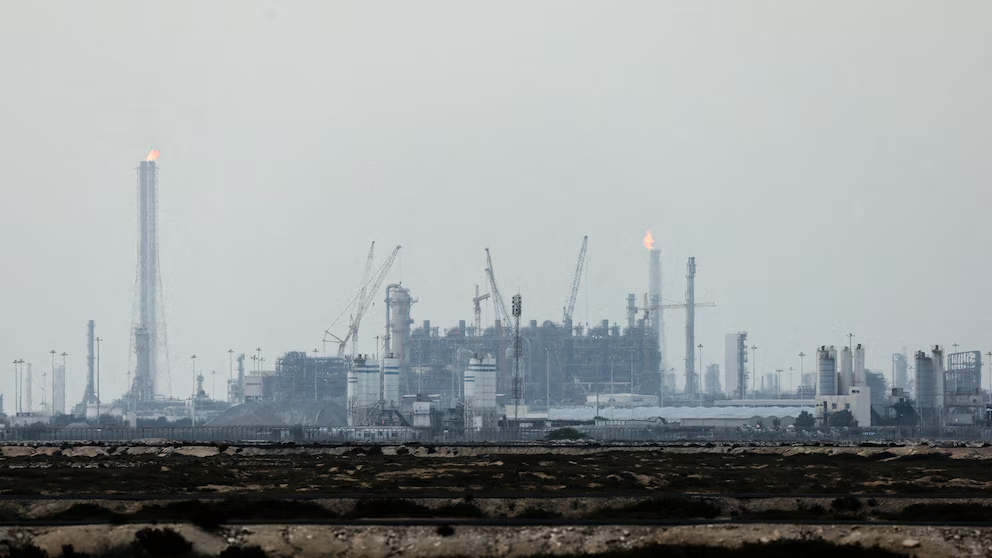
LiveQatarEnergy’s production centers for liquefied natural gas, amidst the U.S.-Israeli dispute with Iran, situated in Ras Laffan Industrial City, Qatar on March 2, 2026. Reuters
Iran commenced a sequence of retaliatory offensives on the crucial energy framework in neighboring Gulf nations, following Israel’s assault on its largest gas reserve Wednesday – a “perilous intensification” that exacerbated the situation and triggered a surge in petroleum prices.
In reaction to Israel's opening offensive, Iran dispatched departure directives for several energy holdings in Qatar, Saudi Arabia, and the United Arab Emirates, declaring the installations had become “explicit and warranted objectives,” as per the quasi-official Mehr News Agency.
“Previously, unequivocal and recurrent cautions were conveyed to your leaders regarding embarking on this precarious route and risking the destinies of their countries,” the Islamic Revolutionary Guard Corps conveyed in a statement.
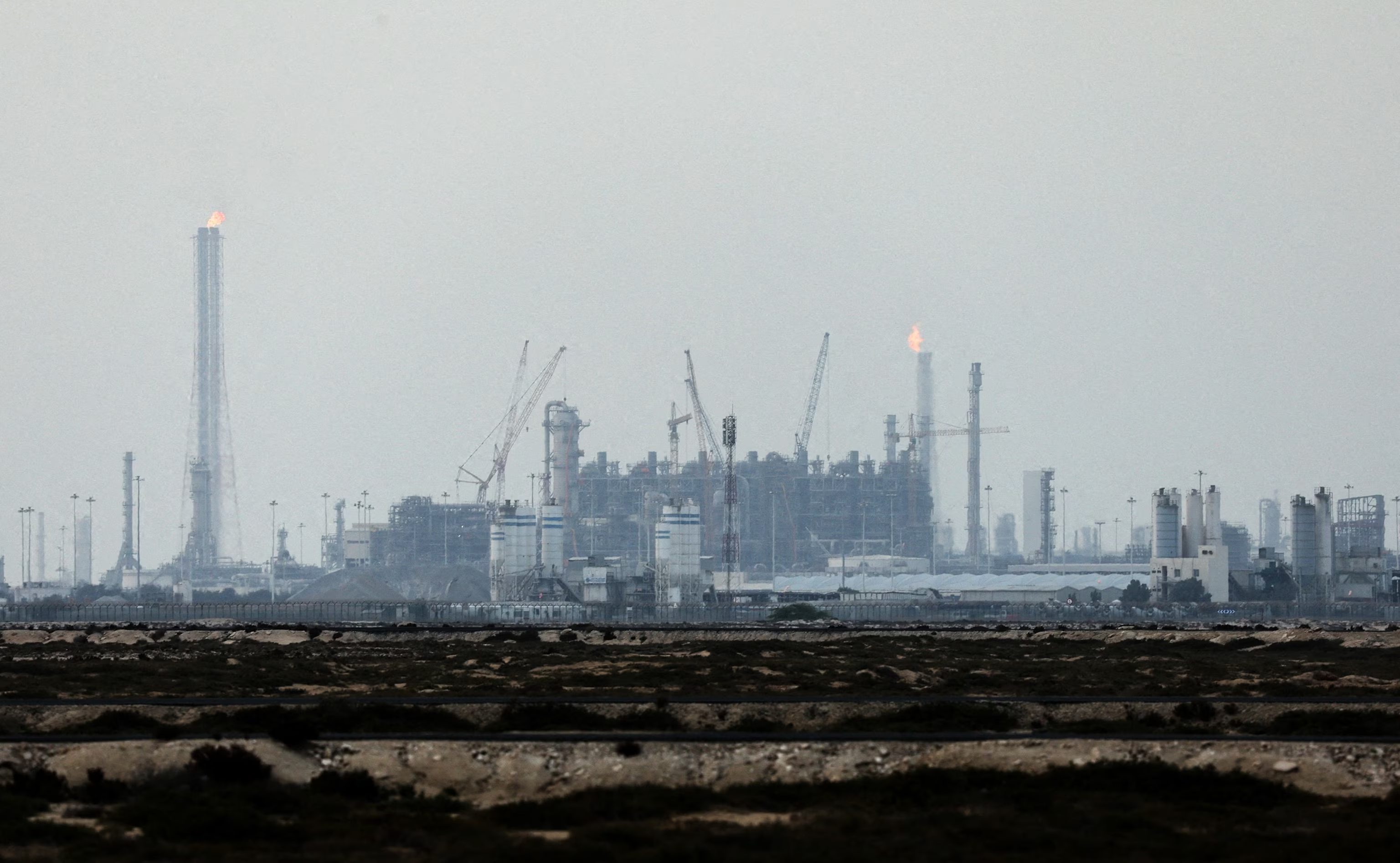
QatarEnergy’s liquefied natural gas production facilities, amid the U.S.-Israeli conflict with Iran, in Ras Laffan Industrial City, Qatar March 2, 2026.Reuters
Both Qatar and the UAE voiced strong disapproval of Israel's initial strike, with the Qatari foreign minister describing it as a “risky & irresponsible measure amidst the ongoing military escalation in the region,” in a social media communication.
Within a declaration, the Qatari Foreign Ministry similarly denounced Iran's offensive, characterizing it as a “hazardous worsening and a blatant infringement of the state's self-determination, alongside a direct menace to its internal security and the steadiness of the area.”
Among the retaliatory assaults, Iran struck the globe’s largest liquefied natural gas (LNG) hub at Ras Laffan in Qatar — the gravest attack on the nation's energy resources since the inception of the war.
President Donald Trump, in a social media announcement late Wednesday night, communicated that neither the U.S. nor Qatar possessed prior knowledge of Israel’s intention to target the South Pars Gas Field and urged Israel to abstain from repetition unless Iran persists in assaulting Qatar's liquefied national gas resources.
“NO FURTHER OFFENSIVES WILL BE LAUNCHED BY ISRAEL regarding this exceedingly significant and invaluable South Pars Field unless Iran imprudently opts to strike a particularly blameless entity, specifically, Qatar,” Trump stated.

President Donald Trump speaks during a meeting with Irish Prime Minister Micheal Martin in the Oval Office of the White House, on St. Patrick’s Day, March 17, 2026, in Washington.Yuri Gripas/EPA/Shutterstock
Trump affirmed that should Iran proceed in such a manner, the U.S. would respond and “obliterate extensively” the South Pars gas field.
“I am disinclined to sanction this degree of aggression and devastation due to the protracted ramifications it will impose on the destiny of Iran, but if Qatar’s LNG is targeted anew, I shall not hesitate to undertake such action,” Trump communicated in the post.
Iran's offensives in Qatar instigated conflagrations and “widespread impairments,” according to Qatar Energy, the state-owned oil and gas enterprise.
Roughly one-fifth of the world’s liquefied natural gas is typically transported from Ras Laffan, based on data from the U.S. Energy Information Administration.
In a formal statement, the Qatari Foreign Ministry denounced the offensive, labeling it a “perilous intensification.”
Subsequent to this, energy facilities in Saudi Arabia encountered targeting by a bombardment of missiles and drones, as conveyed by the Saudi Ministry of Defense.
Missiles further aimed at the Habshan gas installations in Abu Dhabi, according to the United Arab Emirates’ Ministry of Foreign Affairs.
“The Ministry underscored that this terrorist assault, which targeted the nation’s infrastructure and oil resources, embodies an immediate threat to the security and steadiness of the region and its inhabitants, and additionally to global energy security.”
The offensives followed Iran’s pledge to enact reprisal on some of the energy sites of its Gulf state neighbors, consequent to Israel’s offensive on the Iranian sector of the South Pars gas field — the largest on the planet and which Iran shares with Qatar.
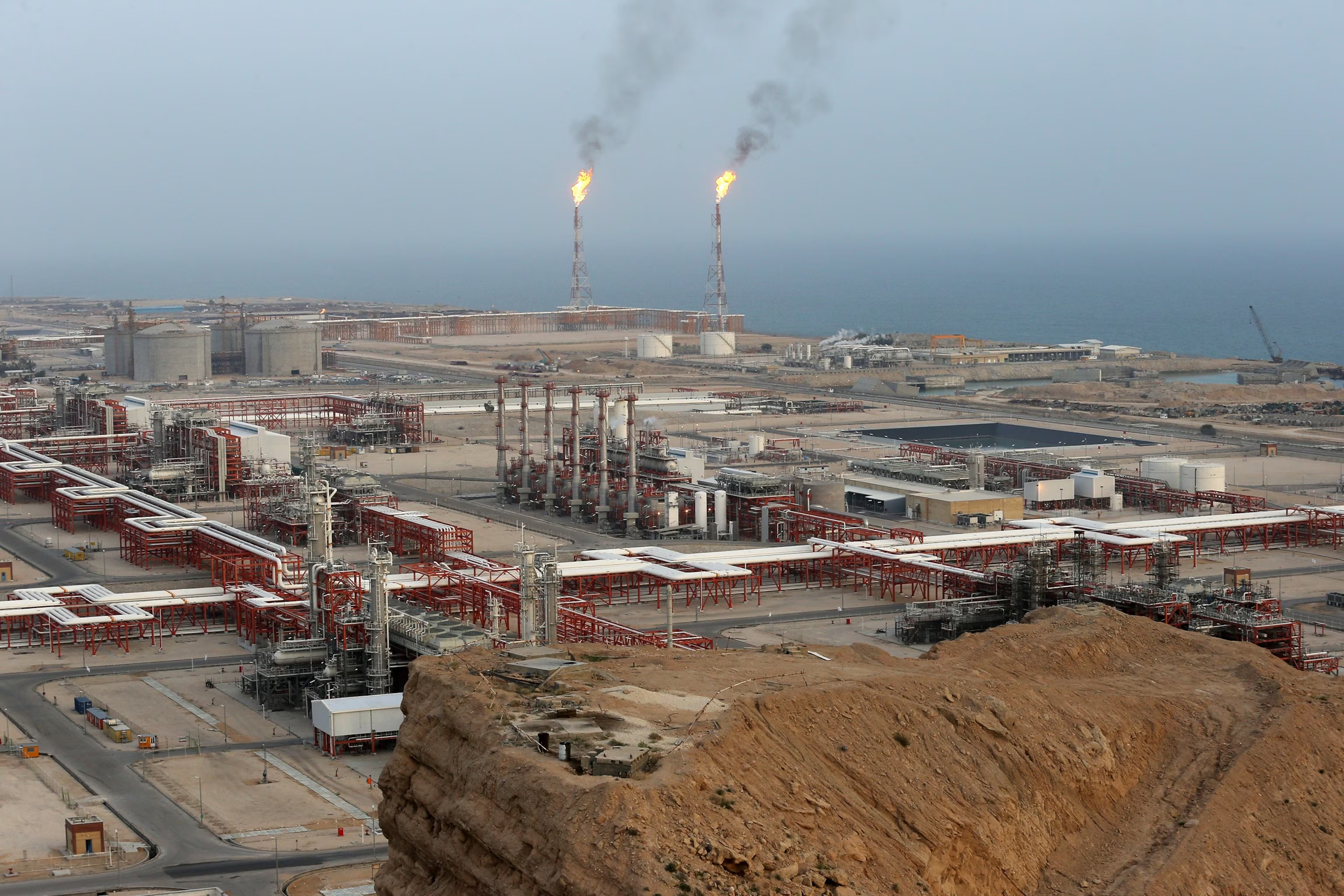
Newly inaugurated natural gas refineries at the South Pars gas field on the northern coast of the Persian Gulf, in Asaluyeh, Iran. March 16, 2019.Vahid Salemi/AP
The roster of targets issued by Iran encompassed Ras Laffan, alongside other installations that generate refined commodities such as gasoline, diesel, and jet fuel — excluding crude oil.
The catalog of prospective targets could potentially impinge upon in excess of 1.25 million barrels each day of oil processing competence within the region, coupled with natural gas output, as reported by Kpler’s chief oil analyst, Matt Smith. Worldwide oil processing competence was assessed at 103.5 million barrels per day in 2023, as per the EIA.
Even though the diminution of yield would constitute just over 1% of global processing competence, it could still exert an influence on gas rates.
Patrick De Haan of GasBuddy posited that an assault on these refining amenities could induce a considerably more pronounced repercussion on consumers at the pump in contrast to the forfeiture of crude oil.
“This epitomizes a transparent escalation in response to the undermining of Iranian gas infrastructure — it signifies an advancement in the stakes,” Smith appended.
In the aftermath of the strikes, oil within the U.S. was being traded upwards by nearly 3% at $99 per barrel. Global oil experienced an upsurge of approximately 5% at $108 a barrel.
Iran’s assaults on energy infrastructure materialize as the Strait of Hormuz — the pivotal waterway off Iran’s southern margin that facilitates conveyance for approximately 20% of oil consumed globally — continues to be essentially blockaded, thereby stifling the global oil provision.
Sourse: abcnews.go.com