
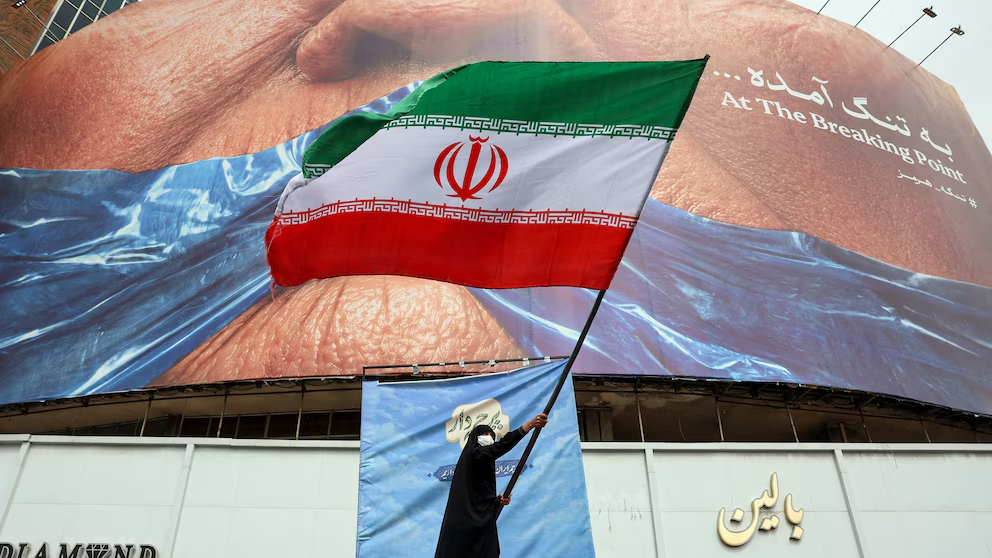
A woman waves an Iranian flag in front of an anti-U.S. billboard in Valiasr Square in Tehran, Iran, on May 5, 2026.-/AFP via Getty Images
As the conflict in Iran lingers and a related energy downturn impacts the world’s economy, presented here is a breakdown of the crucial stages of the battle, starting from the initiation of "Operation Epic Fury" through to "Project Freedom," conceived to restore access to the vital Hormuz Strait.
Phase 1: Trump declares the commencement of war actions in Iran
In a video message delivered late at night to the country on February 28, shortly after U.S. and Israeli forces initiated assaults on Iran, President Donald Trump conveyed that considerable military engagements were in progress.
"Our aim is to safeguard the American populace by neutralizing impending dangers from the Iranian governance, a cruel faction of exceptionally tough, awful individuals," Trump expressed.
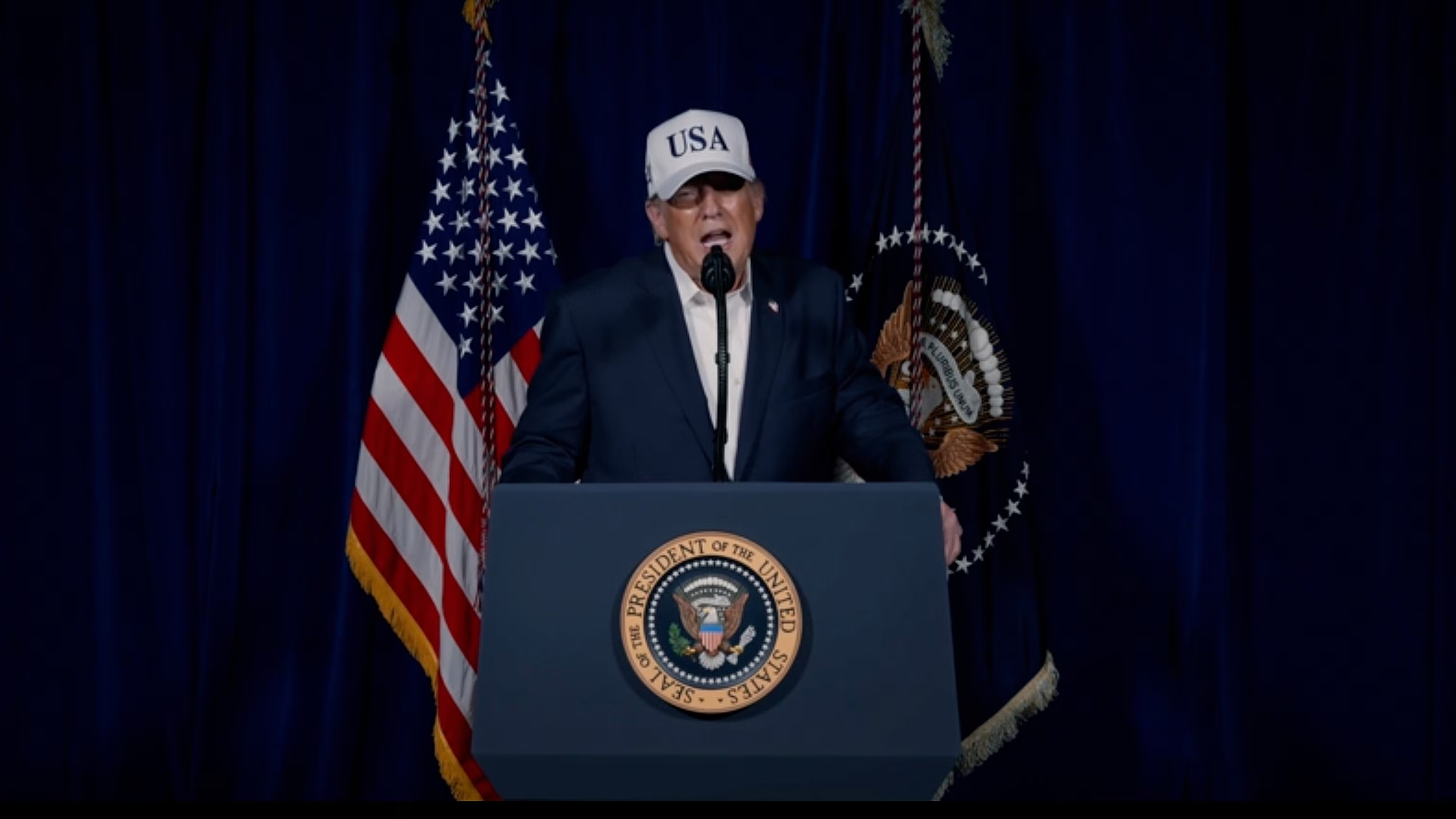
President Donald Trump speaks to announce that the U.S. had begun “major combat operations” in Iran, on the day Israel and the U.S. conducted strikes on Iran, Feb. 28, 2026.The White House
He noted that a central objective of the joint U.S.-Israel missions was to permanently put an end to Iran's aspirations to procure a nuclear device.
"They've turned down every chance to disavow their atomic ambitions, and we can’t tolerate it any longer," Trump stated, further mentioning that after the U.S. "demolished" Iran's atomic installations in June 2025, the regime started to reconstruct its atomic agenda and create long-distance projectiles.
During his inaugural press conference conducted four days following the onset of war actions, Secretary of Defense Pete Hegseth commented, "I stand before you today conveying one unambiguous message about Operation Epic Fury: America is prevailing decisively, devastatingly and without pity."
U.S. military authorities reported that prominent governmental and military figures within the Iranian administration were eliminated in the initial stages of the struggle, which included Supreme Leader Ayatollah Ali Khamenei and the commander-in-chief of the Islamic Revolutionary Guard Corps (IRGC).
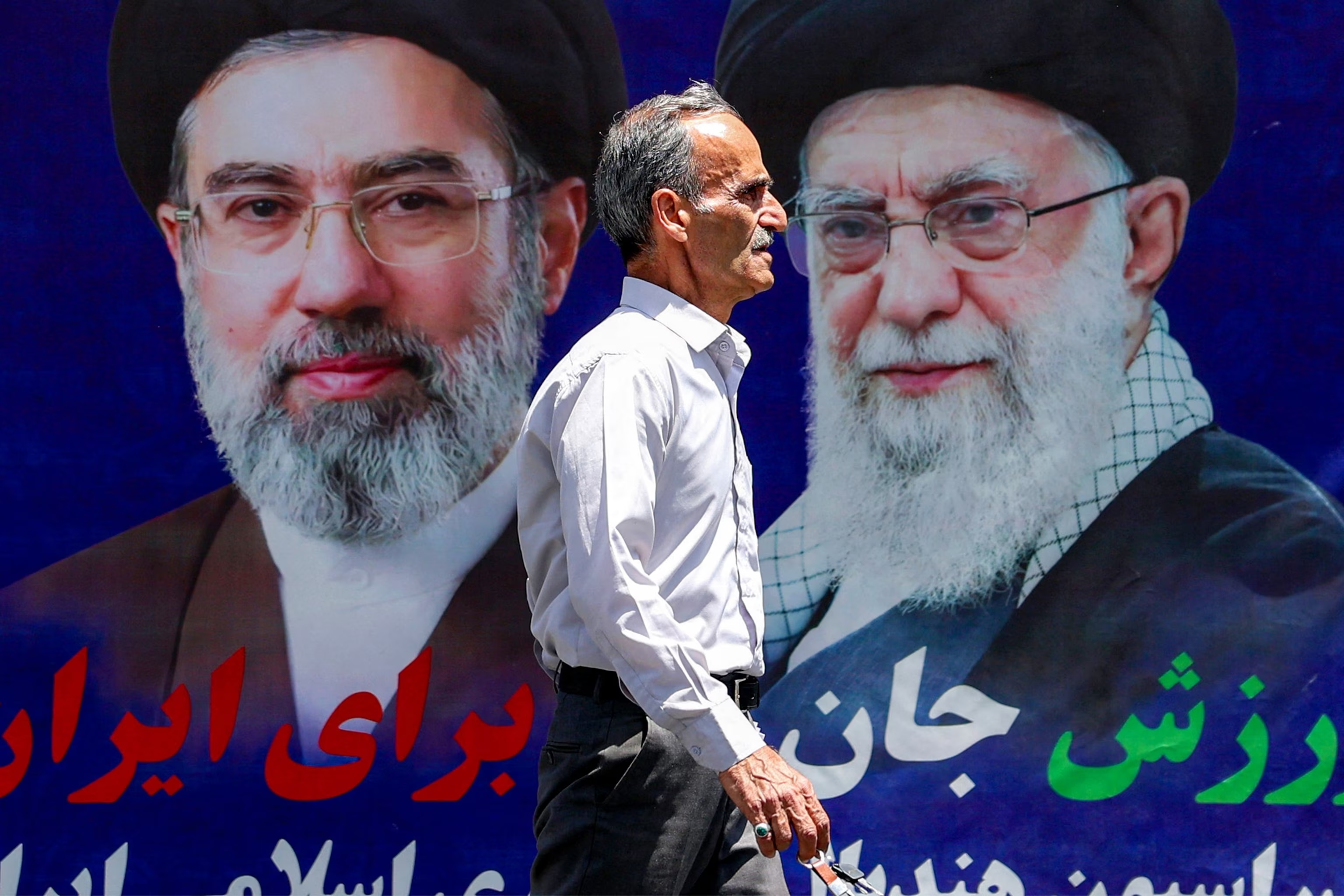
A man walks past a large banner depicting Iran’s current supreme leader Ayatollah Mojtaba Khamenei and his predecessor and late father Ali Khamenei along a street in Tehran, May 6, 2026.AFP via Getty Images
Hegseth stated that numerous military sites were struck during the opening moments of the undertaking, impairing the IRGC's capability to communicate efficiently.
Iran responded by launching missiles toward seven Gulf nations, damaging civilian facilities and airports in the United Arab Emirates, residential zones in Qatar, and an apartment complex in Bahrain.
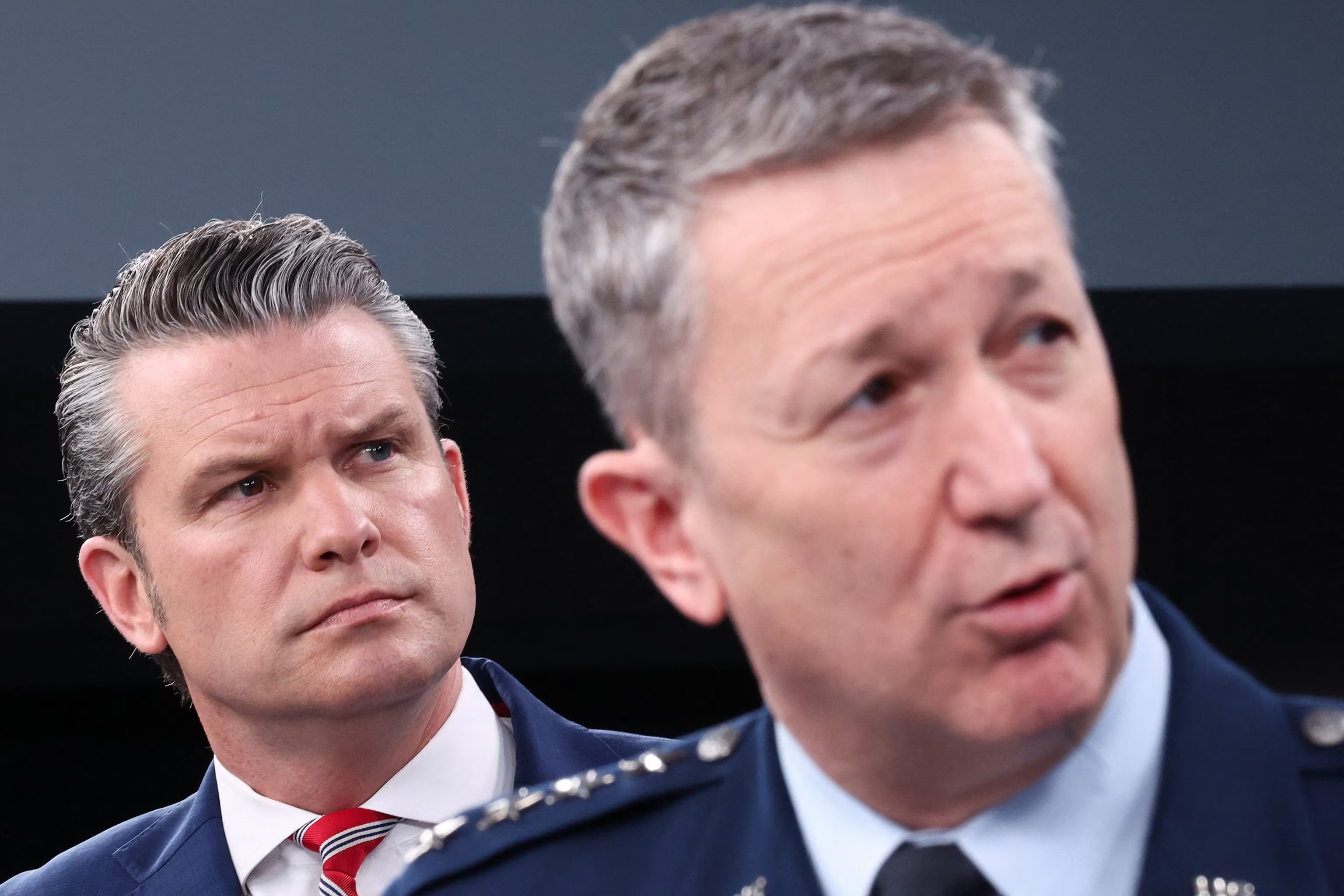
Secretary of Defense Pete Hegseth and Chairman of the Joint Chiefs of Staff General Dan Caine hold a briefing on the Iran war, at the Pentagon in Washington, May 5, 2026.Kevin Lamarque/Reuters
During the briefing, Joint Chiefs of Staff Chairman Gen. Dan Caine disclosed the identities of six U.S. service members who perished in an Iranian drone assault on Port Shuaiba, Kuwait.
Phase 2: The Strait of Hormuz takes center stage in the war
As the battle intensified, Mojtaba Khamenei, the offspring of Ayatollah Ali Khamenei, was declared the country's new supreme leader on March 8, despite reports indicating he sustained severe injuries in the strike that caused his father’s demise.
In what was believed to be his initial formal statement, Mojtaba Khamenei instructed the IRGC to persist in restricting passage through the Strait of Hormuz, the marine route connecting the Persian Gulf to the Gulf of Oman, which saw 20% of global oil and liquefied natural gas transiting through it back in 2024.
Strains swiftly heightened in the Strait of Hormuz after Mojtaba Khamenei's directive to the IRGC. The Iranian military asserted on March 12 that it targeted an oil tanker in the Persian Gulf, one of three commercial vessels attacked that day near the Strait of Hormuz.
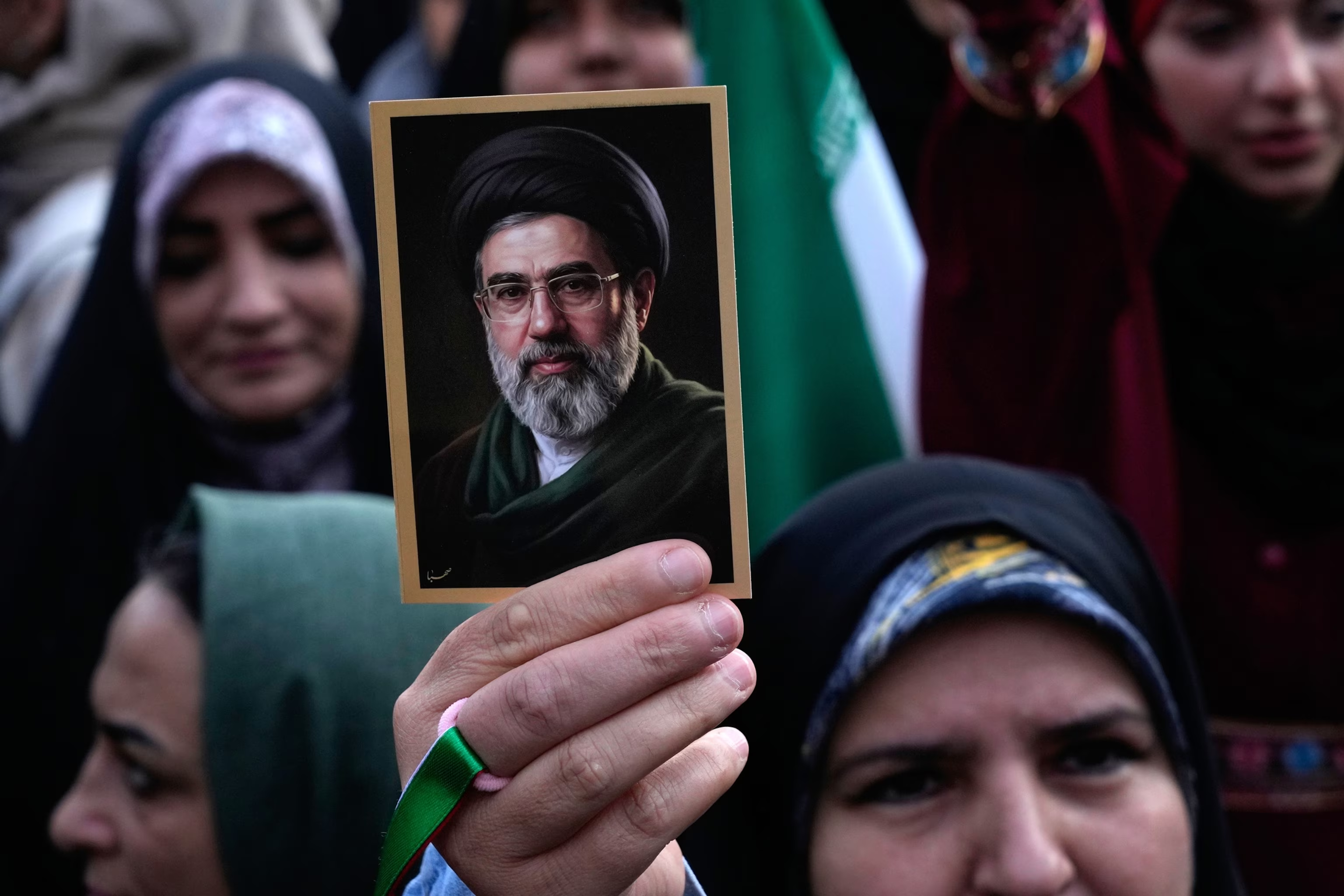
A woman holds up a picture of the Iranian Supreme Leader Ayatollah Mojtaba Khamenei during a state-organised rally celebrating the birthday of Imam Reza, the 8th Shiite Muslims’ Imam, and showing their support to the supreme leader, in Tehran, Iran, April 29, 2026.Vahid Salemi/AP
The assaults transpired mere days after President Trump disseminated a message on his social media platform, stating that if Iran endeavored to obstruct the oil flow in the strait, "They will be struck by the United States of America TWENTY TIMES HARDER than they have been struck thus far."
On March 21, Trump issued Iran a demand to reopen the Strait of Hormuz to all trade ships within a 48-hour duration. The president posted on his social media platform that should Iran fail to adhere, "The United States will attack and wipe out their various POWER PLANTS, STARTING WITH THE BIGGEST ONE FIRST."
The following day, Iran's Ministry of Foreign Affairs dispatched a communication to the U.N. International Maritime Organization, asserting that the strait was accessible to "non-hostile" vessels.
Iranian Foreign Minister Abbas Araghchi declared on state television on March 25 that "Iran's strength resides in the Hormuz Strait."
Phase 3: US Naval blockade and armistice
Trump revealed on March 23 that the U.S. and Iran were in discussion regarding a cessation of the conflict, signaling the initial indication of diplomatic deliberations since the commencement of the war. He granted Iran a five-day extension to reinstate access to the strait, pointing to advancements in ongoing peace talks.
The subsequent day, the Trump administration presented Iran, through intermediaries in Pakistan, a 15-point blueprint to conclude the war.
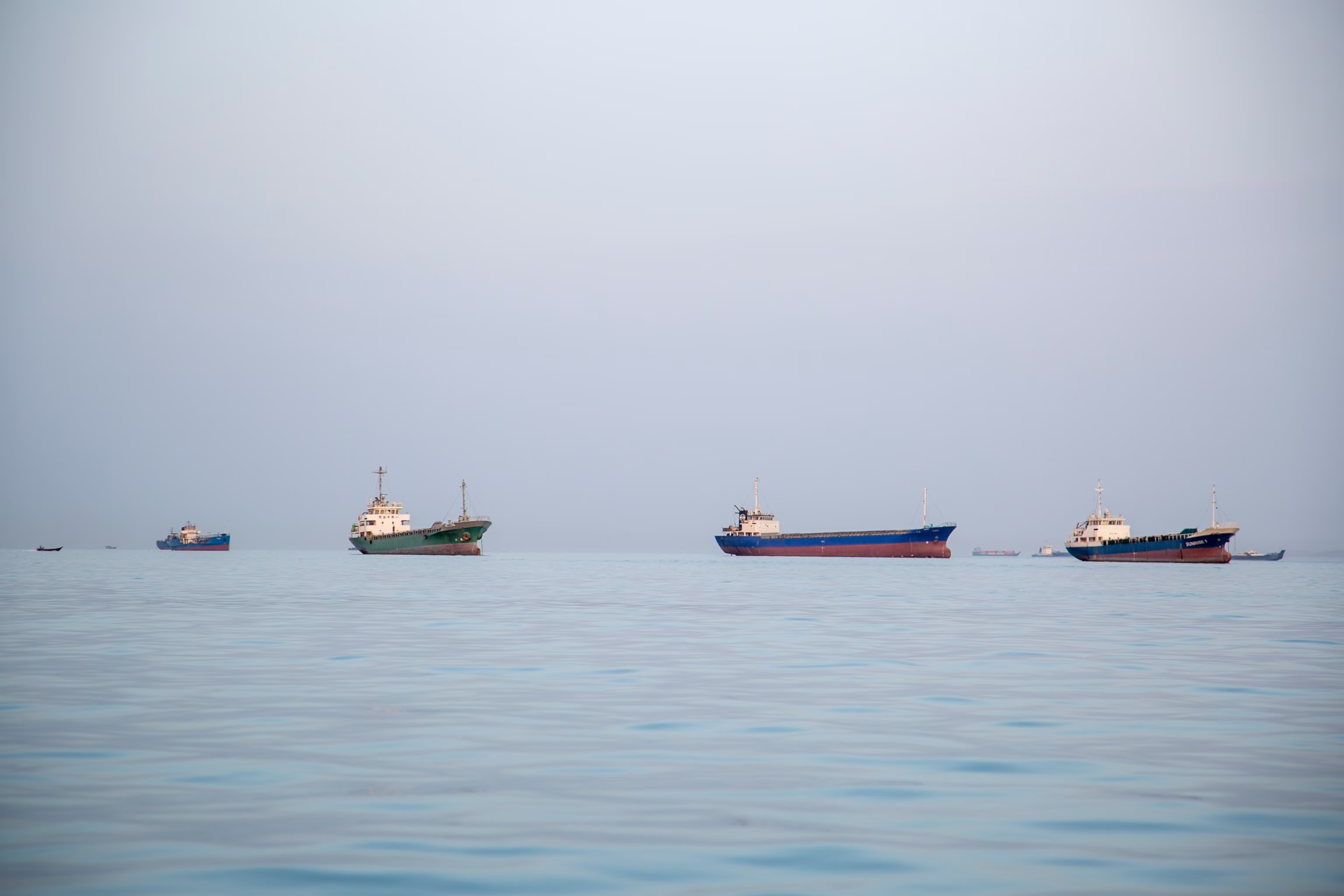
Ships are anchored along the shoreline of the Persian Gulf and Strait of Hormuz, April 22, 2026 in Bandar Abbas, Iran.Getty Images
Israeli Defense Forces announced on March 26 that Alireza Tangsiri, the commanding officer of the IRGC's naval forces, was "terminated" in an assault. The IDF further claimed that the assault resulted in the death of the chief of Iran's naval intelligence, Behnam Rezaei.
On March 26, Trump proclaimed that he was suspending the attack on Iran's power facilities for a 10-day duration until April 6 at 8 p.m. ET., conveying in a social media message, "Discussions are progressing and, notwithstanding inaccurate assertions to the contrary by the Fake News Media, among others, they are advancing quite favorably."
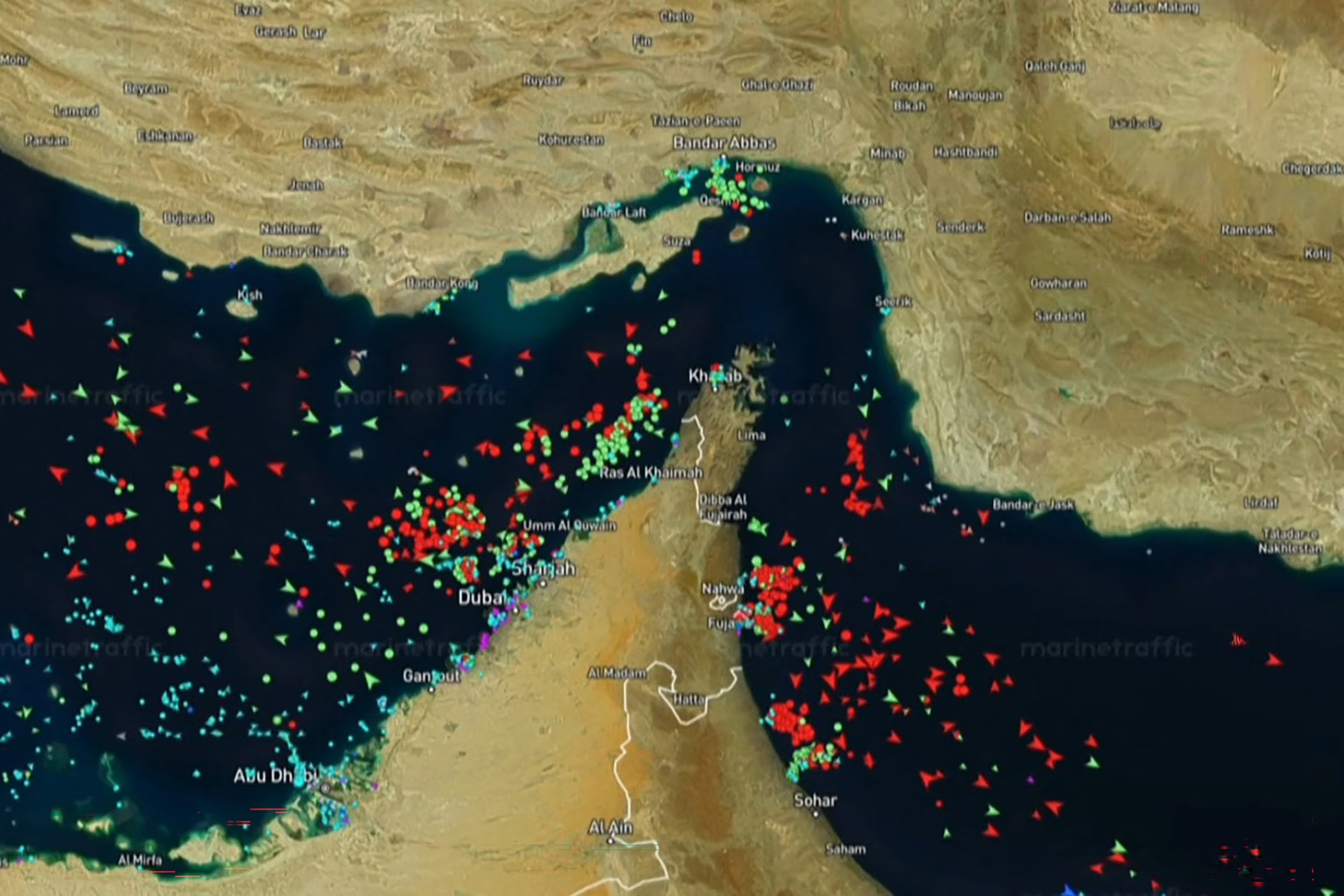
This screen grab taken from a screen recording of the MarineTraffic website on April 21, 2026, shows a data visualization of maritime traffic in the Persian Gulf, Strait of Hormuz and Gulf of Oman from April 18 to April 20.-/MARINETRAFFIC.COM/AFP via Getty
Trump prolonged Iran's deadline again on April 5, granting Iran until April 7 to finalize an accord. Iran countered Trump's 15-point peace strategy with a 10-point proposition for concluding the war, however, the strait remained under restriction.
Scarcely hours prior to the April 7 deadline, Trump once more took to social media, penning, "An entire civilization will perish this evening, never to be revitalized. I wish to avoid such an event, yet it is probable."
That equivalent day, Iran and the United States communicated that they had reached a consensus on a two-week ceasefire that encompassed reinstating access to the Strait of Hormuz.
Nevertheless, on April 8, Israel initiated a substantial bombing strike against Hezbollah in Lebanon, prompting Iran to protest that Israel violated the ceasefire agreement and sealed off the strait anew.
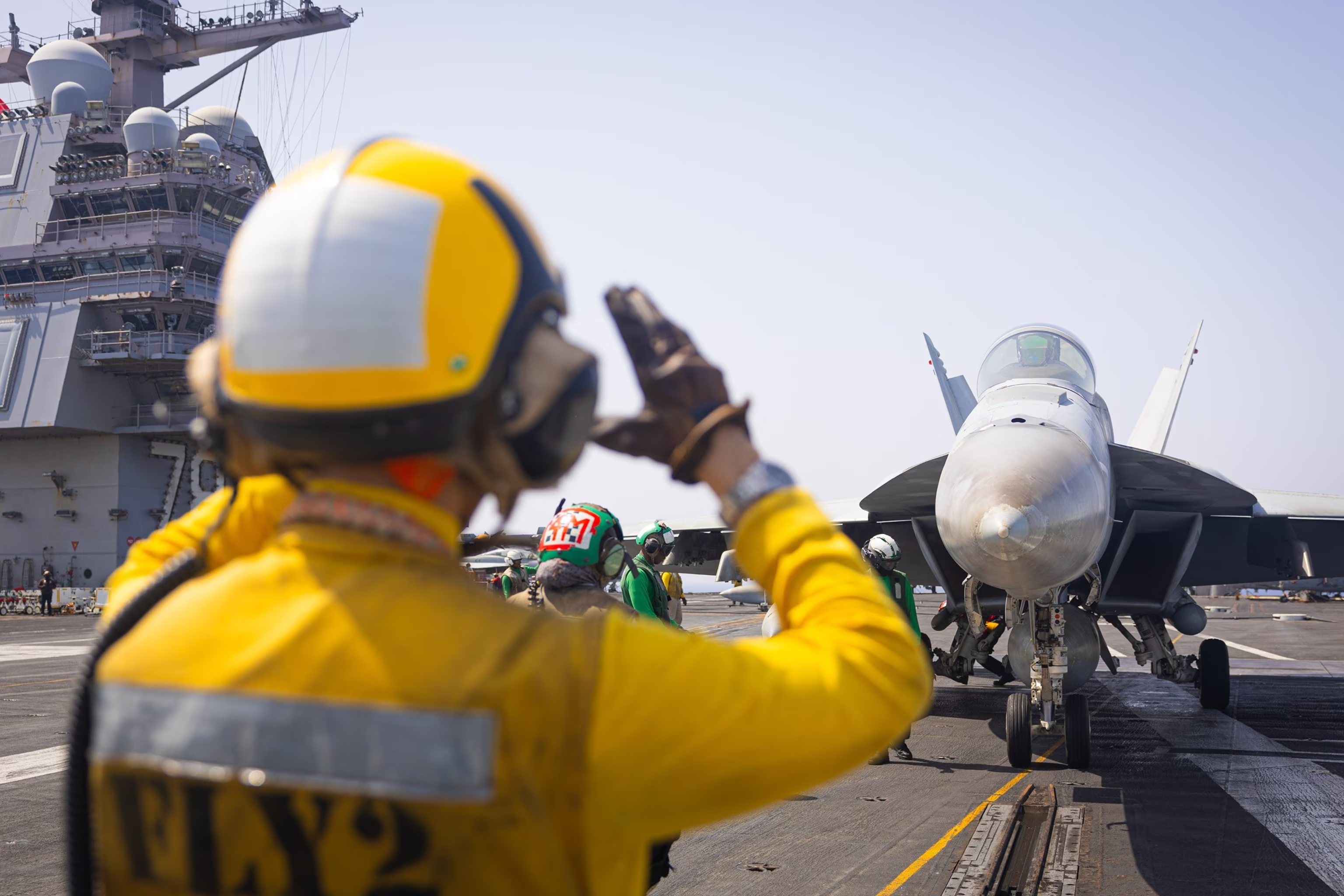
Sailors conduct flight operations aboard USS Gerald R. Ford in the Red Sea, April 19, 2026.U.S. Central Command
Vice President JD Vance subsequently journeyed to Islamabad, Pakistan, for peace discussions with Iran, moderated by Pakistan. Trump's special delegate to the Middle East, Steve Witkoff, alongside Trump's son-in-law, Jared Kushner, also took part in the discussions, yet Vance revealed on April 11 that no resolution had been achieved.
With the strait persistently closed, President Trump on April 13 announced a U.S. naval barricade of Iranian ports flanking the strait. "We cannot permit a nation to blackmail or extort the globe, because that is precisely what they are undertaking," Trump affirmed.
Trump stated on April 21 that the ceasefire was being prolonged indefinitely at the insistence of Pakistan, though the naval blockade would stay enforced.
Phase 4: 'Project Freedom'
As the war extended into May, Trump declared that the U.S. Central Command was commencing "Project Freedom," which entailed U.S. military vessels escorting merchant ships through the Strait of Hormuz.
The debut of Project Freedom on May 3, however, induced heightened strains in the strait.
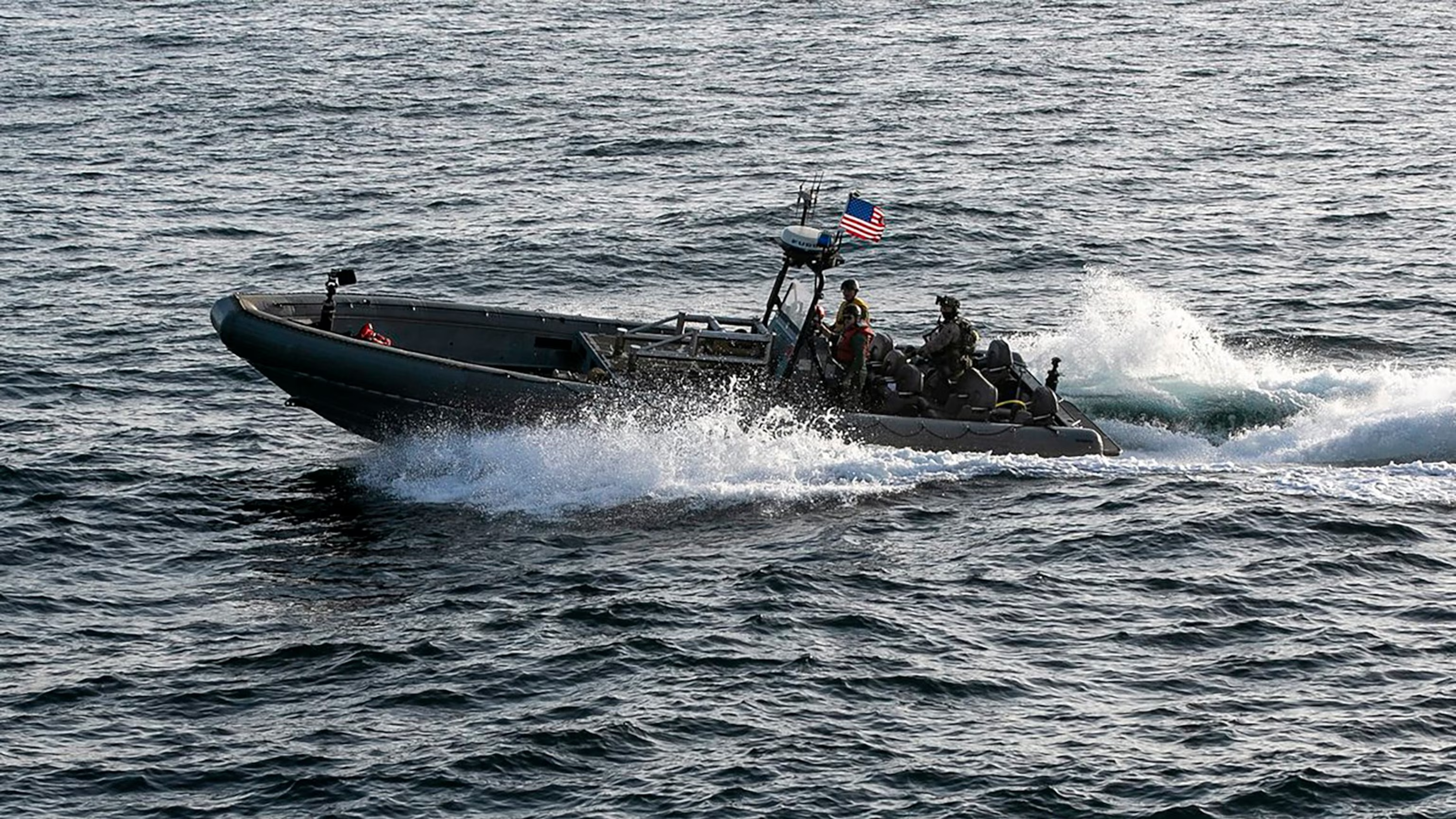
U.S. forces patrol the Arabian Sea near M/V Touska as the Iranian-flagged vessel’s container cargo is searched after U.S. Marines boarded and seized the ship, April 20, 2026.U.S. Central Command/X
On May 4, Adm. Brad Cooper, leader of the U.S. Central Command, communicated that the IRGC had deployed missiles, drones, and small watercraft aimed towards ships that the U.S. was safeguarding in the Strait of Hormuz. Cooper mentioned that the U.S. "neutralized each and every one of those threats," and that U.S. AH-64 Apache attack helicopters amongst others were employed to "obliterate" the Iranian attack vessels.
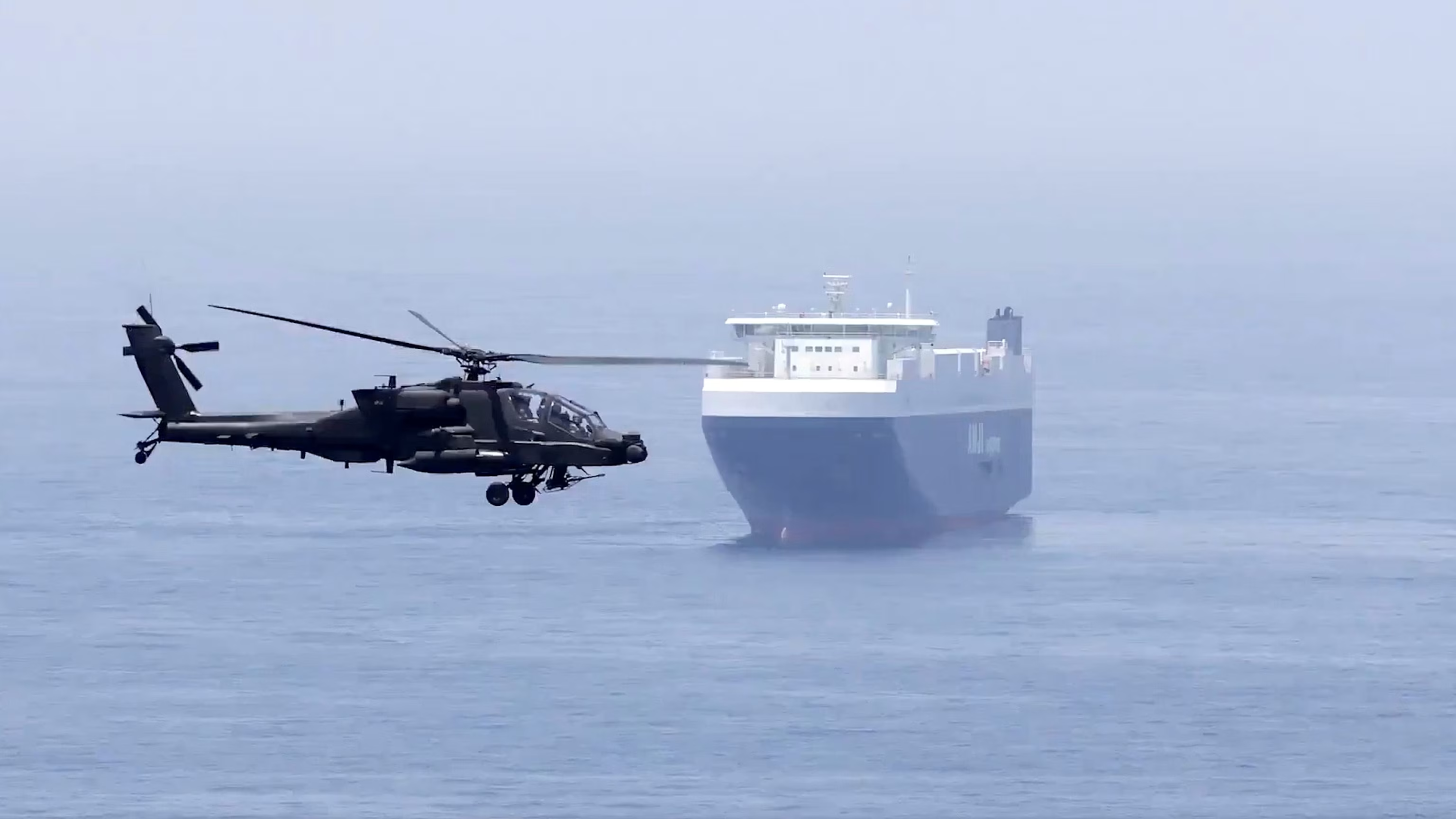
Adm. Brad Cooper, CENTCOM commander, flew over regional waters in and near the Strait of Hormuz in an AH-64 Apache helicopter, May 3, 2026 on the eve of U.S. military support for Project Freedom.U.S. Central Command
On May 5, Trump declared a temporary cessation of Project Freedom at Pakistan’s urging.
In a declaration issued via social media on May 6, Pakistan Prime Minister Shehbaz Sharif remarked that the suspension "will contribute significantly to fostering regional tranquility, stability, and compromise throughout this critical juncture."
Trump stated that despite the pause in Project Freedom, the U.S. naval blockade remains operational.
Sourse: abcnews.go.com