
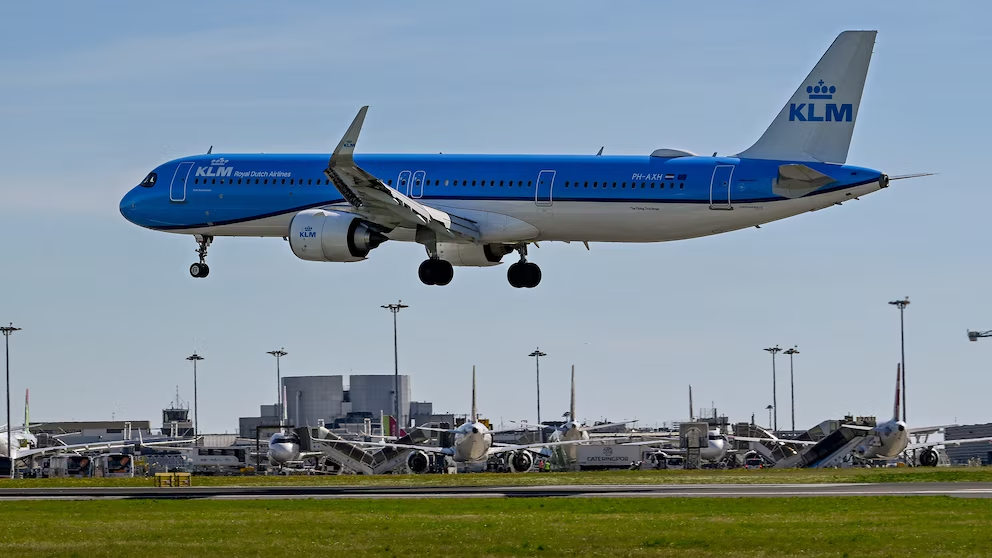
KLM Royal Dutch Airlines revealed on April 16, 2026, that it will be axing 160 takeoffs and landings at Amsterdam Airport Schiphol, attributing it to the escalating cost of jet fuel connected to the conflict in Iran. Horacio Villalobos/Corbis via Getty Images
The continuing hostilities in Iran, which are constricting the global oil market, are now posing a threat to spark a worldwide jet fuel scarcity just as the peak summer vacation period is about to commence, according to comments from global energy analysts.
The top director of the International Energy Agency (IEA) voiced apprehension Thursday when he communicated to the Associated Press that Europe possesses “perhaps only around six weeks’ worth of jet fuel remaining.”
Fatih Birol, the executive director at IEA, told the AP that global airlines might confront “the most substantial energy emergency we’ve ever been subjected to” should the warfare, which has effectively put a chokehold on petroleum deliveries via the Strait of Hormuz, extend for a prolonged time.
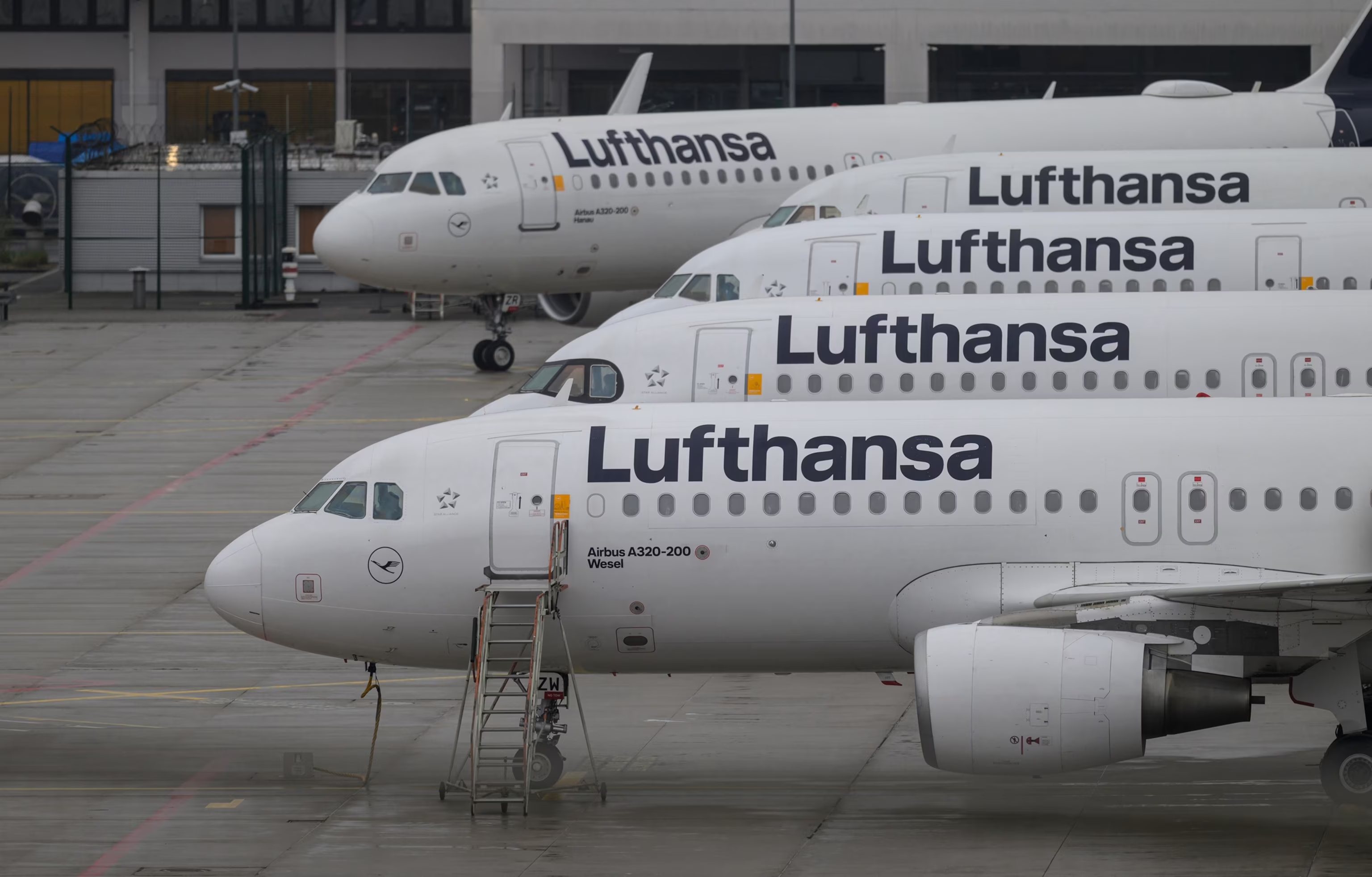
German carrier Lufthansa also proclaimed on April 16, 2026, its decision to discontinue operations of its regional subsidiary airliner, CityLine, in addition to removing 27 planes from its flight offerings permanently because of surging jet fuel expenses linked to the Iranian conflict.Picture Alliance/dpa/picture alliance via Getty I
The U.S. Navy has since enacted a naval blockade on Iranian docks to prevent tankers connected with Iran from moving oil via the Strait of Hormuz — the route through which, according to figures by the U.S. Energy Information Administration, around 20% of total liquid petroleum utilized across the globe transited back in 2024.
“There was a band previously called Dire Straits. It’s an extremely dire situation currently, and it's poised to significantly affect the world economy,” Birol expressed. “And the more protracted this lasts, the more detrimental it will be for both the increase in economic activity and inflationary trends worldwide.”
Birol made these remarks one day after Pierre-Olivier Gourinchas, the primary economist at the International Monetary Fund (IMF), stated in a blog entry that world economic growth this year is anticipated to reach merely 3.1%, while overall inflation could escalate to 4.4%.
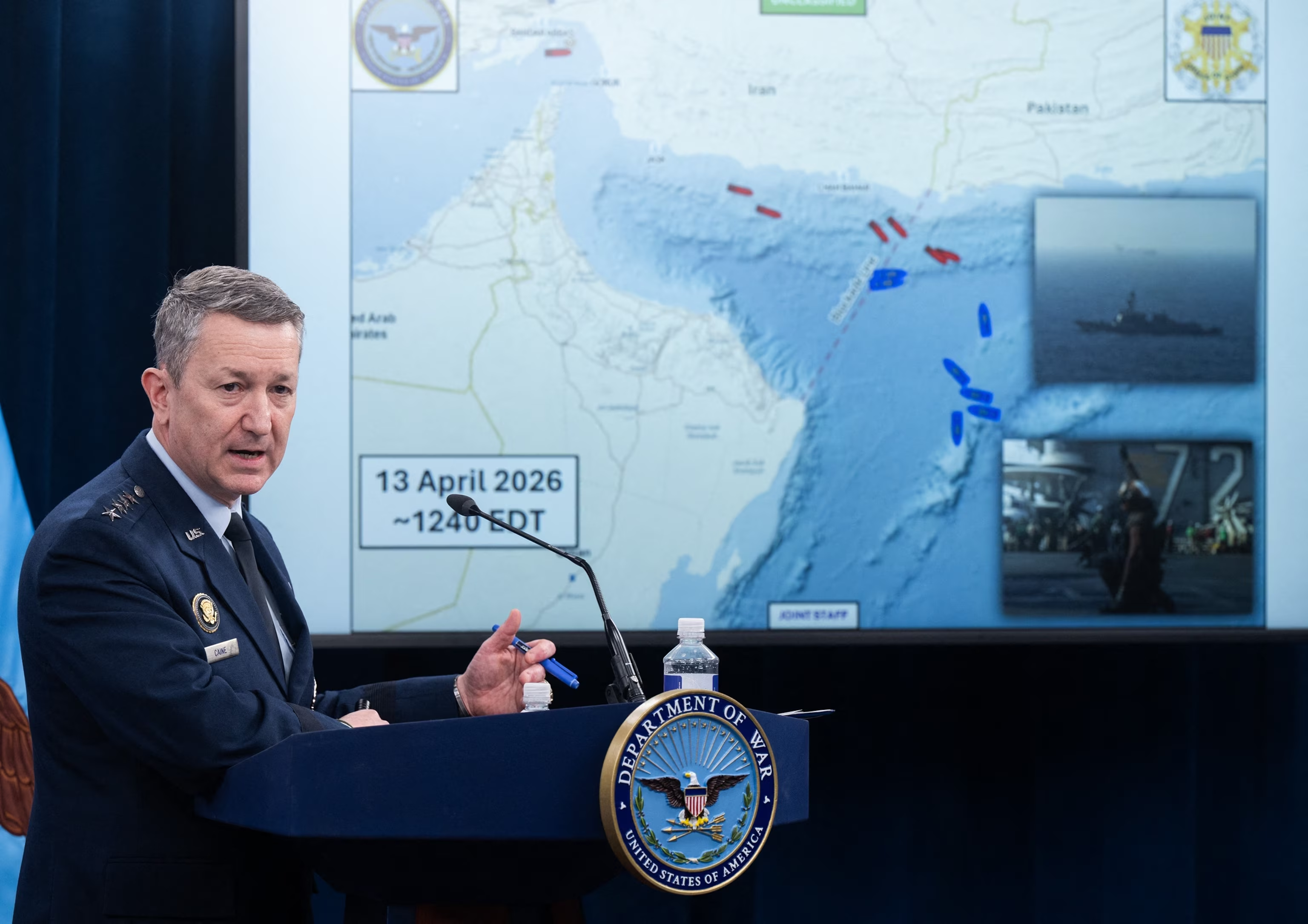
Chairman of the Joint Chiefs of Staff General Dan Caine reveals a visual representation indicating the demarcation line in the Strait of Hormuz at a briefing at the Pentagon in Washington on April 16, 2026, pertaining to the Iranian war.Saul Loeb/AFP via Getty Images
During 2025, the world’s fiscal expansion reached 3.4%, according to information provided by the IMF. Prior to the collaborative U.S.-Israel offensive on Iran, initiated on February 28, the IMF initially forecast that the global economy would grow at a rate of 3.3% for 2026.
“A more prolonged cessation of activity in the Strait of Hormuz and further damage sustained by the drilling and refining infrastructures would inflict profound and lingering disruption to the global financial structure,” Gourinchas stated. “Under an adverse scenario, given a pronounced surge in energy costs within this year, in conjunction with escalating inflation projections and some tightening within fiscal regulations, growth diminishes to 2.5% this year while inflation rises to 5.4%.”
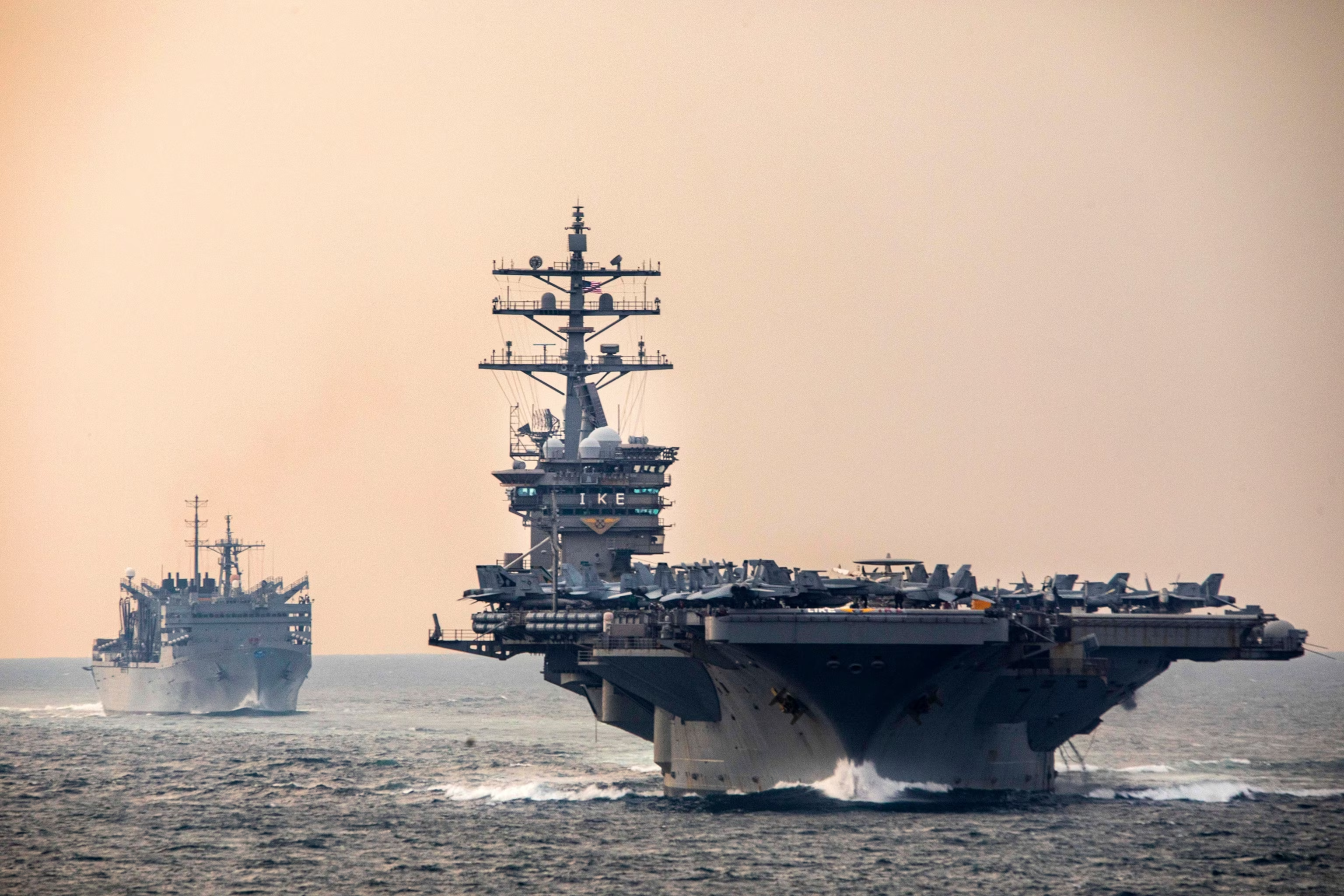
Vessels making up the Dwight D. Eisenhower Strike Group (IKECSG) together with the rapid combat support vessel USNS Supply (T-AOE 6) crossing via the Strait of Hormuz, Dec 14, 2023.Mass Communication Specialist 2nd Class Keith Nowak/U.S. Navy
Rico Luman, a senior economist specializing in transport, logistics, and automotive industries with ING, revealed to ABC News Thursday that Birol’s communication with the AP offered a distinct hint that petroleum reserves globally are diminishing.
Luman explained that certain Asian nations have previously experienced depleted jet fuel supplies.
“In terms of Asia, current trading prices are now positioned 25% higher relative to Europe,” Luman articulated. “Given Asia’s amplified reliance on the Middle East, their stocks have already become depleted.”
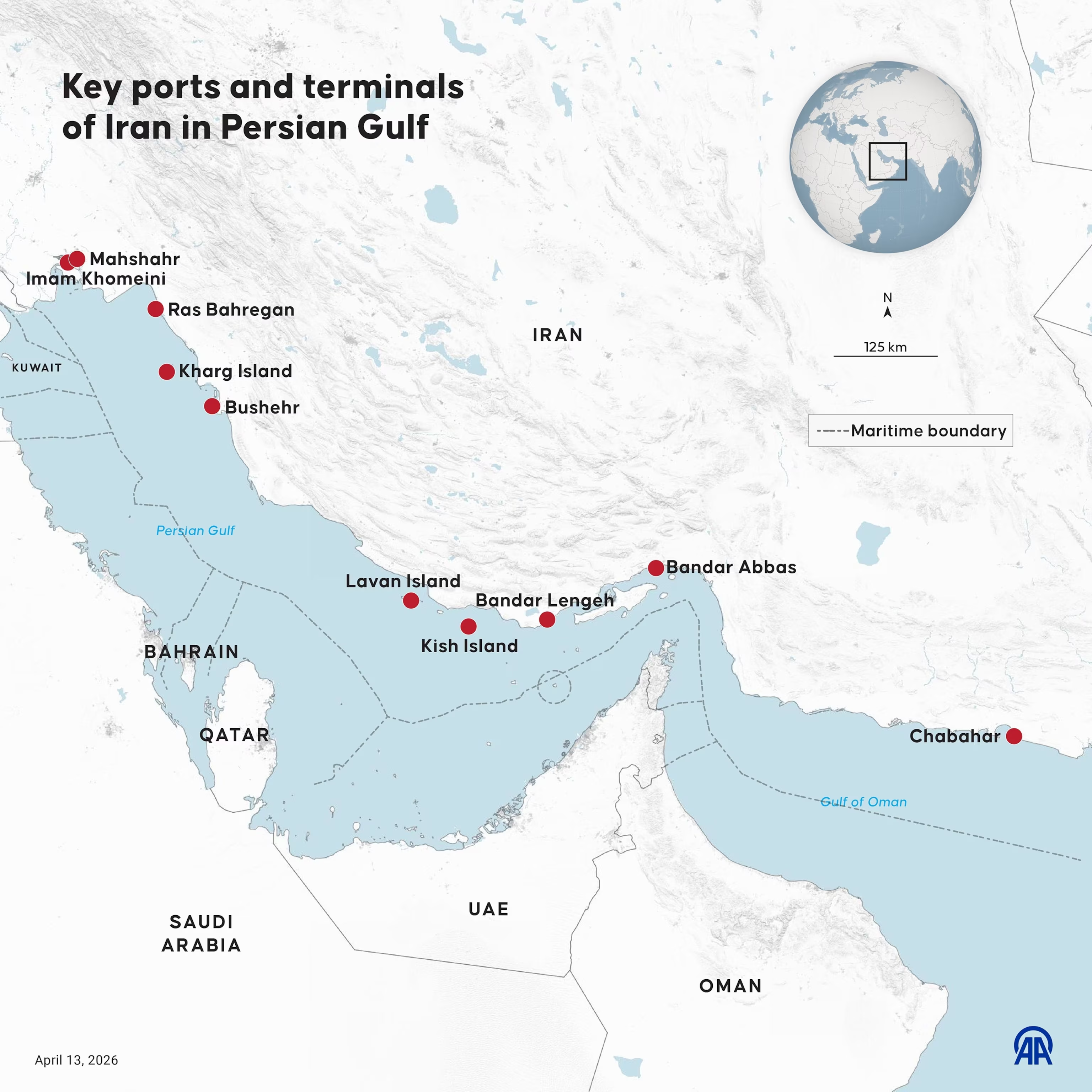
Principal ports and facilities of Iran located around the Persian Gulf proximally to the Strait of Hormuz.Anadolu via Getty Images
As for Europe, Luman remarked, “It possesses the capacity to have a substantial effect” on the forthcoming holiday period for travelers.
“While no limitations or true physical insufficiencies are currently present, they are appearing on the horizon,” Luman indicated, adding that a number of European airliners have begun downsizing flight offerings because of premium-level jet fuel costs.
According to the International Air Transport Association (IATA), which is an air travel industry trade association, the price of jet fuel has amplified by more than double, reaching $197 per barrel ever since the commencement of the armed conflict in Iran.
KLM Royal Dutch Airlines declared Thursday that it is canceling 160 flights, equally separated between outgoing and incoming travel, at Amsterdam Airport Schiphol, citing that these flights “are no longer financially sound to maintain at the moment” due to augmenting jet fuel prices.
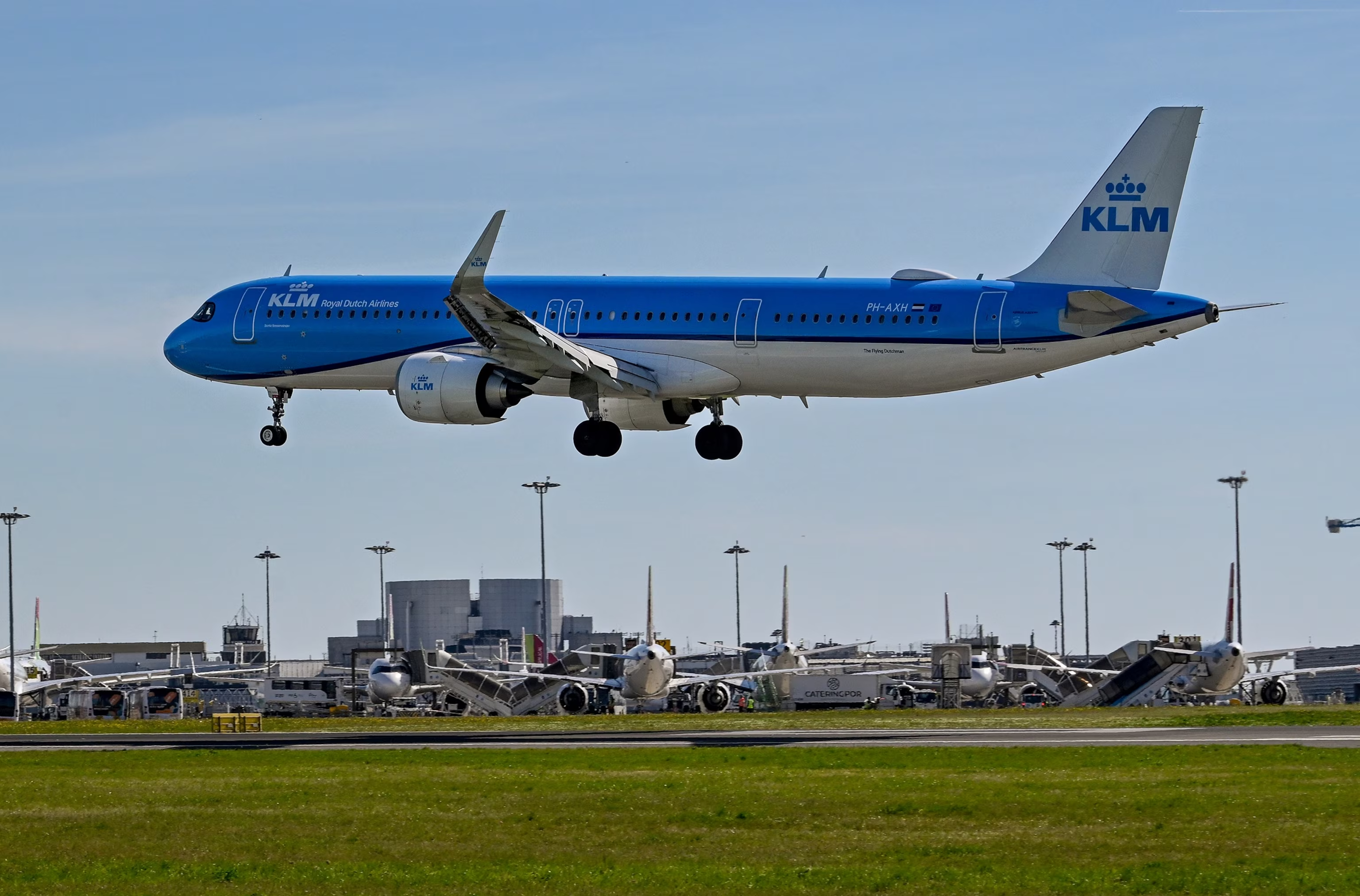
KLM Royal Dutch Airlines announced, April 16, 2026, that it is canceling 160 flights in and out of Amsterdam Airport Schiphol, citing rising jet fuel prices tied to the war in Iran.Horacio Villalobos/Corbis via Getty Images
The German aviation company Lufthansa made public Thursday that it will dissolve its regional affiliated airliner known as CityLine and will permanently withdraw 27 aircraft from its flying schedule this week due to escalating expenses associated with kerosene, more commonly known as jet fuel. Lufthansa also indicated forthcoming intentions to take out of service its remaining four Airbus A340-600 aircraft come October and further, to immobilize two Boeing 747-400 planes.
“A plan involving an accelerated course of action for managing fleet capabilities is unavoidable because of steeply elevated kerosene expenditures as well as geopolitical instability,” Till Streichert, Lufthansa Group’s CEO and CFO, expressed within a formal statement.
Airline trade groups along with industry representatives relayed to ABC News that there are no immediate apprehensions concerning jet fuel inadequacies within the United States, which ships notably little petroleum via the Strait of Hormuz; conversely, the jet fuel shortage across Europe has the potential to impact U.S. airlines and its passengers.
“If any airport lacks the required fuel amounts for planes headed to the U.S., the airline might possibly reroute to allow for a stopover at a site providing adequate fuel reserves,” Henry Harteveldt, a seasoned airline industry analyst, mentioned. “This poses considerable irregularity while concurrently causing substantial disruption, seeing as the return journey could take longer and bring about additional inconvenience.”
Harteveldt indicated that travelers might encounter elevated ticket costs, pinpointing American, Delta and United Airlines as companies that facilitate travel to second-tier European locations.
“Dependent on the specified route, the particular airline carrier, any existing labor agreements, and regulations concerning staff time issued by safety regulation organizations like the FAA, the carrier may well be required to have increased crew availability to conduct the flight toward the U.S.,” Harteveldt pointed out. “Undoubtedly, that holds the potential to deplete the crew availability of the airline while amplifying its overhead, which the airline will unavoidably endeavor to recuperate via upticks in fares.”
Despite no U.S. air carriers having made public amendments to the summertime flight listings toward Europe, Harteveldt indicated that this could undergo revision should reliance surrounding fuel offerings wane.
“Should the fuel reach prohibitive levels of expense or if the service of a specific path becomes economically unviable, the carrier could curtail the designated count of flights or potentially call off a flight or path altogether,” Harteveldt stated. “Sadly, the effect of all these facets for voyagers is sustained ambiguity.”
Adding to this, Harteveldt shared, “Each individual intending to travel abroad in the summer, in particular toward Europe or Asia, should regularly monitor the state of their reservation concerning potential alterations.”
Sourse: abcnews.go.com