
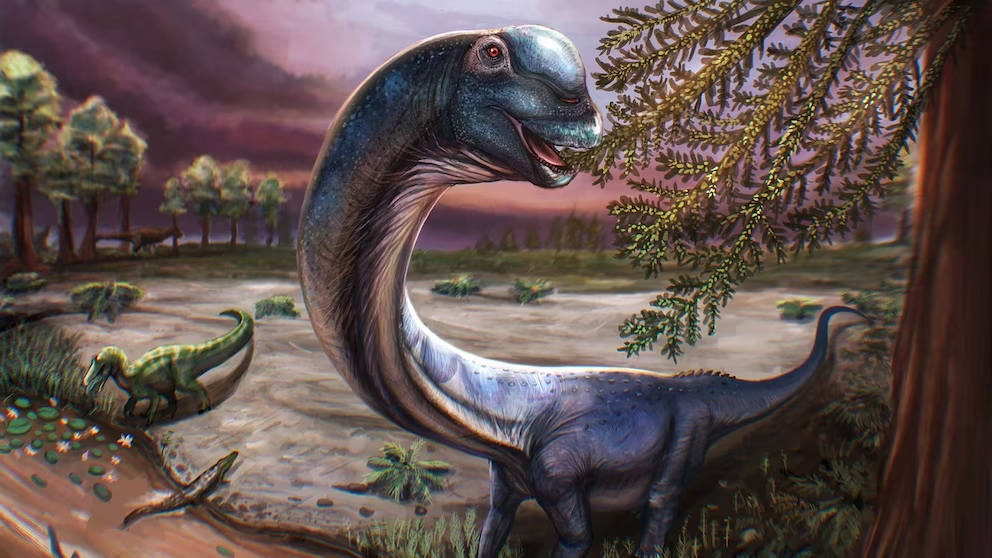
Artistic illustration of Nagatitan chaiyaphumensisPatchanop Boonsai
Researchers state that they have recognized the biggest lengthy-necked, plant-eating dinosaur ever to inhabit Southeast Asia, potentially representing the final existing specimen of this kind, as revealed in a recent scientific paper.
Thitiwoot (Perth) Sethapanicsakul, a Thai doctoral candidate at University College London Earth Sciences and primary author of the research, is referring to it as “Thailand’s ultimate titan.”
“We are unlikely to unearth further dinosaur fossils in more recent rock formations within Thailand, thus rendering this dinosaur the final colossal creature of its nature that we might ever discover in the area,” Sethapanichsakul informed ABC News.
The scientific designation for the dinosaur is Nagatitan chaiyaphumensis.
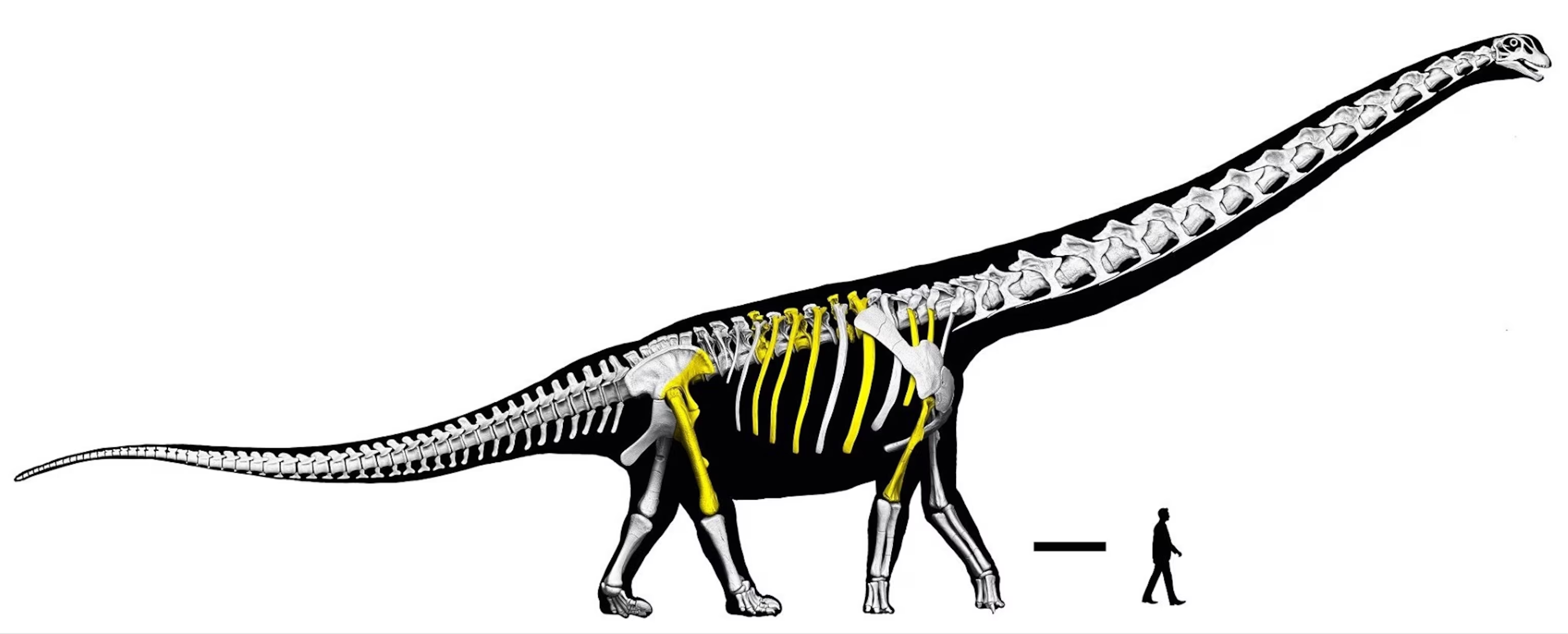
Skeletal reconstruction with specimens highlighted in yellow.Thitiwoot Sethapanichsakul
The appellation is taken from Naga, a mythical serpentine entity present in Southeast Asian tradition, whilst titan denotes one among the twelve giants from Greek mythology. Chaiyaphum signifies the Thai province where the original fossils came to light.
Inhabitants of the Chaiyaphum province, located in northeastern Thailand, initially came across the dinosaur’s fossils in 2016. Imbedded within a rock composition along the edge of a water reservoir, the region’s Department of Mineral Resources unearthed a collection of 10 bones, including a front leg bone estimated to reach nearly six feet.
“Indeed, upon my initial observation of the specimen, the front leg bone was noticeably taller than my own height, which I found quite astonishing,” Sethapanichsakul remarked.
Excavation groups proceeded with their search for evidence until their financial resources were depleted in 2020, according to Sethapanichsakul. Following the acquisition of a grant from the National Geographic Society in 2023, he collaborated with a cohort of researchers, and together they intervened to finalize the investigation.
Based on the recovered remnants, scientists determined that they had uncovered something exceeding the magnitude of any previously recognized dinosaur variety in Southeast Asia — an immense dinosaur, approximated to have had a weight of about 27 tons when it roamed the planet.
This is in excess of twice the dimensions of the world’s most massive extant land mammal, the African elephant.
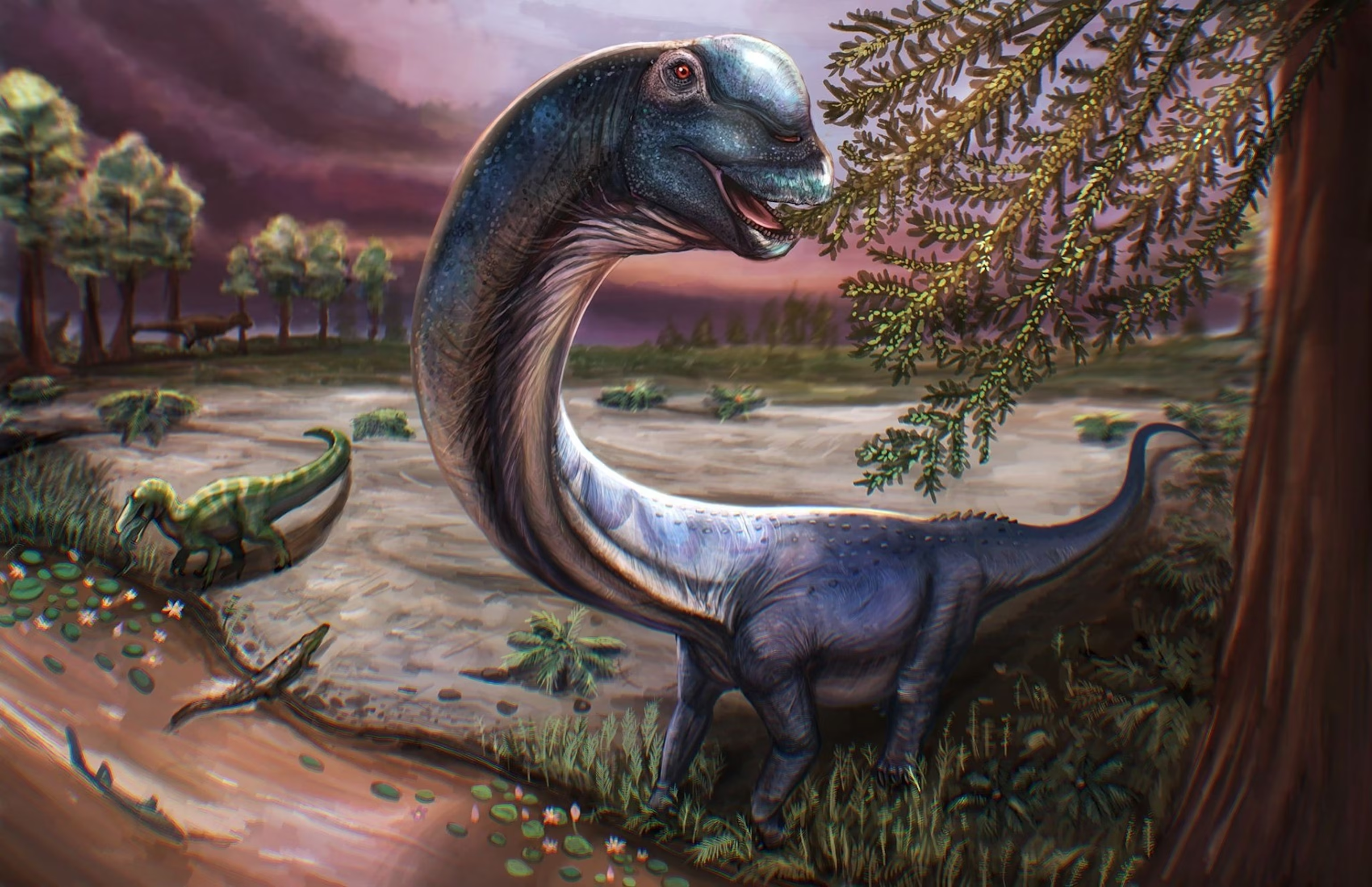
Artistic illustration of Nagatitan chaiyaphumensisPatchanop Boonsai
“This dinosaur holds extraordinary significance for us, particularly in the Southeast Asian context, due to its considerable proportions,” Sethapanichsakul clarified. “It displays tremendous scale when juxtaposed with our current understanding.”
Researchers suggest that Nagatitan chaiyaphumensis existed roughly 100 to 120 million years in the past, during the Cretaceous epoch. Prehistoric Thailand is recognized as a habitat for some of Asia’s most ecologically diverse dinosaurs.
“I envision it as a potential renaissance of dinosaur discoveries in Southeast Asia,” Sethapanichsakul conveyed.
Sethapanicsakul expresses that the finding transcended the mere revelation of a novel dinosaur; it engendered a chance to reinvigorate enthusiasm in paleontology within Thailand, which only entered into the realm of paleontological studies in 1986.
“Our exploration of dinosaurs in Thailand extends back approximately 40 years,” Sethapanichsakul noted. “The global community has been aware of dinosaurs for over 200 years in comparison.”
“We are endeavoring to instill within people, notably those in rural localities, a comprehension of the importance of paleontology,” he supplemented. “And we accomplish this through community engagement and analogous initiatives, with the introduction of a completely new dinosaur proving exceptionally advantageous in inciting public enthusiasm.”
Sourse: abcnews.go.com