
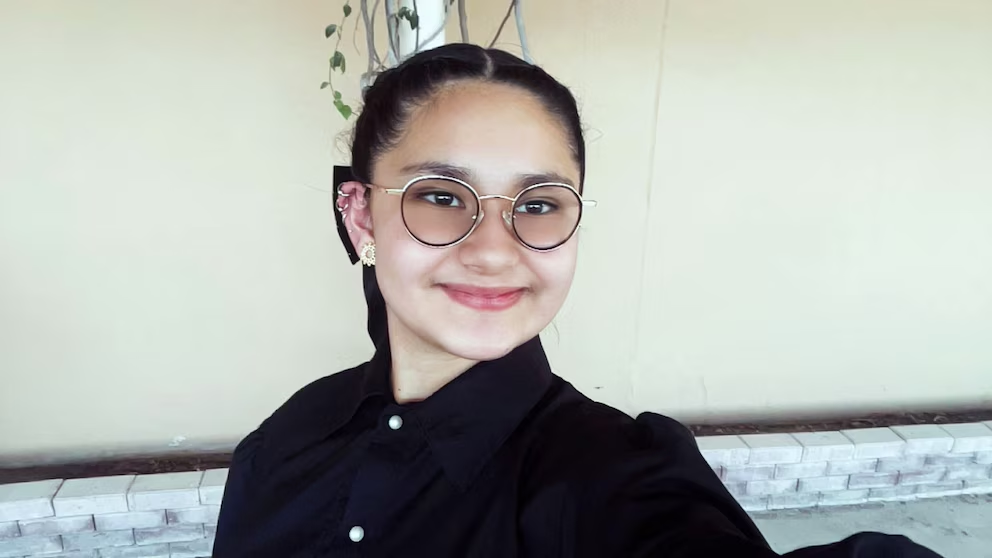
Zahra Muheb, 15, is among over 1,100 Afghan refugees residing at Camp As Sayliyah, a refugee settlement located on an underutilized military installation in DohaZahra Muheb
Her living quarters consist of four imposing grey walls. Adorned with a rug, a vibrant comforter, and a few pictures, 15-year-old Zahra Muheb has endeavored to cultivate a sense of home. She has marked her last two birthdays while living at Camp As Sayliyah, a refugee camp situated on an inactive American military post in Doha, which serves as a temporary abode for more than 1,100 Afghan refugees.
The majority of its inhabitants are women and children who were placed here by the U.S. State Department during the American refugee relocation procedure.
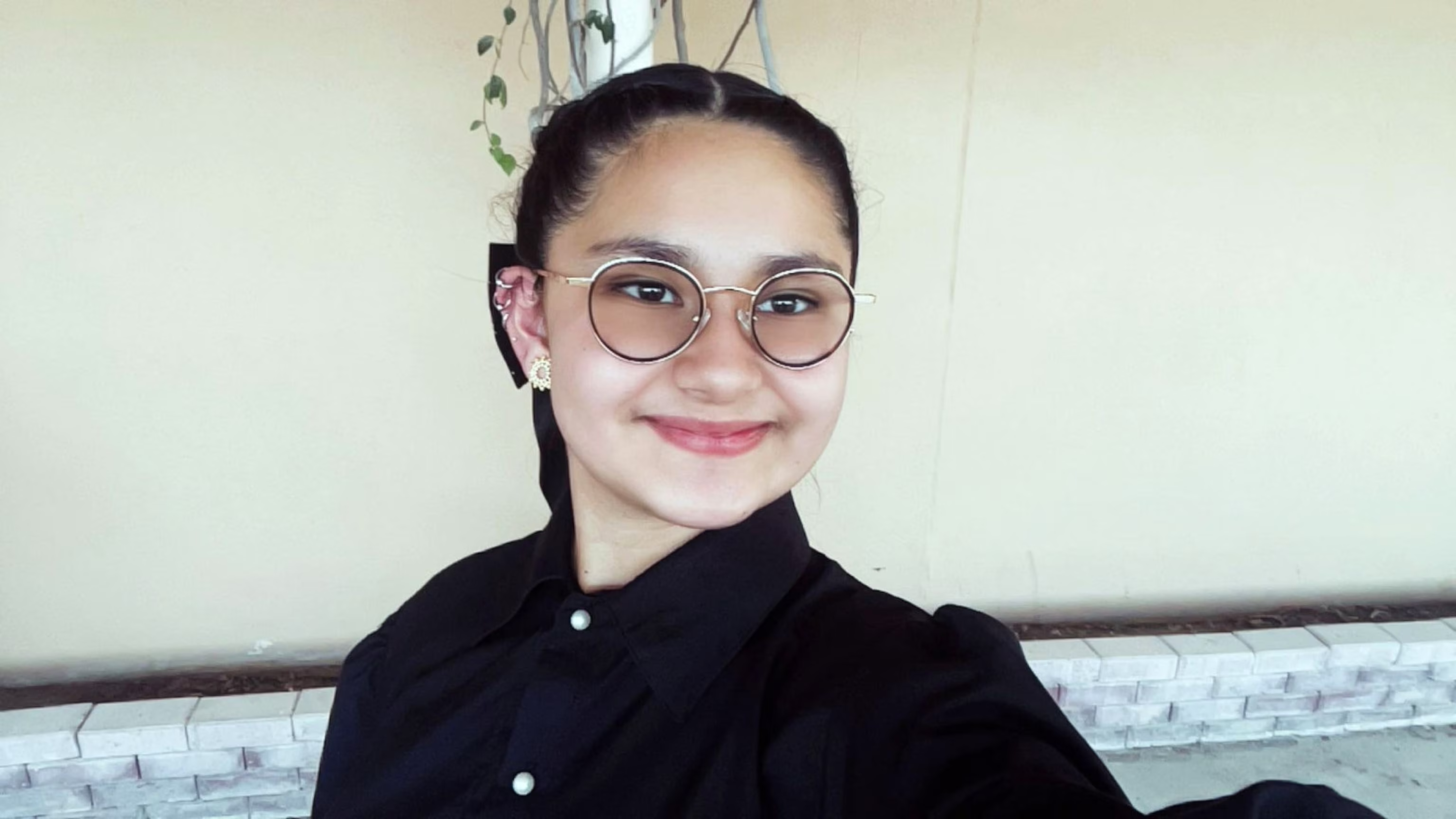
Zahra Muheb, 15, is among over 1,100 Afghan refugees residing at Camp As Sayliyah, a refugee settlement located on an underutilized military installation in DohaZahra Muheb
Zahra communicated to ABC News that her future aspirations have undergone a significant transformation since President Donald Trump enacted an executive order suspending refugee resettlement initiatives during the initial phase of his second term. She indicated that the repercussions have been felt across every segment of the camp.
"I mean, when you depart the camp and you’re unwell, they transport you to the hospital and affix GPS trackers on you to prevent any escape," she stated. "I feel that a prison might offer a superior environment than this place."
Zahra also informed ABC News that she faced threats from the camp’s duty director and other camp authorities subsequent to engaging with media outlets.
She asserted that they conveyed that an individual in Washington, D.C., had requested them to converse with her, and then turned to her parents, stating, "What you permit your daughter [to do] has substantially amplified the peril of returning to Afghanistan."
In response to Zahra’s specific assertions, a spokesperson for the State Department informed ABC News, "We possess no information concerning this purported incident" and that "allegations are addressed promptly to safeguard residents."
The apprehension of being repatriated to Afghanistan is profound for numerous refugees at the installation, she pointed out.
Zahra conveyed to ABC News that camp officials are exploiting this fear and the uncertainty of their future placement to manipulate residents at the facility.
"They are deceiving people regarding [being sent to a] third country," she remarked. "They are encouraging individuals to return to Afghanistan, offering them financial incentives."
Zahra’s family had already undergone vetting by the Biden administration, yet they, along with many other camp residents, remain in a state of uncertainty, awaiting notification from the U.S. State Department regarding their relocation destination and timing.
In recent deliberations, the Trump administration indicated they were contemplating relocating individuals residing at Camp As Sayliyah from Doha to the Democratic Republic of Congo — a nation currently grappling with an Ebola outbreak — although that arrangement was ultimately abandoned.
"The State Department persists in working towards a favorable resolution that ensures the safety of these remaining individuals to commence a new existence beyond Afghanistan while upholding the security and welfare of the American populace," a department representative informed ABC News.
Regarding the prospect of being sent to the DRC, Zahra expressed her desire to directly address Trump, stating that the proposition was "unacceptable even to consider."
"Mr. Donald Trump and Mrs. Melania, please reconsider to at least bring us to America, as we are deserving of safety. We deserve a life imbued with dignity," she implored ABC News.
Concurrently, the Trump administration augmented the refugee cap by 10,000 exclusively for white South African refugees, notwithstanding the commitments previously made by the U.S. to those residing at Camp As Sayliyah.
On June 2, during a hearing of the Senate Foreign Relations Committee concerning the State Department’s fiscal year 2027 budget, legislators challenged these new policies.
Democratic Senator Van Hollen of Maryland remarked to Republican Secretary of State Marco Rubio that "this administration has established a record-low cap on refugees" and that "White South Africans, Afrikaners, have constituted approximately 99% of those allocated slots." He characterized the administration’s approach as a "race-based refugee system."
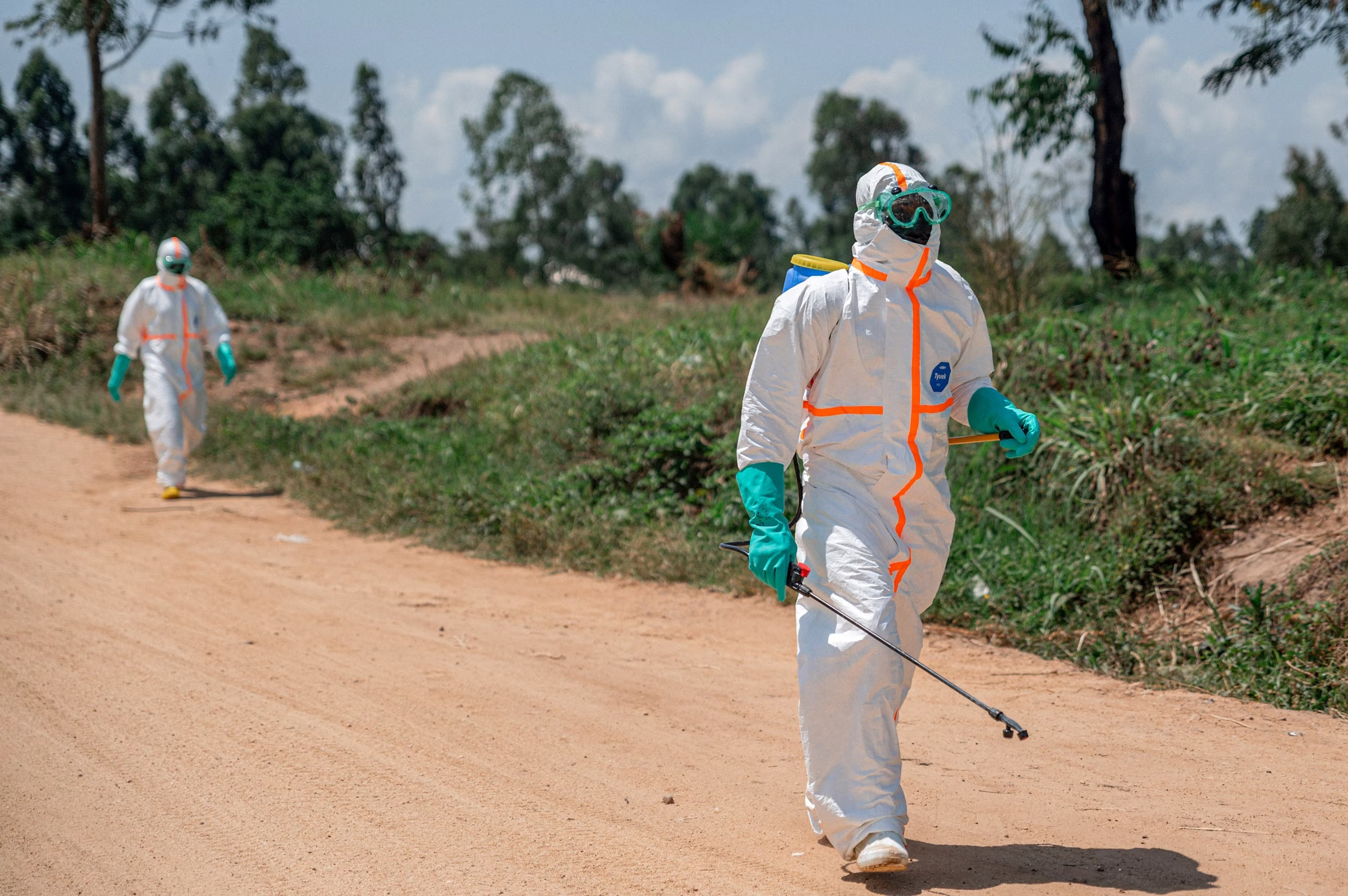
Health workers, dressed in protective attire, recover the remains of a citizen deceased from the Ebola virus from the Rwampara Hospital mortuary for interment rites, within the Democratic Republic of the Congo, on June 8, 2026. Teams are conducting disinfection work at the hospital, recognized as the outbreak’s epicenter, in the Ituri province of the Democratic Republic of the Congo, on June 8, 2026.Anadolu via Getty Images
Senator Chris Coons, a Democrat representing Delaware, condemned the notion of deporting Afghan allies housed at Camp As Sayliyah back to Afghanistan, which is currently under Taliban control, or to the DRC, a nation that has witnessed a surge in sexual violence against women and children in recent years amidst the ongoing conflict since 2022.
In response, Rubio stated that the U.S. "cannot admit any Afghans at this juncture into the country," owing to an executive order issued following the fatal assault on two National Guard members last November.
"I am not aware of any single country that is prepared to accept a thousand individuals, but we have consulted with numerous nations about accommodating several hundred of these people and facilitating their relocation to a secure locale," he commented.
The individuals we engaged with informed ABC News that they feel abandoned, including a father who served as a member of the Afghan Command Forces for the U.S. and requested anonymity from ABC News due to concerns of reprisal.
"In reality, we were lawfully brought here and fulfilled all requisite legal procedures," he stated. "We stood in solidarity with the United States in Afghanistan for nearly two decades. Now, the time has arrived for the U.S. government to honor its commitments."
Shawn VanDiver, the president of AfghanEvac, a non-profit organization dedicated to advocating for Afghan refugees, facilitated a conference call involving residents, congressional staff, and political figures in April.
"We will continue to champion your cause; numerous individuals in Congress are committed to advocating for you," he assured the residents.
Senator Richard Blumenthal, a Democrat from Connecticut, participated in the call to relay the sentiments of his son, who served in Afghanistan as a Marine Corps infantry officer, regarding the Afghan allies who "risked their lives."
"Their affection for America is deep. We shall endeavor and advocate for them, just as we would for our own veterans," he affirmed.
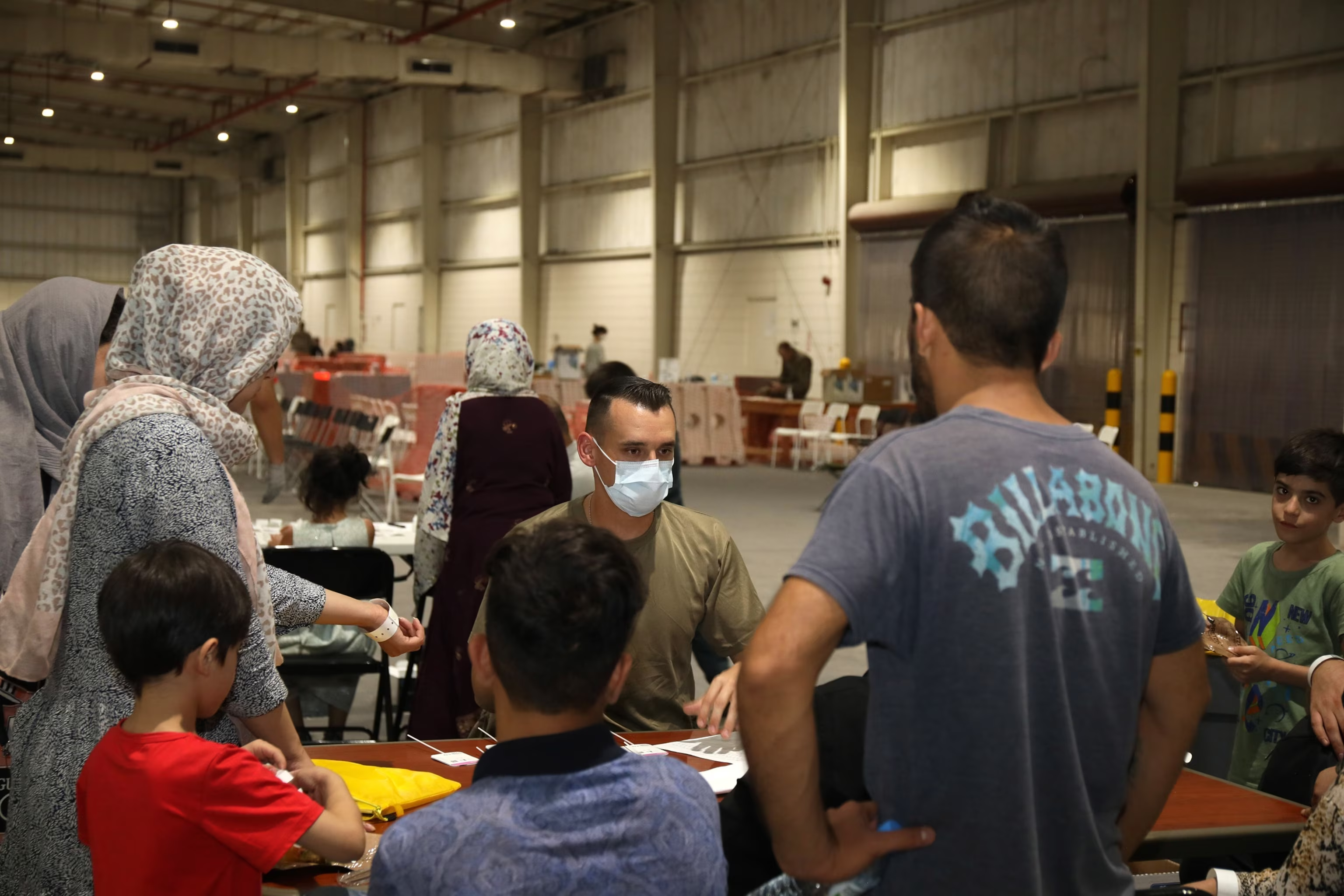
In this August 20, 2021, archival photograph provided by the U.S. Army, combat medic Sgt. Wyatt Ryser from the 811th Hospital Center delivers a COVID-19 briefing to an Afghan family at Camp As Sayliyah in Doha, Qatar. The U.S. military is supplying meals, water, and snacks to immigration applicants seeking resettlement in the U.S.Jimmie Baker/U.S. Army via Getty Images, FILE
In a prior declaration, the U.S. State Department informed ABC News in March that "Afghan Nationals at the Camp currently lack a feasible path to the United States" and that residents were scheduled for relocation by March 31. By June, ABC News had conversations with numerous residents who remain unaware of their relocation destination or timeline, if any.
"There was a viable pathway; the administration has opted to close it — this is a policy decision," VanDiver articulated to ABC News.
For the present, the inhabitants of the camp hold onto the hope that the U.S. will honor its initial pledge to bring them to the nation to establish new lives.
Zahra requested that ABC News use her given name, hoping it would aid her resettlement endeavors and assist others at the camp who fear being sent to conflict-ridden countries like the DRC.
"I am revealing my identity and raising my voice. To the camp officials from this vantage point… you cannot silence me," she declared. "Whatever you do, it will not deter me. If you believe that mistreating me [in this manner] will stop me, it is futile. I will persist. I will ensure those individuals reach safety. I will make an effort."
On Thursday, 83 members of Congress appended their signatures to a letter addressed to Rubio, demanding a clear strategy for the residents of Camp As Sayliyah, shortly after Zahra’s account was broadcast on ABC News on Tuesday. In the letter, congressional leaders stipulated that the department provide a response and a viable plan for the refugees living in uncertainty by June 24.
Sourse: abcnews.go.com