
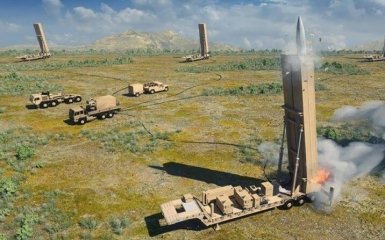
Share Source: Bloomberg
U.S. Central Command has requested the deployment of the Dark Eagle hypersonic missile to the Middle East for possible use against Iran. If approved, the request would mark the first combat deployment of a U.S. hypersonic weapon in history.
Main theses:
- Dark Eagle is the first hypersonic missile for the US, which is deployed in a war with Iran, sending a signal to adversaries about the US ability to respond to a hypersonic threat.
- This missile has a longer range than previous ones and can maneuver, avoid interception, and accurately hit targets.
US to use Dark Eagle hypersonic missile against Iran for first time
Iran has moved its ballistic missile launchers deep into the country, beyond the range of the Precision Strike Missile, which can hit targets over 300 miles (480 km). The Dark Eagle has a much longer range of over 1,700 miles (2,775 km), although the exact specifications are classified.
The missile, developed by Lockheed Martin, flies at more than five times the speed of sound and is capable of maneuvering to avoid interception.
The cost of one rocket is about $15 million, and there are no more than eight of them in total. The cost of one battery is estimated at $2.7 billion.
The deployment of Dark Eagle will also have a strategic dimension – it will be a signal to Russia and China, which have long had their own hypersonic systems, that the United States is finally able to meet this challenge. The missile was originally developed specifically to confront these countries.
Share
The US and Iran have been in a truce since April 9, but the survey suggests Washington is preparing for new strikes if Trump decides to do so. According to Bloomberg Economics analysts, both sides have used the pause to rearm, and possible new rounds of fighting could be more destructive.
The US has already spent about 1,100 JASSM-ER cruise missiles in this conflict. Despite the fact that American aircraft operate under local air dominance, dozens of MQ-9 drones and several manned fighter jets have been shot down, indicating that Iranian air defenses remain in place in some areas.
US President Donald Trump has reiterated his intention to increase pressure on Tehran. On April 29, he said the naval blockade would continue until Iran agrees to a new nuclear deal. Washington is demanding a complete halt to its uranium enrichment program, while Tehran calls it its “sovereign right.”
The Iranian side is offering to open the strait in exchange for access to its ports. According to Secretary of State Marco Rubio, this offer is not bad, but Iran wants to postpone the resolution of the nuclear issue “for later”, which does not suit the United States.