
Share Source: UNIAN
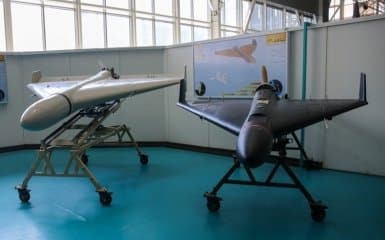
Russia has received from Iran the full technology for the production of Geran-5 jet drones, which are close in speed and combat capabilities to cruise missiles and can be launched from pickup trucks and tactical aircraft. Aviation expert Anatoly Khrapchinsky told what advantages this could bring to Russia, why Moscow is moving to such solutions, and what danger it poses to Ukraine.
Main theses:
- The Russian Geran-52 drones, obtained from Iran, have combat capabilities close to those of cruise missiles.
- The use of Geran-5 drones could be dangerous for Ukraine due to their speed and power in hitting targets.
- Russia is becoming dependent on Iranian supplies of jet drone production technology, potentially threatening the security of the region.
The Geran-5 drone looks like a cruise missile: how to deal with it
Iran has fully transferred the technology for producing the Karrar drones to Russia. In fact, we are dealing with an Iranian drone, the basic concept of which included the ability to carry a payload, drop it, and return it.
The jet drones have an aerodynamic, rocket-like shape with large wings and an external engine, visually reminiscent of the Ukrainian Peklo and Flamingo missiles.
In Russian use, this drone does not require any “creative” scenarios, it is simply used as a kamikaze drone. At the same time, it is almost as fast as a cruise missile. It is capable of speeds of up to 800 km/h and can carry up to 200 kg of payload. This is approximately four times more than typical attack UAVs. This mass is enough to hit targets at a distance of up to 1,000 km.
That is, we are dealing with another cruise missile from the enemy. We need mobile MANPADS and heat-seeking systems.
Share
Iran is currently facing a serious political problem. In the event of a change of power and the overthrow of the current regime, Tehran's cooperation with Moscow will most likely weaken significantly or cease altogether.
By transferring the Shahed technology to Russia, Iran did not hand over all the key elements of production. It continues to supply some of the critical components itself, in return receiving from Russia combat experience in the use of weapons and the opportunity to improve its own developments. In fact, Moscow remains dependent on Iranian supplies.
Previously, the main emphasis of the Russian Federation was on strategic aviation. Planes took to the air and launched a large number of missiles at once. Today, their resource is about 80%. At the same time, the remaining 20% will be enough for several more years of war. At the same time, Russia understands that in the event of a major war, they will need strategic aviation, so they are trying to preserve it.
That's why they need a missile that can fly from under the wing for a long distance. The Geranium-5 or the Carrara are cheap weapons.
Share
Russia has significantly improved the Gerani strike missiles and equipped them with communications for autonomous determination of coordinates.
In particular, a network of mobile towers and radio beacons has been deployed across Belarus, which drones use as navigational landmarks. This is a principle similar to aviation navigation using radio beacons, when GPS is not critically needed. This decision was a response to the constant struggle with our electronic countermeasures.
Therefore, “Gerani-5” is more about reducing the cost of using cruise missiles and at the same time increasing capabilities.