
Share Source: online.ua
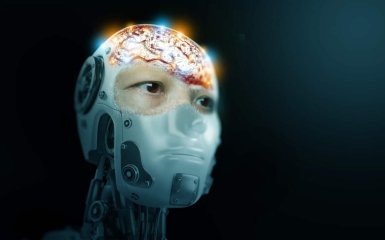
Self-awareness is one of the main characteristics of a person, which involves the ability to be aware of one's own thoughts, feelings, motives, actions and physical qualities, distinguishing oneself from others. It provides an opportunity to reflect and assess one's current position in society. Against the backdrop of the rapid development of artificial intelligence, scientists are increasingly wondering whether AI will be able to progress to the level of the emergence of self-awareness.
Main theses:
- ChatGPT-4 is approaching the level of child-like self-awareness, but it cannot yet reach it.
- Over the next 10-15 years, AI could demonstrate incredible progress in this direction.
Is AI getting closer to human level?
This question seriously interested engineer Marius Bodea from the Technical University of Cluj-Napoca, writes Indian Defence Review.
He even developed a special system called “Consciousness Assessment.”
The main goal is to detect self-awareness in biological or artificial species.
According to the developer, his model is based on a logarithmic scale, which he formed from 5 key parameters:
-
equivalent intelligence quotient;
-
sensory input data;
-
parallelism;
-
metacognitive complexity;
-
data processing capabilities.
As Marius Bodea explained, these metrics aim to provide a comparative framework capable of tracking different levels of consciousness across species.
What is important to understand is that when taking a self-awareness test, most adults score between 500 and 800 points. A child might score around 100.
However, as it turned out, none of the AI models could even reach 100 points, although they were very close to this indicator.
Marius Bodea is inclined to believe that artificial consciousness could appear within 10-15 years if progress continues.