
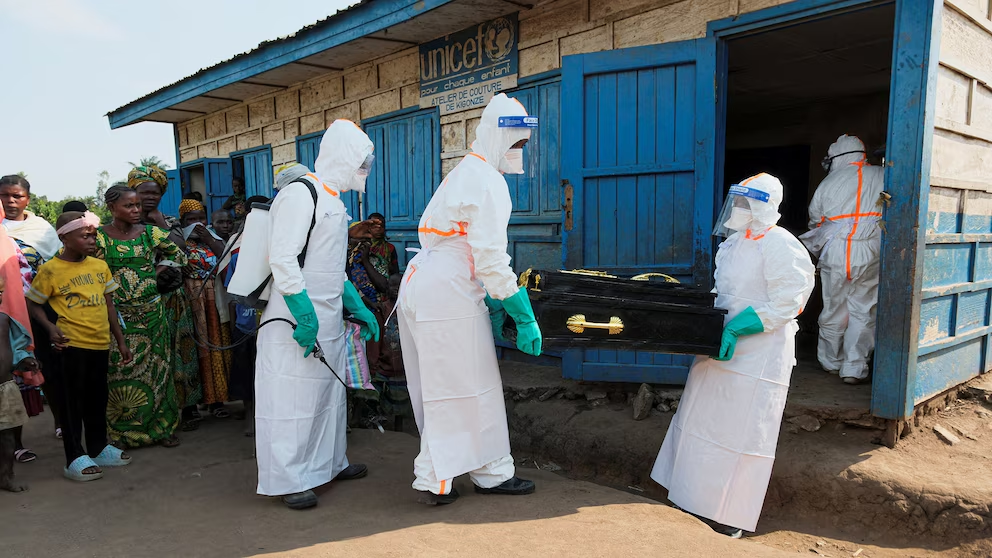
Health workers carry the coffin of a child who is suspected to have died of Ebola for burial at the Kigonze displaced persons cam in Bunia, eastern Democratic Republic of Congo, June 18, 2026.Gradel Muyisa Mumbere/Reuters
The Democratic Republic of the Congo (DRC) has now recorded over 1,000 instances of Ebola as the nation’s devastating epidemic persists.
As of Sunday evening, the DRC Ministry of Health documented 1,003 verified cases and 254 confirmed fatalities. The ministry indicates that 365 individuals are presently receiving care in hospitals or isolation facilities.
Authorities have voiced concerns regarding the ongoing efforts in contact tracing. The Ministry of Health has stated that only 58% of identified contacts have been successfully followed up with, which falls significantly short of the World Health Organization’s (WHO) recommended 90% to 95% target necessary for controlling the outbreak.
This situation arises as UNICEF issues a warning that millions of children and young people are vulnerable due to Ebola and the disruption of critical services in the eastern DRC.
Bonheur Baeni, the project manager for the Ebola emergency response at the humanitarian NGO CARE, informed ABC News that widespread misinformation within affected communities has posed a substantial obstacle to containing the virus.
"Indeed, it is among the major hurdles, the propagation of false information characterized by rumors, rumors disseminated on social networks, and also rumors spread through word-of-mouth," he conveyed to ABC News in French. "This truly fosters resistance within the populace."
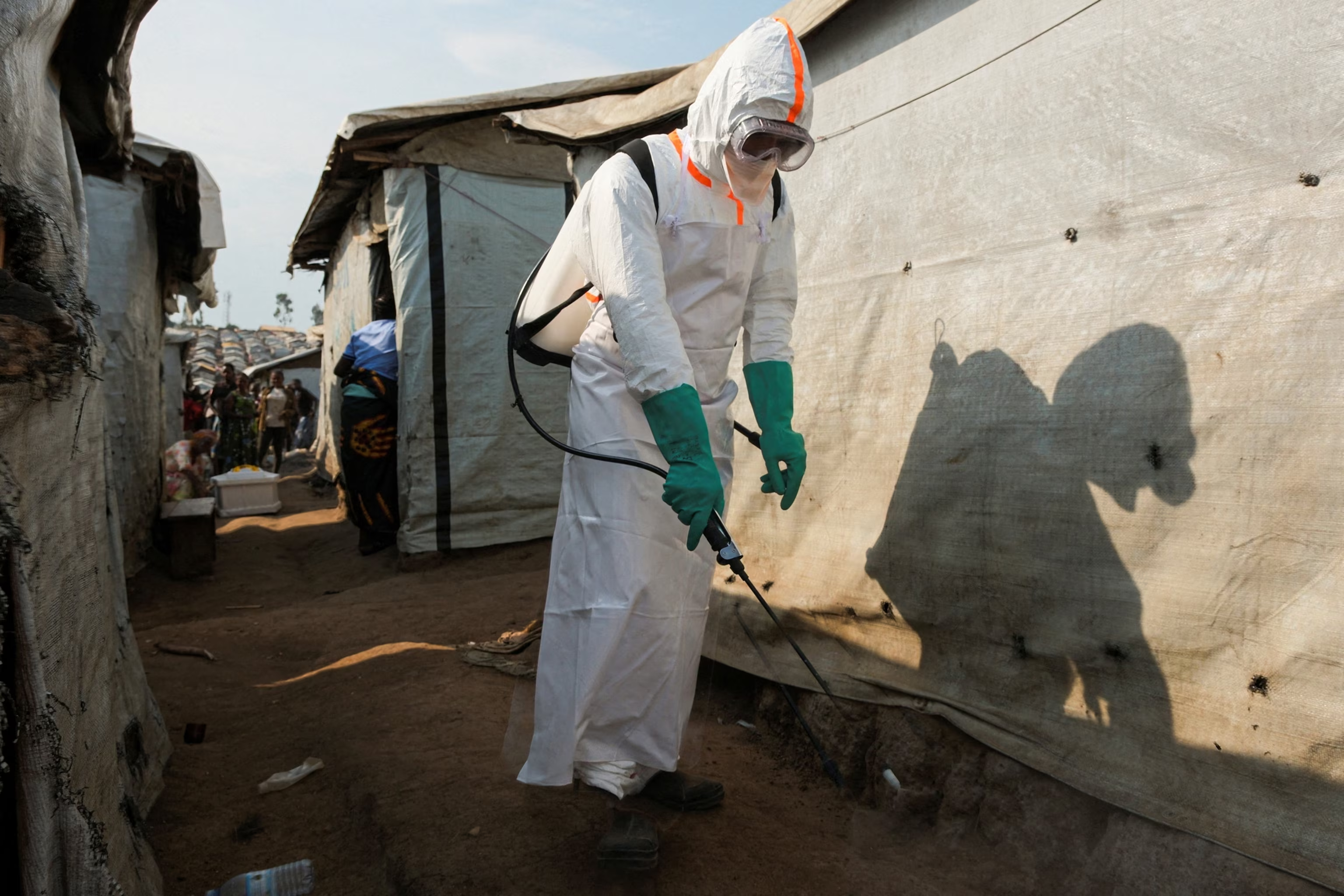
A health worker in full personal protective equipment (PPE) disinfects an area while preparing for the burial of suspected Ebola victims at the Kigonze displaced persons camp in Bunia, eastern Democratic Republic of Congo, on June 18, 2026.Gradel Muyisa Mumbere/Reuters
Baeni mentioned that the organization is collaborating with the Ministry of Health and other partners to engage with the local population and address their inquiries. They are also working alongside respected community figures to counteract the spread of inaccurate information.
"You observe that this cultivates an atmosphere of trust," Baeni remarked. "It fosters an environment of confidence because it is their relative, a member of their community."
The Ministry of Health posted on X, stating that "response teams are continuing active investigations, epidemiological surveillance, and preventive measures in the impacted regions."
Health authorities further reported that an additional eight individuals have recovered from Ebola, bringing the cumulative total of recoveries to 100.
Concurrently, UNICEF issued a caution on Monday, highlighting that an estimated 2.95 million children and adolescents, aged 18 and below—constituting 54% of the population across 31 affected health zones—are at risk from Ebola and the disruption of essential services in eastern DRC.
"Our teams in Ituri [province] have encountered children who have lost their mothers, and in some instances, both parents, to Ebola," stated Catherine Russell, UNICEF executive director, in a press release. "Children are attempting to comprehend the danger while being surrounded by rumors and online misinformation."
UNICEF indicated that children and adolescents account for approximately 15% of confirmed Ebola cases and over 25% of confirmed deaths in eastern DRC as of June 19, and that children and adolescents with confirmed Ebola are nearly twice as likely to succumb compared to adults.
In Ituri province, the epicenter of the epidemic, dozens of children have been orphaned, according to UNICEF. The agency reported that 135 of these children are currently receiving support, including psychosocial assistance.
In neighboring Uganda, there are at least 20 confirmed cases, largely attributed to cross-border transmission from the DRC, and two fatalities, as per UNICEF. The agency noted that children have also been affected in Uganda, with at least one child testing positive and 19 children under monitoring in quarantine.
"Children are particularly susceptible as they rely on caregivers and cannot maintain physical distance from a sick parent or sibling in the same manner an adult can," Russell explained. "To better safeguard children, we require consistent access and the necessary resources to reach every community affected."
ABC News’ Dada Jovanovic and Zoe Magee contributed to this report.
Sourse: abcnews.go.com