
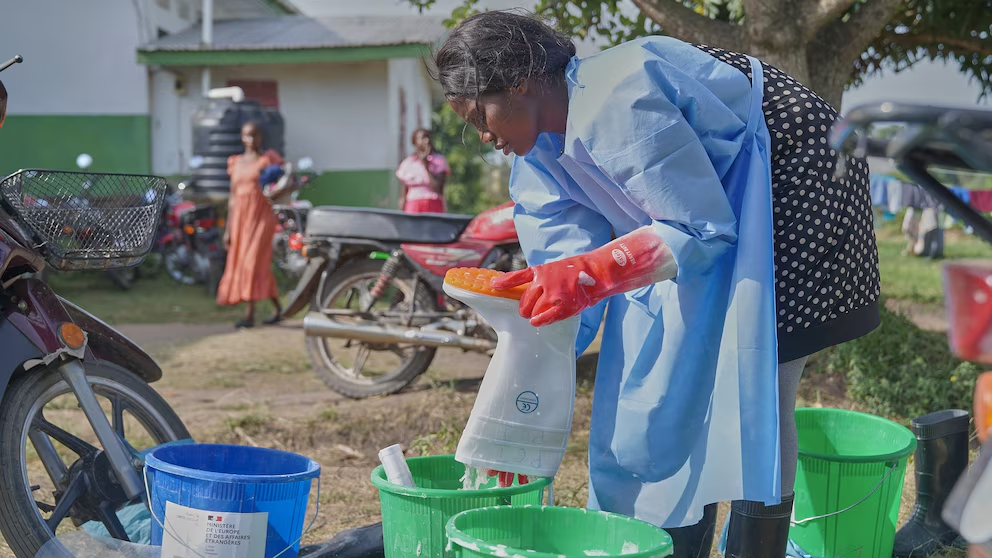
A staff washes rubber boots after use in an area with patients infected with Ebola at the Rwampara Hospital in Rwanpara, Ituri, Democratic Republic of the Congo, June 9, 2026. Dieudonne Dirole/EPA/Shutterstock
The World Health Organization indicated on Thursday that the likelihood of Ebola contagion in Europe and the nations hosting the World Cup is minimal, as the competition is poised to commence across the U.S., Canada, and Mexico.
Dr. Hans Henri P. Kluge, the WHO’s regional director for Europe, stated that currently, there are no reported Ebola cases in North America or Europe, despite an ongoing outbreak in the Democratic Republic of Congo.
As of Thursday morning, the DRC has documented 676 confirmed cases, according to the DRC’s health minister. In Uganda, there are 19 confirmed instances, many linked to travel, and two fatalities, as reported by the country’s health authorities.
Kluge referenced an Ebola patient who received treatment in the European Region following repatriation from the affected area.
An American physician, Dr. Peter Stafford, tested positive for Ebola after contracting it while caring for patients at Nyankunde Hospital. Stafford, a medical missionary affiliated with the mission organization Serge, was transported to Germany and underwent treatment at Berlin’s Charite University Hospital.
His spouse, Dr. Rebekah Stafford, and their four offspring were also transferred to the same medical facility, where they were kept under observation in isolation for 21 days as individuals with high-risk exposure.
Last week, the family was discharged from the hospital after Dr. Peter Stafford exhibited no symptoms for over 72 hours and returned negative results on subsequent PCR tests, according to Serge.
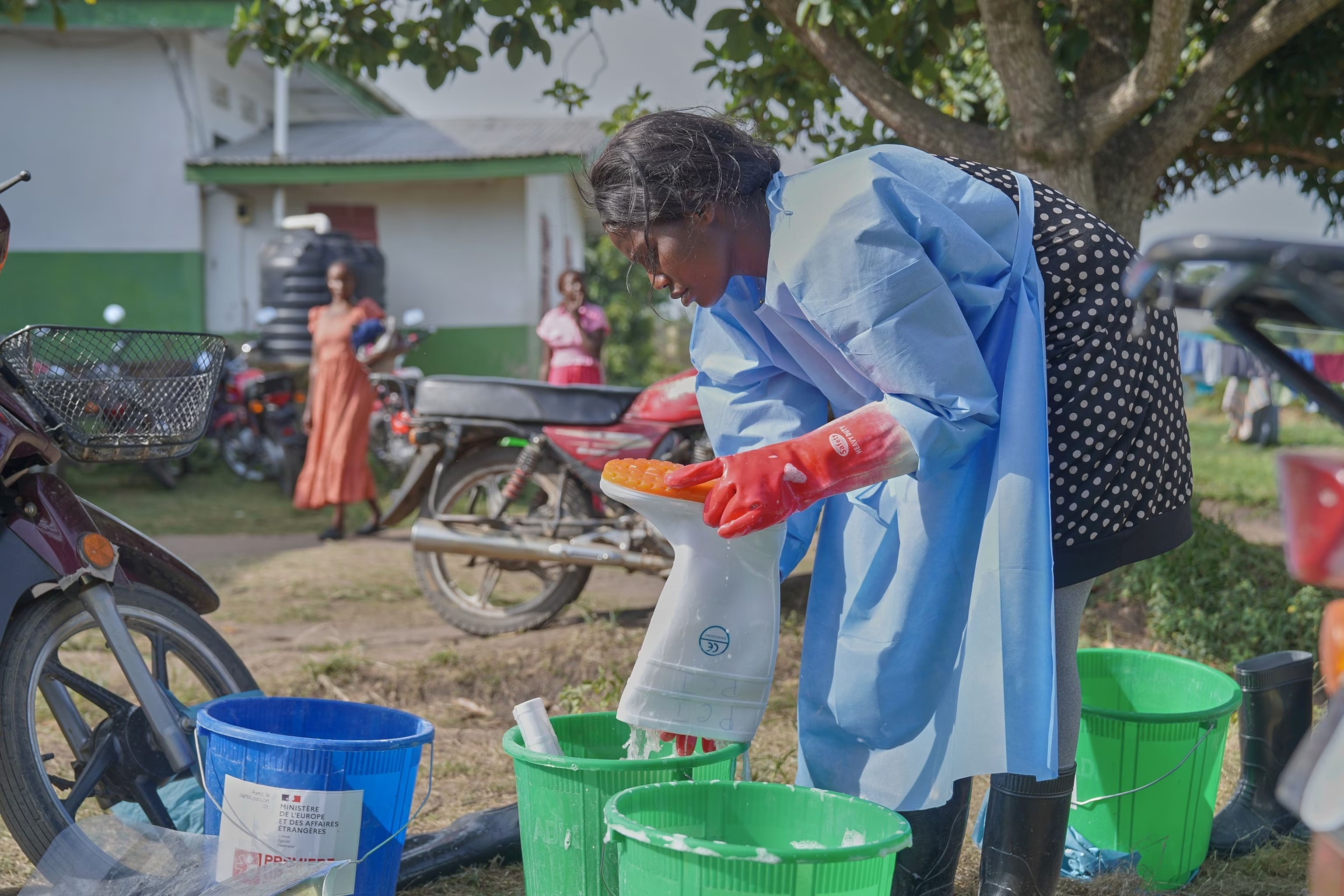
A staff washes rubber boots after use in an area with patients infected with Ebola at the Rwampara Hospital in Rwanpara, Ituri, Democratic Republic of the Congo, June 9, 2026.Dieudonne Dirole/EPA/Shutterstock
"There is no justification to alter your plans. Proceed with your travels as usual, remain informed, and relish the tournament," Kluge advised.
Kluge cited several factors contributing to the low risk in other nations: the majority of cases are concentrated in remote DRC regions, Ebola is not an airborne disease, and transmission occurs through direct contact with the bodily fluids of an infected individual.
Furthermore, screening measures are implemented before travel is permitted from affected areas, and individuals only become contagious once they display visible signs of illness, according to Kluge.
The CDC has temporarily prohibited entry into the U.S. for specific travelers who have recently been in the DRC, Uganda, or South Sudan. Currently, U.S. citizens and nationals are still permitted entry but will undergo enhanced public health assessments.
Kluge stated that the WHO does not advocate for travel bans, "although if you are not required to travel to the affected zones in the Democratic Republic of the Congo or Uganda, it is safer to refrain from doing so."
He emphasized the importance of combating the prejudice directed towards Ebola patients and individuals from affected regions or African communities.
"The propagation of Ebola is not dictated by nationality or ethnicity," he asserted. "Stigma deters individuals from seeking medical attention and can impede the control of outbreaks. Stay updated, consult reliable sources, and treat everyone with empathy. Through prudence and compassion, we can ensure the safety of both people and the sport."
Sourse: abcnews.go.com