
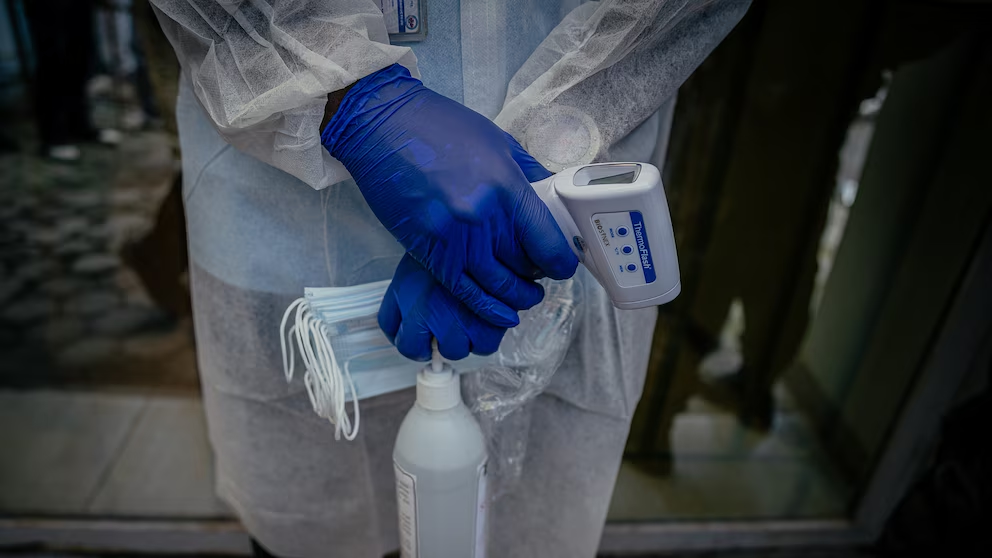
TOPSHOT – A healthcare professional keeps watch over individuals entering the Rodolphe Mérieux Laboratory, National Biomedical Research Institute (INRB) in Goma, on May 19, 2026. The World Health Organization on Tuesday shared its worries regarding the “size and pace” of an Ebola epidemic that has claimed the lives of approximately 131 individuals in the Democratic Republic of Congo, and cautioned that it could be protracted.Jospin Mwisha/AFP via Getty Images
Dr. Craig Spencer, who contracted Ebola while caring for individuals during a 2014 epidemic, informs ABC News he is “certain” the present epidemic is “much larger” than the current figures indicate.
"My main apprehension concerning this epidemic is that we gained far too much knowledge far too rapidly for this to be anything other than truly serious,” Spencer stated.
Spencer, who continues to serve as an ER physician and now also holds a position as a public health professor at Brown University, tested positive for Ebola after treating patients in Guinea with Doctors Without Borders in 2014. Upon his return to the U.S., he underwent 19 days of treatment at Bellevue Hospital in Manhattan.
“I was fortunate enough to pull through. And subsequently, a few months later, I went back to Guinea, functioning as an epidemiologist assisting in the management of the national response for Doctors Without Borders in early 2015,” Spencer recounted.
Spencer suggests that the U.S. government withdrawing from its historically significant involvement in global health has left it unprepared in addressing this epidemic.
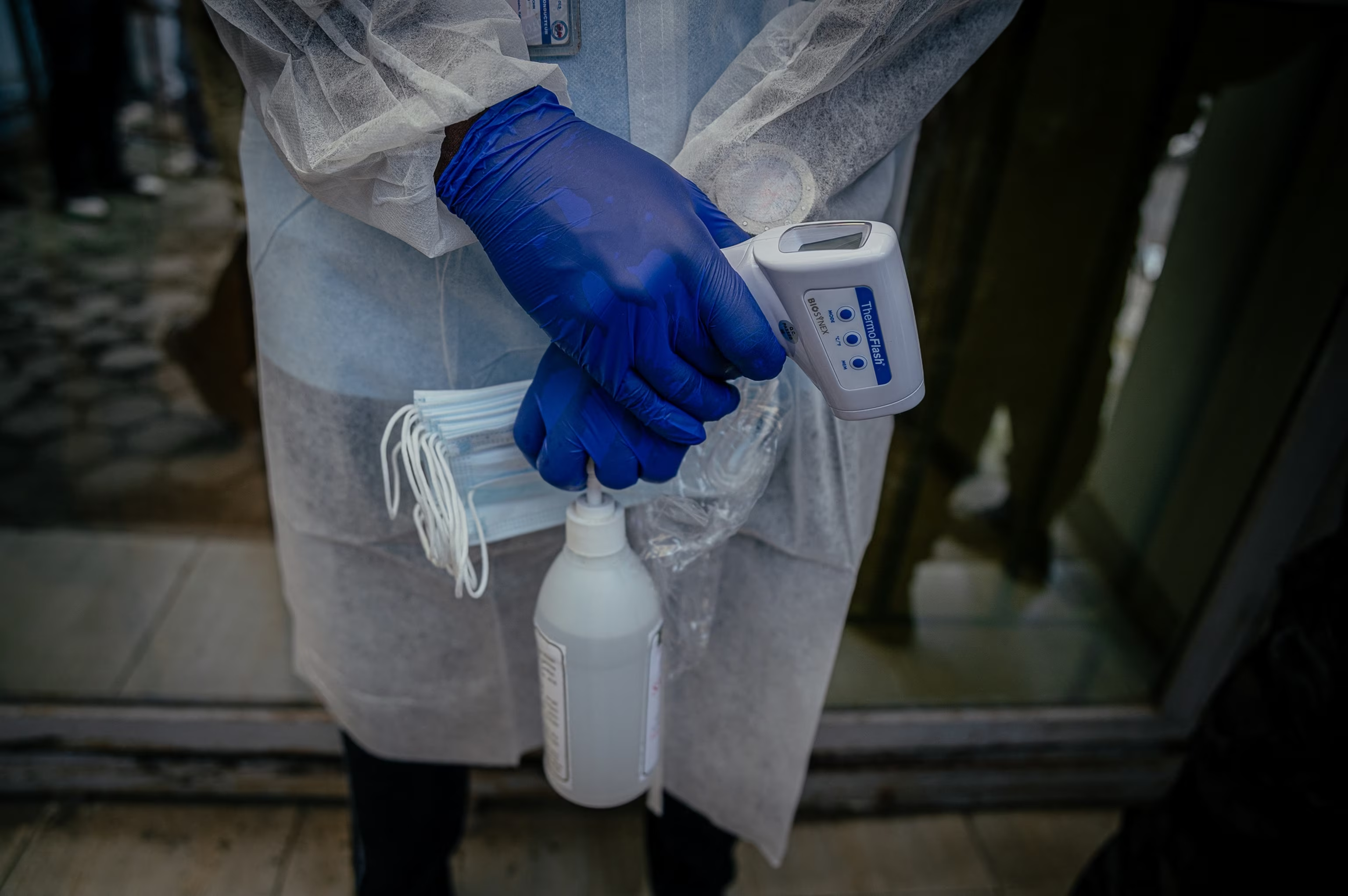
A health worker monitors visitors arriving at the Rodolphe Merieux Laboratory, National Biomedical Research Institute (INRB) in Goma, on May 19, 2026.Jospin Mwisha/AFP via Getty Images
"I'm an emergency room doctor. I don't want to find out who my team members are and encounter them for the first time as my shift commences,” Spencer remarked.
Spencer mentioned he was thinking about the American physician who recently contracted Ebola while treating patients in the Democratic Republic of the Congo.
"I sadly understand precisely what it’s like to be in that circumstance, to be immensely scared, to suffer from an illness where perhaps you've witnessed its repercussions and recognize that there isn’t a cure available. I'm contemplating him and his loved ones,” Spencer voiced.
When questioned regarding whether he would ever contemplate returning to an Ebola outbreak, he conveyed his willingness to provide assistance.
"I've already caused my family considerable distress. We'll observe what emerges from this, but I'm glad to be of service,” Spencer affirmed.
Sourse: abcnews.go.com