
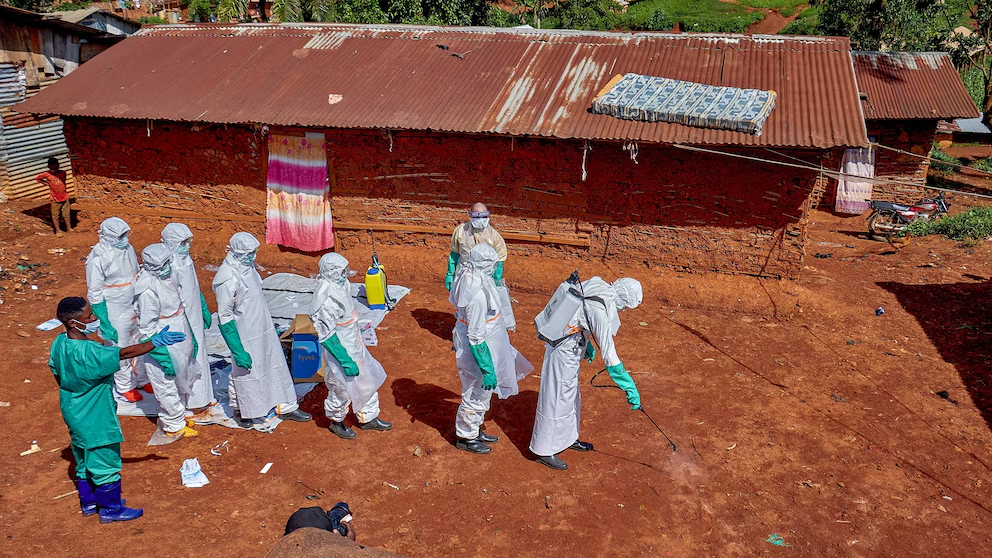
Red Cross workers wearing personal protective equipment walk in a formation as they disinfect the ground outside the house of an unidentified man who died of Ebola in Mongbwalu, Democratic Republic of Congo, May 24, 2026.Gradel Muyisa Mumbere/Reuters
As a devastating Ebola epidemic continues to advance across the eastern Democratic Republic of the Congo, medical professionals have detailed the difficulties they encounter in their efforts to curb the disease.
As of Monday, the government’s statistics and the U.S. Centers for Disease Control and Prevention reported 321 confirmed cases and 48 confirmed fatalities. Furthermore, health authorities indicate that at least 15 cases and one death have been confirmed in neighboring Uganda.
Several physicians informed ABC News that while the virus poses a significant danger, they are equally concerned about the prevalent fear within communities and the dissemination of inaccurate information.
Dr. Aymar Akilimali, a specialist in infectious diseases and the head of research at the DRC-based Medical Research Circle, elaborated to ABC News on the factors that can impede healthcare workers’ capacity to manage the outbreak.
"A virus can be combated and contained through scientific methodologies such as monitoring, swift diagnosis, medical care, investigation, and preventative actions," he stated. "Conversely, when a population experiences fear, distrusts medical facilities, or resides in an area lacking security, the response becomes considerably more intricate."
Akilimali underscored the range of complications that apprehension can engender.
"Individuals may postpone seeking medical attention, identifying certain contacts becomes challenging, and medical teams encounter restricted access to communities," he remarked.
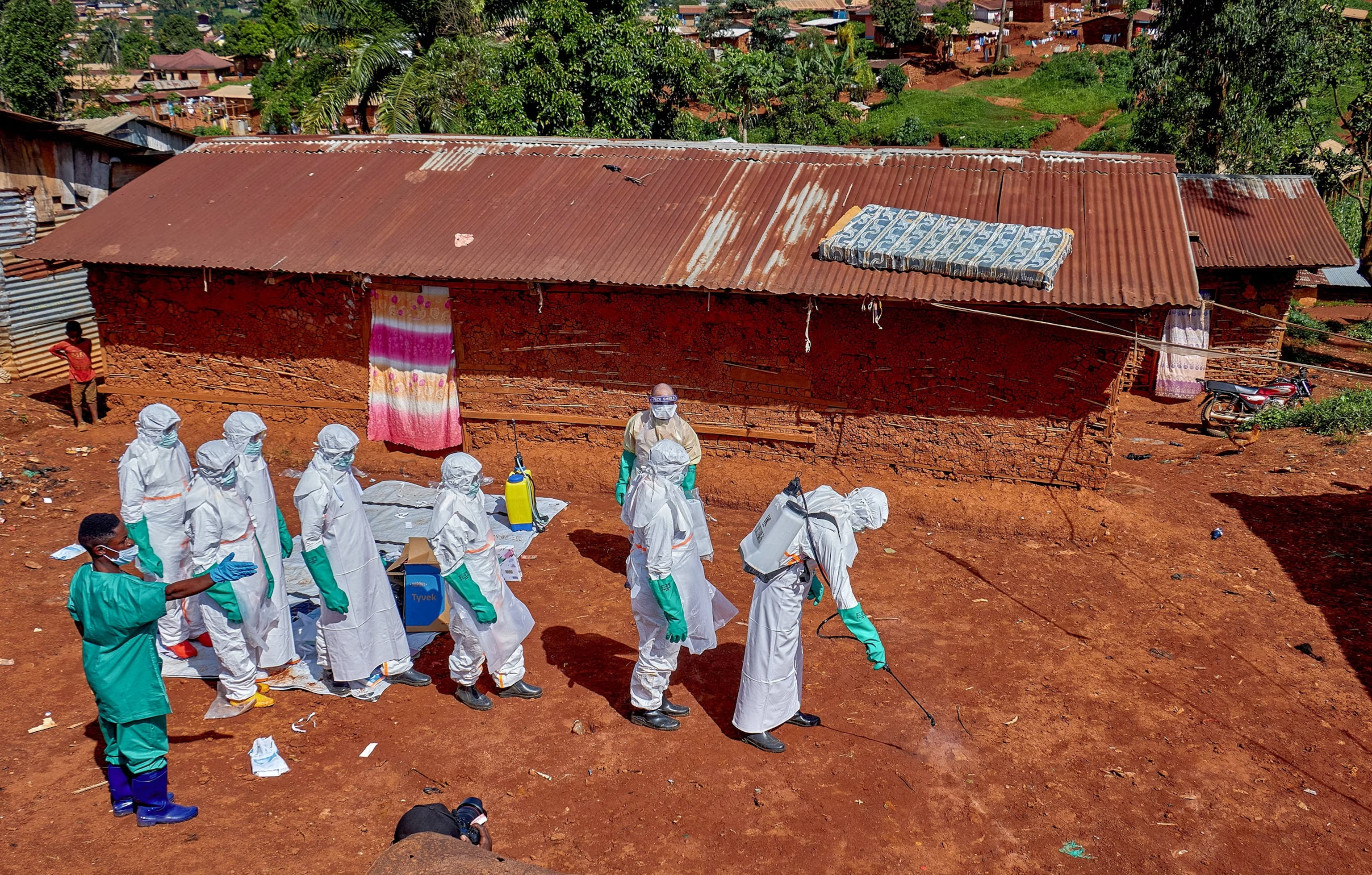
Red Cross workers wearing personal protective equipment walk in a formation as they disinfect the ground outside the house of an unidentified man who died of Ebola in Mongbwalu, Democratic Republic of Congo, May 24, 2026.Gradel Muyisa Mumbere/Reuters
Akilimali has been actively involved in Ebola outbreak containment efforts in Goma, a significant urban center in the eastern DRC. Streams of black volcanic rock traverse the city’s densely populated districts, and camps for displaced individuals mark the urban outskirts.
His responsibilities include documenting the transmission patterns of Ebola through populations over time, assessing strategies for prevention and control, and supporting community engagement initiatives. He admitted that the experience has been "stressful."
"Operating on the front lines means working in an environment characterized by apprehension, urgency, uncertainty, and above all, significant emotional strain due to the extreme contagiousness and lethality of this disease," Akilimali stated.
He described the Ebola treatment facilities, where numerous patients seek care, as being under strict supervision to prevent the disease’s propagation. DRC Minister of Communication Patrick Muyaya informed ABC News last month that these centers house at least 125 patients.
"Biosecurity is a paramount concern within these centers," Akilimali commented. "Every action, every interaction, and every procedure adhere to rigorous protocols designed to safeguard both patients and healthcare personnel."
Healthcare providers in these facilities don elaborate personal protective equipment for extended durations, which he noted can be challenging given the regional heat.
Akilimali recounted instances where individuals in certain communities disbelieve in the existence of the Ebola virus and subsequently disrupt response centers or attempt to retrieve the bodies of deceased relatives.
Dr. Amédée Prosper Djiguimdé, the chief of health for UNICEF in the DRC, concurred that community apprehension represents one of the most substantial obstacles to the response efforts.
"The spread of incorrect information and fear are also impacting containment measures, leading to resistance against disinfection protocols and a reluctance among some patients or their families to undergo isolation," Prosper Djiguimdé shared with ABC News.
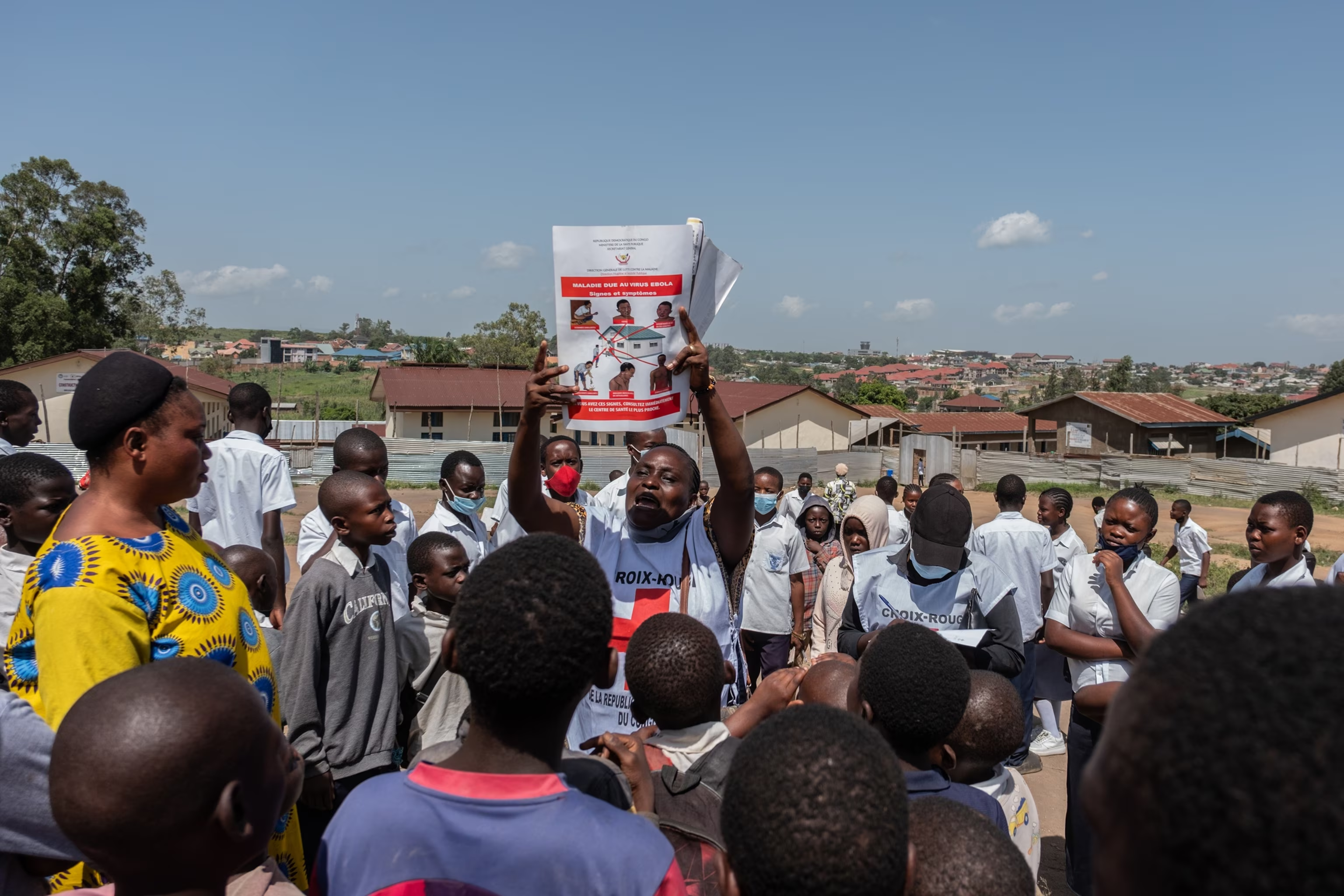
Vanny Birungi, a Red Cross volunteer, speaks to people during a public sensitisation campaign amid the Ebola outbreak in Bunia, Congo, May 25, 2026.Moses Sawasawa/AP Photo
He explained that UNICEF is directly collaborating with local leaders, clergy, women’s associations, transport workers, and health personnel to foster confidence within communities.
Prosper Djiguimdé indicated that UNICEF and its collaborators are actively listening to concerns and addressing misinformation by disseminating messages about Ebola "through established local networks rather than solely depending on top-down communication channels."
According to Akilimali, the most significant challenge for healthcare professionals stems from operating within a region plagued by armed conflict, population displacement, poverty, and precarious healthcare systems.
"In certain locales, the lack of security restricts communities’ access to medical services, and deteriorating infrastructure impedes swift contact tracing," he observed. "An additional challenge involves the psychological strain on healthcare workers. Numerous teams function under persistent stress, confronting the severity of the illness and even fatalities."
Prosper Djiguimdé added that logistical hurdles and insufficient mobility for field teams have been among UNICEF’s primary response difficulties.
He also pointed out deficiencies in the availability of protective gear, community resistance, delayed diagnoses, the transfer of suspected patients between facilities, and "suboptimal" efforts in tracking contacts.
On Monday, the International Rescue Committee noted that approximately only 20% of contacts are presently being traced and that the outbreak is "likely far more severe" than official figures suggest.
Akilimali further mentioned that some frontline healthcare providers harbor fears regarding the disease, particularly after witnessing the demise of some colleagues while tending to patients.
He indicated that these workers comprehend the risks associated with Ebola, but that working amidst a deadly outbreak "evokes complex emotions."
Akilimali stated that healthcare professionals are better equipped to address this Ebola outbreak compared to previous ones, thanks to the prompt provision of resources by international organizations and more robust surveillance strategies and preventative measures.
"Irrespective of the severity of [Ebola], local medical professionals remain deeply dedicated to safeguarding their communities," he asserted.
On Tuesday, U.S. Secretary of State Marco Rubio announced that the U.S. would resume its engagement with the global vaccine alliance Gavi in light of the ongoing outbreak.
He informed the Senate Foreign Relations Committee that the decision to re-engage was finalized a few weeks prior, following the Trump administration’s withdrawal of funding from Gavi last year.
Sourse: abcnews.go.com