

4:04U.S. President Donald Trump showcases a rendering of his envisioned $250 million White House ballroom during a meeting with NATO Secretary General Mark Rutte in the Oval Office on October 22, 2025, in Washington, DC.Alex Wong/Getty Images
On Thursday, the White House is anticipated to unveil the latest updates regarding the East Wing renovation initiative at a public session of the National Capital Planning Commission.
The NCPC, an entity formed by Congress to oversee federal projects in the Washington area, has scheduled the “East Wing Modernization Project” as an agenda item for its January 8 meeting, which will be accessible to the public and streamed live.
Last December, the National Trust for Historic Preservation initiated a lawsuit to halt the East Wing construction, alleging that the administration had bypassed the necessary review procedures for federal projects.
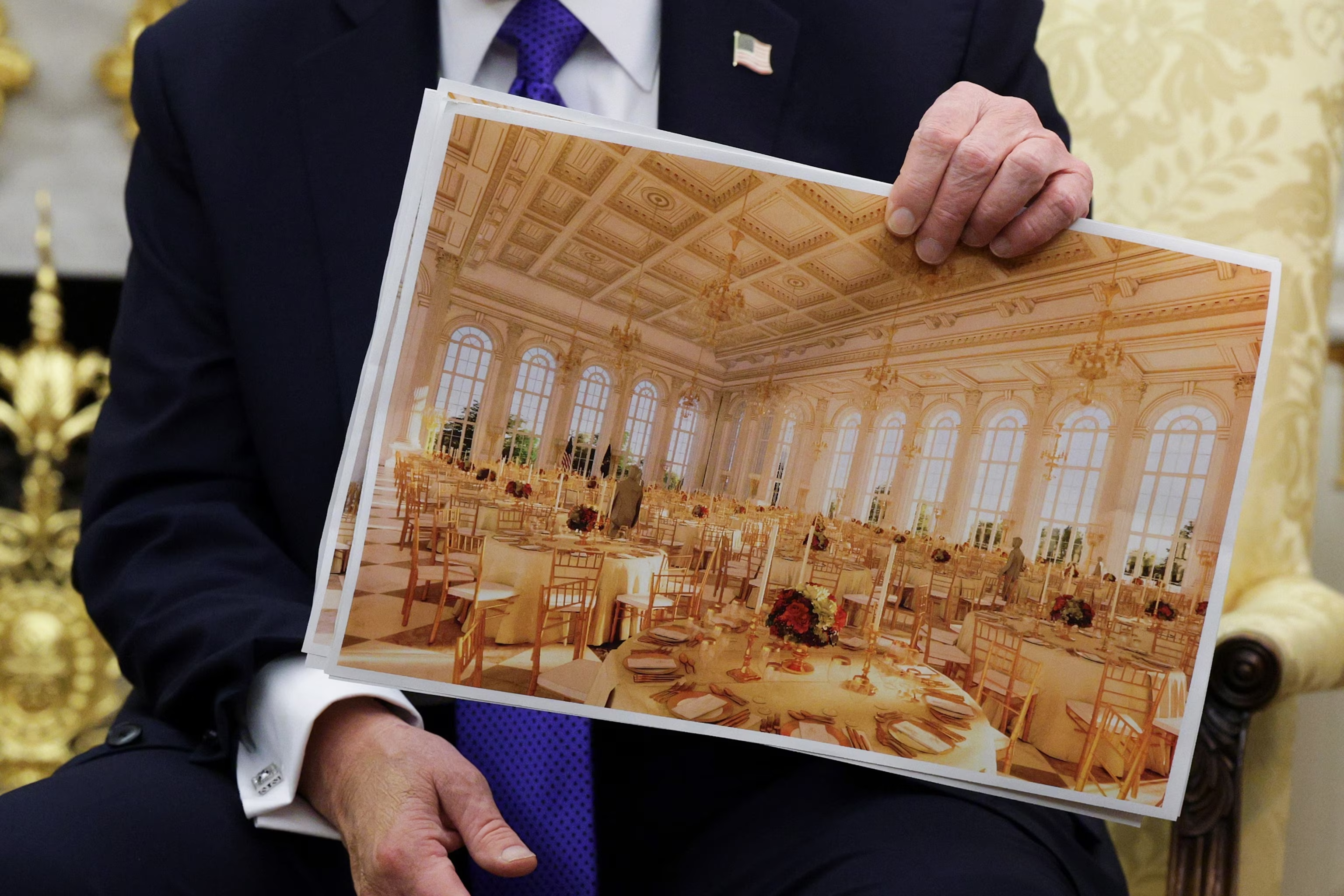
U.S. President Donald Trump showcases a rendering of his envisioned $250 million White House ballroom during a meeting with NATO Secretary General Mark Rutte in the Oval Office on October 22, 2025, in Washington, DC.Alex Wong/Getty Images
During a hearing related to that case, the administration informed a federal judge that it would present plans for the project to the appropriate federal oversight agencies.
The judge indicated he would conduct a follow-up hearing regarding the White House’s procedures in January and chose not to halt construction at that moment.
Shortly thereafter, the administration submitted formal applications and plans for the renovation to the NCPC and the Commission of Fine Arts, as confirmed by a White House official to ABC News at that time.
In its legal filing concerning the case raised by the preservation group, the Justice Department contended that without a permanent ballroom, the White House would be unable to adequately serve the president’s constitutional duty to "receive Ambassadors and other public Ministers."
"It is entirely appropriate, then, that the presidential residence and workplace be equipped for that purpose. Given contemporary needs, the White House is not," the Justice Department asserted.
Despite determining in late August that the White House ballroom would have "no significant impact" on the adjacent grounds, the National Park Service did acknowledge some negative effects of the project, reflecting concerns that have been subsequently echoed by preservationists, architects, and designers.
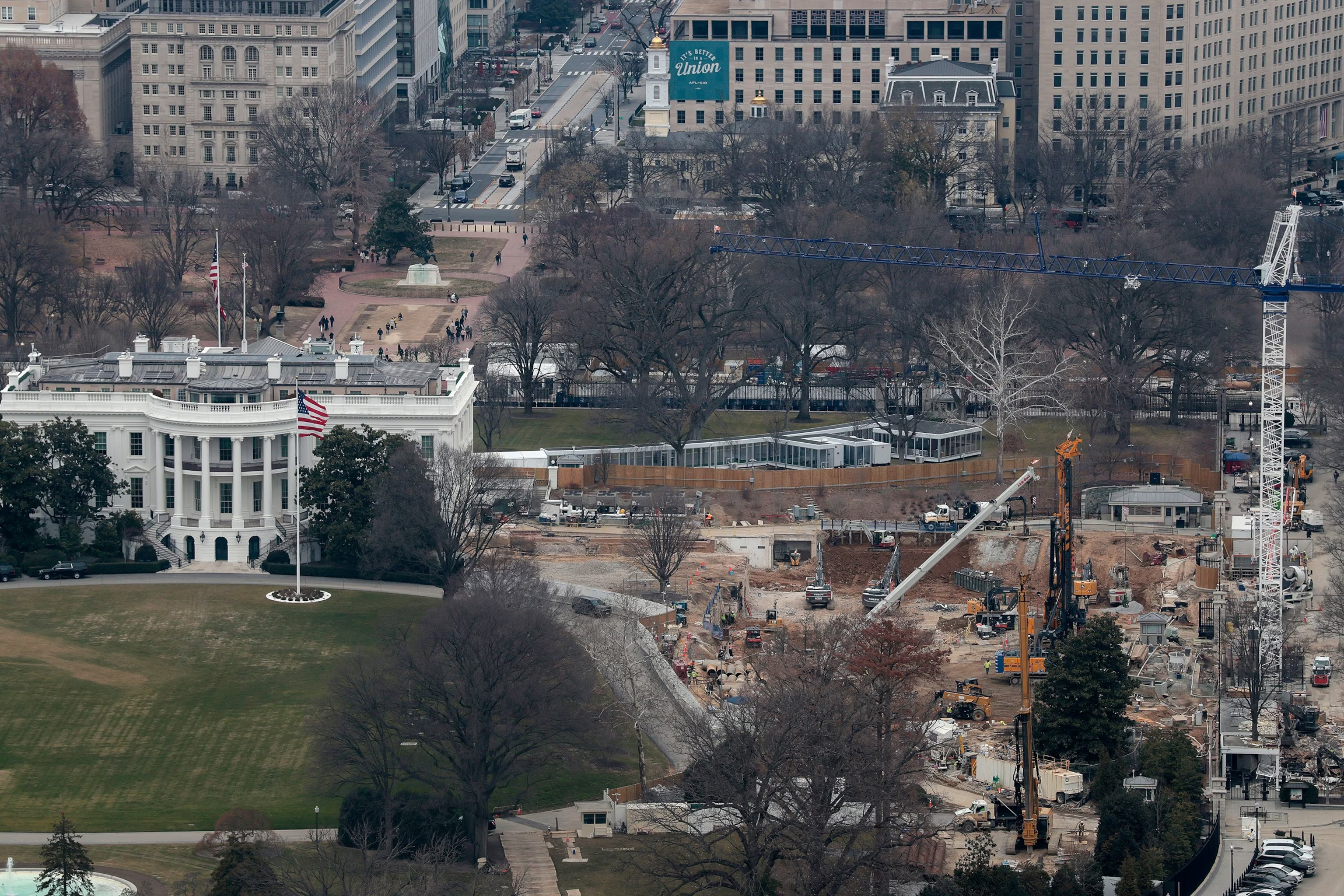
Demolition work continues where the East Wing once stood at the White House, Jan. 5, 2026.Heather Diehl/Getty Images
"The new structure’s increased footprint and height will overshadow the eastern section of the site, creating a visual imbalance with the more modestly scaled West Wing and Executive Mansion," the NPS report noted. "Adding a second story to the East Colonnade will further alter the setting, contrasting with the single-story design of the West Colonnade and changing the traditional spatial organization and sightlines of the grounds."
Such modifications, the report indicated, "will adversely alter the design, setting, and ambiance of the White House and grounds over the long-term," while the demolition of the East Wing would lead to "the permanent loss of a component that has been integral to White House operations since 1942."
Nonetheless, the "environmental assessment" — prepared by the deputy director of the park service and endorsed by its comptroller — concluded that the advantages of a new ballroom for state events would outweigh the negative impacts "by reducing dependence on temporary event infrastructure, minimizing wear on the grounds, and enhancing functionality for large gatherings."
The White House revealed the ballroom construction initiative in late July, and demolition commenced abruptly on the East Wing in late October, when workers were seen dismantling the segment of the White House that housed the first lady’s offices.
Sourse: abcnews.go.com