
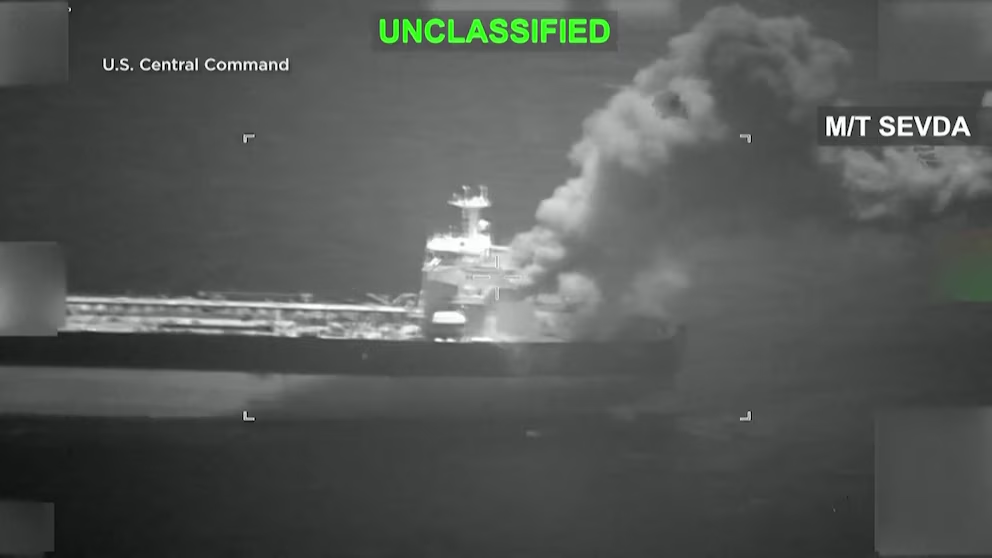
This screenshot, dated May 10, 2026, sourced from a video shared by U.S. Central Command on its X feed on May 8, 2026, purportedly depicts a strike against the Iranian tanker M/T Sevda. U.S. military sources report that American forces engaged and rendered inoperable two Iranian tankers attempting to breach the U.S. blockade of Iranian ports on May 8, 2026.U.S. Central Command Public Affairs/AFP via Getty Images
Mike Waltz, the U.S. representative to the United Nations, stated on Sunday that President Donald Trump is affording diplomacy with Iran “every opportunity” prior to resuming military actions, despite ongoing exchanges of fire between the two nations following Trump’s declaration of a ceasefire.
“[It is] the prerogative of President Trump, as commander-in-chief, to determine what constitutes a violation, when to revert to military engagement, or when to persist in giving diplomacy a chance,” Waltz conveyed to Martha Raddatz, co-anchor of ABC News’ “This Week.”
Trump asserted that the ceasefire with Iran remained intact, notwithstanding the skirmishes between Iran and the U.S. in the Strait of Hormuz, characterizing the strikes to ABC News as “just a love tap.” Iran, conversely, accused the U.S. of violating the ceasefire.
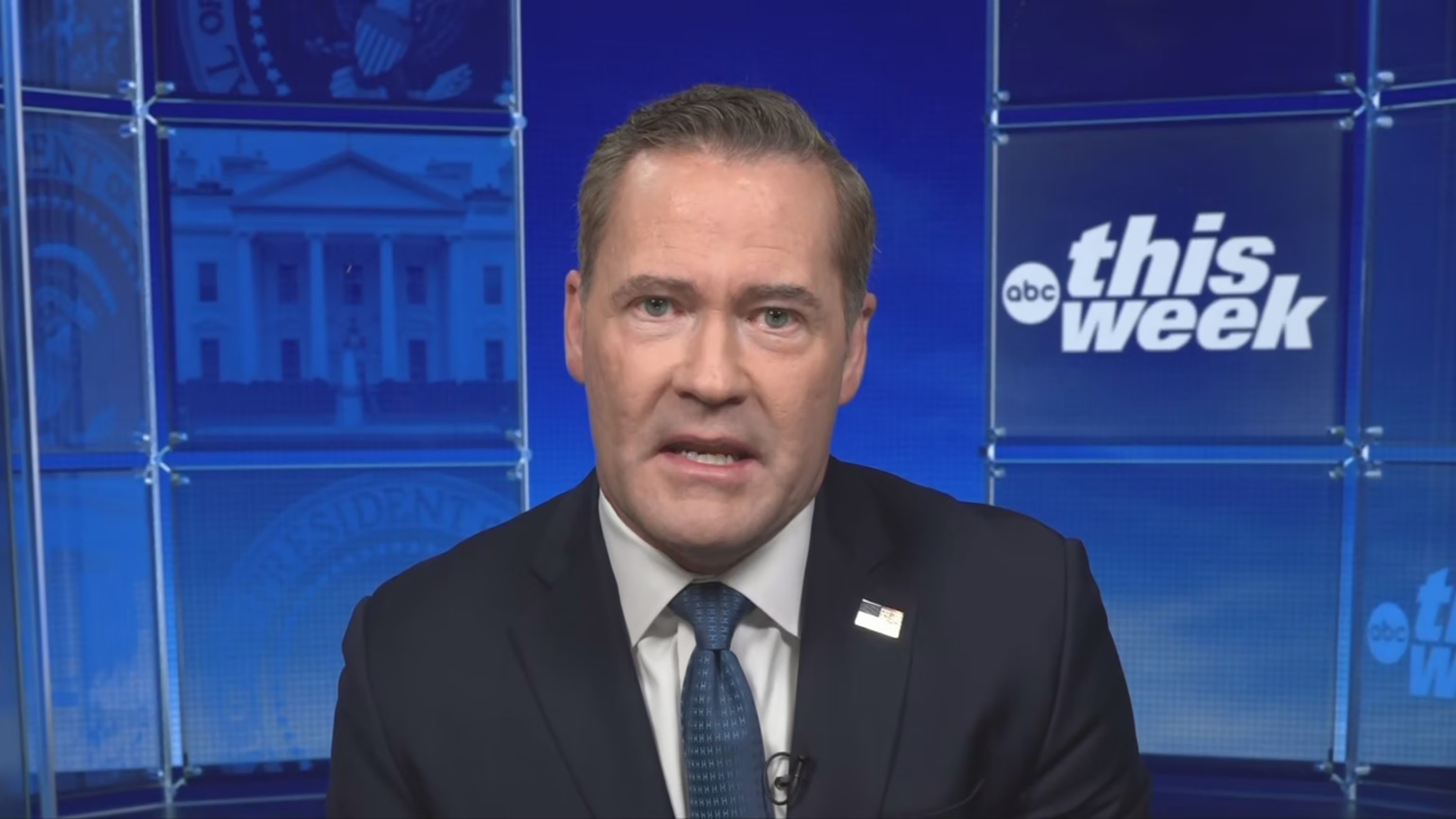
U.S. Ambassador to the United Nations Mike Waltz is seen on ABC News’ “This Week” on May 10, 2026.ABC News
Following weeks of inconclusive discussions, Waltz affirmed on Sunday that Trump intends to continue pursuing diplomatic solutions.
“When the mediators, in this instance Pakistan, request us … to provide this negotiation another opportunity before we revert to bombing Iran, then I consider that a wholly suitable choice for President Trump to undertake,” Waltz commented. “He is exhausting every possible avenue of diplomacy before resorting to hostilities.”
Retired Adm. William McRaven, who led U.S. Special Operations Command at the time of Osama Bin Laden’s death 15 years prior, appeared on “This Week” after Waltz, asserting it was evident the ceasefire had been breached.
“Of course, the ceasefire has been compromised, Martha,” McRaven stated. “Now, I comprehend Ambassador Waltz’s stance. Ultimately, this revolves around ideally persuading the Iranians to consent to the proposal … the reality is, when active engagement is underway, a ceasefire is no longer in effect.”
According to sources with knowledge of the matter, the U.S. presented Iran with a proposal entailing a phased reopening of the Strait of Hormuz by Iran and a corresponding relaxation of the U.S. blockade over a 30-day timeframe. While the current iteration of the one-page document lacks provisions concerning Iran’s nuclear ambitions, the implicit expectation is that the two nations would engage in negotiations regarding the handling of Iran’s enriched uranium during this period.
The Trump administration has consistently underscored that preventing Iran from enriching uranium to a level conducive to the creation of a nuclear weapon constitutes a pivotal objective of the conflict. Iran has asserted its disinterest in developing nuclear weaponry.
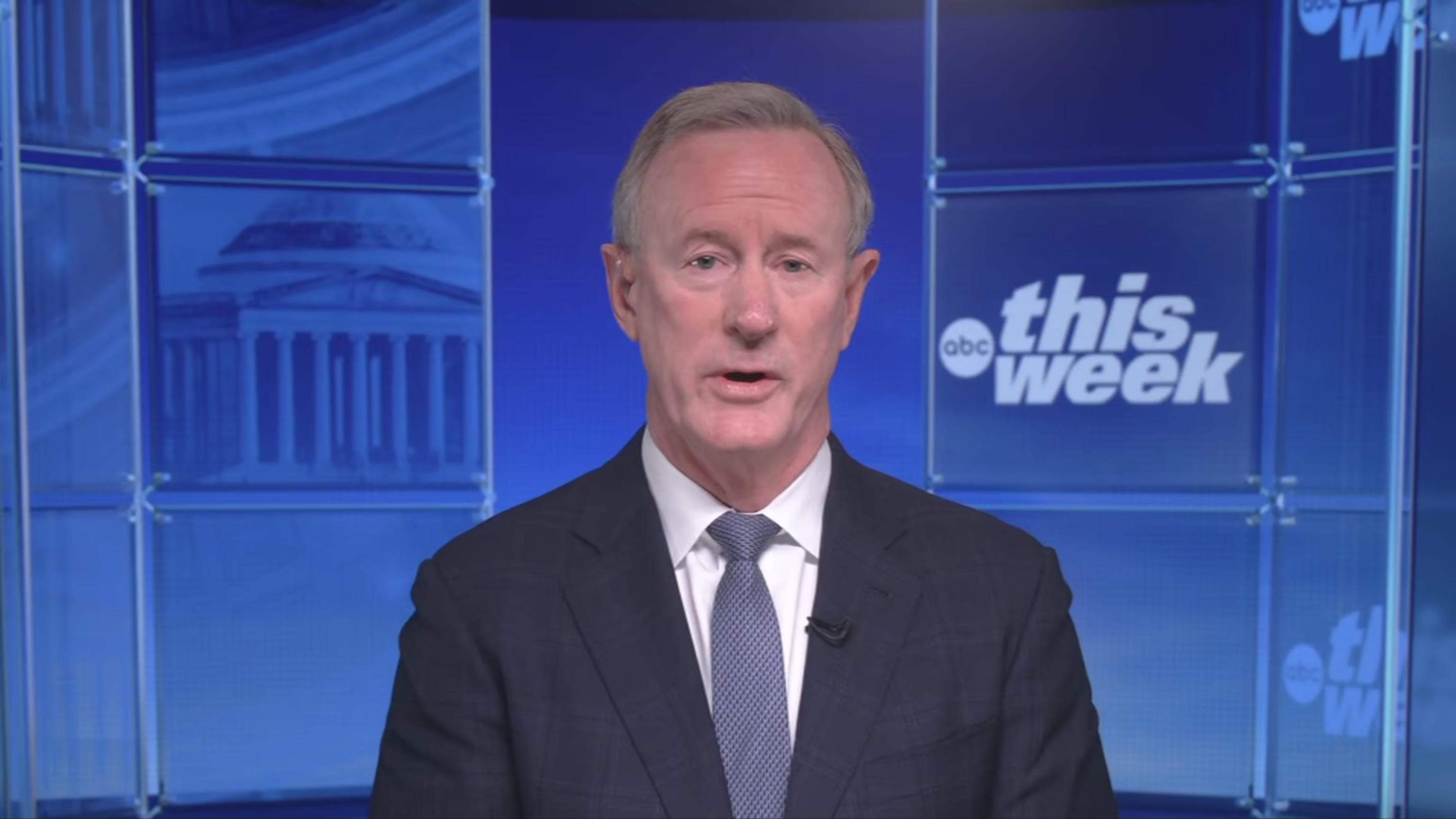
Retired Adm. William McRaven, formerly in command of U.S. Special Operations Command, is featured on ABC News’ “This Week” on May 10, 2026.ABC News
Iranian state media conveyed on Sunday that Tehran had communicated its reply to the U.S.-proposed framework outlining a potential conclusion to the conflict via Pakistani intermediaries, though specific details were withheld.
McRaven remarked on Sunday that he deemed 30 days an insufficient duration for negotiating a substantial nuclear accord.
“The negotiation of the JCPOA spanned over two years. Thus, the notion that we can somehow negotiate a highly intricate nuclear agreement with the Iranians within 30 days strikes me as excessively compressed,” McRaven observed, alluding to the 2015 Iran nuclear agreement, formally designated the Joint Comprehensive Plan of Action, negotiated during the Obama administration.
Raddatz also questioned Waltz regarding Trump’s ultimatum to Iran several weeks prior, demanding the opening of the Strait of Hormuz within 48 hours under threat of destruction to its largest power facilities. Trump did not actualize that threat, and the strait remains obstructed, causing global oil prices to surge in recent weeks.
Waltz defended the timeline by censuring Iran’s impediment of the strait, stating his advocacy for a U.N. resolution to preclude any nation from obstructing shipping in an international waterway.
“I believe we should consider a broader perspective — 50 days to address a problem spanning 50 years,” Waltz suggested. “This isn’t the inaugural instance of Iran threatening or executing such actions … consequently, we are presently advocating for another U.N. resolution stipulating that Iran cannot perpetrate this. No nation possesses the right to emulate Iran’s actions in international waterways.”
Sourse: abcnews.go.com