
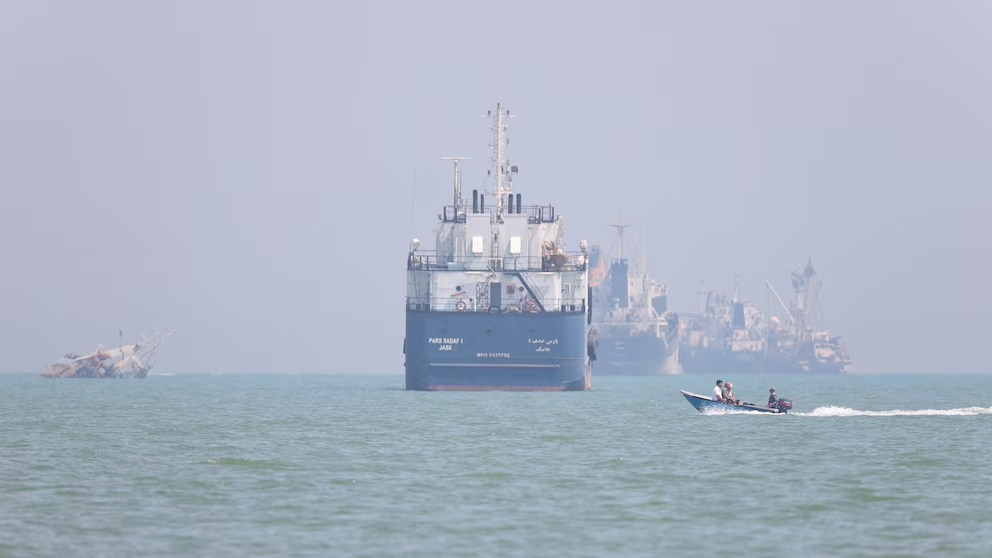
Vessels are seen in the Strait of Hormuz near the beach of Bandar Abbas, Iran, on June 11, 2026.Amirhosein Khorgooi/isna via Reuters
U.S. Ambassador to the United Nations Mike Waltz stated that while he did not wish to preempt an announcement, President Donald Trump still “maintains every intention for” the preliminary accord for peace with Iran to be finalized on Sunday.
“How will this [signing] proceed, and how confident are you that it will occur today?” inquired ABC’s “This Week” co-anchor Martha Raddatz.
“Well, the president is fully committed to its realization. I will defer the specific details and timing to the White House. The Iranians are exceptionally challenging negotiators, compounded by the fact that they are encountering significant difficulties in obtaining directives from their supreme leader, and they are not always in complete accord within their own delegation,” Waltz commented.
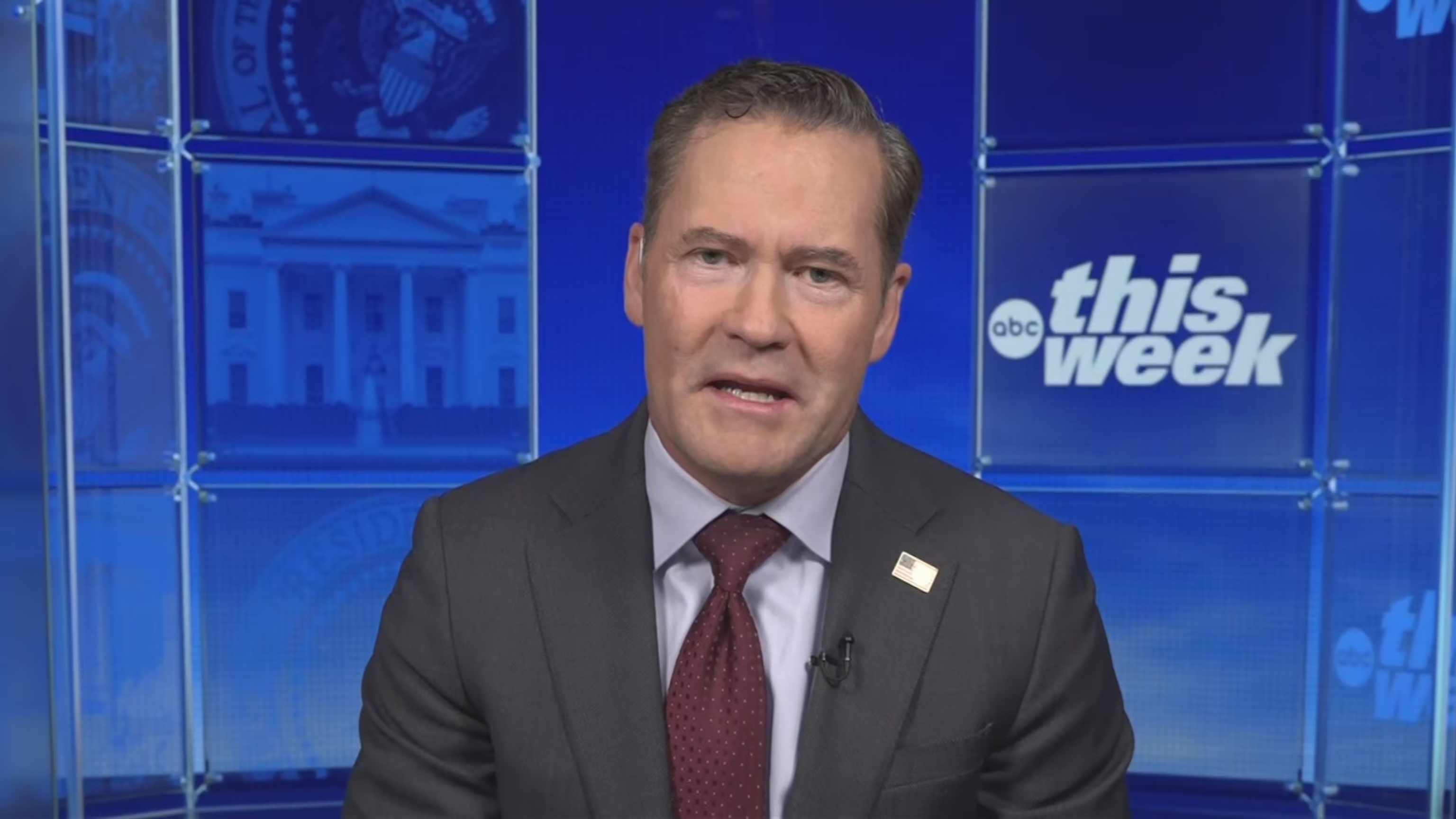
U.S. Ambassador to the United Nations Mike Waltz appears on ABC News’ “This Week” on June 14, 2026.ABC News
Nevertheless, the ambassador emphasized that Trump and the U.S. negotiating team are “assured” of the deal’s consummation.
“They are fully determined to conclude this today,” he stated.
U.S. officials and Iranian officials have indicated a potential agreement to reopen the Strait of Hormuz and address outstanding matters concerning Iran’s nuclear program over a 60-day interval. However, while Trump suggested a signing ceremony would take place on Sunday, Iran has not corroborated this schedule; a representative for Iran’s foreign ministry indicated on Saturday that there was a strong likelihood the memorandum of understanding would be finalized in the upcoming days.
The precise terms of the agreement between the U.S. and Iran remain unclear. A senior administration official informed reporters on Friday that the accord would involve reopening the Strait of Hormuz, lead to “the dismantling” of Iran’s nuclear program, and result in the U.S. receiving Iran’s highly enriched uranium.
“The highly enriched uranium must be removed. Their enrichment capabilities must be abandoned. Their backing of terrorist proxies must cease,” Waltz remarked on “This Week.”
“And they have consented to this?” Raddatz interjected.
“And all of these elements, they are — they are agreeing to them,” Waltz confirmed, though he also pointed out that the agreement is merely a memorandum of understanding and “many of these particulars will be resolved as we proceed into the subsequent phase of negotiation.”
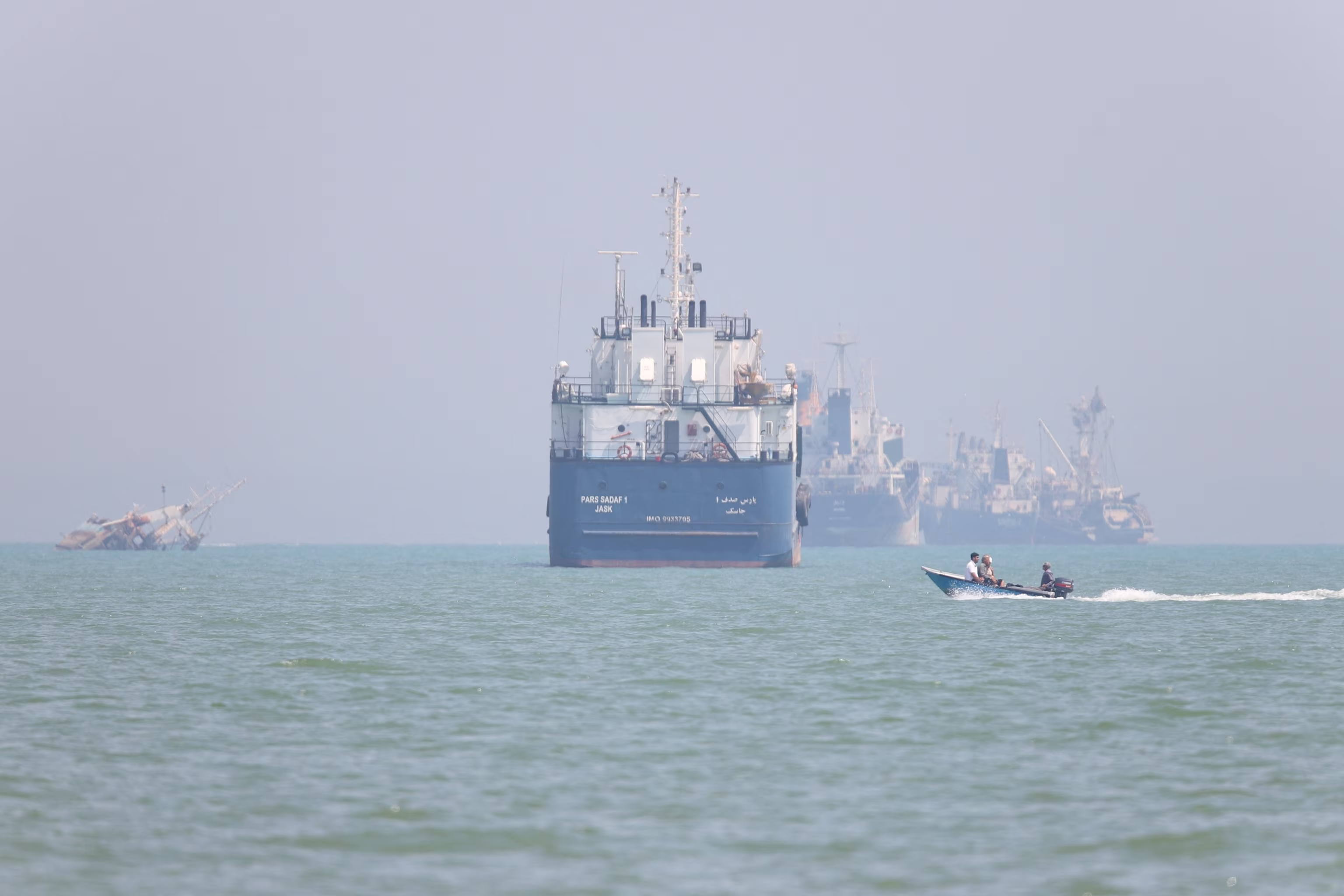
Vessels are seen in the Strait of Hormuz near the beach of Bandar Abbas, Iran, on June 11, 2026.Amirhosein Khorgooi/isna via Reuters
Waltz highlights ‘significant disparities’ in Obama accord
Waltz indicated that there exist “some very substantial distinctions” between the current accord under development and the 2015 Iran nuclear deal, officially termed the Joint Comprehensive Plan of Action.
“Firstly, as the vice president has consistently stated, this will operate on a principle of ‘pay for performance,’ regarding any released funds or sanctions relief. There will be no upfront cash, so to speak,” Waltz explained. “And secondly, the entire focus is on verification. There were considerable deficiencies in the JCPOA and the Obama nuclear deal concerning actual verification.”
“The Iranians have a history of circumventing the terms. There were no provisions for anytime, anywhere inspections of their facilities,” he elaborated. “The Iranians could prolong proceedings. They could select which inspectors they approved or disapproved. And most crucially, Martha, the Iranians could designate sites as military facilities, which then rendered them inaccessible.”
Without access to the memorandum’s specifics, it is impossible to definitively ascertain how the agreements compare. Under the 2015 accord, the U.S., European nations, and the United Nations committed to lifting nuclear-related sanctions, but only after Iran undertook verifiable actions toward implementing the agreement. Six months after the deal was signed, the U.N.’s International Atomic Energy Agency certified that Iran had fulfilled its initial obligations, and sanctions were subsequently lifted. The 2015 agreement also incorporated verification mechanisms to ensure Iran’s adherence to its terms.
“I can assure you that we will not permit these enormous loopholes,” Waltz asserted.
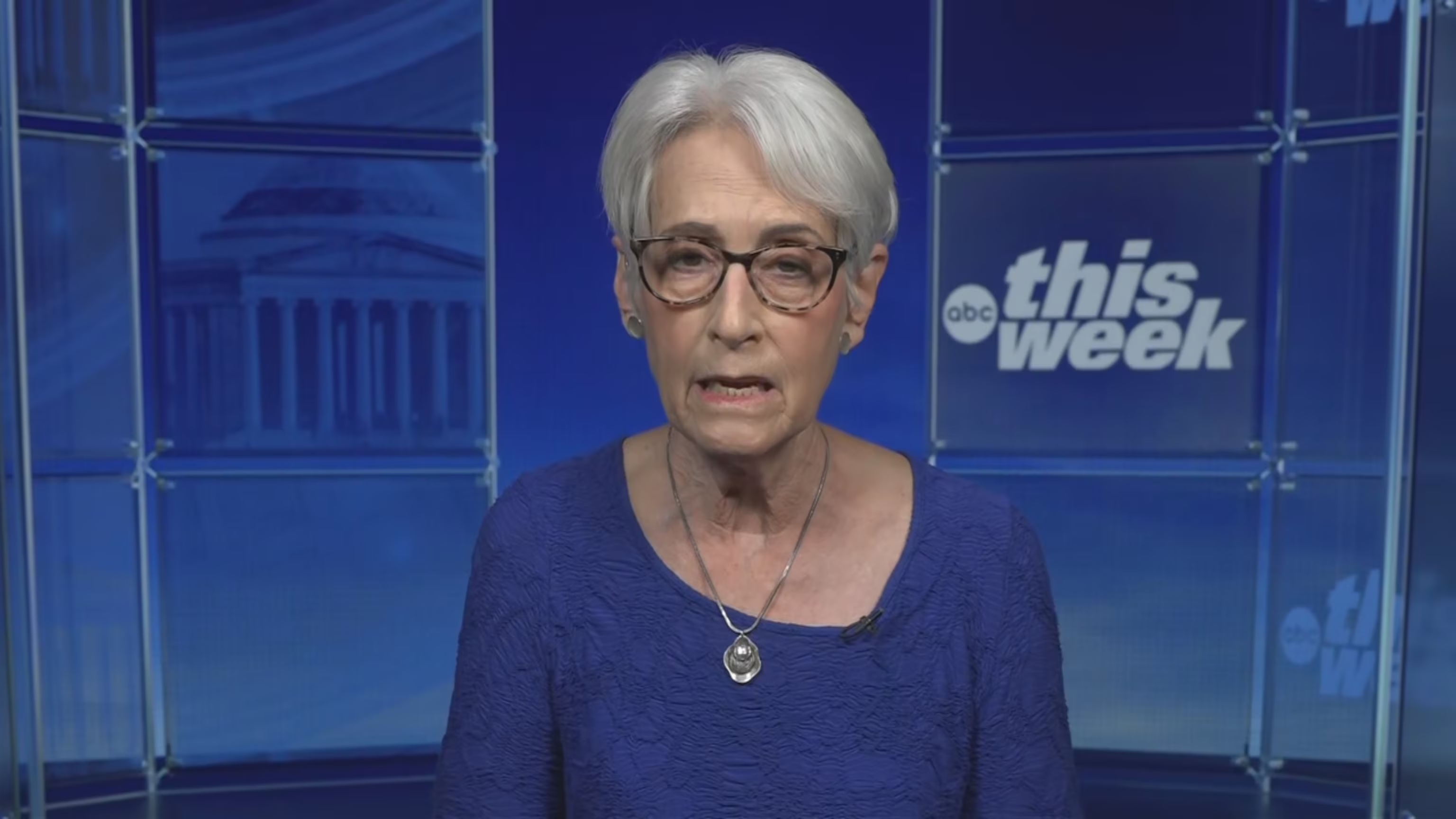
Wendy Sherman, former U.S. under secretary of State, appears on ABC News’ “This Week” on June 14, 2026.ABC News
JCPOA negotiator Sherman deems timeframe unrealistic
Former Deputy Secretary of State Wendy Sherman was among the lead negotiators for the Obama administration during the 2015 discussions. In a separate interview on “This Week,” she predicted that any agreement Trump might reach “will likely bear a resemblance” to the JCPOA.
“However, we are in a vastly different situation, as we did not possess nearly a thousand pounds of 60% highly enriched uranium, which is a considerable concern,” Sherman stated.
Sherman expressed doubt regarding the feasibility of the proposed timeframe for the subsequent negotiation phase.
“I can guarantee that they will not accomplish all of this within 60 days. Some of my colleagues negotiated what was referred to as the Joint Plan of Action, which was a temporary agreement intended to provide us with six months to reach a final resolution. It took us 18 months. This is an extremely intricate negotiation,” she remarked.
From her perspective, Sherman noted that the regime in Iran currently has “more hardliners in positions of power” than in the past.
“Iran feels quite self-assured. It recognizes that the Strait of Hormuz now serves as a point of leverage for them. They believe they have outlasted the United States of America. They are feeling very proud and very confident. I anticipate this will be a highly demanding negotiation, though Iran does require economic assistance,” she said.
Regarding the Strait of Hormuz – the vital waterway in the region through which approximately 20% of the global oil supply passes – Iran’s Foreign Minister, Abbas Araghchi, stated in an interview with Iranian state television on Friday that control over the strait will be different once it is reopened.
“Services within the Strait of Hormuz will incur a charge, and the future administration of the strait will differ from its past management,” Araghchi commented.
Waltz declared that imposing any form of toll is “unacceptable” and “frankly, unlawful.”
“This is clearly established in the U.N. Convention on the Law of the Sea. It is unequivocally stated in numerous resolutions that we recently passed with a record number of countries supporting them, reinforcing this position. It is entirely unacceptable,” he stated. “And frankly – frankly, even the Chinese, Martha, during the summit with Xi and President Trump, and in multiple subsequent discussions, have made it clear to the Iranians that this is unacceptable conduct.”
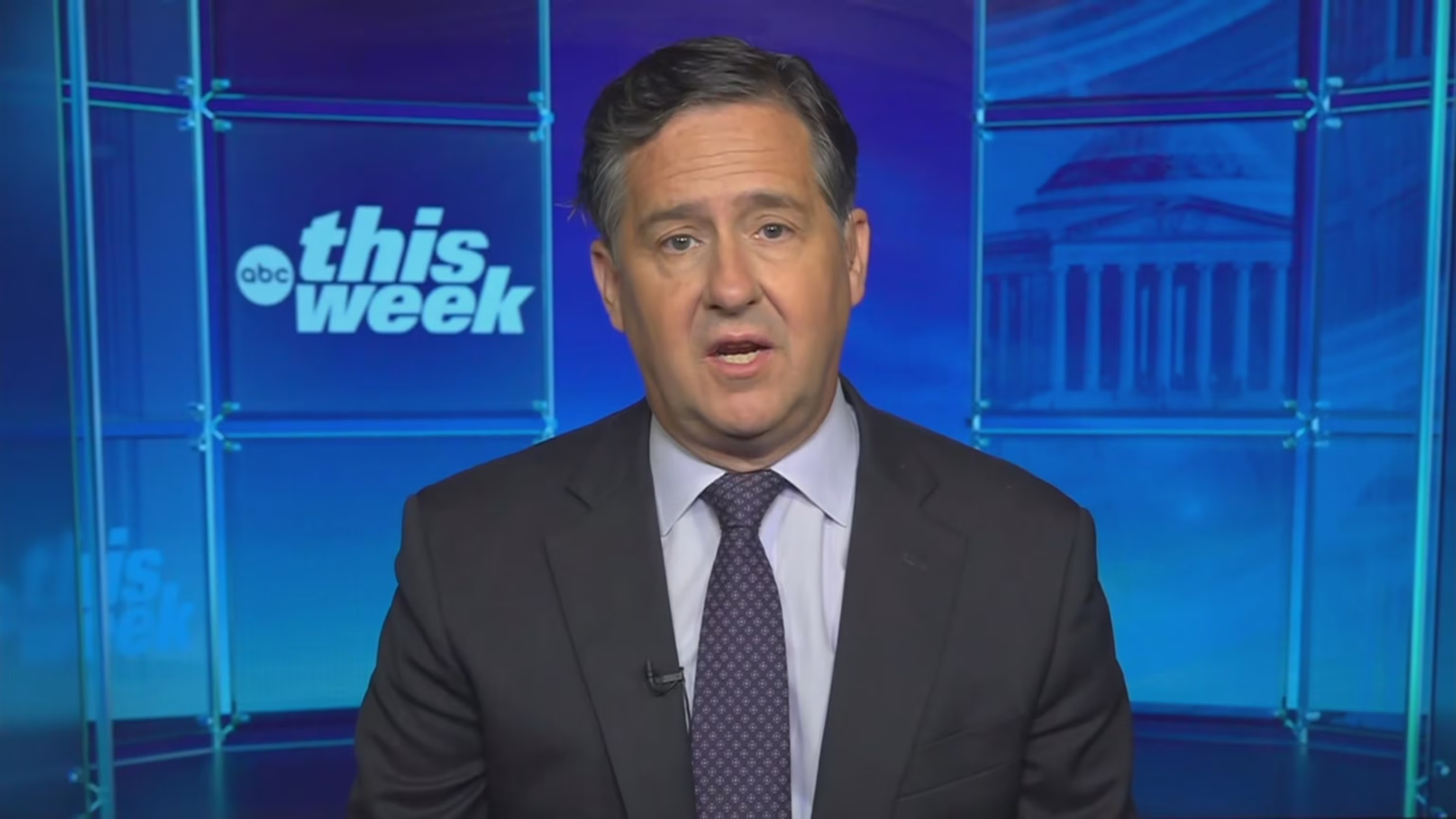
Oil industry expert Bob McNally, founder and president of Rapidan Energy Group, appears on ABC News’ “This Week” on June 14, 2026.ABC News
Oil expert suggests prices could still escalate if strait is reopened
Oil industry specialist Bob McNally, the founder and president of Rapidan Energy Group, informed Raddatz in a separate interview that once an agreement is reached and the strait is reopened, “we should hold out hope that oil can flow.”
Oil prices have receded from their peak in April, yet gasoline and diesel prices remain nearly 40% higher since the onset of the conflict.
However, McNally cautioned that oil and gas prices might still trend upward later in the summer, even with the reopening of the strait.
“The risk is, and here is the risk, even if Hormuz is reopened, and we observe those tankers navigating in the coming weeks – and we will likely witness lower gasoline prices in the forthcoming weeks – there is a possibility that this deficit will persist, so to speak, through July and August, and we could still experience escalating prices, upward pressure on prices later this summer, due to the magnitude of the void that has been created in the global oil market,” McNally stated.
And should this endeavor fail, he warned: “It would represent extremely unfavorable news for the American economy, the global economy, and for our consumers, if we do not achieve a deal and Hormuz remains closed throughout the summer.”
Sourse: abcnews.go.com