
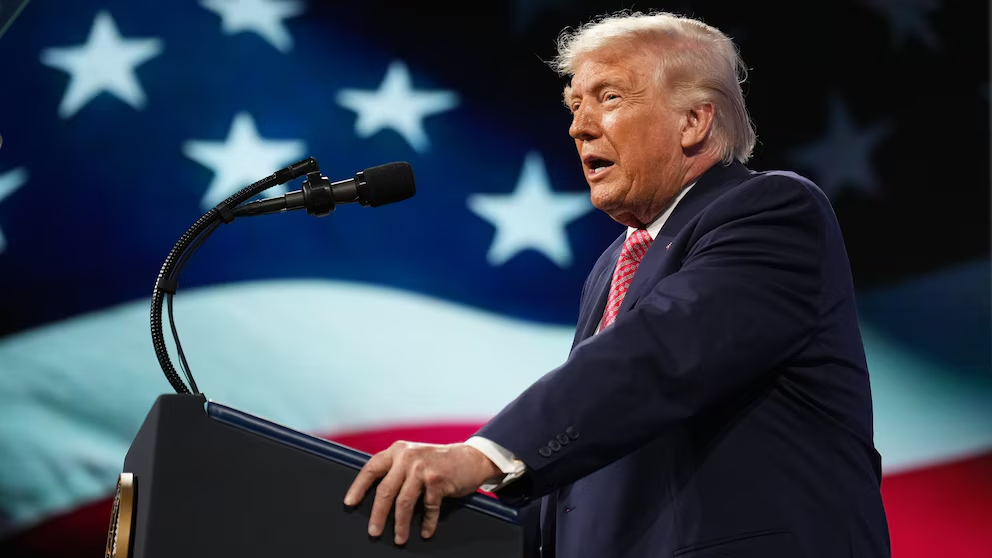
President Donald Trump delivers remarks at the Future Investment Initiative Institute’s conference, March 27, 2026, in Miami Beach, Florida. Mark Schiefelbein/AP
Almost two years following the Supreme Court's significant 2024 determination granting President Donald Trump extensive protection from legal action, the decision's wider influence on the U.S. government is starting to materialize as Trump and his legal team repeatedly cite the case in an endeavor to persuade the justices to sanction broad executive authority.
"It's not accidental; it's a deliberate strategy," commented James Sample, a constitutional expert at Hofstra Law and ABC News legal contributor. "They aren't merely mentioning a legal precedent; they're creating a framework."
An ABC News analysis of the singular 29 Trump emergency applications to the Supreme Court during his second term revealed that close to a third specifically referenced Chief Justice John Roberts' majority viewpoint in the immunity matter, Trump v. U.S.
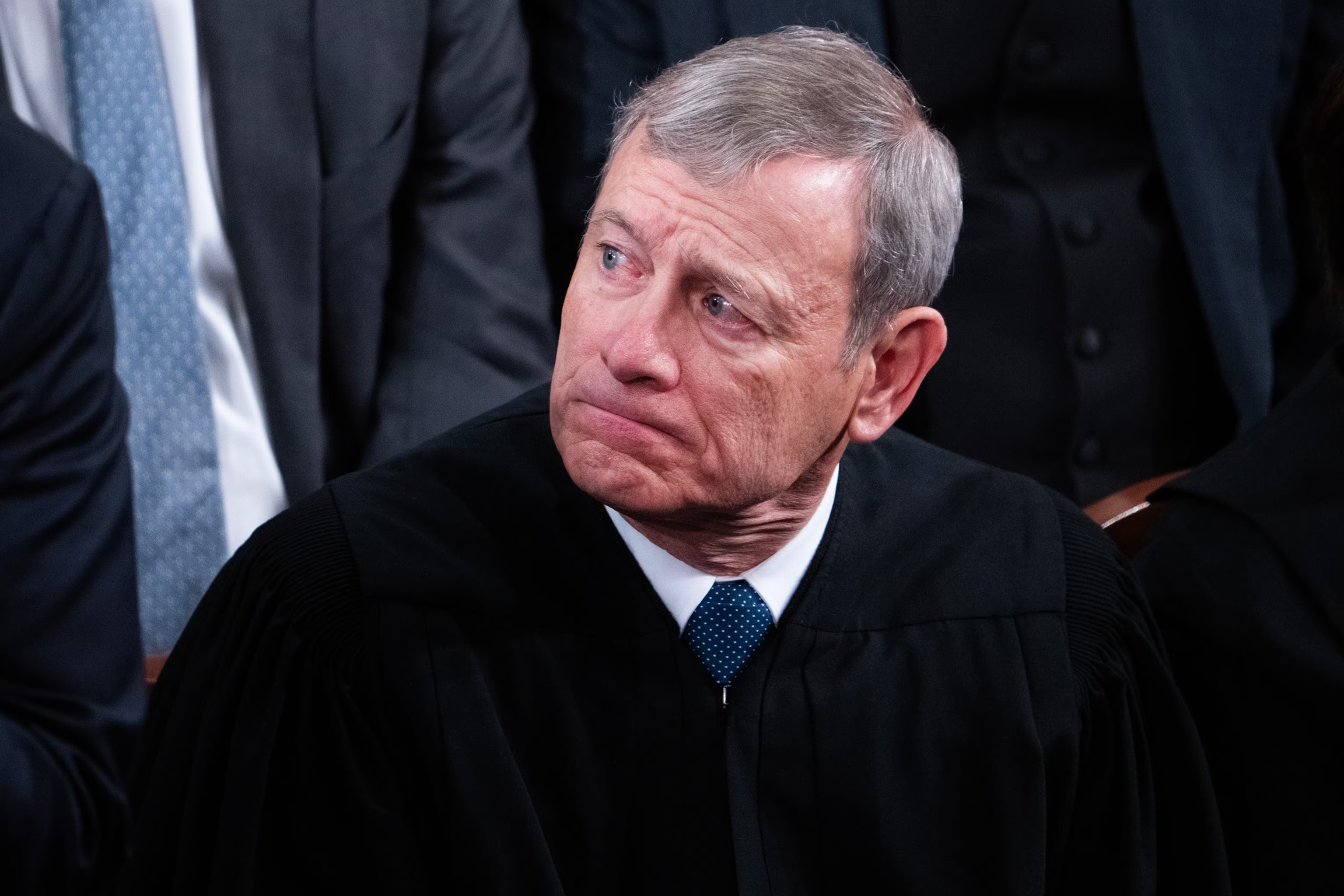
Supreme Court Chief Justice John Roberts is present at President Donald Trump’s State of the Union speech in the House Chamber of the Capitol, Feb. 24, 2026.Tom Williams/CQ-Roll Call via Getty Images
Trump’s lawyers allude to portions of the court's immunity ruling no less than 21 times to argue for "unfettered" presidential power to dismiss employees within the executive branch; unchallengeable command over "issues concerning terrorism, commerce, and immigration;" and total power as commander-in-chief to send troops to support domestic law enforcement.
The Constitution "establishes a vigorous, self-governing executive, not a subordinate one," Solicitor General John Sauer conveyed to the court, quoting Roberts, in a September request to permit Trump to remove Federal Reserve Board Governor Lisa Cook.
"These aren’t arbitrary references," Sample remarked. "The White House Counsel's Office has thoroughly examined that opinion, and they’re utilizing it systematically."
The court is currently developing a verdict in the Cook matter but has generally accepted the administration's expansive interpretation of presidential authority to remove federal personnel and oversee agencies.
However, since January 2025, the justices have not cited Trump v. U.S. to legitimize any of their decisions favoring the Trump administration, prompting some court observers to question why the conservative majority has refrained from expressly mentioning its own precedent.
"We simply don't yet grasp the implications of this case, and it will be up to a future Supreme Court to determine its scope," stated Sarah Isgur, SCOTUSblog editor and ABC News legal contributor.
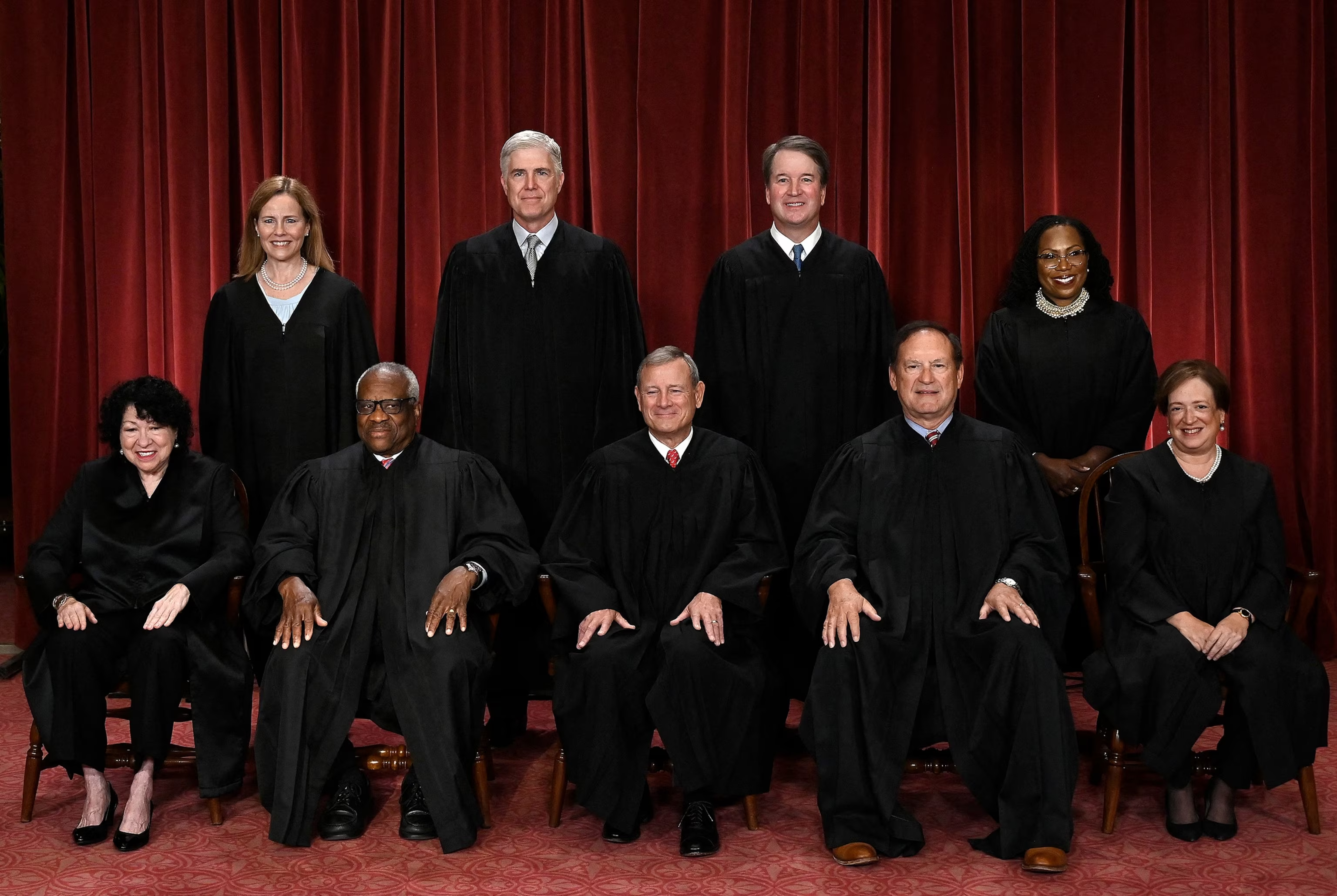
Justices of the Supreme Court pose for their official portrait at the Supreme Court, Oct. 7, 2022. (Seated from left) Associate Justice Sonia Sotomayor, Associate Justice Clarence Thomas, Chief Justice John Roberts, Associate Justice Samuel Alito and Associate Justice Elena Kagan, (Standing behind from left) Associate Justice Amy Coney Barrett, Associate Justice Neil Gorsuch, Associate Justice Brett Kavanaugh and Associate Justice Ketanji Brown Jackson.Olivier Douliery/AFP via Getty Images
On several occasions, Trump’s appeals predicated on the immunity decision have been denied.
The court chose not to embrace the Trump administration’s assertions in April 2025 that the deportation of Kilmar Abrego Garcia was intertwined with the president’s "significant foreign relations duties," which Roberts had suggested in the immunity decision were not subject to judicial scrutiny.
A majority of justices also overruled Trump’s contention that a lower court’s impediment to his National Guard deployment in Chicago encroached on fundamental constitutional powers as commander-in-chief, as outlined in Roberts’ opinion concerning immunity.
"They have been establishing a more potent president — possessing more absolute control over the executive branch and its workforce," Isgur stated regarding the high court’s conservative majority, "but simultaneously a less powerful presidency that must revert to Congress to enact any meaningful legal changes."
Some legal experts point out that the Trump v. U.S. ruling also pioneered the concept that the president holds exclusive authority to enforce federal law and unmonitored prosecutorial judgment — an endorsement that some believe has had, at the very least, a psychological effect on the president and his staff.
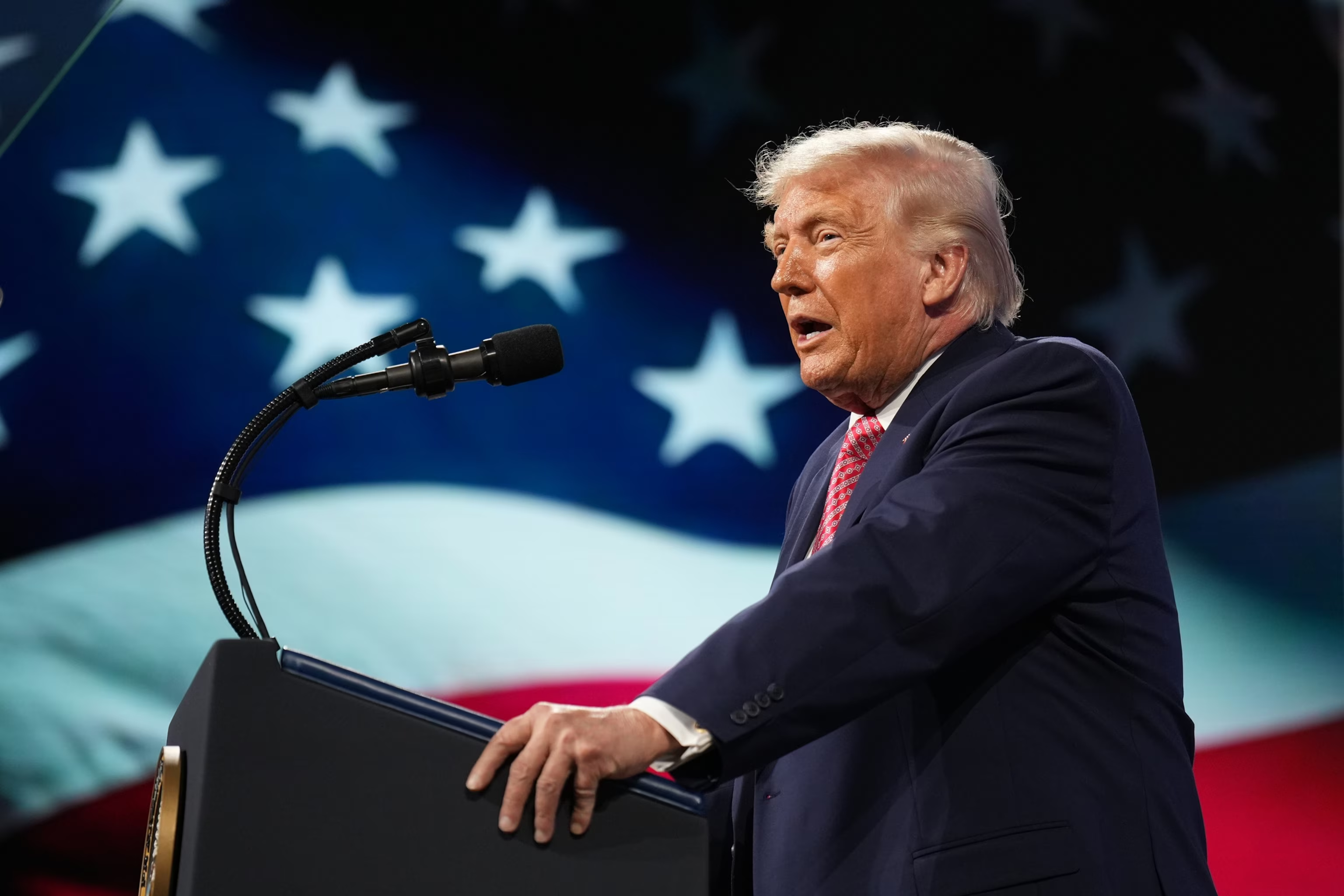
President Donald Trump speaks at the Future Investment Initiative Institute’s summit, March 27, 2026, in Miami Beach, Florida.Mark Schiefelbein/AP
Roberts’ opinion codifies the principle that "investigating and prosecuting crimes is fundamentally an executive function" and that the president has "sole authority and unrestricted discretion to determine which offenses to investigate and prosecute."
"The Justice Department will likely utilize [the ruling’s] examination of the sole power over prosecution and investigation to stretch the limits of this discretion," wrote Harvard Law professor and former assistant attorney general during the George W. Bush administration Jack Goldsmith in a recent law journal entry.
Trump has positioned himself as the nation’s chief law enforcer during his second term, personally instructing the attorney general and other senior officials on whom to investigate and whom to prosecute.
Trump has advocated for indictments against many of his perceived adversaries, including former FBI Director James Comey, New York Attorney General Letitia James, Federal Reserve Chairman Jerome Powell, California Sen. Adam Schiff, and former special counsel Jack Smith.
When six Democratic members of Congress released a video informing military personnel that they possessed the right to refuse unlawful directives, Trump declared that the "traitors" should be "arrested and subjected to trial." Subsequent efforts to secure an indictment proved unsuccessful.
The Supreme Court’s judgment in the Trump immunity case explicitly codifies the president’s entitlement to active involvement in these instances and similar matters.
"The president may confer about prospective inquiries and prosecutions with the Attorney General and other Justice Department officials to fulfill his constitutional duty to 'ensure that the laws are faithfully executed,'" Roberts noted, quoting Article II of the Constitution. Further, Roberts adds on behalf of the court, a president possesses "exclusive authority over the investigative and prosecutorial functions of the Justice Department and its officials, and the president cannot be prosecuted for conduct within his exclusive constitutional authority."
"Those quotations are equally accurate concerning the Constitution," Isgur affirmed. "That is fundamentally the president’s role. What is unprecedented is employing criminal prosecutors for partisan objectives — and there are no quotes about that in the case."
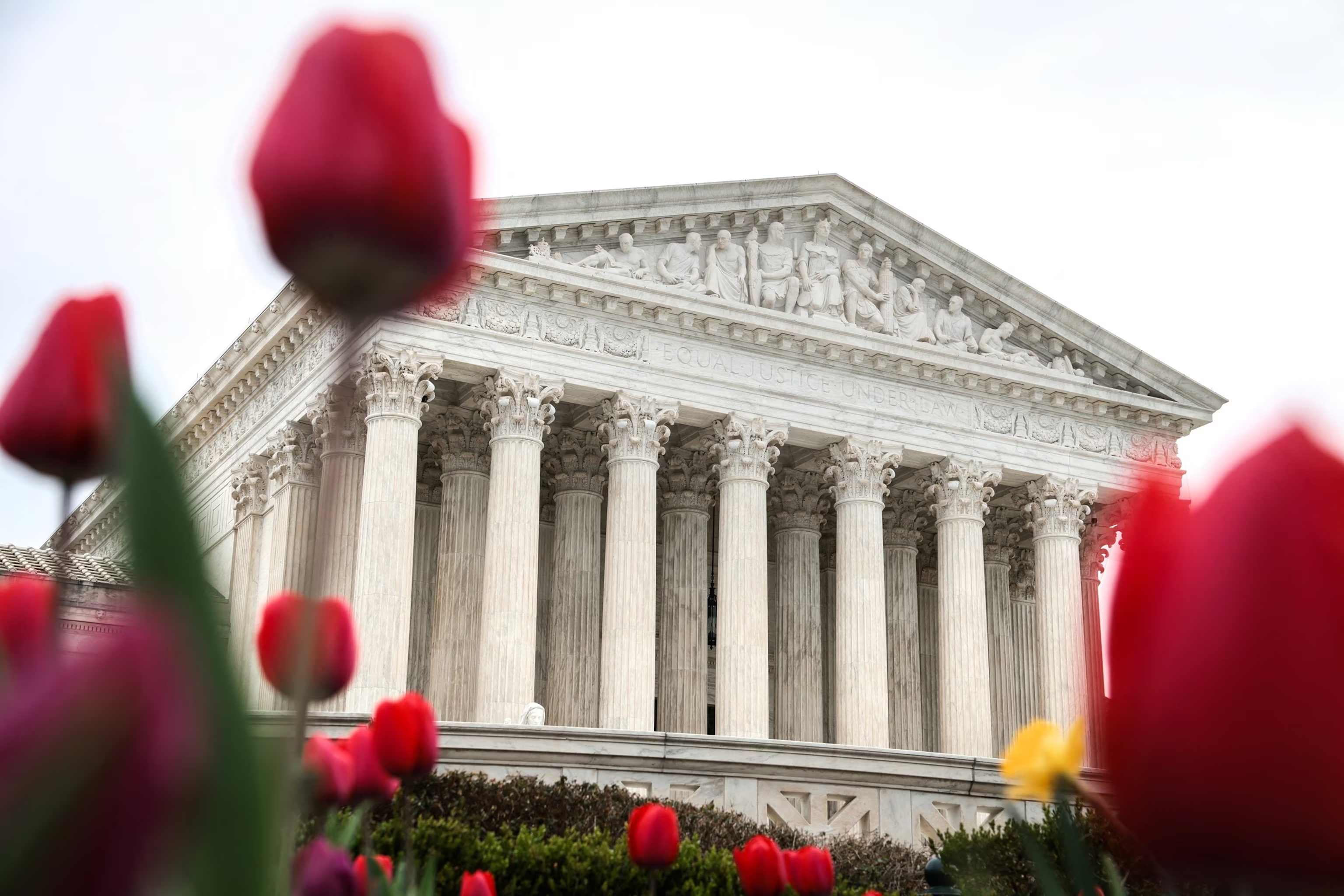
Spring flowers bloom outside the U.S. Supreme Court building in Washington, March 30, 2026.Evelyn Hockstein/Reuters
A majority of Americans, 55%, believe Trump is utilizing the Justice Department to bring unwarranted criminal charges against his rivals, according to a November 2025 Marquette Law School survey; 45% consider the charges warranted.
Concurrently, the majority of Americans — 56% — disapprove of the Supreme Court’s performance, compared to 44% who approve, the Marquette poll indicated.
"The Court has traditionally moved cautiously and deliberately when defining exclusive presidential authority, given the president’s proclivity to exert himself forcefully when the Court recognizes such power. However, it deviated from this approach in Trump v U.S.," Goldsmith contends.
"The Court rendered an imprudent and overly broad decision regarding exclusive presidential powers that presidents will leverage to their advantage against other governmental branches," Goldsmith wrote, "until the Court, upon deeper reflection, acknowledges its lack of foresight and modifies its course."
Sourse: abcnews.go.com