
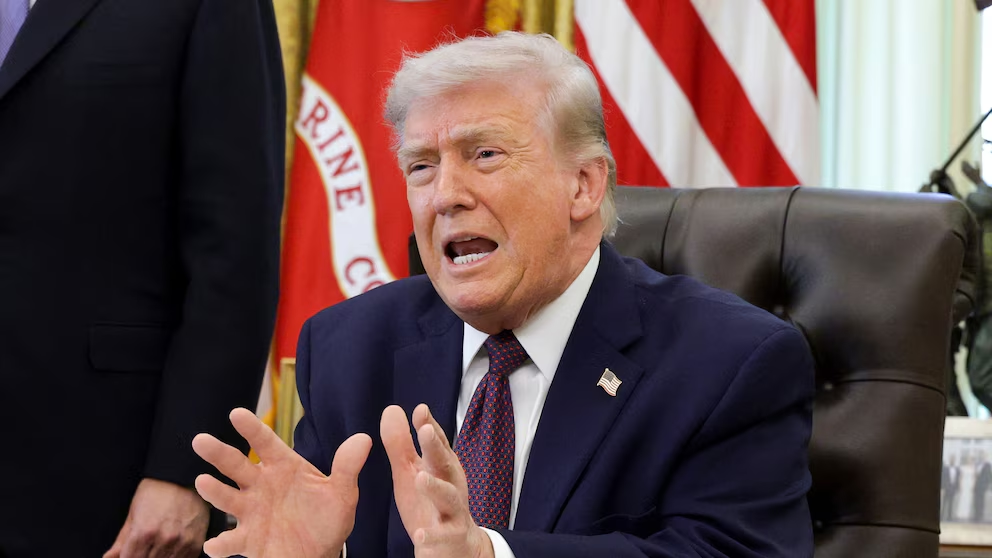
President Donald Trump delivers remarks prior to signing an executive directive aimed at curbing postal voting inside the Oval Office at the White House on March 31, 2026, situated in Washington, D.C.Alex Wong/Getty Images
President Donald Trump, accompanied by his key advisors, has recently issued threats about potentially withdrawing the United States from NATO, following the denial of support from various allied nations for the U.S.-Israeli conflict in Iran.
"Indeed, I would suggest [it's] beyond the realm of reconsideration. NATO never held any sway over me," Trump expressed on Tuesday when queried about whether he might rethink the U.S.'s affiliation following the conclusion of the hostilities. "I have consistently regarded them as a paper tiger, a perception also shared by Putin, I might add."
The North Atlantic Treaty Organization came into existence in 1949 with the objective of furnishing collective national safeguarding against the then-Soviet Union, primarily established as a preventative measure against conceivable military hostility within Europe in the aftermath of World War II. At present, the organization encompasses more than 30 participating countries.
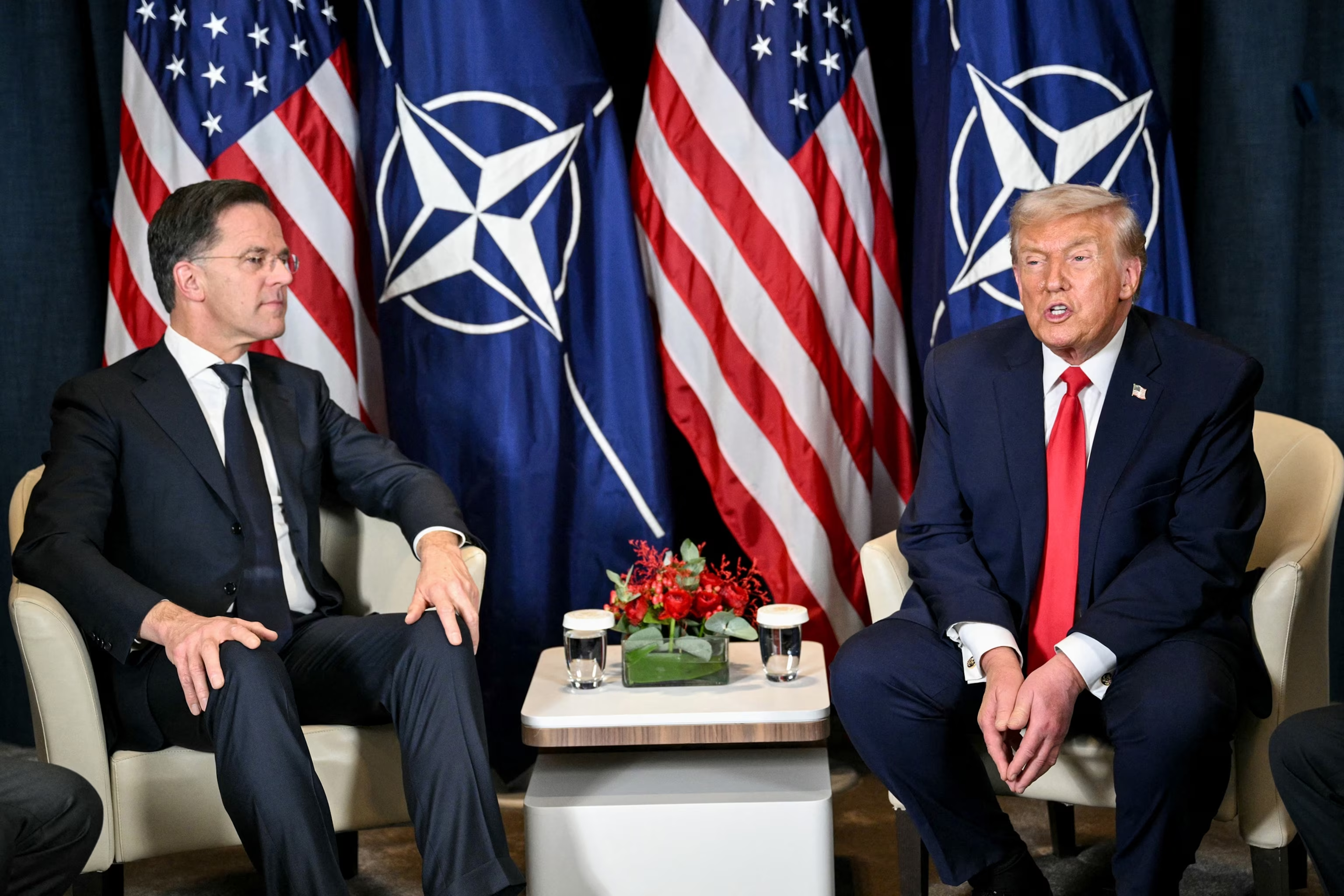
In this archived image from Jan. 23, 2026, President Donald Trump (R) is seen engaging in conversation with NATO’s Secretary-General Mark Rutte during a scheduled meeting on the sidelines of the World Economic Forum (WEF) annual gathering in Davos, Switzerland.Mandel Ngan/AFP via Getty Images, FILE
Following the refusal of NATO allies to heed his appeal for assistance in protecting the vitally important Strait of Hormuz the previous month, Trump denounced the choice as a "grave error," asserting that the U.S. would ultimately not require their intervention.
In the event that the president decides to initiate the withdrawal from the alliance, he will be obliged to seek authorization from Congress.
In 2023, Congress sanctioned a resolution designed to deter any U.S. president from independently extricating the United States from NATO without the endorsement of Congress.
This stipulation was integrated into the National Defense Authorization Act, an annual legislative piece outlining defense strategies, which secured approval from both legislative bodies and was enacted into law by President Joe Biden.
According to the measure, the president would be barred from relinquishing membership in NATO unless sanctioned by a two-thirds majority in the Senate or through distinct legislation ratified by Congress.
Senate Republican Leader John Thune, representing South Dakota, indicated earlier this month in an interview with the Washington Examiner that Congress would need to participate in deliberations concerning withdrawal from NATO.
"Yes, unquestionably, I do not believe such a determination can be made unilaterally," Thune conveyed to the Washington Examiner during a formal interview.
"Congress will most assuredly desire to express its views on a matter of this significance; it is beyond doubt," he further expressed.
Conversely, Republicans Sen. Mike Lee and Thomas Massie have both independently tabled legislation aimed at extracting the U.S. from NATO, with Massie characterizing the entity as a "Cold War remnant."
Concurrently, figures within Trump's administration have articulated in recent days that in the aftermath of the cessation of hostilities in Iran, a "re-evaluation" of the U.S.'s ties with NATO is "indisputable."
"I believe there is little doubt that, regrettably, once this conflict concludes, we will be compelled to revisit that association. We will need to reassess the merit of NATO and that alliance for our nation. Ultimately, the onus rests with the president to make this decision, and he will be required to act accordingly," Secretary of State Marco Rubio remarked during a Fox News interview on Tuesday.
Rubio co-sponsored the 2023 legislative act during his tenure as a senator, concomitantly issuing a declaration affirming the authority of the upper chamber.
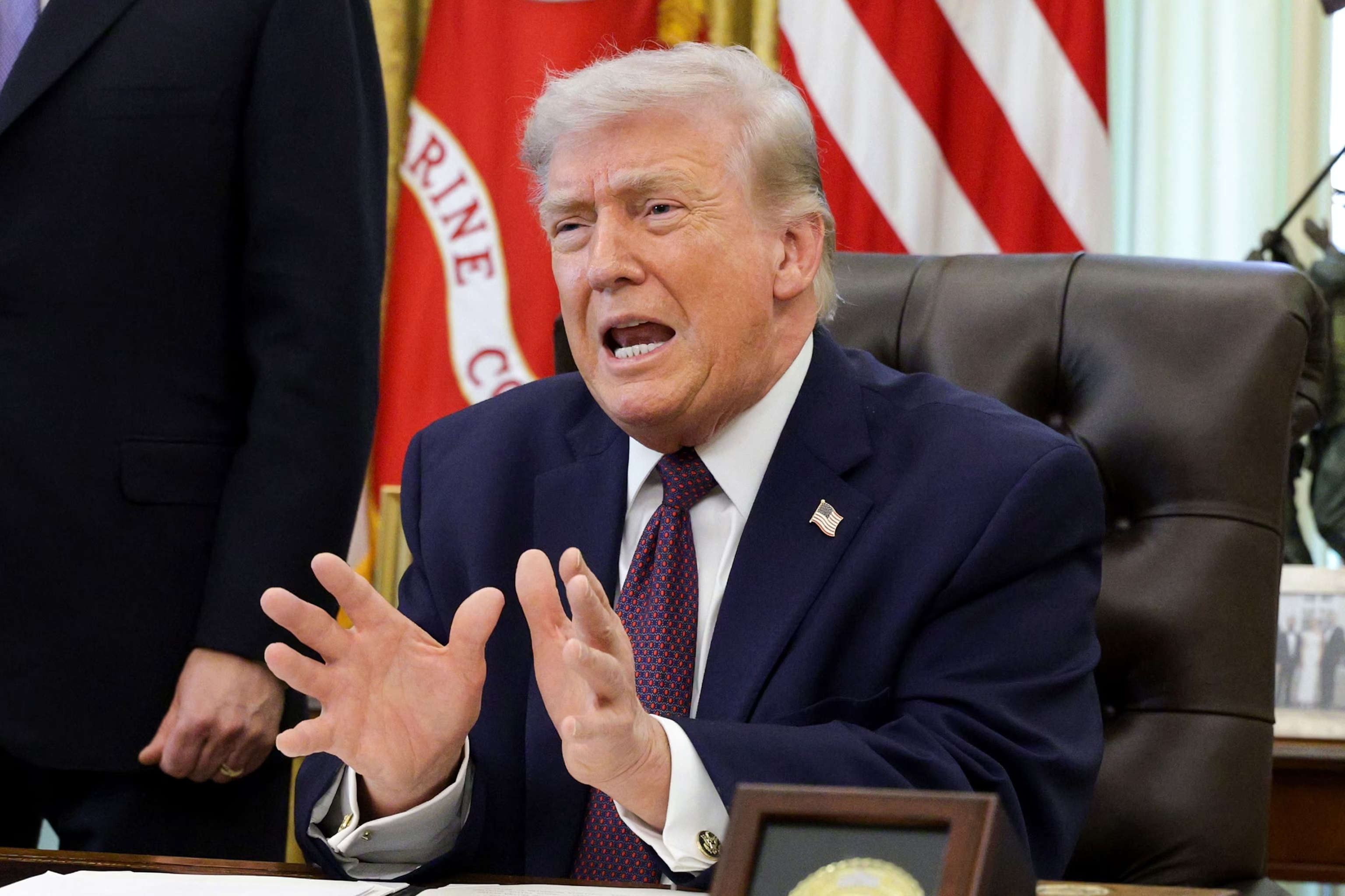
President Donald Trump speaks before signing an executive order to limit mail-in voting in the Oval Office of the White House on March 31, 2026, in Washington, D.C.Alex Wong/Getty Images
"The Senate should maintain its supervisory function concerning our nation's potential withdrawal from NATO. We must affirm our commitment to safeguarding our national interests and guaranteeing the security of our democratic allies," Rubio communicated in 2023.
On Wednesday, Sen. Mitch McConnell, representing Kentucky as a Republican, issued a collaborative statement alongside Sen. Chris Coons, a Democrat from Delaware, in defense of the alliance, standing in opposition to the president.
"NATO stands as the most triumphant military partnership in recorded history," McConnell and Coons conveyed. "It has been the cornerstone of the United States' security for over 70 years. NATO has only engaged in warfare in response to aggression against America. NATO forces have fought and perished alongside American troops in Afghanistan and Iraq. The United States must not trivialize this sacrifice – nor the renewed commitment of our allies to make it again."
"Disagreements among allies are as timeless as the alliance itself," the joint statement further elaborated. "The safety of Americans is fortified when NATO maintains its strength and unity. It is in our collective interest for all allies to nurture this unity with diligence. The United States became part of NATO in 1949, ratified by a Senate vote, and will continue its membership. The Senate pledges its steadfast support for the alliance, recognizing its provision of peace and safeguarding for America, Europe, and the global community."
Sourse: abcnews.go.com