
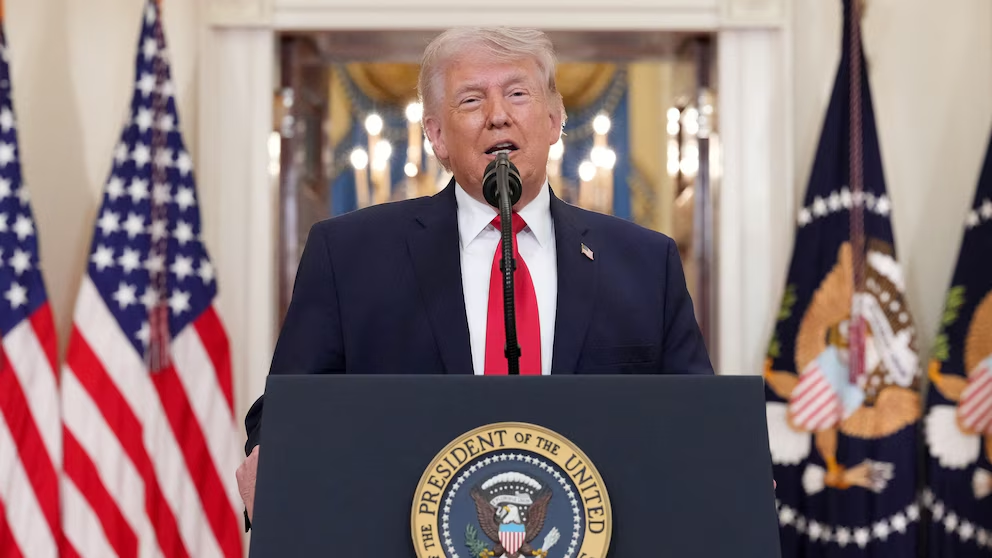
President Donald Trump gives a speech to the country concerning the Iran conflict at the White House in Washington, April 1, 2026.Alex Brandon/Pool/AFP via Getty Images
In a national address on Wednesday, President Donald Trump stated that Iran poses no further danger to the United States, and the conflict in Iran is "approaching its end."
The president vowed to bear down on Iran "incredibly severely" over the ensuing weeks.
"We are going to regress them to the stone age, which is where they belong," Trump remarked.
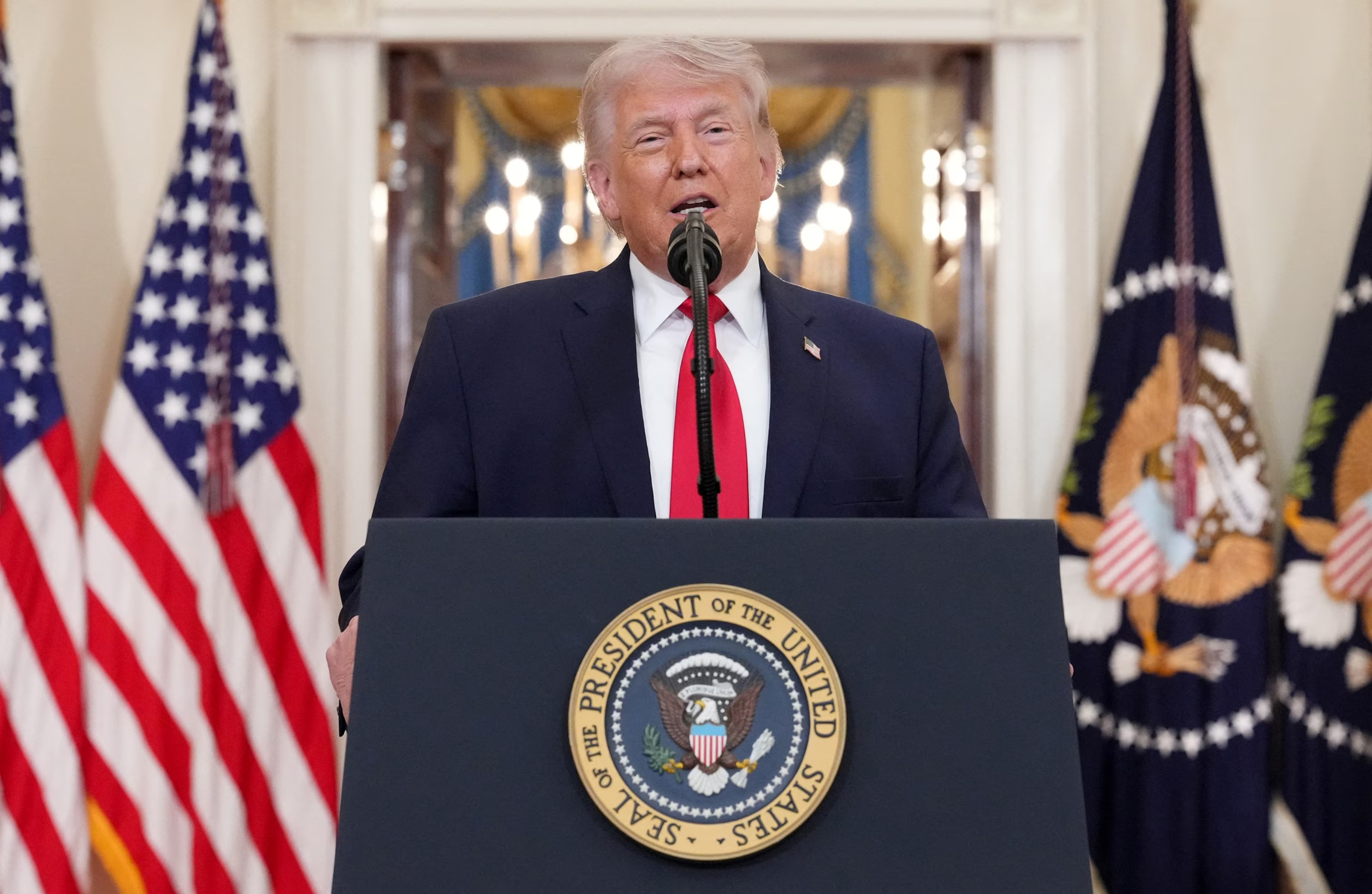
President Donald Trump gives a speech to the country concerning the Iran conflict at the White House in Washington, April 1, 2026.Alex Brandon/Pool/AFP via Getty Images
The address was made as the Trump administration encounters queries regarding the objectives and prospects of the war, now in its fifth week.
Trump has celebrated the achievements of the U.S. operations, emphasizing the annihilation of Iranian military resources and declaring that the U.S. has already accomplished a regime change in the nation through the demise of longtime Supreme Leader Ali Khamenei, along with other political figures.
In a conversation with ABC News' Jonathan Karl on Tuesday, Trump asserted that "we now have a total regime change" in Iran. He mentioned that his administration is presently engaged in discussions with Iranian leaders who are "more tempered" and "far more sensible," making reference to the country's rigid Parliament Speaker Mohammad Bagher Ghalibaf.
Ghalibaf, a former commander in the IRGC with deep affiliations to the Iranian military, faced accusations for his harsh repression of student demonstrations during his tenure as police chief. He has additionally been accused of malfeasance throughout his time as mayor of Tehran, allegations he refuted. Ghalibaf is considered close to Mojtaba Khamenei, Iran’s new supreme leader and the son of former leader Ali Khamenei, who was killed in February.
One month into the conflict, Iran continues to launch missiles and drones on a regular basis, targeting neighboring Gulf nations and Israel each day.
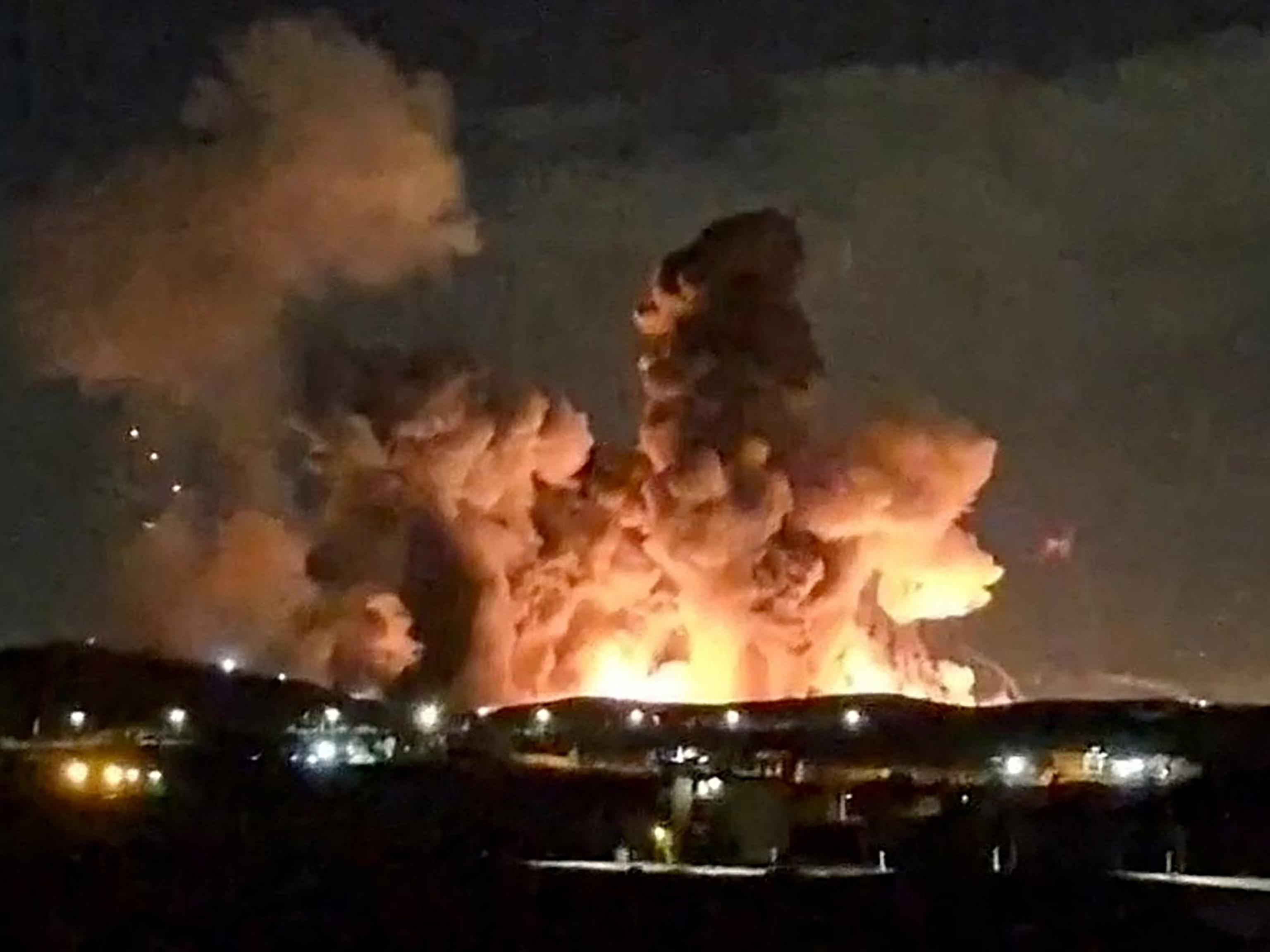
Smoke and fire rise following an explosion in Isfahan, Iran, March 31, 2026.Reuters
The Trump administration has additionally encountered questions regarding the economic ramifications of the conflict, as oil and gas costs have risen sharply due to Iran's persistent control over the Strait of Hormuz, which facilitates approximately one-fifth of the world's oil supply.
Gas prices at the pump have climbed upwards of 30% since the war began on Feb. 28, surpassing $4 per gallon on average on Tuesday, as indicated by AAA data.
Trump acknowledged Americans' apprehensions about increasing gas prices, but assured them that they would quickly decline following the conclusion of the war.
"This transient surge has been entirely provoked by the Iranian regime launching erratic terror strikes aimed at commercial oil tankers and neighboring countries that bear no relation to the conflict. This is further confirmation that Iran must never be entrusted with nuclear arms," Trump expressed.
Concerning the timeframe for bringing the war to a close, Trump conveyed to reporters on Tuesday that it could conclude within a span of two to three weeks. He stated as well that Iran is not required to reach an accord with the U.S. as a prerequisite for halting the current U.S. military endeavor.
"Once we deem that they have been for a substantial period relegated to the stone age, and they will not be capable of developing a nuclear weapon, then we'll depart," Trump revealed to reporters. "Irrespective of whether we strike a deal, it's inconsequential."
Iran reportedly responded to a 15-point peace proposal which the U.S. introduced last week by presenting its own conditions. State broadcaster Press TV quoted an anonymous official saying these included an end to attacks and assassinations, guarantees the conflict will not be repeated and recompense for conflict-related damage. Iranian Foreign Minister Araghchi on Tuesday refuted the notion that Tehran had responded to the 15-point proposal or furnished its personal list of demands.
However, during a conversation with a European official on Tuesday, Iranian President Masoud Pezeshkian signaled a readiness to put an end to the conflict if the reported Iranian conditions were satisfied, conveying a more amenable tone than Araghchi, who informed Al Jazeera, "We hold no conviction that negotiations with the U.S. will yield any outcomes. The trust is nonexistent."
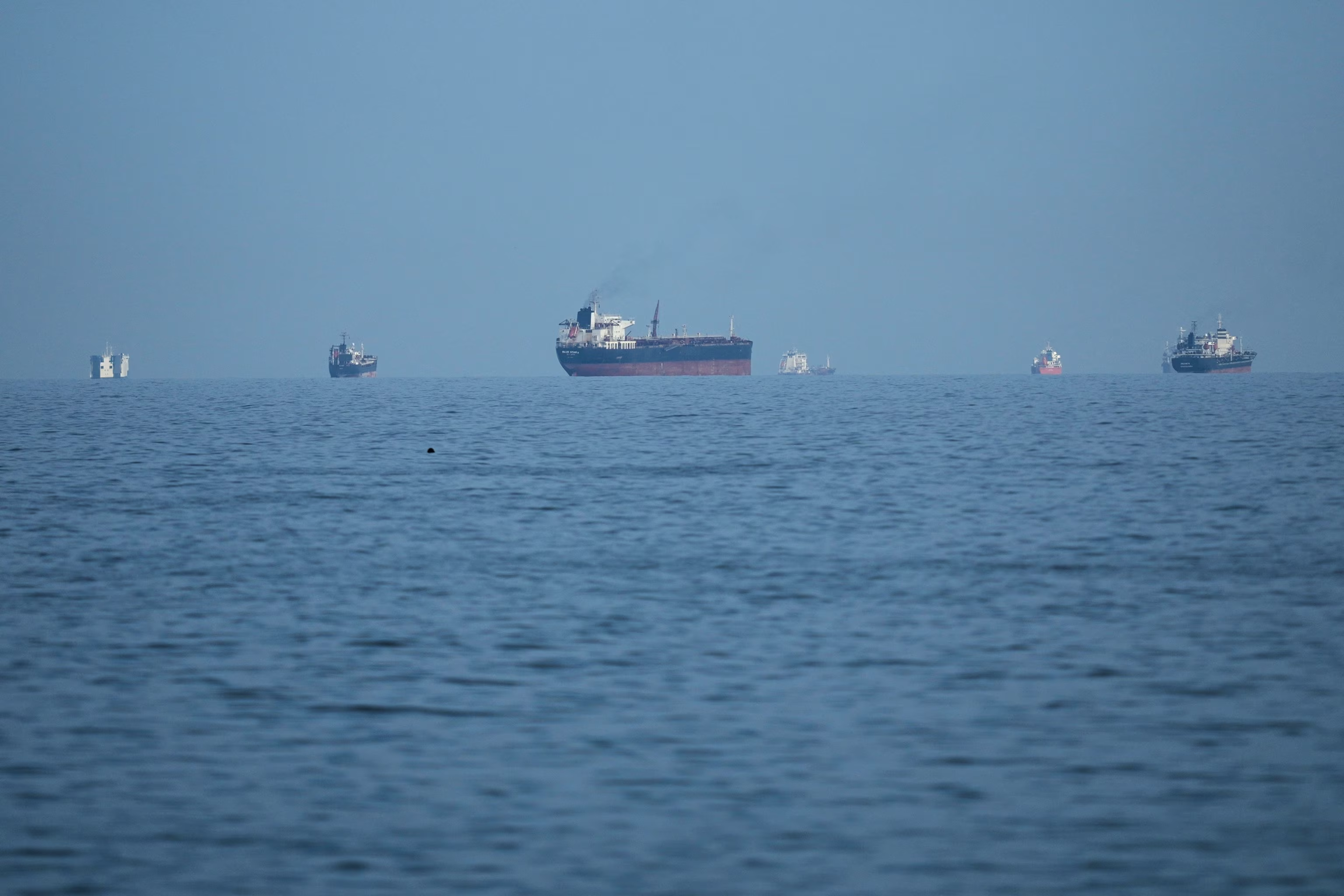
Oil tankers and cargo ships line up in the Strait of Hormuz as seen from Khor Fakkan, United Arab Emirates, March 11, 2026.Altaf Qadri/AP
Over recent days, Trump has furthermore shifted the responsibility for reopening the Strait of Hormuz to other nations.
During his speech on Wednesday, the president reasserted that they should "summon some delayed courage" and independently safeguard shipping within the strait.
"They should have acted sooner. They should have worked with us, as we requested, to go to the strait and simply seize it, protect it, and put it to use for yourselves," Trump stated. "Iran has been fundamentally ruined. The most challenging phase is complete, so it should prove straightforward."
The U.S. and Israel initiated expansive strikes on Iran on Feb. 28, executing an operation directed at military and governmental locations which followed weeks of dialogues with the Iranian government concerning the nation's nuclear agenda.
Trump stated at the inception of the "major combat operations," which were carried out in the absence of congressional authorization, that they were intended to "safeguard the American populace by removing imminent dangers posed by the Iranian regime," and he urged the Iranian people to overthrow the government.
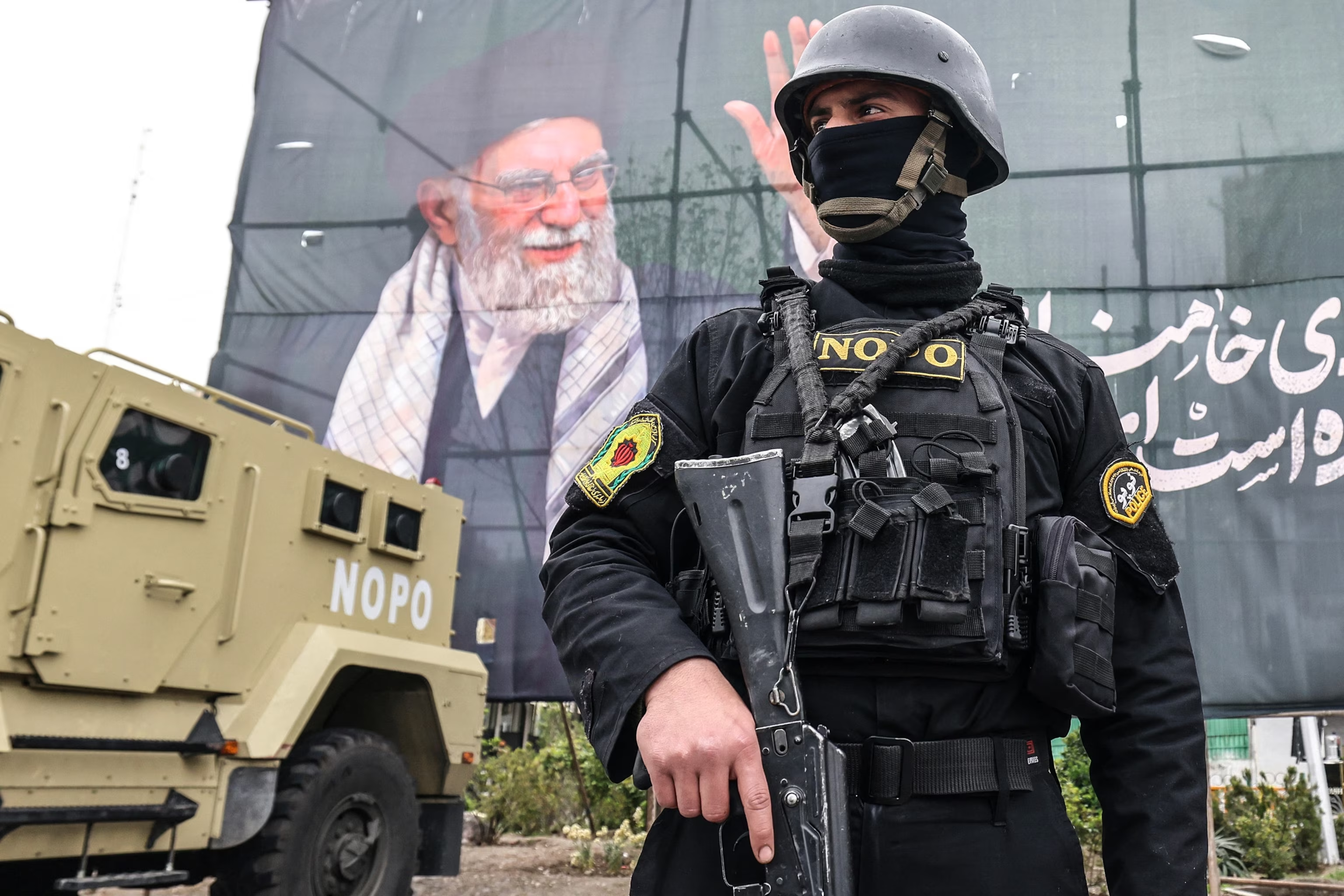
A member of the Iranian security forces stands guard next to a banner honouring Iran’s slain supreme leader Ayatollah Ali Khamenei in Tehran, March 31, 2026Atta Kenare/AFP via Getty Images
Iran responded by launching missile and drone attacks against Israel, U.S. military outposts in the vicinity, and Gulf nations.
Thirteen U.S. service personnel have died throughout the war. The Pentagon reported on Tuesday that 348 U.S. troops have sustained injuries.
No less than 3,519 individuals in Iran have been killed as a consequence of the U.S.-Israeli attacks since the conflict commenced, according to the U.S.-based Human Rights Activists News Agency (HRANA). ABC News has not on its own verified these numbers.
ABC News' David Brennan and Zoe Magee added to this reporting.
Sourse: abcnews.go.com