
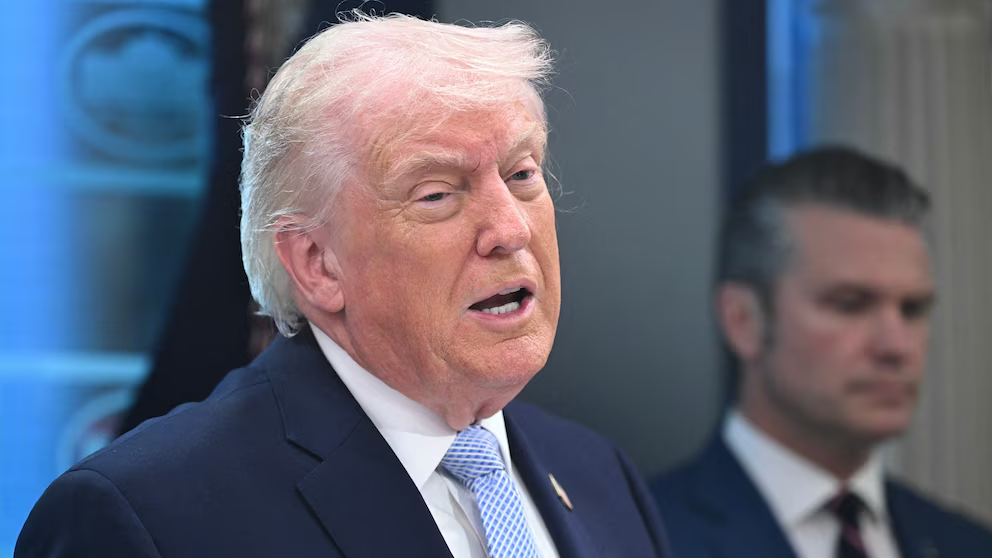
President Donald Trump conducts a news conference inside the James S. Brady Press Briefing Room at the White House in Washington, April 6, 2026. Saul Loeb/AFP via Getty Images
The Trump administration loudly proclaimed a military triumph in Iran this week.
"Absolute and utter victory. One hundred percent. No doubt," President Donald Trump told a journalist from the AFP.
"This represents a win for the United States that President Trump and our outstanding military brought about," White House press secretary Karoline Leavitt stated at a press briefing this past Wednesday.
"This morning signifies a momentous day for global peace. Iran desires it to transpire. They've had quite enough. Operation Epic Fury signified a landmark and overwhelming victory on the combat zone. A capital 'V,'" Defense Secretary Pete Hegseth commented during a Pentagon briefing on Wednesday.
Their statements followed a last-minute accord for a cessation of hostilities after President Trump's cataclysmic warning to eliminate an "entire civilization."
However, military supremacy doesn’t consistently equate to strategic accomplishment.
From a military perspective, yes, the conflict was plainly lopsided.
The combined U.S. and Israeli endeavor overpowered Iranian defenses. Over 10,000 military objectives were eradicated within Iran, and the damage inflicted by Iran was significantly disproportionate.
Nevertheless, the consequence those attacks had on attaining tranquility in the Middle East remains uncertain.
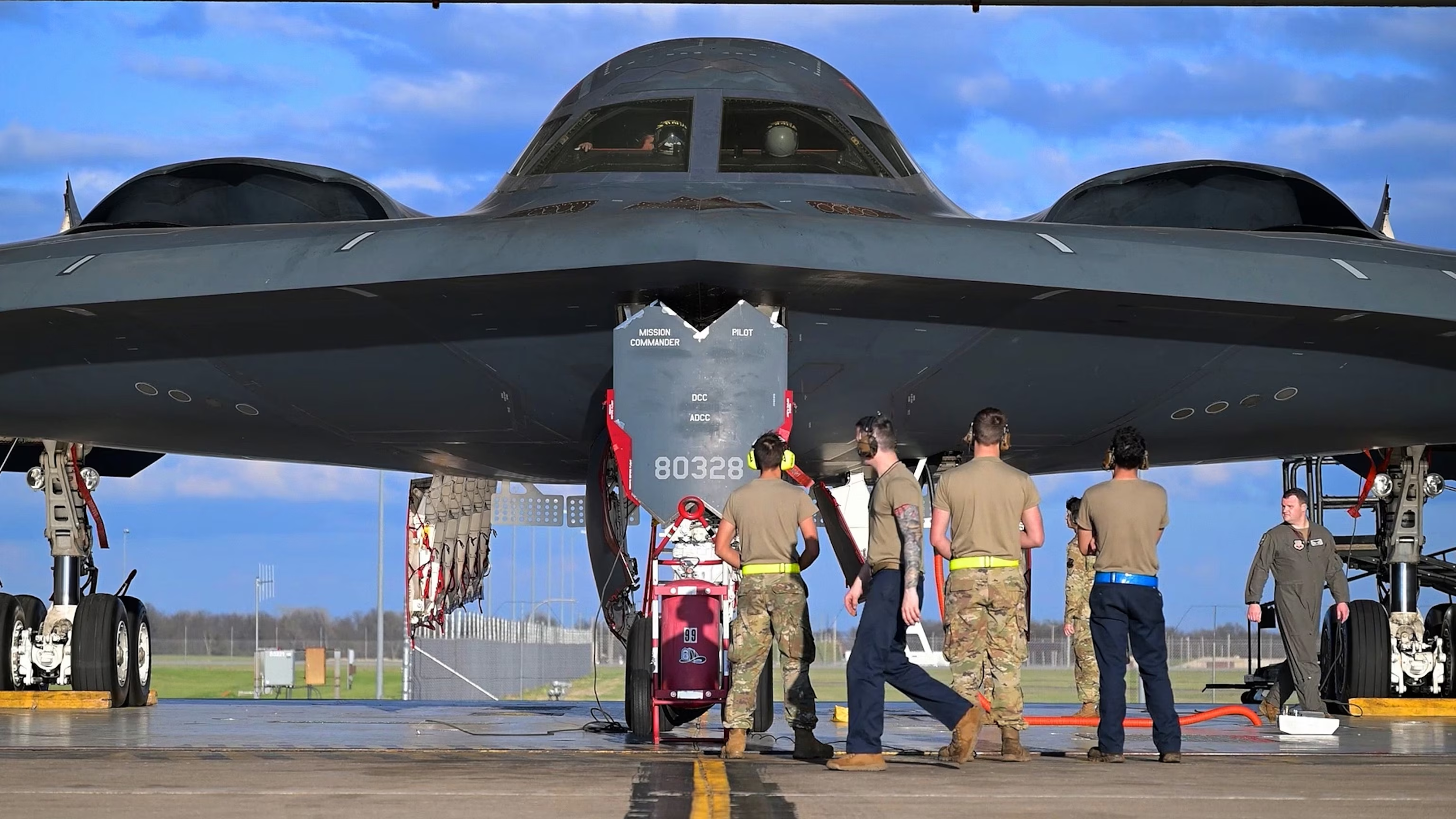
U.S. airmen are engaged in B-2 Spirit aircraft operations at a base within the U.S. Strategic Command area of responsibility in support of Operation Epic Fury, April 2, 2026.USAF
Iran still holds a firm grip on the vital oil passageway in the Strait of Hormuz, which flowed unrestrictedly prior to the commencement of the conflict.
It continues to possess highly enriched uranium that it could employ to construct a nuclear weapon — a principal rationale for initiating the conflict.
Elements of the hardline Iranian regime still persist in power.
And, despite its capabilities being considerably lessened, Iran remains capable of striking U.S. interests within the region.
None of these matters were addressed through the bombing offensive. Instead, they all pivot on diplomacy.
Vice President JD Vance will spearhead a contingent of U.S. envoys to Islamabad, Pakistan, this weekend to tackle these outstanding issues. They've allotted themselves two weeks to achieve this.
Karim Sadjadpour, a senior fellow at the Carnegie Endowment for International Peace, suggests it’s an impractical timeframe.
"The Obama administration needed almost two years to negotiate solely a nuclear arrangement with Iran," Sadjadpour conveyed on X. "There's no possibility the Trump administration secures a more encompassing agreement — encompassing Hormuz, nukes, missiles, and proxies — in two weeks."

Vice President JD Vance addresses the press prior to boarding Air Force Two for his return to Washington while in Budapest, Hungary, April 8, 2026.Jonathan Ernst/Reuters
The point of origin for discussions is similarly vague.
The president has conveyed contradictory statements regarding the groundwork for these dialogues.
At the time the armistice was declared, he indicated the Iranians presented a 10-point proposal that he believed constituted "a viable foundation upon which to negotiate." Nonetheless, the White House has offered no clarification on those points. Contrarily, it's reacted strongly to what the Iranians have asserted is within the proposal, denouncing those notions as a "rubbish" wish list.
The war carries strategic consequences extending beyond the Middle East as well. Domestically, Americans are expending over $4 a gallon for fuel, even as nations such as Russia and China perceive potential gains.
Ryan Hass, a China analyst with the Brookings Institution, asserts the war in Iran affords China what it most desires from the U.S.
"The foremost thing the Chinese desire is latitude, strategic latitude. And as they observe the United States dispatching Marines from Japan, deploying a carrier strike group from Asia, transferring portions of the Terminal High Altitude Air Defense system from South Korea, assembling sections of Patriot defense missile systems from Asia and conveying them to the Middle East, what they are acquiring is latitude," Hass explained in a recent Brookings podcast.
Furthermore, the conflict in Iran has acted as an economic windfall for Russia, given its struggle to financially maintain its now 5-year conflict in Ukraine.
"Russia has materialized as an early benefactor of the U.S.-Israeli conflict on Iran, boosted by elevated oil revenues, burgeoning demand for other products it manufactures such as fertilizers, and the outlook of air defense resources for Ukraine being diverted to the Middle East," writes Thomas Graham, distinguished fellow at the Council on Foreign Relations.
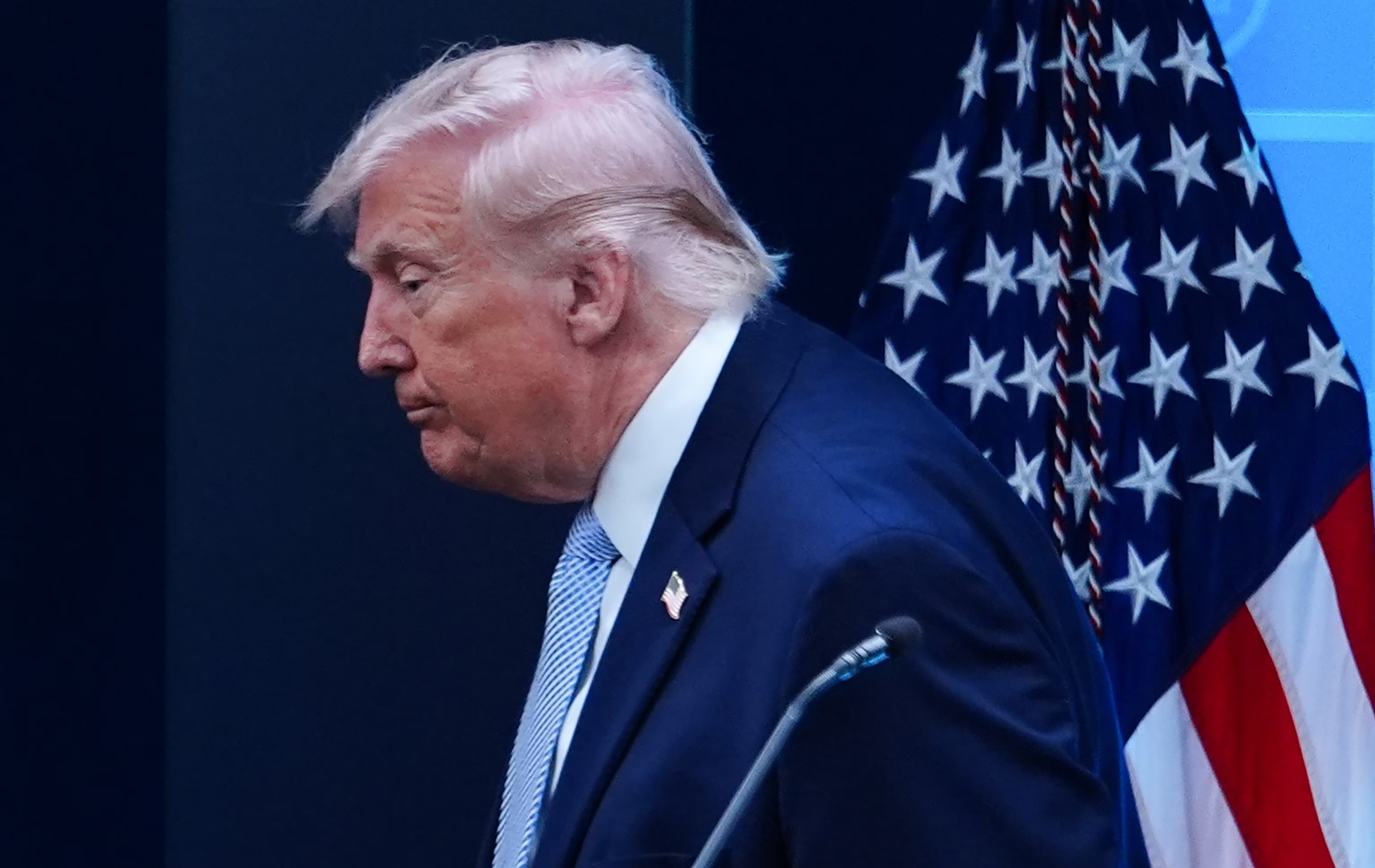
President Donald Trump exits following an address to reporters inside the James Brady Press Briefing Room at the White House, April 6, 2026, in Washington.Julia Demaree Nikhinson/AP
There’s additionally the persistent strain President Trump has exerted on the NATO alliance stemming from the Iran war. Irrespective of whether it’s a justified critique or not, he’s voiced irritation that not every NATO nation supported the U.S. in its war in Iran, with multiple allies plainly stating this isn’t their battle. He’s termed this war a trial for NATO and conveys they fell short.
Both Trump and Secretary of State Marco Rubio convened with the NATO Secretary General this past Wednesday.
Trump subsequently stated he was "dissatisfied" with the alliance, and Rubio communicated in an interview with Fox News that once the dispute is resolved "we are going to have to reevaluate that bond."
Therefore, while the ordnance may have ceased, the circumstance is yet unresolved.
Sourse: abcnews.go.com