

President Donald Trump is seen listening during a session concerning health care affordability inside the Oval Office at the White House, April 23, 2026, in Washington. Mark Schiefelbein/AP
As the ongoing Iran war persists and gasoline costs achieve their highest point in four years, the White House verified that President Donald Trump, together with some of his senior administrative figures, convened with oil and gas leaders this past Tuesday.
According to a White House source, executives held discussions regarding numerous subjects, notably "measures we could implement to prolong the existing blockade for several months if necessary and lessen its impact on American consumers."
Trump has consistently asserted he will not terminate the U.S. naval blockade of the Strait of Hormuz unless the Iranian government consents to a peace proposition that tackles their nuclear potentials.
The president communicated to Axios on Wednesday that he turned down a proposal from Iran that would conclude the naval blockade absent a nuclear accord.
The deadlock in negotiations arises as Trump called off a subsequent phase of discussions in Pakistan this recent weekend, stating he didn’t "comprehend the purpose" of dispatching his leading negotiators, including special representative Steve Witkoff and his son-in-law Jared Kushner.
Concurrently, the war’s noteworthy influences on the international financial state endure.
Americans are currently expending an average of $4.23 per gallon for gasoline. That's an increase of $1.29 — or 44% — from when the war commenced. These costs also represent the peak since Russia’s invasion of Ukraine in 2022.

President Donald Trump listens during an event on health care affordability in the Oval Office at the White House, April 23, 2026, in Washington.Mark Schiefelbein/AP
The assembly of oil sector representatives at the White House on Tuesday, initially documented by Axios, was presided over by Treasury Secretary Scott Bessent. Attendees present encompassed Vice President JD Vance and White House chief of staff Susie Wiles.
Throughout the session, executives delved into other subjects, involving internal output, advancements in Venezuela, oil derivatives, natural gas, and marine transport, as indicated by a White House functionary.
The functionary further mentioned the executives "remarked the president is undertaking all appropriate measures currently" which includes his action earlier in the month to activate wartime authority under the Defense Production Act in efforts to advocate for augmented oil and gas production and prolonging a Jones Act waiver for 90 days to permit internationally flagged vessels to move merchandise among U.S. harbor locations.
The White House minimized the importance of the meeting, describing it as ordinary and emphasized that it was a constructive discussion, stating Trump "engages with energy chiefs on a recurring basis" to acquire their insights concerning home and worldwide energy marketplaces.
Just the prior week, President Trump seemed to casually dismiss worries about escalating gasoline prices, informing a reporter in the Oval Office on April 23 that Americans should foresee steeper costs "temporarily."
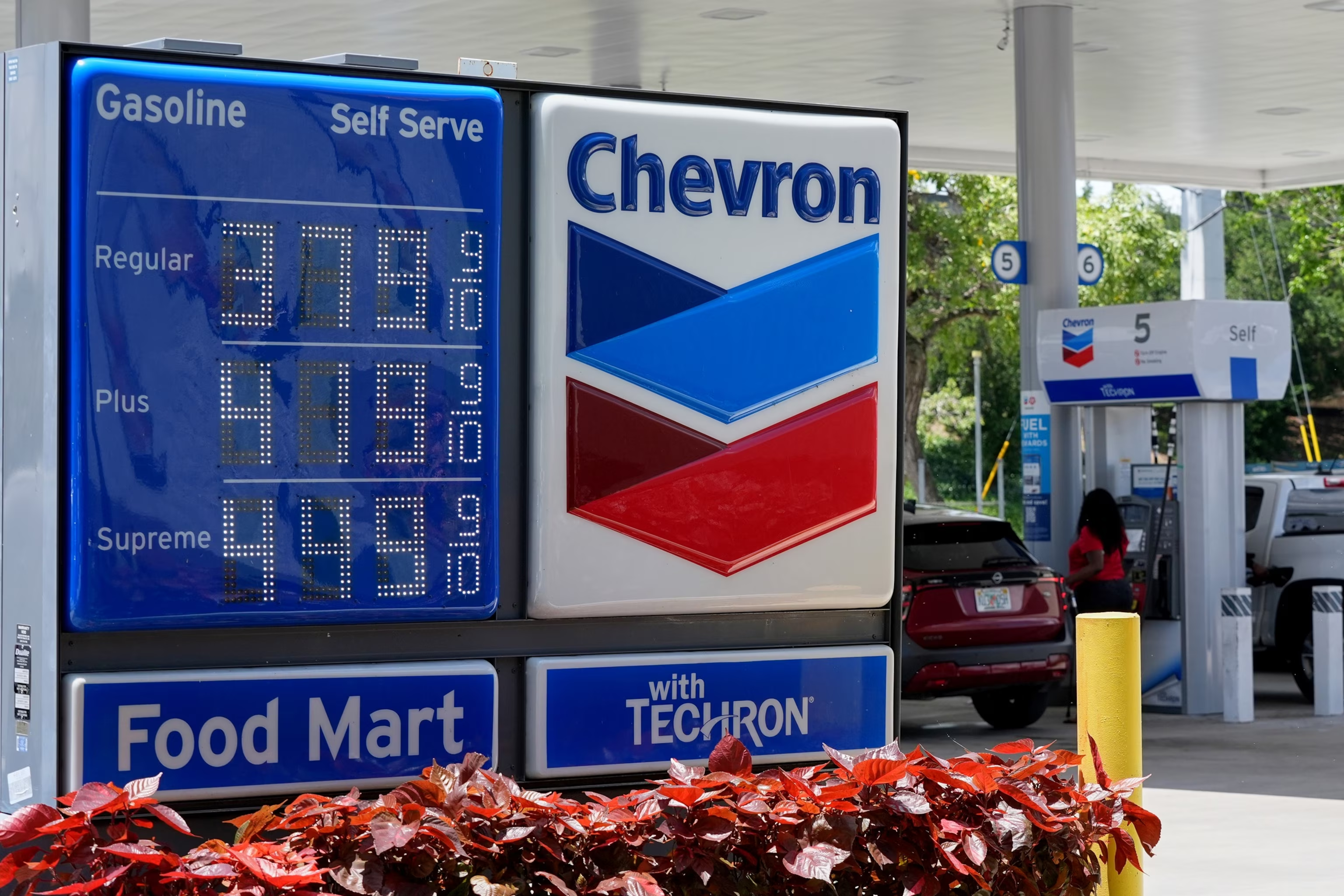
A customer pumps gasoline at a Chevron gas station, April 28, 2026, in Miami.Marta Lavandier/AP
Nevertheless, escalated expenditures introduce political vulnerability for the president, notably as Republicans strive to sustain their slim advantages in Congress during the November elections.
Four surveys issued over the past week determined that Americans are greatly displeased with the condition of the national economy and express it is deteriorating. Voters indicated efforts to decrease spending elsewhere to compensate for the amplified expenses they are incurring for gasoline and food items.
Jessica Woods, who jointly manages a modest independent grocery retail outlet in Washington, D.C., disclosed to ABC News Correspondent Elizabeth Schulze that the increases are exerting a dramatic impact on her enterprise.
"We've observed that we're encountering heightened charges with each delivery we obtain. We acquire six, seven deliveries daily, and increasingly more of those deliveries incorporate a linked fuel fee," Woods stated.
She mentioned that she accepts substantial truck deliveries from national distributors twice weekly, with fuel fees escalating to approximately $55 per delivery.
"There are undoubtedly months where we're not generating any profit whatsoever, particularly with the fresh merchandise we cherish having present. There's additionally minimal leeway for inaccuracies, but you must vend what's in reserve,” Woods conveyed.
When asked if she was preparing for even higher prices in the approaching months, Woods confirmed she "definitely" is.
Sourse: abcnews.go.com